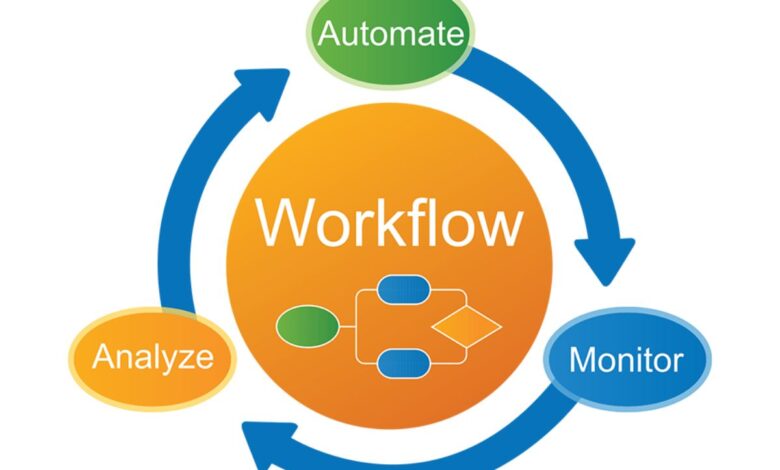
India’s enterprise technology landscape has entered a decisive automation era. Across Bengaluru’s product corridors, Mumbai’s financial districts, Hyderabad’s IT campuses, and Pune’s manufacturing hubs, organisations are aggressively replacing manual, repetitive processes with intelligent, trigger-based automation. The Indian workflow automation market, now a significant slice of the broader $23+ billion global market, is being driven by a convergence of factors: the maturation of India’s SaaS ecosystem, the widespread adoption of hybrid work models, a growing appetite for AI-integrated tooling, and a government-backed push toward digital-first operations under the Digital India initiative.
In 2026, workflow automation is no longer a luxury reserved for large enterprises. Startups with five-person teams and manufacturing companies with five thousand employees are both deploying automation platforms to eliminate bottlenecks, accelerate approvals, and connect their fragmented application stacks. This article presents the ten most reliable, actively operating, and India-relevant workflow automation platforms available in 2026 — evaluated on feature depth, India-specific suitability, pricing, AI capabilities, and real-world adoption.
1. Zoho Flow
Best for: Indian SMBs, Zoho ecosystem users, and teams seeking a no-code integration platform with INR billing
Zoho Flow is India’s most strategically placed workflow automation and integration platform. Built and maintained by Zoho Corporation (headquartered in Chennai), it allows teams to connect over 1,000 applications using a visual, drag-and-drop builder — no coding required. Triggers, conditions, time delays, branching logic, and custom scripting functions are all available within a clean, intuitive interface.
What sets Zoho Flow apart for Indian businesses is its deep, native compatibility with the broader Zoho ecosystem — Zoho CRM, Zoho Books, Zoho Desk, Zoho Recruit, and dozens of other Zoho products integrate instantly and without configuration overhead. Businesses already operating on Zoho’s suite find Flow to be the connective tissue that ties their entire operation together. Beyond the Zoho ecosystem, it connects seamlessly with third-party tools like Slack, Google Workspace, Mailchimp, and Shopify. Pricing is denominated in INR, data processing adheres to Indian compliance requirements, and customer support operates in Indian time zones — three decisive advantages in a market where dollar-denominated billing and off-hours support are persistent pain points.
2. Pabbly Connect
Best for: Budget-conscious Indian startups and SMEs seeking unlimited automation at a flat cost
Pabbly Connect, developed by Magnet Brains (based in Bhopal, Madhya Pradesh), has emerged as one of India’s most popular homegrown automation tools — and for good reason. Its defining proposition is straightforward: a single flat-rate subscription that covers unlimited workflows, unlimited tasks, and unlimited users, with no per-task pricing that can balloon costs as automation scales.
In a market where tools like Zapier charge per task executed, Pabbly Connect’s model is genuinely disruptive for Indian teams running high-volume automations — think e-commerce order processing, lead routing from Facebook Ads, or bulk CRM updates. The platform supports over 1,000 app integrations, multi-step workflows, conditional routing, and webhook-based custom integrations. Its pricing starts at approximately ₹5,000 per year (annual plan), making it among the most affordable serious automation tools available to Indian businesses. In 2026, Pabbly has also expanded its AI-assisted workflow building features, allowing users to describe automation goals in plain language and have the platform suggest a workflow structure.
3. Kissflow
Best for: Mid-market Indian enterprises needing business process management with no-code workflow design
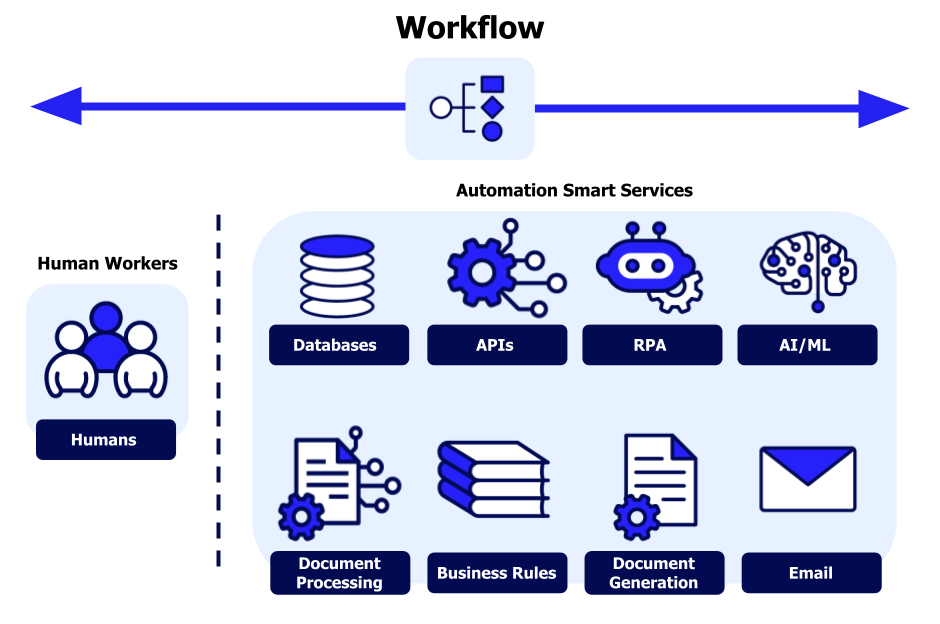
Kissflow is a Chennai-based, no-code business process management (BPM) and workflow automation platform with a strong foothold in India’s mid-market enterprise segment. Unlike pure integration tools, Kissflow is designed to digitise and automate entire business processes — procurement approvals, employee onboarding, leave management, purchase orders, and compliance workflows — within a governed, role-based environment.
Its visual process designer allows HR managers, operations leads, and finance controllers to build multi-step approval workflows without involving IT. Form-based data collection feeds directly into automated routing rules, and managers get real-time dashboards showing where each request stands in the pipeline. In 2026, Kissflow has integrated AI-powered process suggestions, where the platform analyses existing manual processes and recommends automation opportunities. The platform is widely adopted by Indian manufacturing companies, educational institutions, and government-linked organisations seeking structured digital process management. Pricing is available in both USD and INR, and Kissflow maintains an active customer success team in India.
4. Zapier
Best for: Indian product teams, marketers, and growth operators needing rapid, multi-app automation
Zapier remains the global benchmark for no-code automation and commands a large, loyal user base among India’s technology startups and digital marketing teams. With over 7,000 app integrations — the widest library of any automation platform — Zapier enables virtually any trigger-action combination imaginable, from syncing Google Form responses to a CRM to posting Stripe payment notifications to a Slack channel.
In 2026, Zapier has evolved well beyond its original “Zap” model. The platform now bundles Tables (a lightweight database layer), Interfaces (an AI-powered front-end builder), and Zapier MCP (enabling AI agents to trigger Zaps). This positions it less as a simple connector and more as a full automation infrastructure layer. For Indian teams, the free plan (100 tasks per month) is a viable entry point, while the Pro plan at approximately $29.99 per month suits growing teams. The primary limitation for Indian users is USD-denominated pricing, which creates cost unpredictability as the rupee fluctuates, but Zapier’s breadth and reliability continue to make it the first choice for fast-moving product and marketing teams.
5. Make (formerly Integromat)
Best for: Indian tech startups and automation-heavy operations needing complex, multi-branch workflows
Make has established itself as the sophisticated alternative to Zapier — offering significantly more power for teams willing to invest in a moderate learning curve. Its visual “scenario” builder allows users to see the entire data flow in a single canvas, with support for routers, iterators, aggregators, error handlers, and real-time execution logs. This level of transparency and control is invaluable when debugging complex, multi-step automations.
A key reason for Make’s rising popularity in India is its pricing efficiency: it operates on an “operations” model that costs roughly three times less than Zapier for equivalent workloads. In 2026, Make has introduced AI Agents (currently in beta), allowing users to build autonomous agents that can make decisions mid-workflow, and a Make Code App that supports custom JavaScript and Python logic inside scenarios. For Indian fintech startups, logistics companies, and D2C e-commerce brands running sophisticated data pipelines, Make offers an automation depth that simpler tools cannot match. Plans start at approximately $9 per month for the Core tier.
6. Microsoft Power Automate
Best for: Indian enterprises deeply integrated with Microsoft 365, Azure, and legacy enterprise systems
Microsoft Power Automate is the dominant enterprise workflow automation tool across India’s large IT services firms, BFSI companies, and public sector organisations. Its ability to bridge modern cloud applications with legacy desktop software — through cloud flows, desktop flows, and Robotic Process Automation (RPA) — makes it uniquely suited to India’s enterprise landscape, where decades-old ERP systems and modern SaaS tools often need to coexist and exchange data.
Power Automate’s Process Advisor uses historical data to identify automation candidates within existing workflows, removing the guesswork from which processes to automate first. In 2026, Microsoft Copilot is deeply embedded in Power Automate, enabling users to describe automation goals in plain English and have Copilot generate the flow structure. For Indian organisations already paying for Microsoft 365, Power Automate is included in many existing plans — making its effective cost extremely competitive. The platform benefits from Microsoft’s extensive Indian data centre presence in Pune and Chennai, ensuring low latency and data residency compliance.
7. UiPath
Best for: Indian BFSI, IT services, and large-scale operations requiring enterprise-grade Robotic Process Automation
UiPath is the global leader in Robotic Process Automation (RPA) and commands an exceptionally strong position in India’s financial services, insurance, and IT services sectors. Unlike no-code integration tools that connect APIs, UiPath operates at the UI layer — automating tasks that previously required a human sitting at a computer, such as extracting data from scanned PDFs, filling web forms, processing insurance claims, and reconciling banking transactions.
In India, UiPath has a substantial implementation ecosystem with hundreds of certified partners offering deployment, training, and managed automation services. Its Document Understanding module has been particularly impactful in Indian BFSI, where KYC document processing, loan application review, and regulatory reporting involve enormous volumes of unstructured documents. In 2026, UiPath’s AI capabilities include specialised computer vision models and integration with large language models for natural language processing within automated pipelines. UiPath operates on an enterprise pricing model with Indian-market pricing available through its partner network.
8. n8n
Best for: Indian engineering teams, fintech startups, and data-sensitive organisations requiring self-hosted automation
n8n has emerged as the platform of choice for India’s technically sophisticated startup teams that need automation power without sacrificing data control. As a fair-code, open-source platform, n8n can be self-hosted on any cloud infrastructure — AWS, Google Cloud, or even an on-premise server — giving engineering teams complete sovereignty over where their data flows. This is a compelling advantage for Indian fintech, healthtech, and edtech companies that handle sensitive user data and face regulatory constraints around data localisation.
n8n supports over 400 integrations, custom JavaScript and Python code nodes, AI agent workflows, and webhook-based triggers. In 2026, its AI capabilities have expanded significantly, with native support for connecting to LLMs, building multi-agent pipelines, and adding conversational logic into automated workflows. The cloud-hosted version starts at approximately $24 per month, while the self-hosted community edition is free. Among India’s developer-driven startup community, n8n has been growing rapidly as awareness of its power relative to its cost spreads through Slack communities and developer forums.
9. ServiceNow
Best for: Indian IT service companies, large enterprises, and organisations managing complex IT and HR workflows
ServiceNow occupies a distinct category in the workflow automation landscape: it is not primarily a general-purpose integration tool but a purpose-built platform for IT Service Management (ITSM), IT Operations Management (ITOM), HR Service Delivery, and enterprise workflow governance at scale. In India, ServiceNow is deeply embedded in the delivery operations of major IT service companies including Infosys, Wipro, HCL, and TCS, as well as in the internal IT operations of Indian banks, telecoms, and manufacturing conglomerates.
In 2026, ServiceNow’s Now Assist (powered by generative AI) enables IT teams to auto-resolve common incidents, generate knowledge base articles from resolved tickets, and provide employees with conversational self-service for HR and IT requests. For Indian IT operations teams managing hundreds of thousands of service requests per month, the ROI from ServiceNow’s automation is measurable and significant. ServiceNow operates on an enterprise licensing model and maintains a growing presence in India with local offices and implementation partners.
10. Freshservice (by Freshworks)
Best for: Indian SMEs, IT teams, and internal operations teams seeking affordable ITSM and workflow automation
Freshservice, Freshworks’ IT service management and internal operations platform, brings enterprise-grade workflow automation to Indian companies at a fraction of the cost of ServiceNow. Built and maintained by Freshworks (headquartered in Chennai and San Mateo), Freshservice offers automated ticket routing, approval workflows, change management automation, SLA enforcement, and an AI-powered virtual agent — all within a clean, intuitive interface that non-technical IT managers can configure and maintain.
In 2026, Freddy AI — Freshworks’ proprietary AI engine — powers intelligent incident classification, auto-resolution suggestions, and predictive alerting within Freshservice. For Indian mid-market companies running internal IT help desks, HR service desks, or facilities management operations, Freshservice offers a compelling combination of local origin, INR billing, Indian data centre hosting, and an accessible price point. Plans start at approximately ₹1,799 per agent per month, and Freshworks provides dedicated support teams in India for all enterprise accounts.
How to Choose the Right Workflow Automation Platform for Your Indian Business
The right platform depends on three core questions specific to the Indian context. First, what type of automation do you need? If your goal is connecting cloud apps (Zapier, Make, Zoho Flow, Pabbly Connect), managing internal business processes (Kissflow, Freshservice), automating enterprise IT operations (ServiceNow, Power Automate), or handling high-volume document processing in regulated industries (UiPath, n8n), each category demands a different class of tool.
Second, what is your data sensitivity profile? Indian fintech, healthtech, and government-adjacent organisations face data localisation pressures that make self-hosted options like n8n or platforms with Indian data centres (Zoho Flow, Freshservice, Microsoft Power Automate) preferable to purely US-hosted solutions.
Third, what is your realistic total cost of ownership? INR-denominated billing (Zoho Flow, Kissflow, Freshservice, Pabbly Connect) eliminates exchange rate volatility, while flat-rate pricing models (Pabbly Connect) protect against cost escalation as automation volume grows. The ten platforms listed above collectively cover every combination of these variables — giving Indian organisations in 2026 a comprehensive, vetted foundation for building their automation strategy.