ED Attached Properties In Investment Fraud By Royal Twinkle Star Club, Citrus Check Inns And Others
The Enforcement Directorate’s latest action against Royal Twinkle Star Club Limited and Citrus Check Inns Limited has brought renewed attention to one of India’s most troubling investment scandals. Between 01.04.2008 and 31.03.2017, the companies collected approximately ₹8,852 crore from the public through holiday membership and investment schemes. Investigators uncovered ₹3,077 crore in agent commissions, ₹1,723 crore transferred to associated concerns and a network of more than 87 entities linked to promoter Om Prakash Goenka and his family. With properties worth ₹556.72 crore now attached, the case raises serious questions about financial accountability, regulatory intervention and investor protection.

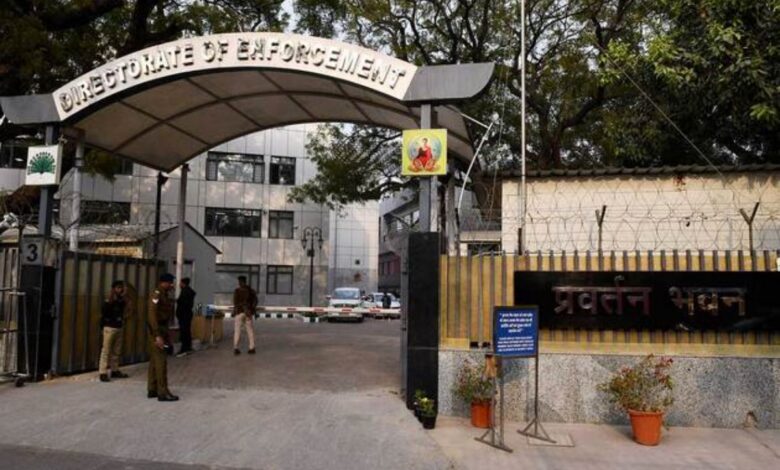
ROYAL TWINKLE’S ₹8,852 CRORE INVESTMENT SCAM: ED ATTACHES ₹556.72 CRORE, EXPOSES ₹3,077 CRORE COMMISSION NETWORK AND 87 ASSOCIATED ENTITIES
ED’s Latest Action Exposes the Financial Structure Behind the Holiday Investment Schemes
The Enforcement Directorate (ED) has provisionally attached immovable properties worth approximately ₹556.72 crore in connection with the ₹8,852 crore investment fraud involving Royal Twinkle Star Club Limited (RTSCL), Citrus Check Inns Limited (CCIL) and their associated entities. The action, announced by the agency’s Mumbai Zonal Office-I on 23.11.26 under the Prevention of Money Laundering Act (PMLA), 2002, has brought renewed attention to an investment operation that collected thousands of crores from the public through long-term holiday membership schemes promising attractive returns and hospitality benefits.
The investigation has uncovered a complex financial structure involving substantial agent commissions, repayments financed through fresh investor contributions and the movement of money across dozens of interconnected businesses.
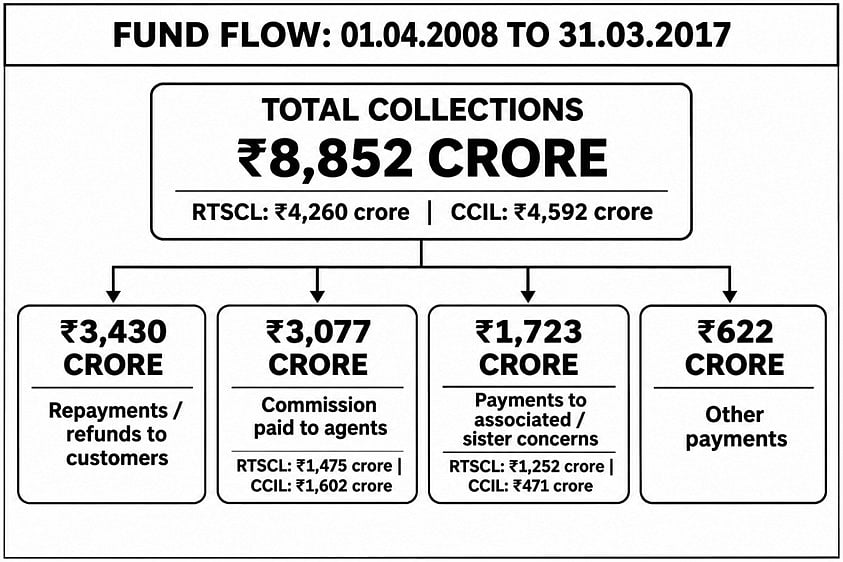
According to the ED, Royal Twinkle and Citrus Check Inns collected approximately ₹8,852 crore between 01.04.08 and 31.03.17. Of this amount, approximately ₹3,430 crore was repaid to investors, ₹3,077 crore was distributed as commissions to agents, and ₹1,723 crore was transferred to associated and sister concerns through loans, advances and other financial transactions.
Investigators found that the companies operated investment arrangements resembling Collective Investment Schemes without obtaining the required registration from the Securities and Exchange Board of India (SEBI). The ED initiated its investigation following a First Information Report registered at Mumbai’s R.A.K. Marg Police Station and identified a Ponzi-type circulation mechanism in which money collected from new investors was used to repay earlier participants.
The agency also traced funds through more than 87 group companies, firms and associated entities controlled by promoter Om Prakash Goenka and his family members. These funds were subsequently invested in real estate, hospitality and other businesses. The findings expose how a business presented through holiday memberships and investment opportunities became associated with an extensive corporate network and a financial operation dependent on continuous fundraising.
The ₹8,852 Crore Money Trail: ₹3,077 Crore in Commissions and ₹1,723 Crore in Corporate Transfers
The most striking aspect of the investigation is the distribution of the money collected from investors. Of the approximately ₹8,852 crore mobilised over nine years, ₹3,430 crore was repaid to investors, representing around 38.7% of collections. Agent commissions accounted for approximately ₹3,077 crore, or 34.8%, while transfers to associated businesses represented another ₹1,723 crore, equivalent to 19.5%. These figures reveal that a substantial portion of the money entering the schemes was directed towards maintaining the recruitment network and financing businesses associated with the promoter-controlled group.
The ₹3,077 crore commission expenditure is particularly significant. Agents acted as intermediaries between the companies and investors, facilitating enrolment and mobilising fresh contributions. Their compensation was linked to the money collected, creating a powerful financial incentive to attract new participants.
The Supreme Court’s records concerning the case also describe a pyramid-style arrangement in which participants could receive commissions based on the number of new investors they introduced and the investments made by those individuals. Combined with the ED’s finding that fresh collections were used to repay earlier investors, the commission structure reveals the financial machinery supporting the expansion of the schemes.
The ₹1,723 crore transferred to associated and sister concerns introduces another dimension. According to the ED, funds moved through loans, advances and other financial arrangements before being deployed in real estate, hospitality and other businesses. The involvement of more than 87 associated entities demonstrates the extensive corporate structure through which public money circulated. The central financial concern extends beyond the original fundraising activity to the subsequent deployment of investor contributions across companies connected to Om Prakash Goenka and his family.
Om Prakash Goenka and the Corporate Network Behind Royal Twinkle
Om Prakash Goenka, identified by the ED as the promoter associated with the companies, occupies a central position in the investigation. The agency has linked him and his family members to a network of more than 87 companies, firms and associated entities through which funds were routed. This structure enabled money collected through the holiday membership and investment schemes to move into businesses operating in different sectors, particularly real estate and hospitality.
The broader financial activities of the Goenka family have also attracted scrutiny from the Serious Fraud Investigation Office (SFIO). According to reporting on proceedings before the Delhi High Court, the SFIO examined financial transactions involving family-linked businesses, including payments categorised as consultancy fees, commissions and unsecured loans.
The agency also raised concerns about the movement of public funds through group companies and transactions involving members of the promoter’s family. These proceedings added another layer to the investigation of the corporate arrangements surrounding Royal Twinkle and its associated businesses.
The scale of the network is important because the movement of money through multiple companies complicates the identification of its ultimate recipients. The ED’s findings connect investor collections with substantial related-party transfers and investments made through associated businesses, placing the group’s corporate structure at the centre of the financial investigation.
SEBI’s Findings: Only 5.72% of Citrus Customers Used Holiday Facilities
The most revealing evidence concerning the nature of the holiday membership business emerged from SEBI’s adjudication proceedings against Citrus Check Inns. In an order dated 30.06.26, the regulator examined seven holiday plans named Crystal, Gem, Sapphire, Crown, Glory, Jewel and Pearl. The schemes allowed customers to contribute money that was converted into points, generally at the rate of one point for every ₹100. Depending on the plan, customers could use these points for holiday facilities or pursue redemption, rent-out and sale options that provided monetary returns.
SEBI found that only 73,363 out of 12,81,542 customers across the seven plans had utilised holiday facilities, representing just 5.72% of the total. Even more significantly, the monetary value of holiday facilities utilised accounted for only 0.41% of the money collected under these plans. None of the customers enrolled in the Crystal, Gem and Sapphire plans had used the holiday facilities in the dataset examined. The regulator also recorded that the schemes offered returns of up to 21.24% per annum, depending on the plan and tenure.
These findings exposed the investment-oriented nature of the business. SEBI observed that customers frequently preferred monetary redemption arrangements over actual hospitality services. The regulator also noted that Citrus lacked hotel infrastructure in several states from which it received substantial subscriptions. Taken together, the financial-return provisions, limited holiday utilisation and company’s control over customer contributions established the investment character of the schemes.
The contrast between the hospitality proposition and the actual utilisation figures is particularly striking. While the companies attracted public money through holiday-related offerings, SEBI’s findings demonstrated that the schemes functioned substantially as financial investment arrangements. The enormous commission payments subsequently identified by the ED further underline the importance of investor recruitment within the overall business model.
SEBI’s Intervention Began in 2014, Yet the Case Continued for Over a Decade
The regulatory history of Royal Twinkle and Citrus Check Inns stretches back to 2014. SEBI received a complaint dated 17.01.14 concerning Citrus Check Inns, alleging that the company was operating a Ponzi scheme, mis-selling investment products and refusing to refund a customer. On 07.03.14, the regulator issued directions against Royal Twinkle, restricting further collection of money from investors, the launching of new schemes and the diversion of funds collected through existing arrangements. The action marked an early attempt to prevent further mobilisation of public money through the company’s investment schemes.
The regulatory proceedings subsequently extended to Citrus Check Inns. On 03.06.15, SEBI issued interim directions against the company and its directors, including Omprakash Basantlal Goenka, Prakash Ganpat Utekar, Venkatraman Natarajan and Narayan Shivram Kotnis. The regulator examined the company’s collection of public money through holiday plans that functioned as investment schemes. The interim restrictions were confirmed on 24.08.15, while the matter continued through regulatory adjudication and judicial proceedings.
In June 2025, SEBI imposed a ₹50 lakh penalty on Royal Twinkle and four directors in proceedings concerning the continued collection of money despite earlier restrictions. Subsequently, its adjudication order dated 30.06.26 concerning Citrus Check Inns imposed a penalty of ₹35 lakh on Omprakash Basantlal Goenka and ₹25 lakh each on Prakash Ganpat Utekar, Venkatraman Natarajan and Narayan Shivram Kotnis. SEBI concluded that the company’s seven holiday plans constituted unregistered Collective Investment Schemes and examined violations of securities regulations.
The prolonged enforcement history presents a troubling picture of the challenges associated with controlling large-scale investment schemes. Regulatory intervention began in 2014, but the consequences of the fundraising operations continued to occupy SEBI, investigative agencies and the judiciary more than a decade later. The case raises a fundamental question about the effectiveness of financial oversight when companies collect enormous sums through investment-oriented products marketed as consumer services.
Supreme Court Proceedings and the Struggle to Recover Investors’ Money
The Royal Twinkle and Citrus Check Inns case also reached the Supreme Court, where proceedings focused on identifying assets, supervising their sale and facilitating refunds to affected investors. Judicial records discussed the work of a Sale and Monitoring Committee responsible for realising the companies’ assets. The Supreme Court recorded that 103 properties or investments had been sold, while another 17 remained unsold at the stage examined.
Approximately ₹435.61 crore had been collected through property sales, recoveries and interest, of which ₹41.99 crore was subject to claims from banks and financial institutions. The remaining ₹393.62 crore was identified as available for investor payments under the applicable arrangements.
The refund process subsequently moved forward under a committee headed by retired District Judge A.P. Kurhekar. According to an official public notice dated 18.02.26, ₹29,32,64,291 had been paid to 82,813 eligible investors as of 31.01.26. The process involved verification of investor claims and payments through designated banking arrangements. The initial refund mechanism covered eligible investors with investments of up to ₹7,500, with payments of up to ₹5,000 after adjustments for commissions or refunds already received.
The committee subsequently introduced a second phase of refund claims. An official notice dated 13.10.26 extended the Phase II claim-submission window until 13.11.26. The repeated extensions and structured claims process demonstrate the administrative complexity of dealing with a large investor base whose money had been collected over several years.
The financial scale remains substantial. Against the ED’s reported collections of approximately ₹8,852 crore, repayments of approximately ₹3,430 crore leave an arithmetic difference of ₹5,422 crore. This difference illustrates the magnitude of collections not accounted for as investor repayments in the ED’s aggregate figures. The Supreme Court-supervised recovery process, the commission payments and the movement of funds into associated businesses have consequently become central to understanding the financial impact of the schemes.
The ₹556.72 Crore Attachment and the Larger Failure of Investor Protection
The ED’s latest attachment of immovable properties worth approximately ₹556.72 crore forms part of its money-laundering investigation and the broader proceedings concerning investor protection before the Supreme Court. The agency’s findings connect the assets with a financial operation involving public collections, commission-driven recruitment, repayments using fresh investor contributions and transfers across a network of promoter-controlled entities.
The Royal Twinkle case is particularly significant because its financial structure combined several elements that have repeatedly appeared in large investment scandals: promises of attractive returns, consumer-facing products that obscured the investment character of transactions, substantial incentives for intermediaries and the movement of collected money into associated businesses. SEBI’s finding that only 5.72% of Citrus customers used holiday facilities provides a particularly revealing contrast between the schemes’ public presentation and their actual operation.
The regulatory timeline is equally concerning. From SEBI’s initial restrictions in 2014 to the ED’s attachment in 2026, the case has involved years of enforcement proceedings, litigation, asset sales and investor refund arrangements. The financial figures demonstrate the scale of the problem: ₹8,852 crore collected, ₹3,077 crore distributed as commissions and ₹1,723 crore transferred to associated concerns.
The latest ED action brings the focus back to the corporate network through which investor money circulated and the assets acquired through the group’s business activities. More broadly, the Royal Twinkle and Citrus Check Inns scandal exposes how investment schemes presented through familiar holiday membership products can develop into extensive financial operations, leaving regulators, courts and affected investors confronting the consequences for years.