Sachin Mittal, Loanwalle and the RBI Silence
How Did a Digital-Lending Trail Reach 2026 Without a Public Enforcement Order?

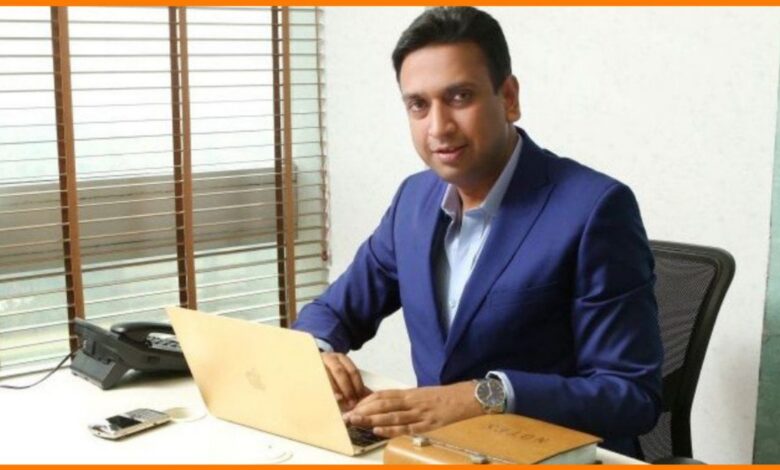
A founder linked to Loanwalle and Naman Finlease was arrested in a Delhi property-loan fraud case involving alleged forged documents and ₹6.80 crore in bank loans. The State told the Delhi High Court that seven FIRs were pending against him and that 16 alleged victims had emerged in a wider investigation. A separate Karnataka FIR arose from a ₹25,000 Loanwalle loan carrying a court-recorded rate of 1% per day and allegations of recovery harassment. Yet, in the public RBI material reviewed for this investigation, Naman Finlease continues to appear as a registered NBFC and no RBI monetary-penalty or cancellation order specifically against Naman Finlease or Sachin Mittal was located. RBI says digital-lending compliance is subject to supervisory examination and enforcement. So the question is not whether RBI has legal power. The question is: where is the visible regulatory outcome?
There is a point at which “regulatory oversight” begins to sound less like oversight and more like a phrase inserted into a website footer.
There is a point at which “borrower protection” starts looking suspiciously similar to a pamphlet.
And there is a point at which a regulator’s silence becomes a legitimate public-interest question—not because silence proves wrongdoing, but because the underlying record becomes too serious to ignore.
The Sachin Mittal–Naman Finlease–Loanwalle story has reached precisely that point.
The facts are not obscure.
They are sitting in court orders.
They are sitting in FIR records.
They are sitting in current company disclosures.
They are sitting in borrower complaint records.
They are sitting in RBI’s own digital-lending framework.
And yet the central regulatory question remains stubbornly unanswered:
What concrete regulatory action, if any, has the Reserve Bank of India taken in relation to the lending practices, digital-lending arrangements, recovery conduct and regulatory compliance of Naman Finlease/Loanwalle?
That is the question.
Not whether Sachin Mittal has been convicted.
He has not.
Not whether every borrower complaint is true.
It has not been established.
Not whether Loanwalle should automatically be called an illegal or “fake” app.
The evidence reviewed does not justify that blanket description.
The real issue is considerably more uncomfortable:
A documented criminal investigation, a High Court-recited Loanwalle lending transaction at 1% per day, a criminal FIR alleging recovery harassment, multiple public complaints alleging aggressive recovery and repayment disputes, and a founder-level criminal prosecution all exist in the public record. Where is the corresponding, publicly visible regulatory examination?
Let’s start with the fact that cannot be argued away
The Karnataka High Court did not discover Loanwalle through a blog post or a social-media rant.
It recorded the company’s own case.
In Naman Finlease Private Limited v. State of Karnataka, W.P. No. 13963/2023, decided on 19 July 2023, Naman Finlease was described as a non-deposit-taking NBFC registered with RBI.
The Court recorded that a borrower had obtained a ₹25,000 loan through the Loanwalle application, which the company described as its creation.
And then came the number.
The loan had been sanctioned at 1% interest per day, with repayment due on 3 January 2023.
One per cent per day.
That is the number a High Court actually recorded in a live criminal proceeding.
The borrower subsequently complained that the company was harassing him in the recovery of the loan.
That complaint became Crime No. 289/2023, invoking Sections 419, 420, 504 and 506 IPC and Sections 66(C) and 66(D) of the Information Technology Act. The investigating officer then froze Naman Finlease’s bank account.
This is not an internet rumour.
It is a judicial record.
But the next part matters just as much.
The Karnataka High Court did not hold Naman Finlease guilty of harassment, cheating or cybercrime.
Instead, it found that the police had failed to comply with the mandatory procedure under Section 102(3) CrPC for reporting the account seizure to the Magistrate. The Court consequently quashed the account-freeze direction while preserving liberty for lawful action.
That means:
the criminal allegation remained an allegation.
the account freeze was procedurally defective.
the underlying complaint was not adjudicated on merits.
This distinction is absolutely essential.
But it leads directly to the next question:
What happened to the underlying investigation after the account was unfrozen?
And more importantly:
What did RBI do with the information?
RBI itself says digital lending has a problem
RBI does not pretend that India’s digital-lending ecosystem is spotless.
Quite the opposite.
Its 2025 Digital Lending Directions expressly identify concerns relating to:
- unbridled engagement of third parties;
- mis-selling;
- data-privacy breaches;
- unfair business conduct;
- exorbitant interest rates; and
- unethical recovery practices.
The regulator then imposed a remarkably clear obligation on regulated entities.
Before entering into an arrangement with an LSP, the regulated entity is required to carry out enhanced due diligence, including consideration of the LSP’s:
technical capabilities;
data-privacy and storage systems;
fairness in conduct with borrowers;
past record of conduct;
and ability to comply with applicable laws and regulations.
The regulated entity must then periodically review the LSP’s conduct and take appropriate action where there is deviation.
And the most important principle is this:
outsourcing does not wash the regulator’s regulated entity of responsibility.
RBI’s framework says the regulated entity remains fully responsible and liable for the acts and omissions of its LSP.
So if a digital-lending platform misbehaves, “the app did it” is not supposed to be a magic regulatory escape hatch.
RBI has gone further: it created a public DLA directory
In August 2024, RBI announced that it would establish a public repository of Digital Lending Apps because of concerns over unscrupulous players falsely claiming association with RBI-regulated entities.
The RBI directory became operational from 1 July 2025, according to the Government’s March 2026 statement.
The Government also stated that compliance with digital-lending guidelines is examined on a sample basis during supervisory assessments, and that observed non-compliance may lead to rectification as well as supervisory or enforcement action, as deemed fit.
So the regulatory machinery exists.
The rules exist.
The reporting architecture exists.
The complaint mechanism exists.
The enforcement power exists.
The public repository exists.
Which makes the Sachin Mittal/Loanwalle question more, not less, uncomfortable.
Then why is the RBI action so invisible?
This is the point where journalism should stop making assumptions and start asking questions.
In the public RBI material reviewed for this investigation, Naman Finlease continues to appear as a registered NBFC.
The RBI’s published NBFC list identifies Naman Finlease Pvt. Ltd., CIN U70101DL1997PTC088735, as an NBFC-ICC based in New Delhi.
Naman’s present website also continues to identify itself as an RBI-registered NBFC and publicly displays RBI registration number N-14.01466. It also advertises personal and business lending products and maintains an RBI-compliance section.
But despite an extensive search of publicly available RBI material conducted for this investigation, no published RBI monetary-penalty order, cancellation of Naman’s Certificate of Registration, or specific public enforcement order against Sachin Mittal relating to the matters examined here was located.
That is an important finding.
It is also an important limitation.
It does not prove that RBI never inspected the company.
It does not prove that RBI never issued confidential supervisory directions.
It does not prove that there are no regulatory files.
Supervisory material may not be public.
But it creates an unavoidable public-interest question:
Has RBI conducted a supervisory examination of Naman Finlease/Loanwalle in relation to the documented lending, recovery, pricing, data and criminal-proceeding concerns—and, if so, what was the outcome?
That is a question RBI should answer.
The Sachin Mittal criminal case is not a social-media invention
The founder-level issue is even more serious.
In Sachin Mittal v. State (NCT of Delhi), Bail Application No. 2576/2023, the Delhi High Court considered FIR No. 84/2023 registered at the Special Cell, Delhi.
The FIR invoked Sections:
420 — cheating
467 — forgery of valuable security
468 — forgery for the purpose of cheating
471 — using forged document as genuine
384 — extortion
506 — criminal intimidation
120B — criminal conspiracy.
The prosecution case concerned two alleged home loans totaling approximately ₹6.80 crore.
One:
₹3 crore from IDBI Bank.
Another:
₹3.80 crore from ICICI Bank.
The High Court record states that Sachin Mittal was arrested on 11 June 2023 and was given 14 days of police custody.
The prosecution case, as recorded by the Court, went far beyond an ordinary borrower-lender dispute.
It alleged that Mittal ran Naman Finlease and that he and associates procured fraudulent loans using forged documents.
The State also alleged that seven FIRs were registered against him under various cheating, forgery and conspiracy provisions and said that 16 victims had been identified in what the prosecution characterised as a multi-victim scam.
Those are staggering allegations.
But they are still allegations.
The defence disputed them.
The defence argued that Mittal had been falsely implicated and that he was primarily involved in expansion and administration rather than loan documentation or disbursement. The defence also disputed the prosecution’s portrayal of the 16 victims.
The High Court granted regular bail.
And the Court made clear that bail was not punishment and that guilt could only be determined through the criminal process.
So again:
arrest — yes.
chargesheet — yes, according to the record.
bail — yes.
conviction — no conviction established.
And here comes the part that should embarrass every institution responsible for speedy justice
The FIR was registered on 28 March 2023.
The arrest happened on 11 June 2023.
The Delhi High Court dealt with regular bail on 28 March 2024.
Yet on 10 June 2026, the criminal case was still pending and the trial court recorded that supplementary investigation was still in progress.
The Investigating Officer sought additional time.
The court directed the IO to expedite the investigation.
And the DCP concerned was directed to monitor the investigation.
The next hearing was listed for 20 November 2026.
This is more than three years after registration of the FIR.
And supplementary investigation was still being finalised.
That is not a finding of guilt against Sachin Mittal.
But it is a finding of procedural delay.
And it raises a brutally simple question:
If the police had enough material to arrest, interrogate, file chargesheets and present a serious multi-victim allegation before the High Court, why was supplementary investigation still unfinished more than three years later?
What exactly remains?
Bank records?
Forensic reports?
Property records?
Digital evidence?
Statements?
Additional accused?
Additional victims?
Additional FIRs?
The court’s June 2026 order does not provide the public with the complete answer. It simply records that further investigation was continuing and directs the police to expedite it.
A criminal case cannot be allowed to become an annual subscription.
Investigation cannot be permanently upgraded to “supplementary”.
Seven FIRs: the number that demands verification
The prosecution told the Delhi High Court that seven FIRs were registered against Mittal and that he had criminal antecedents going back to FIR No. 499/2014 at Police Station I.P. Estate.
There is independent High Court evidence of the older proceeding.
W.P.(CRL) 391/2015, Sachin Mittal & Ors. v. Anuj Aggarwal & Anr., concerns FIR No. 499/2014, I.P. Estate. The matter remained before the Delhi High Court for years and was still appearing in cause lists as late as 2025–26.
The Delhi High Court’s March 2023 order records that the parties had sought mediation and also filed an application concerning quashing of the FIR.
Again, this does not prove that the allegations in FIR 499/2014 were true.
It does, however, establish that the criminal-law history associated with Mittal did not begin in 2023.
And that makes one issue particularly important:
The seven-FIR figure must be fully reconciled.
If the State said seven FIRs, publish the seven.
Give the FIR numbers.
Give the police stations.
Give the sections.
Give the complainants.
Give the current status.
Give the court cases.
Give the disposal orders.
Give the acquittals, quashings, settlements and convictions—if any.
A number without a docket is not an investigation.
It is a headline.
Loanwalle’s historical lending model deserves scrutiny
A 2021 profile of Loanwalle described the company as founded by Sachin Mittal, with Naman Finlease Pvt. Ltd. as the parent organisation.
It described Loanwalle as a short-term or payday-style lending business, stating that loans could be processed rapidly and that the maximum tenure was 30 days.
The profile also described data-driven underwriting and the use of information from banks, CIBIL and digital sources to assess borrowers.
That historical description matters because the Karnataka High Court later recorded a real Loanwalle loan transaction in which the stated rate was 1% per day.
The arithmetic of 1% a day needs no sensational adjective.
It is already sensational enough.
But this too requires a qualification:
The Karnataka judgment recorded the terms of one specific loan in one criminal proceeding. It should not be presented as proof that every Loanwalle loan carried exactly the same rate.
That is how fact-based investigation works.
One document.
One number.
One conclusion.
No invention.
Compare that with what Loanwalle says today
The present Loanwalle website now markets itself differently.
It describes LoanWalle as a platform through which borrowers can compare multiple lender options.
Its current consumer-facing personal-loan page advertises:
monthly interest: 2.9166%
offered APR: 35% fixed
tenure: 1–3 years
loan amount: ₹10,000–₹3 lakh
processing fee: 2%
plus 18% GST on the processing fee.
The current site also describes itself as a multiple-lender marketplace and identifies a present corporate address in Mumbai and a 2026-incorporated company, 8byte.ai, CIN U62020MH2026PTC471057, in the footer.
That creates another question—not an accusation:
What is the exact legal and operational continuity between the historical Loanwalle that Naman Finlease told the Karnataka High Court it had created and the LoanWalle platform operating today?
Was the business transferred?
Was the technology transferred?
Was the domain transferred?
Was the brand transferred?
Did the regulated lender change?
Did the DLA change?
Did the ownership change?
Did the data controller change?
Was the change reported to the RBI?
Was the app included in the DLA repository?
Those are precisely the kinds of questions the RBI’s 2025 Digital Lending Directions contemplate when they require regulated entities to report their DLAs and keep their websites updated with DLA and LSP details.
A brand can change.
A lender can change.
An LSP can change.
A DLA can change.
What cannot change without a paper trail is the history.
Then there are the borrower complaints
This is where the story becomes particularly uncomfortable.
There are public complaint-board entries concerning Loanwalle/Naman Finlease alleging:
- a ₹20,000 loan with a claimed ₹26,380 repayment demand;
- a ₹30,000 loan with a claimed ₹44,000 repayment demand;
- a borrower who alleged that a settlement was paid but further demands continued;
- alleged home visits by recovery personnel;
- a ₹40,000 borrower alleging contact with an employer and former employer;
- disputes over CIBIL reporting;
- a borrower alleging ₹24,500 of penal interest after paying ₹64,500 against a ₹50,000 loan.
These complaints are not court judgments.
They are not RBI findings.
They are not independently authenticated loan ledgers.
They are public allegations posted by complainants.
And they should be labelled exactly that way.
But the regulator’s own framework is designed around the very categories these complaints raise.
RBI’s digital-lending rules prohibit DLAs from routinely accessing borrowers’ phone resources such as contact lists, call logs, files and media, except as specifically permitted and with the required consent and audit trail.
RBI also requires explicit consent for data sharing and mandates privacy policies.
And the 2022 recovery-agent directions prohibit intimidation and harassment, including attempts to publicly humiliate debtors or intrude on the privacy of family members, referees and friends, threatening or anonymous calls, inappropriate messages and repeated calls at prohibited hours.
So when a borrower alleges that a lender or collection agent contacted his employer, the correct response is not:
“Online complaint. Ignore.”
It should be:
Was it investigated?
Was there a recovery-agent trail?
Were the emails authentic?
Was the employer contacted?
Was borrower consent involved?
Which entity authorised the contact?
What did the regulated lender’s grievance system conclude?
Was RBI informed?
And where necessary:
Did RBI inspect the lender?
RBI says the regulated entity remains responsible
This is perhaps the most important regulatory provision in the entire story.
The 2025 RBI Digital Lending Directions say that the regulated entity remains fully responsible and liable for the acts and omissions of its LSP.
The outsourcing arrangement cannot dilute or absolve the regulated entity of its legal or regulatory obligations.
Therefore, the favourite corporate defence—
“That was the app.”
—is not supposed to end the inquiry.
Nor is:
“That was the recovery agent.”
Nor:
“That was the LSP.”
Nor:
“That was an external service provider.”
RBI has already written the answer.
The regulated entity remains responsible.
Yet the public RBI record remains remarkably quiet
And here we reach the precise point of this investigation.
As of the material reviewed through September 2026:
Naman Finlease remains publicly presented as an RBI-registered NBFC.
Naman’s own website continues to publish RBI-compliance policies and a grievance mechanism.
The RBI says digital-lending compliance is subject to supervisory examination and enforcement where non-compliance is found.
A Karnataka High Court judgment records a criminal FIR arising from a Loanwalle lending transaction and alleged recovery harassment.
A Delhi High Court bail order records Sachin Mittal’s arrest in a separate property-loan fraud prosecution and records the State’s allegations concerning additional FIRs and alleged victims.
The principal Delhi criminal case remained pending in June 2026, with supplementary investigation still underway.
And yet:
No public RBI penalty or cancellation order specifically addressing Naman Finlease in relation to these matters was located in the public materials reviewed.
That is a legitimate regulatory mystery.
Not a proven scandal.
A mystery.
And mysteries involving regulated lenders are exactly what regulators are supposed to clarify.
“But RBI is not the police”
Correct.
And nobody serious is asking RBI to replace the police.
The Delhi Special Cell has already investigated.
The criminal court is already seized of the case.
The Karnataka police already registered Crime No. 289/2023.
The courts have already issued orders.
RBI’s role is different.
RBI’s task is regulatory supervision.
It is supposed to examine:
fair lending;
pricing;
disclosure;
KFS compliance;
digital-lending arrangements;
LSP conduct;
recovery practices;
data handling;
customer grievance redressal;
credit reporting;
and broader compliance.
And RBI’s own 2025 framework explicitly requires enhanced due diligence of LSPs and periodic review of their conduct.
So the question is not:
“Why didn’t RBI arrest Sachin Mittal?”
That is not RBI’s job.
The proper question is:
“What supervisory and enforcement action, if any, did RBI take after serious lending and recovery concerns involving an RBI-regulated NBFC entered the public record?”
That is absolutely RBI’s territory.
The data-privacy question is especially serious
Digital lending is fundamentally different from a conventional branch loan.
A conventional lender does not ordinarily need an app sitting on your phone.
Digital lenders can interact with:
your identity,
your financial profile,
your phone number,
your device,
your communications,
your employment information,
your credit history,
your location,
and, historically, in the wider digital-lending industry, much more.
RBI responded to exactly these concerns by restricting access to phone resources and imposing explicit-consent and privacy requirements.
Therefore, any credible investigation into Loanwalle and connected lending businesses should examine:
What borrower data was collected?
What permissions were requested?
What permissions were actually used?
Where was the data stored?
Who had access?
Were recovery agents given contact information?
Were third parties given borrower data?
What contracts governed that access?
What happened to data after the borrower repaid the loan?
These are not theoretical questions.
These are the exact risks RBI identified in writing.
The 1% per day question cannot be brushed aside either
The Karnataka High Court recorded a specific loan carrying 1% interest per day.
That should be placed alongside RBI’s continuing concern about exorbitant interest rates in digital lending. The 2025 Directions expressly identify charging of exorbitant interest rates as one of the risks the framework is designed to address.
But again, no one should make the lazy leap from:
“A specific court record states 1% per day”
to:
“Every Loanwalle customer was charged 1% per day.”
That has not been established.
Instead, the hard question is:
How many Loanwalle/Naman loan products carried high effective annual costs during the relevant period, and were those costs transparently disclosed in KFS documents?
RBI’s rules now require the KFS to state the APR and other relevant charges, and any charges outside the disclosed framework cannot simply be invented later.
So the documents should be checked.
Not guessed.
The bigger question: did RBI examine the economics or only the paperwork?
A regulator’s job cannot merely be:
certificate issued;
annual return filed;
grievance officer appointed;
website online;
therefore everything is fine.
Financial regulation requires looking beneath the interface.
The important questions are:
What was the actual effective yield?
What was the actual penal-interest structure?
What was the default rate?
What was the write-off rate?
What was the recovery cost?
What was the complaint rate?
What was the escalation rate?
What proportion of borrowers went into dispute?
How many borrowers complained about recovery?
How many complaints were escalated to the Ombudsman?
How many were resolved in favour of customers?
How many were rejected?
How many recovery agents were used?
Were they certified and properly supervised?
How many borrowers alleged contact with employers or relatives?
How many cases involved data-privacy complaints?
How many CIBIL disputes arose?
What did internal compliance reports say?
What did the statutory auditor say?
What did RBI supervisors find?
These are the questions that can actually tell whether a digital-lending operation was being run responsibly.
And these are precisely the questions that remain largely invisible in the public record reviewed here.
The “fake loan app” label needs one uncomfortable correction
Calling Loanwalle a “fake loan app” as an established fact would go beyond the evidence presently available.
Why?
Because a Karnataka High Court judgment expressly recorded the opposite proposition in relation to the historical platform:
Naman Finlease said it was an RBI-registered NBFC and that Loanwalle was its app.
Naman currently identifies itself as an RBI-registered NBFC and publishes its RBI registration number.
The appropriate investigative formulation is therefore more precise:
Loanwalle is a digital-lending brand/platform with a documented historical connection to Naman Finlease, an RBI-registered NBFC, and the public record contains serious allegations and criminal proceedings concerning connected lending and recovery activity.
That is stronger journalism because it is defensible.
Calling something “fake” without proving it is not investigative journalism.
It is merely reckless.
But the question about “fake” apps is still relevant
RBI itself created the DLA public directory because some loan apps were falsely claiming association with regulated entities. The Government says the directory is intended to help citizens verify those claims.
So one question deserves a direct answer:
Was the historical Loanwalle app listed in the RBI’s DLA reporting system for the relevant regulated entity and period?
And where the present Loanwalle platform differs from the historical Naman Finlease platform:
Was the change in lender, operator, LSP, DLA ownership or platform structure properly disclosed and reflected in RBI’s records?
That can be checked.
It should be checked.
And the public should be told.
There is another current court record involving Naman Finlease and Sachin Mittal
The legal footprint does not end with FIR 84/2023.
A Delhi criminal complaint under Section 138 of the Negotiable Instruments Act, Rajiv Kumar Saxena v. Naman Finlease Pvt. Ltd., names:
Naman Finlease Pvt. Ltd.
Sachin Mittal
Abhijit Banerjee
as respondents.
One such complaint, registered in 2023, was still listed as pending, with complaint evidence recorded on February 9, 2026.
A separate 2024 Section 138 proceeding naming the same principal respondents was disposed on September 9, 2026; the available docket records disposal but does not by itself provide enough detail to responsibly state the substantive merits or outcome.
Separately, a 2025 criminal revision filed by Naman Finlease and Sachin Mittal against the State/Rajiv Kumar Saxena was recorded as withdrawn on September 9, 2026.
These are not financial-fraud convictions.
They are legal proceedings.
And that distinction must remain intact.
But they further demonstrate why the phrase “there is no legal history here” would be demonstrably false.
The public complaint trail is not pretty
The complaint-board material presents recurring themes.
One complainant claimed:
₹20,000 loan
₹18,000 allegedly credited
₹26,380 demanded
within a 30-day structure.
Another complainant described:
₹30,000 loan
₹44,000 repayment demand
followed by an alleged settlement dispute.
Another alleged paying ₹64,500 against a ₹50,000 Loanwalle loan and still being charged ₹24,500 in penal interest.
Another alleged that a collection agent contacted the borrower’s employer and former employer over a ₹40,000 loan.
And another complained that after obtaining an NOC, a CIBIL entry continued to show adverse status.
Again:
These are complaints, not judgments.
But five complaints from a public complaint board are not five convictions.
And five complaints are also not five meaningless internet comments.
They are leads.
What matters is whether a regulator ever tested them.
The RBI framework specifically addresses employer and family harassment
RBI’s recovery-agent guidance states that regulated entities and their agents must not resort to intimidation or harassment, including:
public humiliation;
intrusion into family members’ privacy;
threatening or anonymous calls;
inappropriate messages;
repeated calls;
and calls before 8 a.m. or after 7 p.m.
Therefore, where complaints allege employer contact, public embarrassment or aggressive collection, the regulatory question is not abstract.
It is:
Did the regulated entity have controls preventing this?
If not:
why not?
If yes:
did they work?
And if a borrower complaint alleged the controls failed:
who investigated it?
what evidence was preserved?
what corrective action followed?
The RBI Ombudsman route exists too
Naman’s current grievance page tells borrowers to move through its internal hierarchy and states that unresolved complaints can ultimately be taken to the RBI Ombudsman/CMS after the stipulated period.
RBI’s 2025 Digital Lending Directions also require regulated entities and borrower-facing LSPs to designate grievance officers and provide a route to RBI’s Complaint Management System if the complaint is rejected or remains unanswered for 30 days.
So the system is not missing.
The institutional doors are there.
The question is what happened behind those doors.
That information needs to be surfaced.
What should RBI answer?
The time has come for specific questions, not generic regulatory language.
1. Has RBI ever conducted a supervisory inspection of Naman Finlease concerning digital lending?
If yes:
When?
What were the major observations?
Were corrective directions issued?
2. Did RBI examine Loanwalle’s recovery practices?
If yes:
What did it find?
3. Was the 1%-per-day loan structure reviewed?
If yes:
Was the effective APR/KFS disclosure considered compliant?
4. Did RBI examine borrower complaints alleging employer contact?
If yes:
What was the outcome?
5. Did RBI examine allegations concerning penal interest?
If yes:
Were charges consistent with applicable directions?
6. Was borrower data accessed or shared beyond permitted purposes?
If yes:
Was there any regulatory observation?
7. What was the status of Loanwalle in RBI’s DLA directory?
And:
which regulated entity reported it?
8. What happened when the Karnataka criminal complaint arose?
Was RBI informed?
Did RBI seek the case details?
Did it initiate supervisory examination?
9. Did RBI examine the Delhi Special Cell allegations involving Naman Finlease?
Particularly where the High Court record contains allegations concerning the company’s operations and management.
10. Has RBI ever considered fit-and-proper concerns regarding the relevant persons?
If not:
why not?
If yes:
what was the result?
11. Were any directions issued privately?
If public disclosure is not legally possible, can RBI at least state whether:
supervisory review occurred
and whether:
material non-compliance was found?
These are fair questions.
The most striking feature of this saga is the mismatch
On one side is the documentary record.
A criminal FIR.
An arrest.
Fourteen days of police custody.
A prosecution alleging forged-property loans.
₹6.80 crore in allegedly fraudulent home loans.
The State telling the High Court about seven FIRs.
The State telling the Court that 16 victims had been identified.
A separate Loanwalle-linked Karnataka criminal case.
A ₹25,000 loan carrying a court-recorded 1% per day rate.
Public borrower complaints alleging recovery pressure.
Allegations of employer contact.
CIBIL disputes.
And a criminal trial that, as of June 2026, still had supplementary investigation pending.
On the other side:
An RBI-registered NBFC.
A formal compliance framework.
A grievance mechanism.
A digital-lending regulatory regime.
A public DLA directory.
And no specific public RBI monetary penalty or cancellation order identified in the research reviewed.
That gap is the story.
This is where regulatory accountability begins
A regulator does not have to prove a criminal offence in order to impose regulatory consequences where regulatory requirements are breached.
That is why RBI has separate supervisory and enforcement powers.
A company could, in theory, be innocent of criminal fraud while still being non-compliant with regulatory requirements.
And the opposite can also happen:
a criminal complaint can exist while a regulator determines that a particular regulatory breach has not been established.
That is why the public needs to know the regulatory outcome separately from the criminal outcome.
Instead of asking:
“Was Sachin Mittal convicted?”
ask two separate questions:
Criminal question
Did the prosecution prove the allegations beyond the applicable legal standard?
Regulatory question
Did the regulated entity comply with RBI’s lending, disclosure, pricing, recovery, data and outsourcing rules?
Those are different questions.
Both need answers.
The “silent regulator” deserves scrutiny—but not fiction
The strongest criticism that can responsibly be made today is not:
“RBI protected Sachin Mittal.”
That has not been established.
Nor:
“RBI deliberately ignored the complaints.”
That has not been established.
The fact-based criticism is this:
The public record reviewed for this investigation does not show a clear, publicly disclosed RBI enforcement outcome corresponding to the serious lending and recovery concerns that entered court records and public complaints.
That is a legitimate transparency problem.
And it is one RBI can solve with a simple answer.
Tell the public whether the matter was examined.
If it was:
publish the outcome to the extent legally permissible.
If it was not:
explain why.
Silence helps nobody.
And what about Sachin Mittal himself?
This is where one must resist both the fan club and the kangaroo court.
The Delhi High Court records that Mittal denied wrongdoing.
It records his defence that he was an investor/shareholder focused on expansion and administration and was not involved in loan disbursement or customer documentation.
It also records the State’s very different allegations.
The Court granted bail.
The presumption of innocence remains.
No conviction has been established.
But the criminal trial has still not reached a final determination.
So the correct editorial position is not:
“Sachin Mittal is a fraudster.”
That would cross the line from reporting allegations to declaring guilt.
The correct and much more powerful position is:
“Sachin Mittal faces serious, documented criminal allegations that remain unresolved in court, and the public has a legitimate interest in knowing why the case remains unfinished more than three years after the FIR.”
That statement is harder to attack because it is anchored in the record.
And the trial court itself has already demanded speed
The June 10, 2026 order is devastatingly simple.
The investigation is still continuing.
The IO asked for time.
The Court said:
expedite it.
The DCP was directed to monitor it.
There is perhaps no need for more theatrical language.
The court itself has already supplied the criticism.
The only thing left is:
finish the investigation.
Then prosecute.
Then prove.
Or fail to prove.
But do not leave the case floating indefinitely between accusation and judgment.
What must happen now?
RBI should conduct a formal supervisory review
If it has not already done so, RBI should examine Naman Finlease’s:
- digital lending arrangements;
- DLA mapping;
- pricing and APR disclosures;
- KFS compliance;
- penal-charge structure;
- recovery-agent practices;
- grievance records;
- borrower complaints;
- CIBIL-dispute records;
- data-collection practices;
- consent architecture;
- LSP contracts;
- customer-data storage;
- complaint escalation;
- and historical Loanwalle arrangements.
Delhi Police should finish the supplementary investigation
The June 2026 trial-court direction to expedite the investigation should not become another date in a long calendar.
The seven-FIR claim should be audited
If seven FIRs exist:
list all seven.
If some were quashed:
say so.
If some were closed:
say so.
If some are pending:
give the case numbers.
If any resulted in acquittal:
say so.
If any resulted in conviction:
say so.
The public should not be forced to choose between inflated headlines and opaque dockets.
The 16 alleged victims should be mapped
Not rhetorically.
Documentarily.
Who were they?
What FIRs correspond to them?
What happened?
Which allegations survive?
Which were disproved?
Which remain pending?
Loanwalle’s current legal identity should be explained
Why does the current website present a materially different corporate identity and Mumbai address while the 2023 High Court record identified Loanwalle as Naman Finlease’s creation?
Was there a transfer?
A brand migration?
A technology transfer?
A corporate restructuring?
A change of LSP?
A new DLA operator?
The public deserves a clean corporate trail.
The public should not be forced to guess
That is the real problem.
Not “fake app”.
Not “fraudster”.
Not “criminal empire”.
Those are labels.
Documents are better.
And the documents currently show enough to warrant serious examination.
A High Court recorded a ₹25,000 Loanwalle loan at 1% per day.
A borrower complained of recovery harassment.
A criminal case followed.
The company’s account was frozen.
The High Court quashed the freeze because police did not follow the statutory reporting procedure.
A separate Delhi criminal case recorded allegations of ₹6.80 crore in forged-property/home-loan transactions.
Sachin Mittal was arrested.
The State told the High Court of seven FIRs and 16 identified victims.
He obtained bail.
He has not been convicted.
And more than three years after the original FIR, supplementary investigation was still pending in June 2026.
Meanwhile, Naman Finlease continues to present itself publicly as an RBI-registered NBFC.
That is a factual chain.
And that chain deserves an answer.
The RBI question is therefore brutally simple
Was RBI asleep?
We do not know.
Did RBI investigate?
The public record reviewed here does not tell us.
Did RBI issue confidential directions?
Possibly; the public record cannot establish that.
Did RBI impose a monetary penalty on Naman Finlease in the matters reviewed?
No such published order was located in this investigation.
Did RBI cancel Naman Finlease’s registration?
No such cancellation order was located.
Does Naman still hold itself out as an RBI-registered NBFC?
Yes, according to its current website, which displays RBI registration number N-14.01466.
And that is exactly why the next question is unavoidable:
If the regulator did examine the issues, what did it find? If it did not, why not?
The regulator owes the public more than a compliance logo
A digital lender can display:
“RBI Compliance.”
“Grievance Officer.”
“Fair Practice Code.”
“RBI Registration.”
All of that is useful.
None of it is a substitute for enforcement.
RBI’s own framework exists because digital lending can become abusive precisely when technology, third-party service providers, high-cost credit and aggressive recovery collide.
So the regulator’s credibility rests not merely on writing the rules.
It rests on showing that the rules mean something.
Especially when the underlying court record is this serious.
The final question: why is the case still unfinished?
This is where the story should end.
Not with a declaration of guilt.
With a demand for accountability.
Three years after FIR No. 84/2023.
More than three years after the alleged transactions.
More than three years after the arrest.
More than two years after regular bail.
The criminal case remained pending in June 2026.
Supplementary investigation was still in progress.
The trial court told the police to expedite it.
The DCP was ordered to monitor it.
That is too long for a financial-crime investigation to remain trapped in the land of “further investigation”.
The victims—if the allegations are eventually proved—deserve justice.
The accused—if the allegations are ultimately not proved—deserve a final judgment and the restoration of their legal position.
The regulator deserves public confidence.
The lending industry deserves clear rules.
And the public deserves to know whether the system works for borrowers only on paper or also when the borrower becomes inconvenient.
Conclusion: RBI, the ball is in your court
The harshest criticism that can responsibly be levelled today is not that RBI is protecting Sachin Mittal.
There is no established evidence for that allegation.
The harsher—and more defensible—criticism is this:
The public record leaves too much unanswered.
A regulated NBFC appears in a High Court criminal proceeding.
A Loanwalle lending transaction is judicially recorded.
The loan carried a stated rate of 1% per day in that particular case.
A borrower alleged recovery harassment.
A criminal FIR followed.
The State later placed allegations before the Delhi High Court involving Sachin Mittal, seven FIRs and 16 alleged victims.
Sachin Mittal was arrested.
He received bail.
The principal criminal case remained pending.
Supplementary investigation was still continuing in June 2026.
And no clear public RBI enforcement outcome has been located in relation to the specific matters examined here.
That is not proof of regulatory failure.
But it is more than enough to justify asking whether there has been regulatory failure.
And the regulator should answer.
Not with a brochure.
Not with a generic press note.
Not with a website link.
With the facts.
RBI should tell the public:
Was Naman Finlease inspected?
Was Loanwalle examined?
Were its historical recovery practices examined?
Were borrower complaints examined?
Was the 1%-per-day loan structure examined?
Were KFS/APR disclosures examined?
Was borrower-data handling examined?
Was the DLA listed and verified?
Was the relationship between Naman Finlease, Loanwalle and other lending platforms examined?
Were any violations found?
Were any supervisory directions issued?
Were any enforcement proceedings initiated?
Were any penalties considered?
If nothing was found, where is the closure?
If something was found, where is the action?
Because a regulator cannot demand public trust while leaving the public to discover the regulatory story one court order at a time.
And a criminal justice system cannot tell citizens to “wait for the trial” indefinitely while supplementary investigation keeps growing like an unlimited extension clause.
Investigate quickly.
Supervise seriously.
Prosecute where the evidence supports it.
Acquit where it does not.
Punish proven violations.
And close the cases.
That is not an attack on due process.
That is due process.
Strong Editorial Disclaimer
This article is an investigative opinion and analysis piece based on publicly accessible judicial orders, RBI material, official regulatory publications, company websites, court-docket information and publicly available complaint records reviewed through September 21, 2026.
Allegations remain allegations unless and until established by a competent court or other legally authorised adjudicatory body.
No court of law has convicted Sachin Mittal of the criminal allegations discussed in this article on the basis of the records reviewed for this publication. The Delhi High Court granted him regular bail in FIR No. 84/2023; bail is not acquittal, and the grant of bail did not amount to a finding of guilt. The trial-court case remained pending in June 2026, with supplementary investigation still in progress.
The State’s references to seven FIRs and 16 victims are reported as prosecution/status-report assertions recorded in the Delhi High Court proceeding. This investigation has not independently authenticated every one of those seven FIRs and every alleged victim as a separate adjudicated case, and therefore they should not be described as seven proven frauds or 16 judicially established victims.
The Karnataka High Court’s Loanwalle/Naman Finlease order recorded a borrower complaint, a ₹25,000 loan carrying a stated 1% per-day interest rate, and a criminal FIR; however, the High Court did not adjudicate the underlying allegations on their merits. It quashed the account-freezing direction because the police had not complied with the statutory procedure under Section 102(3) CrPC and preserved liberty for lawful action.
Public complaint-board posts cited in this article are unverified complaints and leads, not judicial findings. They have been presented as allegations and not as established misconduct.
The absence of a publicly located RBI enforcement order in this research does not establish that RBI never undertook supervisory examination or issued non-public directions. Regulatory supervision can involve confidential material. The article therefore asks RBI to clarify what supervisory or enforcement action, if any, has occurred.
Naman Finlease currently represents itself as an RBI-registered NBFC and displays RBI registration number N-14.01466 on its website.
The present Loanwalle website also appears materially different from the historical Loanwalle platform described in the 2023 Karnataka High Court order; this article does not infer wrongdoing from that difference and instead calls for the precise corporate, ownership, DLA and LSP continuity to be publicly explained.
The concerned parties—including Sachin Mittal, Naman Finlease Private Limited, Loanwalle, any present Loanwalle operator, and the relevant RBI-regulated entities or service providers—are invited to provide documentary responses, explanations or rebuttals. Any substantive response will be considered for publication in accordance with editorial policy.
Public-interest demand
Given the age and seriousness of the criminal proceedings, the undersigned calls for time-bound completion of supplementary investigation, regular judicial monitoring where legally appropriate, speedy progression of the trial, full identification and verification of the alleged FIR/victim matrix, and transparent regulatory examination of the digital-lending issues raised above.
Justice delayed is not proof of innocence. It is not proof of guilt either. It is simply unfinished justice.
And after more than three years, unfinished justice deserves an explanation.