Recent Developments In Ankiti Bose & Krishan Rattan Saga With Nitin Naresh Proves The Past Conduct Of Ankiti Bose
Ankiti Bose Filed A Fake FIR On Nitin Naresh For Extortion Using Fabricated Evidence, Raises A Serious Questions On Her FIR Of Sexual Harassment On Her Zilingo Co-Founders

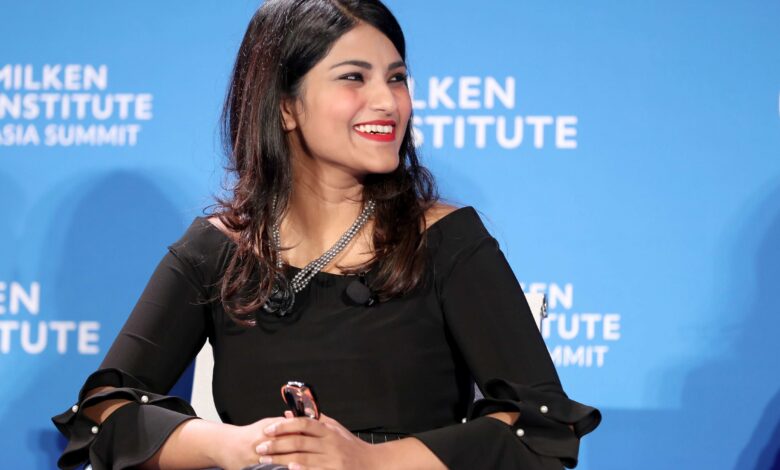
A former unicorn CEO who was removed following serious financial allegations, initiated multiple defamation proceedings against those questioning her, lodged a delayed sexual-harassment FIR against her former colleagues and is now at the centre of another bitter legal controversy involving Terra-Invest, her co-founder Krishan Rattan and Inventiva publisher Nitin Naresh. The question is no longer merely what happened at Zilingo. It is whether the successive legal proceedings are being used to obtain accountability or to avoid answering uncomfortable questions.
There is something deeply troubling about a corporate controversy that begins with allegations of financial irregularities running into millions of dollars, progresses through an internal forensic investigation, results in the termination of a chief executive, and then spends the following four years generating defamation suits, criminal complaints, allegations of false evidence, interim injunctions and increasingly bitter legal confrontations without delivering a final answer on the original financial allegations.
That is the extraordinary story surrounding Ankiti Bose, the former co-founder and CEO of Zilingo.
The latest chapter involving Bose, her Terra-Invest co-founder Krishan Rattan and Inventiva publisher Nitin Naresh has brought the entire history back into focus. Rajasthan Police registered an extortion and criminal-intimidation FIR on 14 September 2026 against Naresh and others, following a complaint by Aniruddh Saran Purohit, an India representative of Terra Vision Investments LLC. The complaint referred to alleged threatening emails, monetary demands and a ₹11,700 deposit into the account of Nine Network Private Limited, the company associated with Inventiva.
On 28 October 2026, a Jaipur Sessions Court rejected Naresh’s anticipatory-bail application. The court’s decision was procedural and did not convict him. Naresh disputes the allegations, including the claim that he authored the emails or demanded money.
The latest development is important not merely because another FIR has been registered. It is important because the FIR emerged in the middle of an already ongoing series of defamation proceedings brought by Bose and Rattan against the same media publisher.
And that is where the larger issue begins.
Bose’s departure from Zilingo was followed by allegations of financial misconduct. She disputed the allegations and challenged the manner of her removal. She subsequently sued journalists and commentators who reported on the controversy. She filed a sexual-harassment FIR against her former co-founder and former COO approximately 23 months after her termination. She instituted proceedings against Inventiva. Rattan subsequently initiated separate proceedings against the same publisher. Applications alleging false evidence were filed in different proceedings. Finally, a criminal extortion complaint was registered in Jaipur against the publisher.
Every individual proceeding must be adjudicated on its own evidence. But the sequence, the timing, the overlapping parties and the continuing absence of final findings demand serious public scrutiny.
The uncomfortable question is this: has the dispute become so consumed by litigation that the original allegations concerning corporate financial management have never received the transparent, independent and final examination they deserve?
THE ZILINGO EXIT THAT STARTED EVERYTHING: A CEO TERMINATED FOLLOWING MILLION-DOLLAR FINANCIAL ALLEGATIONS
Bose and Dhruv Kapoor founded Zilingo in 2015. The Singapore-based fashion technology company became one of the prominent startup stories in the region, raising approximately US$308 million in equity funding and obtaining another US$40 million in venture debt.
In February 2019, Zilingo reportedly achieved a valuation of approximately US$970 million.
The business appeared to have everything associated with an extraordinary startup success story: institutional capital, international expansion, high-profile investors and an ambitious technology-driven business model.
But the narrative began collapsing in early 2022.
An attempt to raise another US$150–200 million stalled after prospective investors reportedly raised concerns about the company’s accounting and revenue reporting. Questions also emerged concerning transactions involving thousands of small merchants, the treatment of discounts, the Indonesian business and the reliability of financial information provided to investors.
On 31 March 2022, Bose was suspended following complaints relating to financial irregularities and management.
On 20 May 2022, Zilingo terminated her employment with cause after a private forensic investigation.
The company stated that the termination followed an investigation by an independent forensic firm into complaints of serious financial irregularities. It also expressly reserved its right to pursue appropriate legal action.
This was a remarkable development. The CEO of a company valued at nearly US$1 billion was removed after allegations involving millions of dollars in financial transactions and discrepancies in investor reporting.
The allegations were not vague complaints about management style or interpersonal disagreements. They concerned the very financial information on which investors had relied.
Bloomberg reported that the Kroll investigation had identified approximately US$7 million in payments to service providers approved by Bose without the knowledge of other senior executives.
Inc42 subsequently reported more than US$9 million in payments to Algo Legal and related entities over the period from April 2020 to November 2021, approximately US$2.3 million to OneDelta Technology Solutions and approximately US$944,000 in relation to EbixCash.
The two reported figures concerning the Algo Legal-related payments should not be conflated with the separate US$7 million figure. They came from different reports and descriptions of the alleged transactions.
The EbixCash transaction attracted particular attention because reporting alleged that an agreement signed in September 2021 had been backdated to April 2021.
There were also allegations concerning differences between reported revenue and the company’s internal accounts, including substantially different FY2021 revenue figures reportedly circulated to shareholders.
The remuneration issue was another area of concern. Reports raised questions about substantial increases in Bose’s monthly salary and whether such changes had received appropriate board approval. However, published accounts contained incompatible remuneration figures, and Bose disputed the allegations.
Bose denied wrongdoing throughout the controversy. She maintained that the payments were documented, that relevant management personnel knew about the transactions and that the investigation was compromised by conflicts of interest. She also stated that she had not been furnished with the Kroll and Deloitte reports.
These denials must be recorded.
But they do not eliminate the need to examine the original transaction documents, board approvals, invoices, bank records, accounting entries and the relevant internal correspondence.
A simple denial cannot close a corporate financial investigation any more than a termination letter can establish criminal guilt.
The more troubling issue is that the Kroll and Deloitte reports remain unpublished, and no final judicial finding against Bose has emerged from the financial allegations.
Burda Principal Investments, a Zilingo investor, stated in April 2023 that significant irregularities in reporting to investors had contributed to Bose’s termination and that investors were still considering legal action.
Yet no publicly identified civil recovery claim by Zilingo’s liquidators or investors against Bose has produced a final determination.
Four years later, the financial controversy remains trapped between an employer’s allegations, a former CEO’s denials and reports based on information that the public cannot independently inspect.
This is not a satisfactory outcome.
The public is entitled to ask why allegations involving millions of dollars were considered serious enough to remove a CEO, yet the complete forensic record has never been made available for independent scrutiny.
A COMPANY THAT RAISED US$308 MILLION AND REPORTED MORE THAN US$328 MILLION IN NET LIABILITIES: WHERE IS THE COMPLETE ACCOUNTABILITY?
Zilingo entered creditors’ voluntary liquidation in early 2023.
Reports placed its net liabilities above US$328 million, against reported equity fundraising of approximately US$308 million.
The company had also borrowed US$40 million from Varde Partners and Indies Capital.
Its workforce, which had reportedly reached approximately 600 employees across eight countries, contracted dramatically during the collapse.
Singapore’s Accounting and Corporate Regulatory Authority also reportedly took enforcement action for failure to file annual returns for 2020 and 2021.
The financial collapse was accompanied by questions concerning unpaid employees, creditors, corporate restructuring and the disposal of technology and intellectual property.
The company was not merely a business that ran out of customers.
It was a heavily funded enterprise whose failure raised substantial governance questions.
What happened to the money? What were the actual recoveries? What did the liquidators establish? Were former executives examined? Were potential director-related recovery claims considered?
These questions concern the entire management and investor structure, not just Bose.
But the former CEO was at the centre of the financial controversy when the company collapsed.
Her decisions, reported transactions and statements to investors deserve scrutiny in the same way that the actions of every other person who exercised management authority deserve scrutiny.
The uncomfortable irony is that the person who was removed following allegations of financial irregularities subsequently became involved in a prolonged series of legal proceedings against those discussing those allegations, while the original financial issues remained without a final public answer.
A defamation suit does not explain a bank transfer.
An interim injunction does not authenticate an invoice.
A public-relations statement does not reconcile revenue.
And the absence of a conviction does not eliminate the responsibility to explain financial decisions.
THE SEXUAL-HARASSMENT FIR: WHY DID THE CRIMINAL COMPLAINT ARRIVE APPROXIMATELY 23 MONTHS AFTER TERMINATION?
This is perhaps the most important and sensitive issue in the entire controversy.
Bose joined Zilingo in 2015. She remained associated with the company until May 2022, when her employment was terminated following the financial investigation.
On 23 April 2024, Mumbai Police registered FIR No. 327/2024 against her former co-founder Dhruv Kapoor and former COO Aadi Vaidya.
The complaint reportedly alleged sexual harassment, stalking, cheating, intimidation and other misconduct.
The accusations included allegations of inappropriate electronic communications, threats and attempts to exert pressure concerning her shareholding in the company.
Kapoor and Vaidya denied the accusations.
The chronology, however, is remarkable.
Bose was suspended on 31 March 2022. She was terminated on 20 May 2022. The criminal FIR was registered on 23 April 2024.
There was an interval of approximately 23 months between termination and the Mumbai police complaint.
That interval is not a technicality. It is a material part of the factual chronology that any serious investigation must examine.
Bose has reportedly maintained that the harassment began much earlier and that she had raised concerns internally.
Zilingo gave a different account. In its public response in May 2022, the company stated that Bose brought certain harassment-related issues to the board for the first time on 11 April 2022, after her suspension on 31 March.
The Indian Express separately reported that she had raised broader complaints about leadership and investors in August 2021.
These accounts must not be deliberately merged. A complaint about leadership and investors is not automatically a formal sexual-harassment complaint against a named individual.
But the discrepancy makes the original correspondence crucial.
What exactly did she report in August 2021?
Were specific individuals named?
Were the allegations sexual in nature?
Was there any complaint to the board, HR personnel, investors or an internal complaints mechanism?
Were there contemporaneous communications?
Did she seek an independent investigation?
What happened between August 2021 and the March–April 2022 corporate crisis?
And why did the allegations become the subject of a police FIR only in April 2024?
Bose also had access to civil legal remedies during the intervening period. She sued Mahesh Murthy and Outlook Business in April 2023, and pursued proceedings involving Inc42 and NDTV in July 2023.
The record therefore does not support the claim that she was completely missing or legally inactive for 23 months.
The genuine issue is more precise: why was there no publicly verified criminal complaint against Kapoor and Vaidya in Singapore or India during that interval, despite her active pursuit of other legal proceedings?
The available research does not establish that Bose filed a Singapore police complaint against these individuals. It also does not establish conclusively that no confidential report ever existed.
The public deserves clarification.
Was there a Singapore police complaint? What was the reference number? If there was no such complaint, what was the reason?
Why was Mumbai selected? Was there a jurisdictional explanation? Was there any new evidence that emerged shortly before the FIR?
A prolonged gap does not by itself establish that a sexual-harassment complaint is false. It would be irresponsible to make that assertion. But it would be equally irresponsible to treat the timing as irrelevant.
The most serious concern is that the complaint emerged after a major corporate breakdown, when the parties were already involved in a contentious dispute concerning financial management, control of the company and valuable shareholding.
The investigating agency must examine that context.
A sexual-harassment complaint is a serious criminal allegation. It cannot be used as an instrument to settle a corporate dispute, just as a financial investigation cannot be used as an excuse to dismiss a genuine harassment complaint.
If Bose was genuinely subjected to the alleged conduct, the evidence must establish it.
If any person knowingly fabricated allegations, the evidence must establish that too.
The demand is not for a presumption against Bose. It is for a proper investigation rather than an indefinite reliance on competing narratives.
FROM FINANCIAL ALLEGATIONS TO DEFAMATION LITIGATION: WHY DID SO MANY PEOPLE BECOME DEFENDANTS IN BOSE’S REPUTATION BATTLES?
What happened after Bose’s termination is equally revealing in terms of the litigation history.
Rather than the Zilingo financial controversy receiving a final public adjudication, the subsequent years saw multiple defamation proceedings.
Bose filed an ₹820 crore defamation suit against Mahesh Murthy and Outlook Business in April 2023.
She then instituted proceedings against Nikhil Subramaniam, Inc42 and NDTV concerning articles that discussed the company’s financial allegations.
She subsequently proceeded against her former colleagues, Dhruv Kapoor and Aadi Vaidya, through another defamation suit.
In 2026, she instituted proceedings against Inventiva publisher Nitin Naresh and others.
The law permits a person to seek protection when genuinely defamed. No one should be deprived of that remedy.
But the repeated resort to litigation raises an important question: is the object to obtain a final determination of defamation or to secure immediate interim protection while the substantive proceedings continue?
The ₹820 crore claim against Murthy is particularly striking.
On 24 August 2023, the Bombay High Court granted interim relief in the matter. The subsequent December order recorded continuation of the interim protection.
However, this was not a final judgment awarding ₹820 crore in damages or determining every disputed financial allegation to be false.
Similarly, the jurisdictional dispute in Bose’s case against Subramaniam, Inc42 and NDTV produced an initial procedural setback in October 2023. A Division Bench reversed that order in November 2023, and the Supreme Court dismissed Subramaniam’s special leave petition in February 2024.
The Supreme Court’s dismissal concerned the jurisdictional challenge, not the truth of the underlying financial allegations.
There is also the Saket district-court litigation, in which interim protection was reported in April 2024.
This record demonstrates that Bose has repeatedly used civil litigation to challenge publications concerning her.
That is her legal right.
But there is another side to the issue.
When allegations concern the financial affairs of a company that raised hundreds of millions of dollars and subsequently entered liquidation, journalists and researchers have a legitimate public-interest responsibility to examine the documents.
A former CEO’s reputation cannot be allowed to become an automatic barrier to examining her corporate decisions.
The public must distinguish between defamatory insinuations and legitimate investigative questions.
If a statement is false, the court can determine the issue. But if the statement concerns a verifiable bank transfer, contractual approval, board resolution or financial entry, the appropriate answer should be a document, not merely a legal notice.
THE DWARKA COURT CONTROVERSY: AN INTERIM INJUNCTION IS NOT A SUBSTITUTE FOR A COMPLETE AND COMPLIANT PLAINT
The 2026 dispute with Inventiva is particularly important because it involves questions about the underlying documents filed in court.
Following an Inventiva article dated 30 May 2026, Bose issued a legal notice on 1 June 2026 and instituted CS DJ ADJ 744/2026 before the Dwarka District Court.
On 8 June 2026, the Court granted ex-parte ad-interim relief.
Bose secured protection against the impugned publication and specified future publications.
Subsequent proceedings, however, brought the question of her pleadings and compliance into focus.
Inventiva reported that on 6 August 2026 the Dwarka Court examined the physical plaint and observed that it appeared to be a scanned copy. It reportedly directed production of the original within 15 days and called for a fresh affidavit concerning nationality and citizenship.
The publication further reported that at a subsequent hearing on 25 August, the compliance issue remained contested.
These later Dwarka directions have not been independently established through the original order in the source set reviewed. Accordingly, the exact compliance position should not be stated as a final judicial finding.
But the issue is sufficiently important to demand a documentary answer.
Was the original plaint filed?
On what date?
Was the direction complied with within the stipulated period?
Was an extension sought?
Was the issue resolved through a subsequent judicial order?
Where is the original filing acknowledgment?
If there was a valid explanation, why should it not be placed on record?
A person who approaches a court seeking urgent equitable relief should be prepared to comply with its procedural directions.
A party cannot treat the first interim injunction as the ultimate destination of the litigation.
The real test is whether the pleadings are complete, the documents are authentic and the case is presented with full and accurate disclosures.
WHY THE SECOND DELHI HIGH COURT SUIT? WHY WAS THE STATUS OF THE FIRST PROCEEDING SO IMPORTANT?
On 24 August 2026, Bose approached the Delhi High Court in CS(OS) 756/2026.
The High Court granted interim relief concerning identified publications and their dissemination through LinkedIn and other social-media accounts.
The order recorded that the publications commented on Bose’s exercise of legal rights and could interfere with court proceedings.
It is important to state accurately that the High Court did grant interim relief. It would be incorrect to say that Bose was denied all relief.
But the existence of two proceedings concerning the broader Inventiva dispute raises questions that deserve examination.
Why was the subsequent suit required while the Dwarka proceeding was still pending?
What was the distinct cause of action?
What was the status of compliance with the earlier court’s directions?
Were both courts informed of the relevant procedural history?
Was all material information regarding the earlier suit disclosed in the subsequent proceedings?
The two cases also concerned different sets of publications and subsequent developments. Their existence alone does not prove forum shopping or abuse of process.
Nevertheless, litigants must provide full and accurate information about related proceedings.
The judiciary should not have to reconstruct the complete procedural history from competing publications and statements.
The question is not whether Bose could approach the High Court. She could.
The question is whether she has fully and transparently answered the outstanding procedural issues in the original litigation.
KRISHAN RATTAN’S SEPARATE SUIT: ANOTHER PLAINTIFF, ANOTHER INJUNCTION, ANOTHER FRONT IN THE SAME MEDIA DISPUTE
The controversy expanded when Krishan Rattan instituted CS(OS) 815/2026 against Nitin Naresh and others before the Delhi High Court.
On 14 September 2026, Justice Sachin Datta granted ad-interim relief.
The Court’s order is particularly important because it contains an express qualification: the interim direction should not be construed as preventing the defendants from continuing their fact-finding exercise concerning the allegations against Rattan.
That qualification cannot be ignored.
The Court’s protection against defamatory imputations did not amount to a prohibition on investigating facts.
On 28 September 2026, Rattan filed an application under Order XXXIX Rule 2A alleging breach of the injunction. Naresh appeared and disputed the claim, maintaining that there had never been a general gag order preventing fact-finding.
The matter involved a separate allegation of disobedience, not a final finding of perjury or wrongdoing.
The sequence is striking.
Bose had already initiated a defamation suit against Naresh.
Rattan subsequently initiated another.
Both proceedings concerned the same media organisation and overlapping issues associated with Terra-Invest.
The resulting legal and financial burden on the publisher is a legitimate subject for public discussion.
At the same time, the fact that two related plaintiffs instituted separate proceedings does not, by itself, establish that either suit was filed maliciously.
The proper question is whether the legal relief sought was necessary, proportionate and consistent with the distinct rights asserted by each plaintiff.
The Court’s express preservation of fact-finding is particularly significant. It recognises that a journalist must be able to investigate allegations while remaining within the legal limits imposed by the injunction.
SECTION 379 BNSS APPLICATIONS: WHY ARE MULTIPLE FALSE-EVIDENCE ALLEGATIONS NOW PART OF THE LITIGATION?
The disputes have also expanded into applications seeking an inquiry into alleged false evidence.
The relevant provision is Section 379 of the Bharatiya Nagarik Suraksha Sanhita, read with Section 215. It is the procedural successor to Section 340 of the former Criminal Procedure Code in this context.
The distinction is important.
Filing such an application does not establish perjury.
But these applications concern allegations that statements, affidavits or documents placed before courts may be false, and they cannot simply be dismissed as irrelevant.
The research identifies two applications filed in 2025 by Nikhil Subramaniam and Inc42 in the Saket District Court, reportedly registered as MC 1583/2025 and MC 1584/2025.
The underlying applications and their final outcomes have not been independently verified in the material reviewed.
In the Dwarka proceeding, Naresh also reportedly filed an application concerning alleged false evidence in the affidavits submitted by Bose.
A separate application was reportedly filed in connection with Rattan’s litigation.
These are separate proceedings involving separate allegations.
No judicial finding of perjury or forgery against Bose or Rattan has been established in the material reviewed.
Still, the proliferation of false-evidence applications raises an obvious question.
Why are the parties repeatedly disputing the accuracy and authenticity of the material placed before the courts?
Why have the original documents and supporting records not resolved the controversy?
Are the disputed affidavits genuine?
Were they executed and verified in the manner required by law?
Were the relevant electronic signatures and notarisation records authentic?
Have the original documents been produced?
The courts must examine the applications and decide whether an inquiry is warranted.
An application should not be mistaken for proof. But allegations concerning the integrity of judicial documents deserve particular attention because the entire justice system depends on the accuracy of evidence placed before it.
THE JAIPUR EXTORTION FIR: THE LATEST CHAPTER IN AN ALREADY EXPLOSIVE DISPUTE
The Jaipur FIR has brought the controversy to a new level.
On 14 September 2026, Rajasthan Police registered FIR No. 267/2026 at Shastri Nagar Police Station, Jaipur, against Nitin Naresh, Nine Network Private Limited and others.
The complainant was Aniruddh Saran Purohit, described as an India representative of Terra Vision Investments LLC.
The complaint alleged that threatening emails dated 26 August and 3 September 2026 contained demands for money in connection with preventing further adverse publications.
The alleged transaction involved ₹11,700 deposited through an HDFC Bank cash-deposit machine into an account belonging to Nine Network Private Limited.
The published account of the complaint states that the complainant allegedly made the deposit in the expectation that the demands and threats would stop, but that another demand followed.
Naresh denies sending the emails, making any demand or threatening the complainant.
According to reporting on the 28 October anticipatory-bail proceedings, his defence disputed the association between him and the email account and said that the bank account was operated online and that the deposit had been made without his knowledge.
The Jaipur Court considered the alleged communications, the bank transaction and other circumstances while rejecting the application for anticipatory bail.
That ruling is significant, but it does not establish criminal guilt.
The FIR also raises questions about the wider Terra-Invest dispute because the civil litigation between Bose, Rattan and Naresh was already underway.
The question that demands answers is whether the Jaipur criminal complaint arose from a genuine act of extortion, a misidentification of the person controlling the relevant communications, an impersonation or some other circumstance.
The original emails, server headers, IP records, device access, bank deposit records and communications between the complainant and Terra-Invest representatives must be examined.
There is no verified basis to state that Bose or Rattan personally manufactured the evidence or filed the FIR.
However, their association with the dispute makes it reasonable to seek transparency about whether and how the complaint was coordinated with the civil litigation.
The complainant, Purohit, must explain the source of his communications and his relationship with the individuals concerned.
Terra-Invest should clarify who authorised the complaint, what evidence was supplied and who was involved in preparing the supporting material.
The investigators must establish the identity of the person who generated the alleged emails and the actual circumstances of the ₹11,700 deposit.
If a false criminal case was deliberately engineered, those responsible must face the law.
If extortion actually occurred, the accused must face the consequences established through trial.
Neither conclusion can responsibly be announced in advance.
THE MOST UNCOMFORTABLE QUESTION: IF THE ALLEGED EXTORTION WAS GENUINE, WAS IT DISCLOSED TO THE HIGH COURT?
The Jaipur FIR was registered on 14 September 2026.
The civil proceedings before the Delhi High Court were already active.
This creates a serious question about disclosure.
When a person alleges that a media publisher is threatening them or demanding money to stop publications, such allegations may have relevance to the surrounding civil dispute, depending on the relief sought and the issues pending before the Court.
Was the Jaipur FIR disclosed in the ongoing Delhi High Court proceedings?
Was any application filed bringing the police complaint to the Court’s attention?
Was the ₹11,700 transaction disclosed?
Were the alleged emails placed before the Court?
Did Bose or Rattan request any directions in light of the criminal complaint?
The short orders available from the September proceedings do not establish whether the Jaipur FIR was separately disclosed through an application, filing or submission.
Therefore, it would be incorrect to say that the High Court was deliberately kept unaware.
But the absence of a clearly identified disclosure in the available orders makes this an important question for the parties.
A litigant who relies on the urgency of a reputational dispute and seeks interim judicial intervention should ensure that all material developments relevant to the proceedings are brought on record wherever legally required.
The question is simple: where is the documentary disclosure?
THE PATTERN THAT CANNOT BE IGNORED: CORPORATE ALLEGATIONS, DEFAMATION SUITS, CRIMINAL COMPLAINTS AND A GROWING LITIGATION BURDEN
The most consequential aspect of this entire saga is the recurring sequence of disputes.
First came the financial irregularity allegations and the termination.
Then came the legal proceedings against commentators and media organisations reporting on those allegations.
Then came the criminal sexual-harassment complaint against former colleagues.
Then came the defamation suit against Inventiva.
Then came the second Delhi High Court proceeding.
Then came Rattan’s separate action against the same publisher.
Then came applications alleging false evidence in different proceedings.
Finally, the Jaipur extortion FIR emerged.
It is this sequence that deserves rigorous examination.
The issue is not that a person should be prevented from filing lawsuits or criminal complaints.
The issue is whether the legal process is being used proportionately, transparently and for genuine remedies.
There is a legitimate public-interest concern when the same business controversy repeatedly produces new litigation, while the original financial allegations remain unresolved.
There is also a legitimate concern when a criminal complaint is filed in the context of an ongoing civil dispute involving the same parties and publications.
The timing and surrounding communications must be examined.
But chronology alone cannot prove a conspiracy.
An FIR cannot be labelled fabricated merely because it was registered after a civil suit.
Nor can a sexual-harassment complaint be labelled false merely because it followed a corporate termination.
The real investigative test is whether the available records independently support each complaint.
The pattern is a reason to investigate, not a substitute for proof.
DOES THE JAIPUR CONTROVERSY UNDERMINE THE SEXUAL-HARASSMENT FIR? IT RAISES QUESTIONS, BUT THE EVIDENCE MUST DECIDE
The latest dispute has inevitably revived scrutiny of the 2024 sexual-harassment FIR.
The connection is understandable.
In both instances, serious criminal allegations arose within an already bitter relationship involving business partners and former colleagues.
Both disputes involve allegations of intimidation, coercion and reputational damage.
Both have created substantial legal consequences for the accused individuals.
Both require examination of electronic communications and contemporaneous evidence.
But the cases must be investigated separately.
The Jaipur complaint does not prove that the Mumbai FIR was false.
Equally, the Mumbai FIR does not automatically prove that the Jaipur complaint is genuine.
The relevant question is whether either complaint was deliberately fabricated or whether the allegations are supported by authentic evidence.
If Bose’s 2024 complaint was genuine, contemporaneous communications, electronic material, witness testimony and investigative findings should support her account.
If the complaint was fabricated to pressurise former colleagues over shareholding or financial disputes, the same evidence should reveal that.
The police should examine the complaint’s chronology, the original communications and the specific allegations made against Kapoor and Vaidya.
The fact that the FIR was lodged after the termination makes the context particularly important. It does not resolve the truth of the allegations.
The law must protect genuine complainants while also ensuring that criminal proceedings are never used to extort, intimidate or retaliate against another person.
That is the standard of fairness that should apply here.
THE KN-95 MASK CONTROVERSY: ANOTHER CHAPTER FROM ZILINGO THAT DESERVES A FINAL ANSWER
The controversies surrounding Zilingo did not begin with the 2022 termination.
During the COVID-19 pandemic, Zilingo entered into a reported US$22.5 million contract for the supply of 10 million KN-95 masks through HLL Lifecare for the High Commission of India in Singapore.
The dispute involved a US$6.75 million bank guarantee.
The Delhi High Court’s October 2020 order records that the contract involved 10 million masks and that the government did not wish to accept the remaining 3.2 million following delivery delays.
Mint subsequently reported allegations by health ministry officials concerning substandard masks and allegedly forged third-party inspection certificates.
Zilingo denied the allegations and disputed the characterisation of its procurement operations.
The Delhi High Court ultimately dismissed Zilingo’s writ petition on 22 February 2024 for want of prosecution and vacated the interim relief.
There was no final judicial determination that Bose personally committed fraud in connection with this transaction.
Nevertheless, it is a significant corporate-governance controversy because the procurement involved public funds and protective equipment during an unprecedented health emergency.
The government must clarify what happened to the masks, what testing established, what was done with the inspection certificates and how the guarantee was ultimately treated.
The former CEO’s role in corporate oversight also deserves examination.
The pandemic cannot become an excuse for avoiding questions about procurement controls, quality assurance and accountability.
THE REAL PROBLEM IS THE ABSENCE OF FINAL DETERMINATION
The entire dispute now suffers from a serious lack of closure.
The Zilingo financial allegations have not produced a publicly established final judicial finding against Bose.
The Kroll and Deloitte reports remain unpublished.
The company’s liquidation has not resulted in a publicly available comprehensive account of the relevant financial allegations.
The sexual-harassment FIR remains without a publicly identified charge sheet or closure report in the material reviewed.
The defamation proceedings are still ongoing or lack a final public determination.
The perjury applications have not produced a final finding establishing perjury.
The Jaipur FIR is under investigation, and the refusal of anticipatory bail is not a conviction.
There is a difference between a legal victory and a final determination of the truth.
There is a difference between a preliminary observation and an adjudicated finding.
And there is a difference between a criminal complaint and proof of a criminal offence.
The public should not be expected to accept any party’s version simply because it has been repeated through multiple publications or supported by an interim order.
The final answers must come from original documents, forensic examination, witness testimony and judicial findings.
THE QUESTIONS THAT NOW DEMAND ANSWERS
Bose should clarify the actual nature and date of her earliest harassment complaints, the reasons for the approximately 23-month gap before the Mumbai FIR, whether any Singapore police complaint was made, and the documentary basis of her allegations against Kapoor and Vaidya.
She should also clarify whether the Dwarka Court’s direction concerning the original plaint was complied with, when it was complied with, and what material was disclosed when the subsequent Delhi High Court proceedings were initiated.
The status of the various applications seeking inquiries into alleged false evidence should be made clear, along with the supporting documents and the responses filed by the respective parties.
The Jaipur complaint requires equal transparency. What did she and Rattan know about the allegations? Was the matter discussed with Purohit before or after the FIR? Was the FIR disclosed in the pending High Court litigation? What documentary material supports the complainant’s account?
These are not questions that can be answered by character attacks, press releases or another defamation notice.
They require documents.
And above all, the original Zilingo financial controversy still demands answers.
Who authorised the disputed transactions? What did the forensic investigations actually establish? Why did the investors and liquidators not pursue publicly reported recovery proceedings? What happened to the financial records and the company’s assets?
A person who has spent years defending her reputation through litigation should also recognise that the public is entitled to seek answers about the financial and corporate decisions that led to the collapse of a heavily funded business.
CONCLUSION: REPUTATION CANNOT BE A PERMANENT SHIELD AGAINST SCRUTINY
The Ankiti Bose controversy has become an extraordinary example of how a corporate dispute can expand into a maze of litigation.
It began with a company that raised approximately US$308 million, obtained a US$40 million debt facility and reportedly reached a valuation close to US$970 million.
It moved into allegations of financial irregularities, vendor transactions and conflicting revenue figures.
It ended in termination, liquidation and unanswered questions about corporate accountability.
What followed was a succession of legal disputes involving investors, journalists, former colleagues and, eventually, Inventiva.
The sexual-harassment complaint, the multiple defamation suits, the disputed Dwarka pleadings, the perjury applications and the Jaipur extortion FIR have all become part of this increasingly complicated saga.
The common feature is not a proven conspiracy or established criminal guilt by any one individual.
It is the continuing absence of a final, transparent determination of the most serious allegations.
And that is unacceptable.
Ankiti Bose has the right to defend her reputation, but she cannot reasonably expect the public to stop asking questions about Zilingo’s financial history.
Krishan Rattan has the right to pursue legal relief, but his litigation must withstand the same scrutiny as anyone else’s.
Nitin Naresh has the right to contest the Jaipur allegations and to a fair criminal investigation, just as the complainant has the right to have the complaint investigated.
The former Zilingo colleagues have the right to defend themselves against the sexual-harassment allegations.
No person should be convicted through a newspaper article. But no person should be insulated from legitimate scrutiny merely by initiating proceedings against those asking questions.
An interim injunction is not an acquittal. An FIR is not a conviction. A confidential forensic investigation is not a judicial verdict. And repeated litigation is not an answer to an unanswered financial controversy.
The authorities must now investigate the Mumbai and Jaipur complaints independently, the liquidators must explain the financial record, and the courts must bring the pending proceedings to an expeditious conclusion.
The public has heard enough allegations.
It is time for authenticated records, forensic answers and final judicial findings.
DISCLAIMER AND EDITORIAL DISCLOSURE
This article examines reported financial allegations, corporate-governance controversies, police complaints, civil litigation and interim judicial orders involving Ankiti Bose, Krishan Rattan, Dhruv Kapoor, Aadi Vaidya, Nitin Naresh and other individuals.
No court of law has convicted Ankiti Bose of financial fraud, misappropriation, extortion or any other criminal offence arising from the Zilingo controversy as of 1 November 2026. The financial allegations discussed in this report remain unadjudicated in the publicly identified record. The Kroll and Deloitte reports have not been publicly released.
The sexual-harassment FIR registered in Mumbai on 23 April 2024 remains subject to investigation. The accused have denied the allegations. No final judicial finding establishing guilt or fabrication has been identified in the material reviewed.
The applications seeking inquiries into alleged false evidence do not constitute findings of perjury or forgery.
The Jaipur FIR registered on 14 September 2026 remains subject to investigation. The rejection of Nitin Naresh’s anticipatory-bail application on 28 October 2026 is not a conviction. Naresh disputes the allegations. No final judicial finding has established that Bose or Rattan fabricated the FIR, generated the alleged emails or engineered the ₹11,700 transaction.
The Delhi High Court orders concerning Bose and Rattan provide interim protection and must be understood according to their actual scope. They do not constitute final adjudication of the Zilingo financial allegations.
The allegation concerning substandard KN-95 masks was reported by Mint and disputed by Zilingo. No finding of personal criminal wrongdoing by Bose in the procurement dispute has been identified.
EDITORIAL CONFLICT-OF-INTEREST DISCLOSURE: Inventiva’s publisher, Nitin Naresh, is a defendant in civil proceedings instituted by Bose and Rattan and is an accused in Jaipur FIR No. 267/2026. This is a material interest that readers should consider when assessing the reporting.
The publication invites Ankiti Bose, Krishan Rattan, Aniruddh Saran Purohit, Dhruv Kapoor, Aadi Vaidya and all other concerned parties to submit their detailed responses and supporting documents. Any substantive response will be considered for publication.
This report seeks independent investigation, transparency and accountability. It does not declare any individual guilty of an offence before a competent court of law does so.