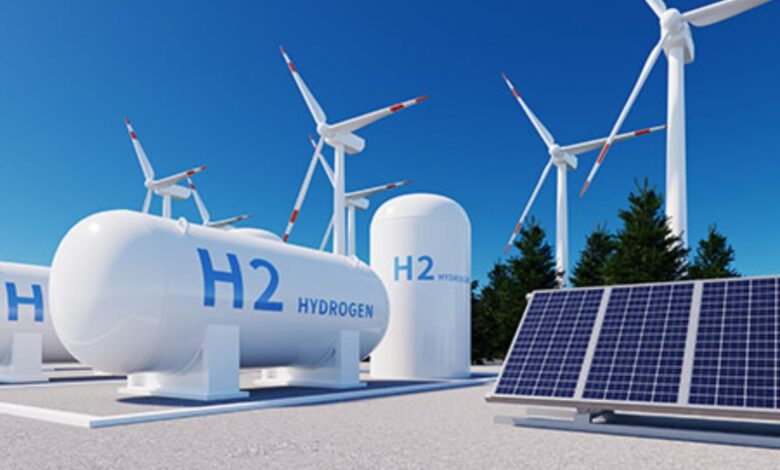
Understanding why hydrogen energy matters to India requires first appreciating the scale of the problem India is trying to solve. The country is the world’s third-largest emitter of greenhouse gases, heavily dependent on imported fossil fuels for its energy needs, and simultaneously committed — through its Nationally Determined Contributions under the Paris Agreement — to meeting 50 percent of its energy requirements from non-fossil sources by 2030. Renewable electricity from solar and wind is central to that mission, but it has a structural limitation: the sun does not always shine and the wind does not always blow, and storing large volumes of intermittent renewable power in batteries at the scale India needs remains extraordinarily expensive.
This is precisely where hydrogen enters the story. When renewable electricity is used to split water molecules through a process called electrolysis, the result is green hydrogen — a zero-carbon fuel that can be stored, transported, and used across sectors that electricity alone cannot easily decarbonise, including steel production, fertiliser manufacturing, heavy transport, and aviation. India’s National Green Hydrogen Mission, launched in January 2023 with a government outlay of nearly Rs 20,000 crore, signalled unambiguously that the country considers green hydrogen central to its energy transition strategy. The target: make India a global hub for green hydrogen production and export, producing five million metric tonnes annually by 2030.
That policy commitment has catalysed a startup ecosystem that is still young but growing with genuine urgency. What is honest and important to note is that India’s hydrogen startup landscape in 2026 looks different from its fintech or edtech counterpart — it features fewer consumer-facing apps and more deep-tech, hard-infrastructure ventures that require patient capital, significant engineering expertise, and long development timelines. The companies on this list are operating at the frontier of that ecosystem, and together they represent the most credible and active participants in India’s hydrogen energy transition.
1. Ohmium International
Ohmium International is arguably the most operationally significant hydrogen startup with a deep India connection, and understanding why requires understanding the global supply chain challenge in green hydrogen. The central technology that makes green hydrogen production possible is the electrolyzer — the device that uses electricity to split water into hydrogen and oxygen. Until recently, the manufacturing of high-quality Proton Exchange Membrane (PEM) electrolyzers was almost entirely concentrated in North America and Europe, creating a supply chain vulnerability for any country trying to scale green hydrogen production.
Ohmium’s most consequential strategic decision was to build its electrolyzer manufacturing facility not in Silicon Valley, where it was founded, but in Dobaspet, near Bengaluru — making it one of the first companies in the world to manufacture PEM electrolyzers at scale outside the Western hemisphere. This decision was made possible by India’s skilled manufacturing workforce and supported by the government’s push to build domestic electrolyzer production capacity. In 2026, Ohmium’s Bengaluru facility is supplying electrolyzers to hydrogen projects across India and internationally, and the company has become a foundational piece of infrastructure for the entire Indian green hydrogen ecosystem.
What makes it stand out: Domestic PEM electrolyzer manufacturing capability that reduces India’s dependence on imported hydrogen production technology.
2. H2e Power Systems
H2e Power Systems is a Pune-based deep-tech startup that has focused its energy on an application of hydrogen technology that receives less attention than electrolysis but is equally important for India’s energy transition: hydrogen fuel cells for stationary power generation and mobility applications. Fuel cells work by reversing the electrolysis process — combining hydrogen with oxygen to produce electricity, with water as the only byproduct. The result is a silent, zero-emission power source that can replace diesel generators for backup power applications and power fuel cell vehicles that offer longer ranges and faster refuelling than battery electric alternatives.
H2e has been developing fuel cell systems suited to Indian operating conditions — high ambient temperatures, variable humidity, and the practical realities of infrastructure-constrained deployments — which require meaningful engineering adaptation from Western designs that were developed for cooler, more infrastructure-rich environments. The startup has been working with both industrial customers seeking cleaner backup power solutions and with partners exploring hydrogen-powered mobility in applications like forklifts, buses, and material handling equipment. In 2026, H2e represents one of the most focused and technically credible fuel cell ventures to have emerged from the Indian deep-tech ecosystem.
What makes it stand out: India-specific fuel cell engineering for stationary and mobility applications, with deep technical expertise in adapting hydrogen technology to Indian operating conditions.
3. Log 9 Materials
Log 9 Materials is a Bengaluru-based advanced materials and energy startup that has attracted substantial venture funding and significant public attention primarily for its aluminium-air battery technology — but its work in hydrogen fuel cells makes it a relevant and important name in this conversation as well. Founded in 2015 by IIT Roorkee alumni, Log 9 has built one of the strongest deep-tech research and engineering teams in India’s clean energy startup ecosystem, with the company’s scientific output spanning multiple electrochemical energy storage and generation technologies.
Log 9’s hydrogen work sits within a broader thesis about electrochemical energy — that the future of clean energy will require multiple storage and generation modalities working in concert, and that a company with genuine materials science depth can develop competitive technology across several of them. The company’s ability to attract experienced engineers and scientists, raise meaningful capital from institutional investors, and execute product development at a reasonable pace distinguishes it from many early-stage hydrogen ventures in India that are still primarily at the ideas and prototyping stage.
What makes it stand out: Strong fundamental materials science capability applied across multiple clean energy technologies, with a well-funded and technically credible research and engineering team.
4. Hygenco
Hygenco is one of India’s most focused pure-play green hydrogen project developers, and it occupies an important and distinct role in the ecosystem that is worth explaining carefully. While companies like Ohmium build the electrolyzers and H2e develops fuel cells, Hygenco’s business model is centred on developing, financing, and operating green hydrogen production projects at industrial scale — essentially functioning as the green hydrogen equivalent of an independent power producer. This project development model is critical because it is the mechanism through which the technology built by hardware startups gets deployed into the real economy.
Hygenco has been developing green hydrogen projects for industrial offtakers — companies in sectors like steel, fertilisers, and refining that need to decarbonise their hydrogen consumption — as well as for green ammonia production, which is both a viable export commodity and a practical method for storing and transporting hydrogen over long distances. The company’s team brings together expertise in renewable energy project development, electrochemical engineering, and green finance, which is the specific combination of capabilities required to navigate the complex regulatory, technical, and commercial challenges of first-of-kind green hydrogen projects in India.
What makes it stand out: End-to-end green hydrogen project development capability, with a focus on industrial offtake and green ammonia that directly addresses India’s largest decarbonisation challenges.
5. ACME Cleantech Solutions
ACME Cleantech Solutions is the green energy and green hydrogen arm of ACME Group, one of India’s most experienced independent renewable energy developers, and it has positioned itself as one of the most ambitious players in India’s nascent green hydrogen export market. ACME has announced plans for large-scale green hydrogen and green ammonia production facilities, targeting export markets in Europe and Japan where countries with high decarbonisation ambitions but limited renewable energy resources are willing to pay premium prices for zero-carbon hydrogen.
What makes ACME Cleantech relevant to a discussion of India’s hydrogen startup ecosystem — despite being part of a larger group — is the genuinely entrepreneurial and technology-forward nature of its hydrogen venture, which operates with significant strategic independence and has built its own project development, electrolyzer procurement, and offtake contracting capabilities. The company’s pipeline of announced projects represents one of the largest committed development volumes in India’s green hydrogen sector, and its ability to execute will be an important test of whether India can convert its green hydrogen ambitions into operational reality within this decade.
What makes it stand out: Large-scale green hydrogen and ammonia production projects targeting international export markets, backed by two decades of renewable energy project development experience.
6. Greenko ZeroC
Greenko ZeroC is the dedicated green hydrogen and green molecules business of Greenko Group, one of India’s largest and most sophisticated renewable energy companies, and it merits inclusion on this list because of the extraordinary scale and integration of the vision it is pursuing. Greenko has pioneered a concept it calls Integrated Renewable Energy Storage Projects — large-scale renewable energy installations that combine solar, wind, and pumped hydro storage to produce firm, round-the-clock green power, which is then used to produce green hydrogen and green ammonia at costs that are genuinely competitive with fossil-fuel-derived alternatives.
The ZeroC venture is developing projects at a scale that dwarfs most other Indian hydrogen initiatives, with announced capacities in the millions of tonnes of green ammonia annually. This scale ambition matters because one of the fundamental economics challenges of green hydrogen is that production costs only fall significantly as the scale of both renewable energy generation and electrolysis capacity increases. Greenko’s integrated approach — owning the renewable energy, the storage, the electrolysis, and the export terminal — is designed to capture the maximum possible value across the entire green hydrogen value chain rather than being a single-point technology vendor.
What makes it stand out: Vertically integrated green hydrogen production model combining proprietary renewable energy assets with large-scale electrolysis for cost-competitive production at export scale.
7. Jakson Green
Jakson Green is the renewable energy and green hydrogen venture of the Jakson Group, a diversified industrial conglomerate with deep roots in power generation equipment. The group’s decades of experience in diesel and gas-based power generation have given Jakson Green an unusual combination of engineering depth, project execution experience, and understanding of the power generation market that pure-play startups without this heritage struggle to acquire quickly. The green hydrogen initiative focuses on both green hydrogen production for domestic industrial use and on the development of hydrogen-based energy storage systems.
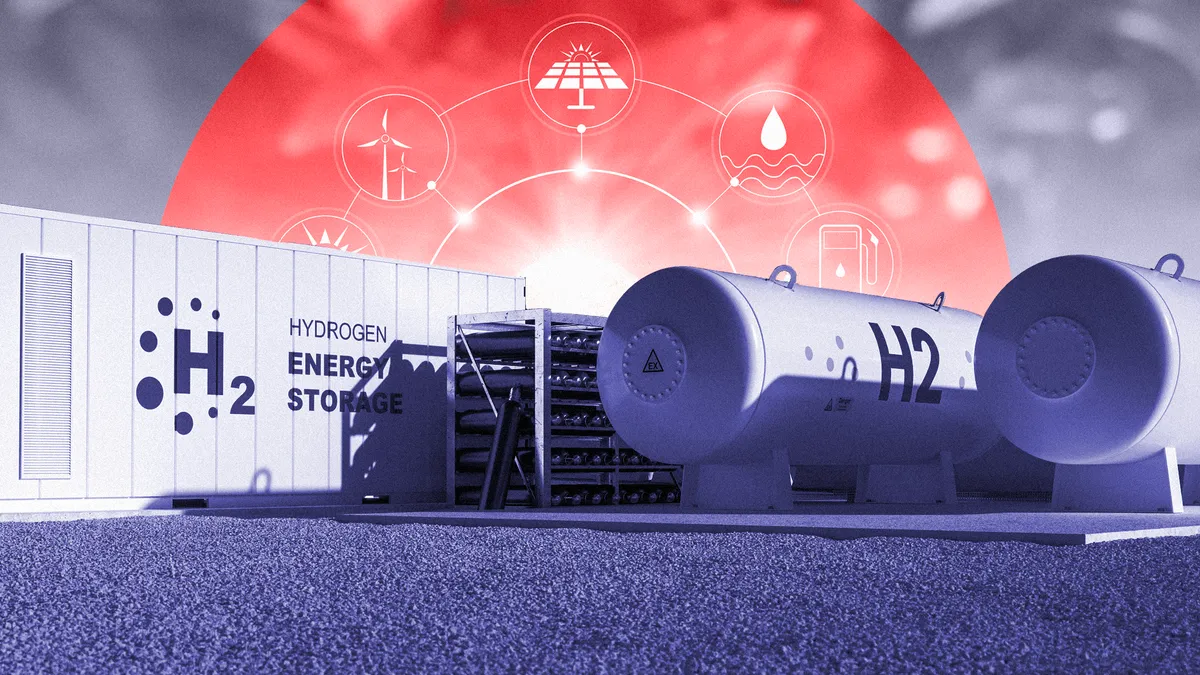
Jakson Green’s particular area of interest is the use of green hydrogen as a medium for long-duration energy storage — a critical application for a renewable-heavy grid where there is increasing need for storage that can bridge gaps not of hours but of days and weeks. This positions the company at the intersection of two of India’s most pressing energy transition challenges: decarbonising industrial energy consumption and solving the intermittency problem that limits how far a solar-and-wind-dominated grid can go without complementary storage solutions.
What makes it stand out: Industrial pedigree combined with green hydrogen project development, with a focus on long-duration hydrogen energy storage that addresses one of the fundamental challenges of India’s renewable energy transition.
8. Eden Clean Energy
Eden Clean Energy is an early-stage Indian startup that has been developing green hydrogen production and distribution solutions with a particular focus on making green hydrogen economically viable for small and medium industrial consumers — a segment that is often overlooked in conversations dominated by gigawatt-scale export projects and massive industrial complexes. The company’s approach recognises that while the headline green hydrogen projects attract most of the capital and attention, a large portion of India’s hydrogen consumption happens at smaller facilities — dyeing and finishing units in textile clusters, small chemical plants, food processing facilities — that need decarbonisation pathways but cannot justify the complexity and capital of large-scale on-site hydrogen production.
Eden’s model involves developing modular, right-sized hydrogen production units that can be economically deployed for this distributed demand, combined with the project financing and offtake structuring that allows smaller industrial customers to adopt green hydrogen without bearing the full capital cost themselves. This bottom-up, distributed approach to green hydrogen deployment is genuinely complementary to the top-down, export-oriented model pursued by ACME and Greenko, and both will be necessary for India to achieve its ambitious green hydrogen targets.
What makes it stand out: Modular green hydrogen production approach targeting the distributed small and medium industrial consumer segment that large-scale projects cannot efficiently serve.
9. Amp Energy India
Amp Energy India is a renewable energy developer and energy storage company that has been building a meaningful position in India’s clean energy infrastructure, and its hydrogen initiatives represent a natural extension of its core renewable energy project development capabilities. The company has been developing integrated clean energy projects that combine solar and wind generation with storage and, increasingly, with green hydrogen production for industrial customers seeking to decarbonise their energy and feedstock consumption simultaneously.
Amp Energy’s significance in the hydrogen context comes partly from its commercial sophistication — the company has developed strong capabilities in structuring power purchase agreements, renewable energy certificates, and clean energy supply contracts of the kind that industrial customers need to justify decarbonisation investments to their own boards and shareholders. This commercial infrastructure is as important as the technical capability in scaling green hydrogen, because the offtake contract is frequently the most difficult element of any hydrogen project to secure. Companies that can originate, structure, and execute these commercial arrangements are providing a form of market infrastructure that the sector urgently needs.
What makes it stand out: Renewable energy project development expertise combined with commercial structuring capability for green hydrogen offtake, providing market infrastructure that accelerates adoption by industrial customers.
10. GPS Renewables
GPS Renewables is a Bengaluru-based clean energy startup that deserves its place in this conversation because it is building hydrogen infrastructure from an angle that is often overlooked in discussions dominated by electrolysis and fuel cells: biohydrogen produced from organic waste. The company’s core technology is biogas upgrading and biomethane production — converting agricultural waste, municipal solid waste, and industrial organic effluents into clean gas — and its hydrogen pathway involves reforming this bio-derived gas into hydrogen, which can be produced at costs that are competitive with electrolytic green hydrogen in the near term.
This matters in the Indian context because India generates enormous volumes of organic waste — from agricultural residues, food processing, municipal solid waste — that currently represent both an environmental problem and an underutilised resource. GPS Renewables has developed a project model that simultaneously solves waste management challenges and produces clean energy, which gives its projects a dual revenue stream and a social licence that purely electrolytic projects lack. In 2026, the company is operating biogas plants across India and developing its hydrogen production capabilities as a logical next step in the value chain.
What makes it stand out: Biohydrogen production pathway from organic waste that offers near-term cost competitiveness and dual-purpose infrastructure combining waste management with clean energy generation.
Understanding Why This Ecosystem Looks the Way It Does
If you compare India’s hydrogen startup ecosystem to, say, its fintech or e-commerce ecosystem, you will notice something structurally different: the companies are fewer, larger in their capital requirements, slower in their development timelines, and more dependent on government policy and large industrial offtakers than on consumer adoption. This is not a weakness of the ecosystem — it is a reflection of the fundamental nature of energy infrastructure, which requires patient capital, policy certainty, and industrial partnerships to scale in a way that a consumer app simply does not.
The Indian government’s National Green Hydrogen Mission provides the policy framework, but the startups on this list are doing the harder work of proving that green hydrogen can be produced, stored, and delivered at costs and scales that make economic sense without perpetual subsidy. The next three to five years will be decisive in that regard — the projects that are currently in development or early operation will either validate the economics of Indian green hydrogen at scale or require the industry to rethink its cost reduction pathway.
What gives genuine reason for optimism is the quality of the teams building these companies. India’s combination of engineering talent from its IITs and NITs, a growing pool of clean energy project development experience from the solar and wind boom of the last decade, and the increasing availability of risk capital for deep-tech ventures has produced a hydrogen startup cohort that is, by any objective measure, technically and commercially more capable than most observers expected this early in the mission’s timeline.
Conclusion
India’s hydrogen energy startup ecosystem in 2026 is young, capital-intensive, and operating at a moment of genuine inflection — when the gap between ambition and operational reality is beginning to close for the first time. The ten companies on this list represent the most credible and active participants in that closing process, each contributing a distinct and necessary piece of the infrastructure that India must build to fulfil its green hydrogen mission. The path from here to five million metric tonnes of annual production by 2030 is long and technically demanding, but the foundations being laid by these ventures are more solid than they have ever been.