Top 10 Best 3D Printing Companies in India in 2027
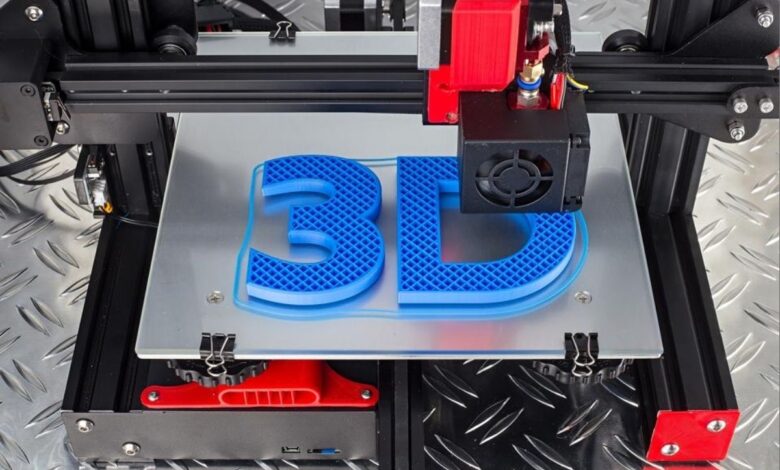
Three-dimensional printing, commonly known as 3D printing or additive manufacturing, is transforming the way products are designed, developed, tested, and manufactured in India. From aerospace components and automotive prototypes to medical devices, jewellery, architectural models, consumer products, and industrial machinery, 3D printing enables businesses to manufacture complex objects with greater design flexibility and reduced material wastage.
Unlike traditional manufacturing, which often involves cutting, drilling, milling, or moulding materials into a desired shape, 3D printing builds objects layer by layer from a digital design. Depending on the technology used, manufacturers can work with plastics, engineering polymers, metals, resins, ceramics, and specialised composite materials. This approach can reduce the need for expensive tooling, accelerate product development, and make customised production economically viable for applications that would otherwise require substantial investment.
India’s 3D printing industry includes several distinct categories of companies. Some specialise in industrial metal additive manufacturing for demanding engineering applications, while others provide plastic printing, rapid prototyping, 3D scanning, printer manufacturing, design support, and on-demand production. Companies such as Imaginarium, Wipro 3D, Intech Additive Solutions, Objectify Technologies, THINK3D, and WOL3D represent different segments of this expanding ecosystem.
As Indian businesses increasingly explore domestic manufacturing capabilities, the importance of choosing the right 3D printing partner continues to grow. A startup developing a new consumer product may prioritise affordability and turnaround time, whereas an aerospace manufacturer may require traceable materials, validated processes, repeatable production, and stringent quality controls. Similarly, a jewellery designer may need exceptionally fine details, while an automotive engineer may require functional prototypes capable of withstanding mechanical stress and elevated temperatures.
1. Imaginarium
Imaginarium is one of India’s prominent advanced manufacturing and 3D printing companies, headquartered in Mumbai, Maharashtra. The company has built its reputation around the integration of additive manufacturing, conventional machining, rapid tooling, casting, and product development. Rather than limiting its services to the production of physical prototypes, Imaginarium supports businesses that need to move from an initial digital design to functional components and low-volume manufacturing.
The company’s broad manufacturing approach makes it relevant to industries where product design, surface finish, dimensional precision, and manufacturing consistency are important. Its capabilities span metal and polymer additive manufacturing, with technologies including Direct Metal Laser Sintering (DMLS), Selective Laser Sintering (SLS), Multi Jet Fusion (MJF), stereolithography (SLA), and digital light processing (DLP) across its manufacturing offerings.
Key Features and Capabilities
One of Imaginarium’s major strengths is its ability to combine different manufacturing processes under one service umbrella. A customer can begin with an additively manufactured prototype, refine the design, and explore CNC machining, vacuum casting, or injection moulding for subsequent production stages. This integrated model can reduce the operational complexity associated with coordinating multiple vendors.
For example, a company developing a new automotive accessory may initially require a detailed visual model, followed by a functional prototype and then a small production batch. Instead of treating each stage as a completely separate project, an integrated manufacturing partner can help coordinate design changes, process selection, finishing, and production planning.
Imaginarium is also relevant to jewellery manufacturing, where complex geometry and fine detailing can be difficult to achieve through conventional methods alone. Additive manufacturing can produce intricate patterns and casting models that support the creation of detailed jewellery designs. In industrial applications, the same principle allows designers to create customised geometries and consolidate certain assemblies into fewer components.
Another important feature is its emphasis on hybrid manufacturing. Three-dimensional printing does not always deliver the final dimensional accuracy or surface finish required for a finished industrial component. Combining additive manufacturing with CNC machining and suitable finishing processes can help achieve tighter specifications where the selected materials and design permit it.
Industries Served and Applications
Imaginarium’s manufacturing model is relevant to automotive, aerospace, jewellery, healthcare, consumer products, industrial design, and engineering. Typical project categories include concept models, functional prototypes, customised components, casting patterns, design validation, and limited production runs.
For startups and product-development teams, the company can be particularly useful when a design is still evolving and conventional tooling would be expensive or premature. For established manufacturers, its value lies in the ability to combine multiple manufacturing methods according to the requirements of a particular component.
2. Wipro 3D
Wipro 3D is a major Indian industrial additive manufacturing business associated with Wipro Enterprises. Based in Bengaluru, Karnataka, it focuses on advanced manufacturing solutions for sectors in which component performance, process repeatability, and quality assurance are particularly important.
Unlike providers primarily catering to hobbyists and consumer printing, Wipro 3D concentrates on engineering-led applications. Its services cover metal and polymer additive manufacturing, design for additive manufacturing, material and process development, prototyping, and industrial production. It also offers 3D printing systems and associated technical support for organisations building their own additive manufacturing capabilities.
Key Features and Capabilities
A major strength of Wipro 3D is its focus on industrial qualification. Producing a geometrically correct prototype is different from manufacturing a component that must perform reliably under mechanical loads, temperature variations, pressure, vibration, or other demanding operating conditions.
The company supports customers in evaluating whether additive manufacturing is appropriate for a particular engineering problem. This can involve redesigning a component for layer-based manufacturing, analysing geometry, selecting suitable materials, and identifying opportunities to reduce weight or consolidate multiple parts.
Metal additive manufacturing is especially relevant where engineers need complex internal channels, intricate structures, or customised components that would be difficult or expensive to produce conventionally. Such designs can be valuable in aerospace, energy, industrial machinery, and other engineering-intensive sectors.
Wipro 3D also offers polymer additive manufacturing, allowing businesses to explore applications that do not necessarily require metal. Depending on the selected technology, polymer printing may support prototypes, production aids, fixtures, tooling components, and end-use parts.
Its industrial services are complemented by engineering and consulting support. This is important because successful adoption of additive manufacturing often requires more than purchasing a printer. Organisations must also establish suitable workflows for design preparation, material handling, machine operation, inspection, post-processing, and maintenance.
Industries Served and Applications
Wipro 3D identifies aerospace, space, defence, medical, automotive, oil and gas, energy, and industrial manufacturing among its application sectors. Its capabilities make it relevant to manufacturers looking to develop specialised components, evaluate new geometries, or incorporate additive manufacturing into established production systems.
For example, an engineering team designing a lightweight metal component may be able to redesign the part around the loads it must withstand instead of simply reproducing the shape of a conventionally manufactured component. The resulting design may reduce unnecessary material or improve functional integration, subject to engineering validation.
The company is also relevant to organisations that require documented manufacturing procedures and structured quality systems. Its published certifications include AS9100, ISO 9001, NADCAP, API 20S, and ISO 27001. The relevance of each certification depends on the facility, process, product, and scope covered, so customers should verify applicability to their specific order.
3. Intech Additive Solutions
Intech Additive Solutions, commonly known as Intech, is an Indian additive manufacturing technology company based in Bengaluru. Founded in 2012, the company has developed expertise in metal 3D printing systems, manufacturing software, and engineering solutions designed to help industrial users adopt additive manufacturing.
Intech stands out because its business is not limited to selling printing services. It develops metal additive manufacturing equipment and software intended to support the preparation, execution, monitoring, and optimisation of manufacturing jobs. This positions the company within India’s domestic industrial technology ecosystem.
Key Features and Capabilities
One of Intech’s principal areas of expertise is laser powder bed fusion, a metal additive manufacturing process in which a laser selectively melts or fuses successive layers of metal powder to create a component. The technology is suitable for producing complex metal parts and can support applications requiring intricate geometry.
Intech’s machine portfolio includes systems designed for different production requirements. Its iFusion150 platform, for example, is positioned for applications such as toolroom work and precision metal component development. Equipment selection should depend on the required build volume, material compatibility, productivity, resolution, and intended application.
The company’s software capabilities are equally important. Preparing a metal printing job involves more than converting a computer-aided design file into machine instructions. Engineers must consider component orientation, support structures, thermal behaviour, build layout, process parameters, and the potential for distortion.
Intech develops software solutions covering areas such as build preparation, machine planning, simulation, process monitoring, parameter optimisation, and batch management. These tools can help manufacturers establish more controlled workflows and improve the repeatability of printing operations.
Design for additive manufacturing is another important component of its offering. Engineers can redesign parts to exploit additive manufacturing’s advantages rather than reproducing conventional geometries unnecessarily. In suitable cases, this may enable weight reduction, part consolidation, improved internal passages, or more efficient material use.
Industries Served and Applications
Intech’s technologies are relevant to aerospace, automotive, defence, tooling, energy, research, and industrial engineering. Potential applications include complex metal components, specialised tooling, lightweight structures, and parts requiring geometries that conventional machining cannot easily produce.
Its integrated hardware and software model can be useful for manufacturers that want to develop in-house expertise rather than rely exclusively on external service providers. Organisations can evaluate equipment, software, process development, and training as interconnected elements of a broader manufacturing strategy.
4. Objectify Technologies
Objectify Technologies is an industrial 3D printing and additive manufacturing company headquartered in Greater Noida, Uttar Pradesh. Founded in 2013, it provides metal and polymer manufacturing solutions for engineering-led businesses, making it particularly relevant to customers that need functional components rather than only visual prototypes.
The company offers an extensive portfolio of additive manufacturing and associated services, including metal printing, polymer printing, 3D design, reverse engineering, CNC machining, vacuum casting, and heat treatment.
Key Features and Capabilities
Objectify’s metal manufacturing capabilities include processes associated with laser powder bed fusion, such as selective laser melting and direct metal laser sintering. These technologies can produce geometrically complex components from engineering metals, provided the chosen alloy and application are compatible with the process.
The company’s stated material portfolio includes titanium alloy Ti6Al4V, aluminium alloy AlSi10Mg, maraging steel, and stainless steel 316L. Each material offers different characteristics. Titanium alloys are valued in applications where strength-to-weight performance and corrosion resistance matter, while aluminium alloys can be attractive for lightweight components. Stainless steel may be suitable for applications requiring a combination of strength and corrosion resistance.
The suitability of any alloy depends on the component’s design, operating environment, required mechanical properties, and post-processing. Buyers should request material specifications and relevant test documentation instead of assuming that every printed component automatically matches the properties of conventionally manufactured material.
Objectify also works with polymer additive manufacturing technologies. Polymer printing can support complex housings, functional prototypes, customised parts, and other components where metal would be unnecessarily expensive or heavy.
Another useful capability is reverse engineering. This process involves examining an existing physical component to reconstruct its geometry digitally. It can be valuable when legacy components are difficult to source, replacement parts are unavailable, or an engineering team needs to modify an existing design. Depending on the application, reverse engineering may require scanning, dimensional inspection, CAD reconstruction, and engineering validation.
Industries Served and Applications
Objectify identifies automotive, aerospace, and industrial manufacturing among its application areas. Its published company information also describes projects involving major engineering and manufacturing organisations.
Potential use cases include functional metal prototypes, lightweight components, production tooling, complex polymer parts, and customised engineering assemblies. Conformal cooling channels in moulds and tooling are another application area in which additive manufacturing can create internal passages that are difficult to machine conventionally.
5. THINK3D
THINK3D is an Indian digital manufacturing company established in 2014. Founded by graduates of BITS Pilani and the Indian Institute of Management, the company developed around the idea of making advanced manufacturing more accessible to startups, product developers, and small and medium-sized enterprises.
The company offers an integrated range of services that includes 3D printing, 3D scanning, 3D design, CNC machining, vacuum casting, and injection moulding. Its published operations include a manufacturing facility in Visakhapatnam, Andhra Pradesh, with its corporate headquarters in Hyderabad, Telangana.
THINK3D is particularly relevant to businesses that need to develop a product from an early concept through prototyping and limited production without establishing their own manufacturing infrastructure.
Key Features and Capabilities
THINK3D offers multiple manufacturing processes to accommodate different materials, budgets, geometries, and production requirements. Its reported capabilities include fused deposition modelling (FDM), stereolithography (SLA), selective laser sintering (SLS), Multi Jet Fusion (MJF), and metal additive manufacturing through processes such as direct metal laser sintering.
FDM is useful for affordable prototypes and functional plastic components, while SLA is often selected for detailed models and parts requiring a relatively smooth surface finish. SLS and MJF can be suitable for functional polymer components, especially where complex geometries and small production batches are important.
The company also provides CNC machining, which can be used when a component requires particular tolerances, material properties, or surface characteristics. Vacuum casting and injection moulding can support later production stages when a product design has stabilised and the economics of manufacturing multiple copies justify a different process.
This combination makes THINK3D useful for product-development projects that evolve over time. An engineering team may begin with a 3D-printed concept model, create functional prototypes, validate the design, and subsequently evaluate casting or moulding for a larger production run.
Its digital ordering approach is another feature worth considering. The company describes an online quotation workflow through which customers can submit design files and receive manufacturing estimates. Such systems can simplify procurement by bringing design files, manufacturing requirements, and quotation requests into a single process.
Industries Served and Applications
THINK3D is relevant to hardware startups, consumer electronics developers, industrial equipment manufacturers, educational institutions, and engineering teams. Applications may include product enclosures, functional prototypes, customised components, product-development models, and small-batch manufacturing.
Its broad service portfolio can also benefit companies that do not have specialist manufacturing engineers on their payroll. Access to different production processes allows a team to compare possible solutions before committing to expensive tooling or equipment.
6. 3Ding
3Ding is an Indian 3D printing company based in Chennai, Tamil Nadu. Operating since 2013, it combines 3D printer sales, printing services, materials, scanning equipment, training, and technical support. This broad portfolio makes it relevant to both individual makers and organisations seeking to incorporate additive manufacturing into their workflows.
The company is particularly notable for combining an equipment business with an on-demand printing service. Customers can explore purchasing printers for recurring requirements or outsource specific parts when maintaining an in-house machine would be uneconomical.
Key Features and Capabilities
3Ding offers access to desktop and professional 3D printing equipment, including products from established international manufacturers. Its portfolio also includes consumables, scanners, and its own FabX printer range.
For customers purchasing equipment, the availability of training and support can be important. Operating a printer reliably requires an understanding of design preparation, slicing software, material selection, machine calibration, maintenance, and print troubleshooting. Technical support can help users overcome common problems and improve consistency.
Its printing services allow customers to submit digital models for manufacturing without purchasing equipment. Depending on the process and material available for a particular order, these services can be used for prototypes, replacement parts, design models, and customised products.
The company also promotes an online quotation process that provides pricing and estimated production time for submitted designs. Automated quoting can help customers evaluate whether a proposed component is financially viable before proceeding to production.
Another aspect of 3Ding’s positioning is its involvement in engineering and educational applications. Three-dimensional printing can help students, researchers, and product designers convert digital concepts into physical models, making it easier to evaluate shape, assembly, and design feasibility.
Industries Served and Applications
3Ding’s potential customer base includes engineering companies, educational institutions, researchers, manufacturers, design professionals, and individual creators. Applications range from simple visual prototypes and educational models to specialised engineering components.
The company has also described projects connected with space, defence, and research applications. Such examples illustrate the breadth of potential uses for 3D printing, although the precise capabilities required for each project should be evaluated independently.
7. WOL3D
WOL3D is an Indian 3D printing company with a substantial presence in the consumer and professional printing ecosystem. Associated with Mumbai, Maharashtra, the business supplies 3D printers, printing materials, accessories, and related services. It has also developed a broader presence in printing services, training, and after-sales support.
Unlike businesses concentrated primarily on industrial metal components, WOL3D has a strong consumer-facing orientation. Its portfolio is relevant to individuals, schools, design studios, small manufacturers, and companies looking for accessible printing equipment.
Key Features and Capabilities
WOL3D supplies equipment from international brands, including manufacturers serving the desktop FDM and resin-printing markets. These machines support a range of uses, from basic plastic prototypes to more detailed models produced using resin-based technologies.
FDM printing is often a practical starting point for customers seeking affordable prototypes, educational projects, fixtures, enclosures, and relatively simple functional parts. Resin printing can be useful where surface detail and fine features are important, although resin handling, post-curing, and material-specific safety precautions must be considered.
The company also offers filament and other consumables. Material selection can substantially affect the strength, flexibility, temperature resistance, surface finish, and durability of a printed object. PLA, for example, is commonly used for accessible prototyping, whereas PETG, ABS, and other engineering polymers may be considered for different mechanical or environmental requirements when compatible with the equipment.
WOL3D’s ecosystem approach extends beyond product sales. Its business information describes printing facilities, experience centres, training, and support services intended to help customers use 3D printing more effectively.
This combination can be useful for buyers who prefer to evaluate equipment before purchasing it. A demonstration or consultation can help clarify build volume, printing speed, material compatibility, maintenance requirements, and the practical limitations of different machine categories.
Industries Served and Applications
WOL3D is relevant to education, product design, architecture, prototyping, manufacturing, hobbyist projects, and small-business production. Its equipment and service offerings can help customers produce models, product enclosures, display pieces, fixtures, customised objects, and design prototypes.
For businesses that require only occasional parts, outsourcing printing may be more economical than purchasing a machine. For users printing frequently, an in-house system may provide greater control over scheduling and design confidentiality.
8. Divide By Zero Technologies
Divide By Zero Technologies is an Indian 3D printer manufacturer known for developing professional and industrial polymer printing systems. The company is associated with Maharashtra and has focused on making additive manufacturing more practical for businesses that need functional prototypes, manufacturing aids, and customised components.
Its position in the market differs from that of a service bureau. Rather than concentrating only on manufacturing parts for customers, the company develops printers intended to help organisations bring more of the printing process in-house.
Key Features and Capabilities
Divide By Zero has developed printing systems using its proprietary Advanced Fusion Plastic Modeling technology, commonly referred to as AFPM. The technology is associated with its approach to polymer extrusion-based 3D printing.
The company has offered a range of professional systems, including models designed for different build volumes and application requirements. Its product portfolio has included machines such as the Accucraft and Aeqon series, although current configurations and availability should be verified before purchase.
A central advantage of professional polymer 3D printing is the ability to manufacture components on demand. Instead of maintaining a large inventory of specialised plastic parts, a company may be able to print certain components when required, provided the design, material, and operating conditions are suitable.
This can be useful for production fixtures, assembly aids, customised housings, equipment brackets, prototype components, and replacement parts. Engineers can also use printed models to check assembly fit and identify design problems before commissioning conventional tooling.
In-house printing can shorten iteration cycles because design changes do not necessarily require a new tooling order. However, the practical benefit depends on printer reliability, material availability, operator skills, and the time required for finishing and inspection.
Industries Served and Applications
Divide By Zero’s equipment is relevant to automotive, consumer products, industrial manufacturing, engineering, education, and product development. Its professional systems can support businesses that need recurring access to printed polymer parts.
For small and medium-sized enterprises, the decision to purchase a printer may be driven by recurring prototype requirements, the need for faster design changes, or the desire to manufacture specialised tools and fixtures internally.
9. ALTEM Technologies
ALTEM Technologies is an Indian engineering technology solutions provider based in Bengaluru, Karnataka. The company offers access to additive manufacturing equipment, 3D scanning systems, engineering software, and associated technical services. Its portfolio makes it relevant to businesses looking for an integrated approach to product design, digital engineering, and advanced manufacturing.
ALTEM differs from companies that operate primarily as printing service bureaus because its business also involves supplying technology platforms and supporting their implementation. This can be particularly valuable for organisations that want to develop in-house manufacturing expertise and integrate 3D printing into their existing engineering workflows.
Key Features and Capabilities
ALTEM offers access to professional additive manufacturing technologies, including Fused Deposition Modelling (FDM) and PolyJet printing through its equipment portfolio. It also provides solutions associated with metal additive manufacturing and specialised construction-oriented printing technologies.
FDM is useful for creating prototypes, production aids, fixtures, and functional plastic parts. PolyJet technology, by contrast, uses material jetting to produce detailed components and can support applications requiring fine features, smooth surfaces, or combinations of material characteristics on compatible systems.
The availability of different technologies allows businesses to select equipment according to their application rather than relying on one universal printing process. For example, an engineering department may require a durable fixture for an assembly line, while a product-design team may need a detailed model to assess appearance and ergonomics. These applications can have substantially different material and accuracy requirements.
ALTEM also supplies 3D scanning solutions. Scanning complements additive manufacturing by helping engineers capture the geometry of physical objects and create digital representations for inspection, reverse engineering, or design modification. Depending on the scanner and workflow, this can help document complex shapes and compare manufactured parts against digital designs.
Its engineering software portfolio supports broader digital product development, including design, simulation, manufacturing planning, and product lifecycle management. Integrating these capabilities can help organisations coordinate design changes and reduce the gap between digital engineering and physical production.
Industries Served and Applications
ALTEM’s solutions are relevant to automotive, aerospace, industrial manufacturing, education, research, healthcare-related applications, and product engineering. Potential applications include rapid prototyping, composite tooling, production fixtures, dimensional inspection, reverse engineering, and the evaluation of new manufacturing methods.
The company may be especially relevant to organisations that want more than access to a printer. Businesses implementing additive manufacturing at scale may need assistance selecting equipment, training operators, preparing digital workflows, and integrating new technologies with established production processes.
10. Make3D
Make3D is an Indian 3D printing and manufacturing technology company associated with Surat, Gujarat. The company has developed a presence in 3D printing equipment and related manufacturing services, making it relevant to customers looking for domestic solutions for prototyping, product development, and small-scale manufacturing.
Its inclusion reflects the importance of accessible printing technologies in India’s growing additive manufacturing ecosystem. Although highly specialised metal printing receives considerable attention in industrial applications, affordable polymer printing and prototyping remain essential to the everyday work of designers, engineers, students, and small manufacturers.
Key Features and Capabilities
Make3D has been associated with 3D printer manufacturing, equipment sales, and services involving 3D printing and scanning. Its Pratham printer series has been marketed for different customer requirements, ranging from entry-level experimentation to more demanding applications.
A key advantage of working with a domestic equipment provider is the potential for closer access to technical support, maintenance, and assistance with installation. These factors can be particularly important for customers who do not have dedicated additive manufacturing specialists.
For small businesses, a printer can be used to create initial prototypes, test product dimensions, assess assembly fit, and evaluate different design alternatives. Designers can also produce physical models for presentations and customer feedback before investing in expensive moulds or production tooling.
Where supported by the selected machine and material, polymer printing can help produce brackets, housings, fixtures, display models, customised accessories, and other components. The technology may also be useful in educational settings, where students can develop practical skills in CAD modelling, design iteration, and digital manufacturing.
Three-dimensional scanning can complement printing by capturing the shape of existing objects. This is useful when a team wants to recreate a component, modify an existing design, or produce a physical model from a digital reference. The quality of the final result depends on scanning accuracy, surface characteristics, software processing, and the precision required by the application.
Industries Served and Applications
Make3D’s equipment and services are relevant to educational institutions, product designers, engineering teams, small manufacturers, and individual users. Potential applications include rapid prototyping, design validation, educational projects, customised components, and the development of new products.
The company may be worth evaluating for organisations that want to establish basic additive manufacturing capabilities without immediately committing to expensive industrial equipment. However, the suitability of any particular printer depends on the required build size, material properties, surface finish, accuracy, printing speed, and expected workload.
How to Choose the Best 3D Printing Company in India in 2027
Selecting a 3D printing company requires more than comparing the number of technologies advertised or choosing the lowest quotation. The best supplier depends on the intended application, the materials required, the quantity of parts, the expected mechanical performance, and the quality standards that the final product must satisfy.
1. Identify the Right Printing Technology
FDM is often appropriate for affordable prototypes and general-purpose polymer components. SLA and DLP can be useful for detailed resin models and applications requiring fine features. SLS and MJF are worth considering for complex polymer parts and functional components. Metal laser powder bed fusion processes are relevant when engineering requirements justify the additional cost and complexity of metal additive manufacturing.
2. Evaluate the Material Rather Than the Technology Alone
Two components printed using different materials can have substantially different strength, flexibility, heat resistance, chemical resistance, and durability. Even parts produced from the same nominal material can differ depending on the machine, printing parameters, orientation, and post-processing. Ask for material data and testing information where performance matters.
3. Confirm Dimensional Accuracy and Tolerances
A prototype that looks correct may not fit into an assembly. If a part must mate with another component, fit into a housing, or satisfy a precision requirement, communicate the required tolerances before production. Ask how the supplier measures and verifies dimensions.
4. Assess Finishing and Post-Processing
Printing is only one stage of production. Support removal, curing, heat treatment, machining, surface finishing, dyeing, coating, and inspection may be required, depending on the material and process. Make sure the quotation clearly states which operations are included.
5. Consider the Production Quantity
A 3D printing service may be economical for one-off components and small batches, but conventional manufacturing can become more cost-effective as quantities rise. Vacuum casting and injection moulding may be appropriate alternatives for certain polymer products once designs have stabilised. A capable manufacturing partner should help compare these options instead of recommending 3D printing for every requirement.
6. Compare the Complete Cost
The final price may include material, machine time, support structures, design preparation, engineering consultation, finishing, inspection, packaging, and delivery. A low initial quotation may not represent the lowest total cost if significant finishing or rework is required later.
7. Verify Quality Systems and Documentation
For aerospace, medical, automotive, defence, or other regulated applications, determine whether the supplier has the relevant process controls, material traceability, inspection capabilities, and certifications. Verify that any claimed certification applies to the actual facility and manufacturing activity involved.
8. Examine Intellectual Property Protection
CAD files can contain commercially sensitive product designs. Before sharing proprietary information, understand the company’s confidentiality arrangements, file-handling practices, access controls, and applicable contractual protections.
9. Evaluate Production Capacity and Delivery Commitments
A supplier may be excellent at producing prototypes but less suited to repeated industrial orders. Ask about machine availability, backup capacity, inspection procedures, production scheduling, and the ability to reproduce parts consistently.
10. Request a Sample or Pilot Order
Before committing to a large project, test the supplier with a representative component. Assess dimensional accuracy, surface finish, mechanical performance where applicable, communication, packaging, and delivery reliability. A small pilot can reveal practical issues that a brochure or quotation cannot.
Conclusion
India’s 3D printing industry offers a diverse range of options for businesses exploring rapid prototyping, customised manufacturing, professional printing equipment, and advanced industrial applications. The ten companies featured in this article demonstrate how the sector extends beyond desktop printers into integrated manufacturing, metal additive manufacturing, engineering software, scanning, and production-oriented services.
Imaginarium stands out for its broad manufacturing ecosystem and ability to combine additive manufacturing with machining, casting, tooling, and finishing. Wipro 3D is a strong candidate for industrial applications requiring engineering expertise and structured quality systems, while Intech Additive Solutions is particularly relevant to organisations exploring metal printing equipment and manufacturing software. Objectify Technologies offers a combination of metal and polymer additive manufacturing, and THINK3D provides an integrated route from prototyping to small-batch production.
For customers seeking a wider range of equipment and support, 3Ding and WOL3D are worth evaluating. Divide By Zero Technologies represents India’s domestic professional polymer printer segment, ALTEM connects printing with engineering technology and scanning solutions, and Make3D offers another option for equipment and prototyping requirements.
There is no single company that is best for every 3D printing application. The right choice depends on whether the objective is to manufacture a detailed model, validate a product design, produce a functional polymer part, develop a complex metal component, or establish an in-house additive manufacturing facility.
As the industry develops through 2027, buyers should focus on verified capabilities, material suitability, quality assurance, production consistency, and the total cost of manufacturing. Companies that evaluate these factors carefully will be better positioned to use 3D printing as a practical manufacturing tool rather than simply as an experimental technology.