The Shadow Pipeline Across the Border: How Ordinary Banking and Retail Channels Fueled a Transnational Narco Network Linking Myanmar to India’s Northeast
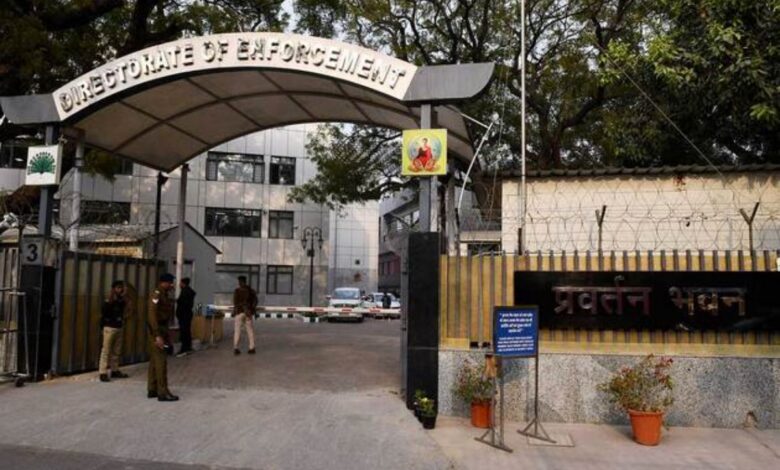
The Enforcement Directorate conducted coordinated searches across Mizoram and Manipur on 23 October 2026 under three linked money laundering investigations that originated in separate narcotics seizures. The action froze 1424 bank accounts provisionally attached a commercial property valued at 17.82 crore and rested on earlier secured assets of 8.19 crore while resulting in six arrests. The scale of the financial disruption alone forces a hard look at how retail banking facilities mini ATM counters and ordinary commercial entities were positioned inside a network that allegedly moved industrial chemicals outward finished narcotics inward and large volumes of cash through intermediary accounts before settlement with suppliers across the border.
The three underlying seizures provide the entry points. On 14 March 2025 authorities at Zokhawthar in Champhai district recovered 4.722 kg of heroin concealed in 440 soap cases and said to be moving toward Aizawl for a Myanmar based supplier. On 21 August 2025 a seizure near Seling on NH 06A yielded 49.101 kg of methamphetamine tablets together with 40 grams of heroin linked to a source identified as Chintuang in Myanmar and destined for the Damchhera Kanhmun border sector.
On 2 July 2026 a recovery in Churachandpur produced 2.413 kg of brown sugar along with 31.43 lakh in cash described as sale proceeds collected for remittance to suppliers. These three events triggered separate Enforcement Case Information Reports yet the subsequent financial mapping treated them as different openings into a single ecosystem of chemical supply drug movement cash collection and informal currency settlement.
The alleged arrangement operated in five connected layers. The first involved the dispatch of approximately 32 tonnes of caffeine anhydrous in 15 consignments between March and November 2024 together with 10 tonnes of aluminium chloride anhydrous by M/s Krishiv Enterprises. The consignments travelled under regular GST invoices and e way bills to small retail pharmacies and a general store in the Aizawl and border belt. The receiving entities lacked manufacturing or processing facilities of their own.
The second layer concerned the alleged onward movement of those chemicals across the border into tablet pressing facilities in Myanmar where caffeine functioned as a bulking agent in methamphetamine tablets known as Yaba.
The third layer covered the return flow of finished narcotics across the Tiau river in the Zokhawthar sector their staging in Champhai and onward movement toward Aizawl and routes leading into Assam and Tripura with concealment methods said to include soap cases taxis motorcycles and truck convoys accompanied by escort vehicles.
The fourth layer addressed the collection of cash generated by sales in Manipur and other states and its introduction into the banking system through mini ATM and Customer Service Point counters beneficiary accounts and related businesses.
The fifth layer involved the routing of those funds through intermediary accounts to unlicensed rupee kyat exchangers who settled supplier payments in Myanmar currency against commissions.
The geography of the corridor itself amplifies the concern. The Northeast shares roughly 1643 kilometres of land border with Myanmar a stretch long recognised as a corridor for products originating in the Golden Triangle. Outbound chemical consignments moved toward the border from commercial addresses inside Mizoram. Inbound narcotics moved from Zokhawthar through Champhai and Aizawl before branching toward Vairengte and the Assam Tripura borders or into Manipur itself.
Money however travelled in the opposite direction. Cash collected far from the border had to return to the settlement points near the frontier. That separation between the physical drug route and the financial settlement route is one of the most consequential features of the entire investigation.
At the centre of the domestic financial machinery stood M/s Go Alpha Trip a mini ATM and money transfer counter in Churachandpur operated by H Gouzalal. Between 2024 and June 2026 the counter processed 175.03 crore through 2947 transfers an average of approximately 5.94 lakh per recorded transfer with alleged daily deliveries reaching as high as 1 crore.
Cash handlers brought sale proceeds to the counter together with lists of beneficiary accounts. Transfers then moved to traders pharmacies and individuals in Mizoram. Some funds passed through additional counters and front entities before reaching the accounts of the informal currency exchangers. Ledgers recovered from the counter matched credits appearing in Mizoram accounts under examination in the Aizawl investigations. One cash handler was recorded under the code name NUNIANG.
The use of rented bank accounts added another layer of separation between formal account holders and the persons directing the funds. Account holders are said to have admitted renting their accounts for 500 per lakh. Seven analysed accounts received a total of 11.98 crore of which only 17 lakh was withdrawn in cash approximately 1.42 percent. The bulk moved onward through RTGS NEFT or IMPS within days with no underlying trade activity identified in the transactions examined.
One account belonging to a homemaker in Champhai received 15.48 crore while the family’s stated monthly income stood at approximately 27000. The account was operated by her husband a bank employee. The disparity between household income and account turnover raises immediate questions about beneficial control yet the mere existence of high turnover does not by itself prove the origin of every credit.
The settlement stage was anchored by Lalrampari and her husband Lalliansanga proprietor of M/s JTS Store. Accounts associated with them recorded credits of approximately 268.80 crore of which roughly 125 crore arrived as cash from Assam Nagaland West Bengal Tripura and Delhi. These operators functioned as unlicensed rupee kyat exchangers settling supplier dues in Myanmar currency against commissions ranging from 250 to 500 per lakh.
The same accounts are linked to the construction of Hotel JTS a five storey commercial building standing on 571.11 square metres of land in Zion Veng Champhai and valued at 17.82 crore. The property was provisionally attached on 23 October 2026. Earlier secured bank accounts of 8.19 crore brought the total assets under restraint to 26.01 crore.
Financial threads extended well beyond the Northeast. Cash deposits into Champhai based accounts originated in Guwahati Silchar Delhi and other centres. Approximately 2.14 crore reached one hawala operator from Kolkata based entities described as shell companies. A further 10 lakh moved from a Howrah based shell company into an account linked to the Churachandpur seizure. Mumbai also appears among the reported sources of funds flowing into the hawala accounts.
These metropolitan connections suggest that the cash collection network was not confined to the border districts yet each individual credit still requires precise mapping to the underlying narcotics activity before any firm attribution can be made.
Six persons were arrested under the Prevention of Money Laundering Act during the searches. In Mizoram the arrests covered Kashyap G Thakkar in the Krishiv Enterprise investigation Thangkhuala and T Chatuan Vanlalgakha in the methamphetamine related investigation. In Manipur the arrests covered Zenngaihniang also known as Taniang Nengzatuan Valte also known as Tuanpi and H Gouzalal. Taniang is described as having handled cash collections in Churachandpur and delivered amounts reaching 1 crore per day to the Go Alpha Trip counter.
Tuanpi is identified as a syndicate operative who collected cash and handed it to handlers such as Taniang. Gouzalal operated the counter itself. Taniang and Tuanpi were already in judicial custody in the underlying narcotics cases and were formally arrested under the money laundering statute after permission from the Special Judge. Applications for the arrest of four additional persons already in judicial custody in narcotics cases were under process before the Special Court in Mizoram.
The wider multi agency action reported on the same day under Operation Trident recorded 18 arrests across Assam Mizoram and Manipur and searches at 38 locations. The six arrests reported by the Enforcement Directorate form a subset of that larger effort focused specifically on the money laundering investigations. The numerical difference between six and 18 therefore reflects distinct legal and geographic scopes rather than contradiction.
Evidence recovered during the searches included cash ledgers matching the Go Alpha Trip records cheque books debit cards mobile phones digital devices and banking records from branches holding key accounts. The matching of ledger entries with bank credits provides a documentary bridge between cash collection and electronic movement.

GST invoices and e way bills document the chemical consignments and their stated recipients. Property records link the ownership of Hotel JTS to Lalliansanga. Each category of evidence contributes to a potential chain yet none of them standing alone establishes the criminal origin of every rupee that moved through the system.
The chronology of the case stretches from the chemical dispatches of March to November 2024 through the successive seizures of March 2025 August 2025 and July 2026 to the coordinated searches and provisional attachment of 23 October 2026 and the public announcement of 25 October 2026.
The 175.03 crore processed through the Churachandpur counter and the 268.80 crore credited to the hawala accounts represent overlapping but non identical transaction sets. Adding them together would risk double counting money that passed through successive stages of the same alleged network. The 26.01 crore in secured assets measures property and accounts under restraint not the total volume of criminal proceeds.
What emerges from the material is a picture of financial infrastructure that appears ordinary on the surface yet is alleged to have served as the circulatory system for a cross border narcotics enterprise. Mini ATM counters are everyday banking access points. Customer Service Points exist to extend basic services. Retail pharmacies and general stores operate under commercial registrations.
Bank accounts belong to named individuals including homemakers. Yet the investigation places these ordinary facilities inside a sequence that begins with documented chemical consignments ends with the provisional attachment of a commercial hotel and includes intermediate cash handling of a scale that reaches 1 crore in a single day. The interrogative force of the case lies precisely in that normalisation.
When the mechanisms used for legitimate commerce and retail banking are the same mechanisms through which drug sale proceeds are said to have been collected transferred and settled the distinction between lawful economic activity and criminal facilitation becomes a matter of transaction level proof rather than outward appearance.
The 1424 frozen accounts the 17.82 crore hotel and the six arrests therefore stand as markers of the financial depth that investigators claim to have mapped. Whether every credit every transfer and every chemical consignment can be sustained as part of a continuous chain from narcotics offence to laundered asset remains the central question that subsequent court proceedings will have to resolve.
Until that resolution the figures themselves the 32 tonnes of caffeine anhydrous the 175.03 crore through 2947 transfers the 268.80 crore in hawala credits and the 26.01 crore under restraint continue to demand attention as indicators of how far a network operating across the Myanmar border is said to have embedded itself inside India’s domestic banking and commercial systems.