CBI Registers FIR Against IL&FS Energy Development Company Limited
The registration of a CBI case on 21 October 2026 against IL&FS Energy Development Company Limited and five named executives over an alleged 212.34 crore wrongful loss to Canara Bank raises searching questions about the end use of a 100 crore short term facility and a separate 50 million dollar foreign currency term loan. Funds said to have been sanctioned for solar park, wind energy and infrastructure special purpose vehicles appear to have moved through group and associate entities amid claims of inadequate documentation and misrepresentation of the borrower’s financial position. The investigation now requires precise mapping of every transfer, every intermediate account and every representation made to the lender while the broader IL&FS group history of defaults and earlier parallel probes continues to cast a long shadow over the transactions under scrutiny.

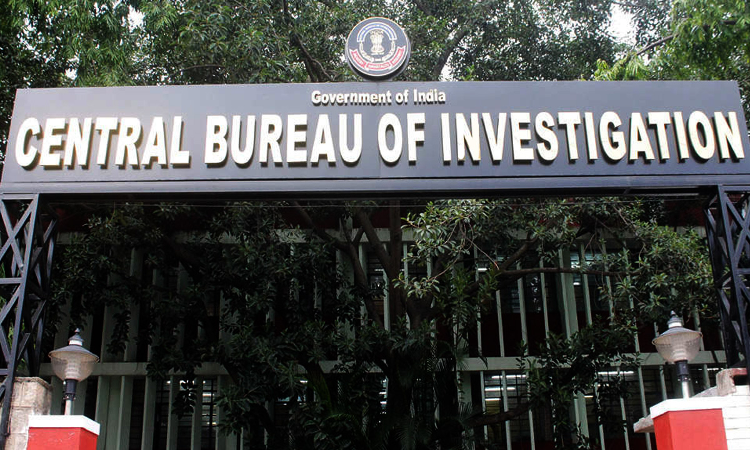
CBI Registers ₹212.34 Crore Bank Fraud Case Against IL&FS Energy Development Company Limited and Its Directors, Conducts Multi-City Searches
The Central Bureau of Investigation has registered a formal case of bank fraud involving an alleged wrongful loss of ₹212.34 crore to Canara Bank against Mumbai-based IL&FS Energy Development Company Limited and several of its past and present directors. The agency registered the case on 21 October 2026 on a complaint filed by Canara Bank’s Circle Office in Bandra East, Mumbai, and followed it with searches at multiple premises linked to the company’s managing directors and directors in Mumbai, Delhi, Noida and other locations. Incriminating documents were recovered and seized, and the investigation continues.
According to the CBI’s official statement, the accused are M/s IL&FS Energy Development Company Limited and its managing directors or directors, Sunil Wadhwa, Anoop Seth, Hari Sankaran, Ramesh Chandra Bawa and Arun Kumar Saha, along with unknown public servants and unknown private persons. They have been booked for offences of criminal conspiracy for cheating and also under the Prevention of Corruption Act. The alleged wrongful loss to the complainant bank stands at ₹212.34 crore.
The core of the case concerns two credit facilities obtained from the erstwhile Syndicate Bank, which later merged with Canara Bank. The first was a term loan of ₹100 crore sanctioned by the Large Corporate Branch of Syndicate Bank in Mumbai. The second was a foreign-currency term loan of USD 50 million extended by the bank’s London branch. The ₹100 crore facility was described as a short-term loan for twelve months under a multiple banking arrangement. Its stated purpose was to finance the company’s solar park, wind energy and solar energy projects, which were being implemented through various project companies.
The USD 50 million facility was intended for onward lending to the borrower’s special purpose vehicles for existing and new infrastructure projects, as well as for any other end-use permitted under the Reserve Bank of India’s External Commercial Borrowings guidelines then in force.
The CBI alleges that the company did not utilise the bank funds for the purposes for which they had been sanctioned. Instead, the money was diverted and siphoned off through associate companies, resulting in the loss claimed by Canara Bank. A forensic audit conducted by Canara Bank after the merger of Syndicate Bank reportedly found that the borrowed funds had been deployed for purchases and activities other than those approved.
The audit is said to have noted that funds were routed through group and associate entities, that supporting documentation was inadequate, and that the accounting treatment of certain transactions was questionable. The FIR further alleges that the company misrepresented its financial statements in order to conceal its deteriorating financial position.
Following registration of the case, CBI teams carried out searches at premises associated with the named directors. During these operations, investigators recovered and seized bank documents, deposit slips, mutual-fund portfolio records, details of bank accounts and properties belonging to the directors, and the company’s ledgers. These materials are being examined to establish the full trail of the funds, the precise roles of each individual, and the possible involvement of public servants.
IL&FS Energy Development Company Limited was incorporated in 2007 as a focused vehicle of the larger Infrastructure Leasing & Financial Services group to develop, own and operate power generation and transmission assets. At a time when India faced acute power shortages, the company built a portfolio spanning solar, wind, biomass, natural gas and coal-based projects.
It developed generation capacity across multiple states and participated in joint ventures, including with public-sector entities. Like the rest of the IL&FS group, however, it operated within a complex web of special purpose vehicles, inter-company loans and layered financing structures that later came under intense scrutiny after the group’s near-collapse in 2018.
The broader IL&FS crisis remains one of the most significant corporate defaults in recent Indian history. In 2018 the group defaulted on its debt obligations, triggering a liquidity crunch that threatened to spill over into the non-banking financial company sector and beyond. The central government superseded the board and appointed a new one under the chairmanship of Uday Kotak to stabilise the group and resolve its liabilities in an orderly manner.
The resolution process exposed deep structural problems: excessive leverage, opaque inter-company transactions, aggressive project financing, and governance failures. The crisis also accelerated regulatory and legislative changes, including greater attention to group insolvency frameworks and tighter oversight of infrastructure financing vehicles.
Against that backdrop, the present case is significant for several reasons. First, it concerns loans sanctioned by a public-sector bank that was later merged into another public-sector bank. The merger of Syndicate Bank into Canara Bank transferred both the assets and the residual risks of the earlier lending decisions. Second, the allegations centre on diversion of funds meant for renewable-energy and infrastructure projects — sectors that have received substantial policy support and public funding. Third, the inclusion of unknown public servants under the Prevention of Corruption Act indicates that investigators are examining whether bank officials or other government functionaries played any role in the sanctioning or monitoring of the facilities.
Bank frauds of this nature typically involve a combination of factors: optimistic project appraisals, weak end-use monitoring, reliance on representations made by the borrower, and subsequent movement of money through related entities that obscures the actual destination of funds. Forensic audits often reveal circular transactions, advances to group companies without adequate commercial justification, and accounting entries that mask the true use of borrowed money. In this instance, the CBI has stated that the investigation will continue to trace the end-use of the loan funds and to identify the roles of all involved persons.
The naming of five specific directors and managing directors places individual accountability at the centre of the probe. Sunil Wadhwa has been associated with the company’s leadership for a considerable period and had earlier experience in the Tata Group before joining the IL&FS energy vertical. Hari Sankaran and other named individuals held senior positions within the larger IL&FS ecosystem during the years when the group expanded aggressively. Whether the loans in question were sanctioned during their tenure, and what level of oversight each exercised, will form part of the ongoing investigation.
For Canara Bank, the case represents the formal pursuit of recovery after a forensic examination revealed irregularities. Public-sector banks have, over the past decade, faced repeated pressure from regulators and the government to clean up their balance sheets, recognise non-performing assets promptly, and pursue fraud cases rigorously. The registration of an FIR with the CBI is often a necessary step before certain recovery and enforcement actions can proceed under the relevant statutes.
The broader implications extend beyond the immediate parties. Infrastructure and renewable-energy financing in India has grown substantially, supported by both domestic banks and external commercial borrowings. Cases such as this reinforce the need for rigorous end-use monitoring, independent verification of project progress, and clear separation between the funds of a parent company and those of its special purpose vehicles. They also underline the risks that arise when group companies use the balance-sheet strength or reputation of a parent to raise funds that are then deployed across the group in ways that may not match the original sanction conditions.
At the same time, it is important to note that the registration of a case and the conduct of searches constitute the beginning of a criminal investigation, not a final determination of guilt. The accused are entitled to due process. The CBI will have to collect and present evidence that meets the standards required for prosecution under the Indian Penal Code provisions relating to conspiracy and cheating, as well as under the Prevention of Corruption Act. The forensic audit findings, bank records, and documents seized during the searches will form the evidentiary backbone of the case.
The multi-city nature of the searches, Mumbai, Delhi and Noida, reflects the geographic spread of the company’s operations and the residential or office locations of the directors. Seizure of mutual-fund portfolios and property details suggests that investigators are examining both corporate and personal financial trails. Such multi-pronged inquiries are typical in complex bank-fraud cases where money may have been layered through multiple entities and asset classes.
8 years after the original IL&FS default, the group continues to feature in legal and investigative proceedings. Assets have been sold, liabilities restructured, and several subsidiaries resolved or wound down. Yet residual claims and alleged irregularities continue to surface. The present case against IL&FS Energy Development Company Limited is one more chapter in that longer story of governance failure, aggressive expansion and subsequent accountability.
For the banking system, each such case serves as a reminder of the importance of continuous monitoring after disbursement. Sanction of a loan is only the first step; ensuring that the funds reach the intended project and generate the cash flows required for repayment is equally critical. Where group structures are involved, the risk of fund diversion rises, and the need for stricter covenants, escrow mechanisms and independent auditors becomes more pronounced.
The CBI has stated that its investigation is ongoing. Further developments like additional searches, examination of witnesses, forensic analysis of digital records, and possible attachment of properties can be expected as the agency works to establish the complete chain of events. Whether the alleged loss of ₹212.34 crore can be fully quantified and recovered, and whether additional accused will be named, remain questions for the investigation to answer.
In the meantime, the case adds to the growing body of prosecutions that seek to hold both corporate entities and their directors accountable for the misuse of bank funds. It also keeps public attention focused on the unfinished business of the IL&FS resolution and on the continuing need for vigilance in the financing of infrastructure and energy projects. The outcome of this investigation will be watched closely by banks, regulators, investors and the wider corporate sector.