The Never-Ending Cruise That Ran Into A Fuel Crisis, And What It Tells Us About The Iran War’s Impact On Global Shipping
A never-ending world cruise has hit an unexpected wall, and the culprit is soaring fuel costs. With Villa Vie Odyssey forced to suspend its 1,301-day voyage, the Iran war's impact on global shipping is becoming harder to ignore. From oil tankers to cargo ships, the cost of keeping the world moving is rising.

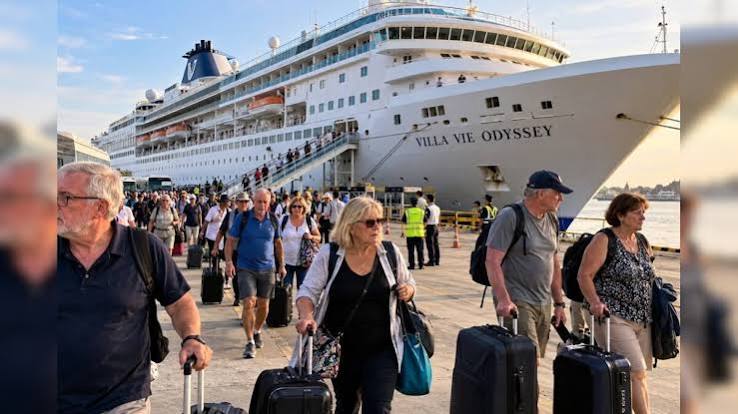
The idea was simple, if rather extraordinary. Buy a home on a cruise ship, spend years travelling the world, and wake up in a different destination every few days. For residents of Villa Vie Odyssey, however, that dream has run into a problem that has little to do with tourism and everything to do with the cost of keeping the world moving.
The US-based residential cruise operator Villa Vie Residences has suspended operations of its 924-passenger ship in Cambodia after what it described as an “extraordinary” rise in fuel costs. The vessel, which set out in October 2024, was on a planned 1,301-day voyage covering all seven continents and more than 425 ports. Unlike a conventional cruise, the concept was built around long-term living at sea, with residents able to buy or rent cabins.
The financial strain has been dramatic. According to the company, monthly fuel expenses on an equivalent per-cabin basis, which historically averaged around $1,800, have climbed to an estimated $6,000–$8,000 in parts of Asia. That is more than three times the previous average at the lower end of the estimate, and over four times at the upper end.
Villa Vie said it had tried to reduce consumption by slowing the ship and spending longer in port. Those measures, however, failed to offset the increase. The company is now coordinating residents’ disembarkation and temporary accommodation while exploring restructuring and fresh capital over the next 60 days. It has warned that no outcome is assured.
The operator has linked the surge in fuel costs to the US-Israeli war against Iran, which began in late February. The suspension is an unusual illustration of how a conflict can reach well beyond the battlefield: in this case, disrupting a floating residential community operating thousands of miles from the Gulf.
The Iran War And The Threat To Global Shipping
The conflict began on February 28, 2026, when the US and Israel launched strikes against Iran. Tehran retaliated, and the confrontation soon extended beyond military targets to the maritime routes that carry energy supplies and other essential goods around the world. Eight months on, the war is still disrupting shipping, with the Strait of Hormuz at the centre of the crisis.
The strait, which lies between Iran and Oman, connects the Persian Gulf to the Gulf of Oman and the wider Indian Ocean. Before the war, roughly one-fifth of global oil and liquefied natural gas trade passed through this narrow waterway. Its strategic importance means that even the threat of disruption can unsettle energy markets and force shipping companies to reconsider whether a voyage is worth the risk.
The danger has become increasingly tangible. According to the International Maritime Organization’s figures reported by Seatrade Maritime on October 28, there had been 121 incidents involving attacks on vessels in the Strait of Hormuz, the Arabian Gulf and the Gulf of Oman since the conflict began, with 24 seafarers killed. At the same time, diplomatic efforts to end the war have struggled to produce a lasting settlement.
There are fresh efforts to find a way out. On October 28, The Indian Express, citing Reuters, reported that Qatari mediators had presented Iran with a new draft deal intended to address the concerns of both Tehran and Washington, with a response expected by the end of the week. But the threat of renewed military action remains, leaving shipowners and energy markets with little certainty about what comes next.
For shipping companies, the problem is no longer simply whether a route is open on a map. It is whether vessels can pass through safely, whether insurers will cover them, and how much extra it will cost to keep cargo moving. That is where the war’s impact begins to spread through the global economy.
a) How the Iran War Is Disrupting Global Shipping
The first casualty of the conflict was the assumption that commercial ships could continue using the Strait of Hormuz as they always had. As attacks mounted, vessel movements through the waterway fell sharply, leaving ships and crews stranded inside the Gulf. The disruption has since evolved into a costly, high-risk system in which some vessels continue to move while others avoid the region altogether.
The IMO has warned that around 20,000 seafarers, along with port workers and offshore crews, have been affected by the crisis. The figures underline that this is not merely a question of delayed cargo deliveries; it is also a prolonged safety emergency for people working at sea.
The shipping industry has responded by changing how cargo moves. Some tankers have continued carrying oil through the strait under US military protection, with vessels travelling at night and switching off tracking systems before transferring cargo to other tankers outside the Gulf. These workarounds have helped restore oil shipments towards pre-war levels, but at a steep price.
Reuters reported on October 23 that daily charter rates for some tankers had exceeded $1 million, while more than 30 very large crude carriers had been damaged since the war began.
Container shipping faces a different challenge. The Strait of Hormuz is not the only vulnerable passage in the region. The Red Sea and Bab el-Mandeb, which connect the Indian Ocean to the Suez Canal route towards Europe, remain exposed to security threats involving Yemen’s Houthis. A French naval vessel shot down a drone threatening a CMA CGM container ship passing through Bab el-Mandeb in October, illustrating the risks that persist even outside the immediate Gulf conflict.
For operators unwilling to risk the Red Sea, the alternative is to sail around the Cape of Good Hope at the southern tip of Africa. That can add at least 10 days to a journey, increasing fuel consumption, tying up vessels for longer and delaying the return of containers for their next shipment. The result is a shipping network that is still functioning, but with longer journeys, fewer flexible vessels and greater uncertainty over delivery schedules.
b) The Rising Cost of Moving Goods
When shipping routes become dangerous, the cost of transporting goods rises long before cargo disappears from the market. Shipowners must account for higher insurance premiums, more expensive fuel, longer journeys and the possibility of damage or delay. Those costs are then reflected in freight charges and emergency surcharges, leaving importers and exporters to decide how much they can absorb and how much they must pass on.
War-risk insurance has become a particularly important expense. Insurers assess the risk of vessels entering conflict zones, and premiums can rise sharply when attacks intensify. The International Maritime Organization has warned that persistently high insurance costs are adding to the burden on shipowners and operators, making it harder for freight costs to return to normal even when shipping conditions improve.
c) Protection of Vital Shipping Lanes
Tanker rates have also surged as ships become harder to secure and voyages become more complicated. Reuters reported on October 23 that some operators were earning more than $1 million a day for very large crude carriers, reflecting the combination of strong demand for Gulf cargoes, limited vessel availability and the risks involved in moving oil through the region. Such rates can benefit some tanker owners, but they make every shipment more expensive for the buyer.
Reuters
The cost pressure is not confined to oil. Container ships taking longer routes burn more fuel and spend additional days at sea, while delayed arrivals can disrupt port schedules and the availability of empty containers. Shipping lines may impose surcharges to recover these expenses, adding another layer of cost for businesses moving electronics, machinery, clothing and other manufactured goods.
Ultimately, the bill travels through the supply chain. Importers may pay more for raw materials and finished products; manufacturers may face higher input costs; and retailers may eventually raise prices. Not every increase will reach consumers, and the impact will vary by route and product. But the longer the disruption lasts, the harder it becomes for businesses to absorb the extra expense without affecting prices, margins or delivery times.
Beyond Shipping, The Wider Economic Fallout
The disruption does not end when a ship reaches port. Higher freight charges and energy prices feed into the cost of producing and transporting goods, creating pressure across industries that may have little direct connection to the Middle East.
Fertiliser is one important example. The Gulf is a major supplier of fertiliser and the natural gas used to manufacture nitrogen-based products such as urea and ammonia. UN Trade and Development estimates that around one-third of global seaborne fertiliser trade passes through the Strait of Hormuz. Disruption therefore threatens both the movement of finished fertilisers and the availability of inputs needed to produce them.
That creates a potential second-round effect on agriculture. If fertiliser becomes more expensive or harder to obtain, farmers face higher production costs, which can eventually feed into food prices. The same principle applies to energy-intensive manufacturing, aviation and logistics, where higher fuel and transport expenses squeeze margins or are passed on to customers.
The World Bank warned in April that the war could drive energy prices up by 24% in 2026, with broader commodity prices projected to rise by 16%. The impact will not be uniform. Countries with alternative suppliers, strategic reserves and greater financial capacity may be better placed to manage the shock. Import-dependent economies with limited room to subsidise prices or support businesses face a more difficult adjustment if disruptions persist.
What the Iran War Means For India
For India, one of the world’s largest crude oil importers, the disruption presents a complicated challenge. The country must secure reliable energy supplies while managing the higher costs of transporting them, the risk of supply interruptions and the possibility that expensive imports could add to inflation.
The initial disruption forced Indian refiners to look beyond their usual Middle Eastern suppliers, including increasing purchases of Russian crude. But the picture has since changed. Reuters reported on October 22 that India’s imports of Middle Eastern crude recovered to around 2.8 million barrels per day in September, returning to pre-war levels as shipments through the Strait of Hormuz increased. Gulf oil accounted for approximately 54% of India’s overall crude imports that month.
Yet recovering supply does not necessarily mean returning to normal costs. On October 23, state-run Hindustan Petroleum Corporation (HPCL) said freight rates had doubled between July and September compared with the previous quarter.
Shipping crude on a Suezmax tanker had become about $9 per barrel, against $3–$4 in the June quarter. HPCL has increasingly opted to buy crude on a delivered basis, leaving suppliers responsible for arranging transportation and reducing the refiner’s exposure to maritime risks. Discounts offered by producers with stranded cargoes have helped offset some of the higher freight expenses.
The consequences extend beyond the oil market. Higher energy and transport costs can put pressure on India’s import bill, businesses dependent on imported inputs and the prices consumers ultimately pay. In its October 1 review, the Finance Ministry warned that geopolitical tensions and elevated crude prices could increase imported inflation and create risks for the rupee and capital flows.
Investing.com Australia
For India, then, the challenge is not simply finding enough oil. It is securing supplies at a cost the economy can absorb, while keeping shipping, manufacturing and domestic prices from coming under sustained pressure.
Winners, Losers And What Happens Next
The shipping crisis has created an uneven set of winners and losers. Some tanker owners are benefiting from exceptionally high charter rates as demand for vessels rises and ships become harder to deploy. For oil producers able to get cargoes to market, elevated prices can also bring in additional revenue. But these gains are far from universal, and they come with greater operational and security risks.
On the other side are cruise operators, importers and manufacturers facing costs they cannot easily control. Container lines must balance higher fuel bills and longer voyages against the risk of losing customers if freight charges rise too sharply. Smaller businesses, which often have less bargaining power and fewer options for hedging costs, may find it particularly difficult to absorb the increase.
Villa Vie Residences offers a striking example of that pressure. Its residential cruise model depends on keeping a ship moving across a long itinerary while maintaining a cost structure that residents can afford. When fuel expenses rise severalfold, slowing down and spending more time in port may not be enough to make the economics work. The company’s suspension shows how a shock in one part of the global economy can threaten a business operating in an entirely different sector.
The outlook now depends heavily on whether the conflict eases and commercial shipping can move through the region with greater confidence. A lasting agreement, safer passage through Hormuz and a reduction in war-risk insurance premiums could gradually bring costs down. A prolonged confrontation, however, would leave shipowners and businesses planning around elevated risks and unpredictable expenses.
The Last Bit, The World Cruise That Couldn’t Keep Sailing
Villa Vie Odyssey’s suspension brings the wider shipping crisis back to an unusually personal level. For its residents, the ship was not simply a way to see the world; it was intended to be home for years. The sudden interruption raises questions about what happens when the economics of long-term life at sea are upended by a conflict thousands of miles away.
For the shipping industry, the lesson is broader. Global trade does not have to stop completely for a crisis to become expensive. Ships can still move, oil can still reach refineries and cargo can still reach ports, but each journey may involve greater risk, higher insurance premiums, longer routes and more expensive fuel.
That leaves businesses facing a difficult question: how long can they absorb the additional costs before raising prices, changing suppliers or suspending operations?
For a residential cruise operator, the answer may come in the form of a voyage put on hold. For manufacturers, importers and consumers, the consequences may be less visible, but they can travel just as far.
The wider shipping industry’s recovery will depend on something much larger: whether the conflict eases enough for ships to move through the world’s most important energy corridor without the constant threat of attack. Until then, the cost of the war will continue to be felt well beyond the Middle East.