ED Arrested Amrit Group Promoter Kailash Chand Dujari In Deposit Scheme Investment Fraud Case
The Enforcement Directorate has arrested Amrit Group promoter-director Kailash Chand Dujari in connection with a ₹300 crore public deposit fraud involving multiple group companies. Investigators found that while more than ₹300 crore was collected from investors, predominantly in cash, only ₹131.86 crore appeared in the companies' accounting records. The investigation has also uncovered the diversion of public funds into hotels, schools, residential properties and construction projects across several states. Searches yielded assets and investments worth ₹5.48 crore, foreign currency and documents concerning properties valued at nearly ₹50 crore, raising serious questions about corporate accountability, financial transparency and depositor protection.

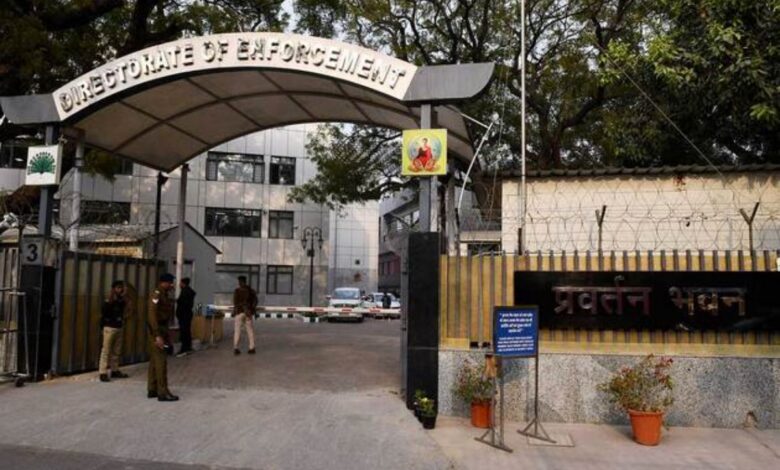
ED Arrests Amrit Group Promoter Kailash Chand Dujari in ₹300 Crore Deposit Fraud, Uncovers Massive Accounting Discrepancies
The Enforcement Directorate (ED) has arrested Kailash Chand Dujari, promoter-director of the Amrit Group of Companies, in connection with a ₹300 crore investment deposit fraud involving the collection of public money through schemes promising attractive returns. The arrest, carried out by the ED’s Kolkata Zonal Office-I on 18.11.26 under the Prevention of Money Laundering Act (PMLA), 2002, follows an investigation into substantial financial discrepancies, unpaid investor deposits and the diversion of funds into immovable properties and construction projects.
According to the agency’s press release dated 20.11.26, the group collected more than ₹300 crore from the public, predominantly in cash, while only ₹131.86 crore was reflected in its books of account. The findings expose a substantial gap between money mobilised from investors and amounts recorded by the companies, alongside a network of property investments spread across multiple states.
Dujari was produced before the Special PMLA Court in Kolkata following his arrest. The court granted the ED seven days of custody until 26.11.26. The investigation concerns Amrit Projects Limited (APL), Amrit Bio-Energy & Industries Limited (ABEIL), Amrit Projects (N.E.) Limited (APNEL) and Amrit Bazar Pariseva Limited (ABPL), whose financial activities have come under scrutiny over the mobilisation and utilisation of public deposits.
More Than ₹300 Crore Collected, Only ₹131.86 Crore Reflected in Company Accounts
The most significant financial irregularity identified by the ED concerns the substantial difference between the amount collected from depositors and the figures appearing in the Amrit Group’s accounting records. Investigators found that Dujari, acting in connivance with associates and through group companies, mobilised more than ₹300 crore from members of the public under various deposit schemes offering high returns. However, only ₹131.86 crore was reflected in the companies’ books, leaving a discrepancy exceeding ₹168.14 crore between the minimum reported collections and the recorded amount.
The predominantly cash-based collection mechanism adds another serious dimension to the case. Large-scale mobilisation of public deposits through cash transactions raises questions about financial transparency, the recording of individual investments and the movement of funds between corporate entities. According to the ED, most of the amounts promised to depositors remained unpaid, while substantial funds were diverted towards acquiring immovable properties and executing construction projects through companies associated with or controlled by Dujari. The investigation consequently centres on the handling of public savings, the accounting of deposit collections and the acquisition of assets using money mobilised from investors.
The financial discrepancy is particularly striking because the recorded amount represents less than 44% of the minimum reported collections. The findings place the group’s financial management and the conduct of those controlling its operations at the centre of a serious corporate fraud investigation.
SFIO Complaint Triggered Money Laundering Investigation
The ED initiated its investigation on the basis of Criminal Complaint No. 01/2025, dated 01.08.25, filed by the Serious Fraud Investigation Office (SFIO) against Kailash Chand Dujari, the Amrit Group companies and others. The complaint invoked various provisions of the Companies Act, 2013, including Section 447, which deals with fraud and constitutes a scheduled offence under the PMLA.
The SFIO proceedings provided the foundation for the ED’s examination of the financial proceeds generated through the deposit schemes. While the corporate fraud investigation concerns the collection and management of public deposits, the money laundering proceedings focus on how those funds were transferred, invested and allegedly converted into properties through associated entities. The involvement of multiple companies is central to reconstructing the financial trail and identifying the relationship between depositor collections and investments made by the group’s promoters and directors.
ED Searches Uncover ₹5.48 Crore in Assets and Foreign Currency
The Enforcement Directorate conducted searches under Section 17 of the PMLA on 16.09.26 and 12.10.26, uncovering financial assets and documents concerning investments made by the group’s promoters and directors. The searches resulted in the recovery and seizure of cash, jewellery, bank balances and investments collectively valued at approximately ₹5.48 crore. Investigators also recovered foreign currency amounting to USD 4,800.
The recoveries provided investigators with additional material concerning the group’s financial operations and investments. More significantly, the searches uncovered records relating to hotels, educational institutions, residential properties and land parcels, extending the investigation beyond deposit collections into the acquisition and ownership of immovable assets. The ED’s findings indicate that public deposits were allegedly channelled into property-related investments through companies connected with Dujari, bringing the group’s corporate transactions and property holdings under scrutiny.
Nearly ₹50 Crore in Property Investments Linked to Promoters and Directors
Another major finding concerns documents relating to investments worth nearly ₹50 crore in properties across several states. According to the ED, the recovered records include investments made by promoters and directors in hotels situated in Jaipur, Indore and Delhi, alongside schools, residential premises and land parcels in West Bengal, Assam, Jharkhand and other locations.
The agency also identified property investments involving benami persons and entities, adding a further dimension to the investigation into ownership and control of assets. Such arrangements are particularly significant in financial fraud cases because properties may be registered in the names of individuals or entities other than those exercising effective control over them. The ED’s examination of these holdings is therefore important for tracing the movement of depositor funds and identifying the beneficiaries of the investments.
The nearly ₹50 crore figure relates to the value of property investments represented by the recovered documents, while the separately reported ₹5.48 crore concerns cash, jewellery, bank balances and investments seized during the searches. Together, these findings reveal the scale of the financial and property-related transactions under examination.
The geographical spread of the investments also raises questions about the manner in which funds collected through deposit schemes were deployed across different businesses and locations. The acquisition of hotels, educational properties and land through associated corporate entities has become a central part of the ED’s investigation into the alleged diversion of public money.
Unpaid Depositors at the Centre of the ₹300 Crore Fraud
Beyond the accounting discrepancies and property investments, the most consequential aspect of the case concerns the depositors whose money was collected through promises of attractive financial returns. According to the ED, most of the promised amounts remained unpaid, even as substantial funds were directed towards immovable properties and construction projects.
The case highlights serious concerns surrounding deposit mobilisation, corporate accountability and the use of investor money within interconnected business entities. The difference between the reported collections and recorded accounts, combined with the alleged diversion of funds into property investments, has placed the financial conduct of the Amrit Group’s management under intense scrutiny.
With Kailash Chand Dujari in ED custody until 26.11.26, investigators are continuing to examine the financial transactions, associated companies and property investments connected with the deposit schemes. The investigation now centres on tracing the movement of more than ₹300 crore collected from the public, examining the accounting discrepancies and establishing the financial relationships behind the investments identified during the searches.
The Amrit Group case illustrates how deposit schemes promising attractive returns can become the foundation of extensive financial irregularities when public money moves through multiple companies and into assets far removed from the original investment arrangements. For depositors awaiting repayment, the central issue remains the fate of their money, while the ED’s findings have brought the group’s financial operations, property acquisitions and promoter-controlled entities under sustained investigation.