ED Attach Properties Against Nupur Bora
The Enforcement Directorate's latest action against former Barpeta Circle Officer Nupur Bora has brought renewed attention to an alleged ₹4.01 crore disproportionate assets case involving family members, subordinate officials and questionable financial transactions. Investigators have traced unaccounted cash through multiple bank accounts, home loan repayments, mutual fund investments, insurance policies and property purchase agreements. The latest attachment of ₹70.09 lakh takes the combined value of attached assets to approximately ₹3.62 crore. The investigation exposes troubling questions about financial accountability within Assam's revenue administration and the use of personal and professional relationships to move suspected proceeds of corruption.

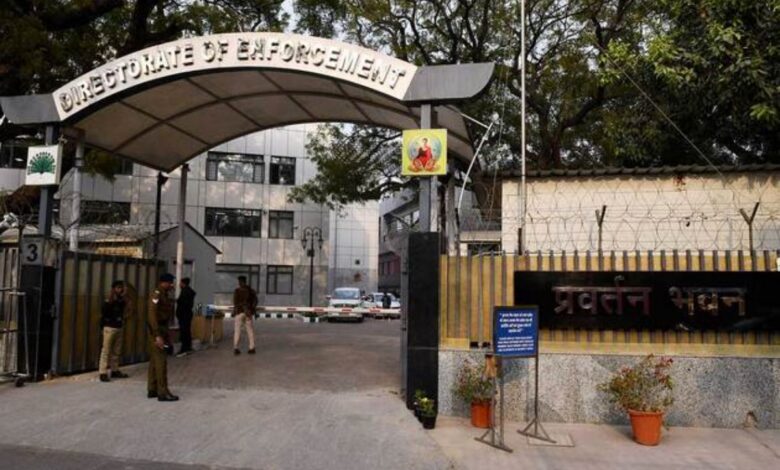
Nupur Bora Disproportionate Assets Case: ED Traces ₹4.01 Crore Money Trail Through Family, Subordinates And Property Deals
The Enforcement Directorate (ED) has provisionally attached movable and immovable assets worth ₹70.09 lakh in connection with a money laundering investigation involving Nupur Bora, an Assam Civil Service (ACS) officer and former Circle Officer of Barpeta, Assam. The action, announced on 23.11.26 by the agency’s Guwahati Zonal Office-I under Section 5(1) of the Prevention of Money Laundering Act (PMLA), 2002, has brought further scrutiny to a disproportionate assets case involving approximately ₹4.01 crore.
According to the ED, the investigation has uncovered a complex financial trail involving unaccounted cash deposits, bank accounts belonging to family members and subordinate officials, mutual fund investments, insurance premiums and property transactions. With the latest attachment, the combined value of assets attached under the PMLA and the underlying vigilance proceedings has reached approximately ₹3.62 crore.
The case has emerged as a significant corruption investigation involving Assam’s revenue administration, particularly because of the manner in which suspected proceeds of crime were allegedly moved through individuals connected to Nupur Bora’s personal and professional circles. The financial trail described by the ED extends beyond the former Circle Officer’s accounts to those of her husband, father, a subordinate Lot Mandal and the subordinate’s father. The involvement of multiple individuals, combined with investments and property agreements executed under different names, has placed the movement and ownership of the assets at the centre of the investigation.
Vigilance Investigation Reveals ₹4.01 Crore In Disproportionate Assets
The money laundering investigation originated from an FIR registered by the Vigilance Police Station under the Chief Minister’s Special Vigilance Cell, Assam. Following its investigation, the vigilance authorities filed a chargesheet against Nupur Bora on 12.11.25 before the Court of the Special Judge, Assam, Guwahati. A supplementary chargesheet was subsequently filed on 31.03.26 against her husband, Gagan Chandra Kalita, her father, Kinaram Borah, and Surajit Deka, a Lot Mandal who worked under Nupur Bora.
According to the vigilance chargesheet, Nupur Bora acquired assets disproportionate to her known sources of income amounting to approximately ₹4.01 crore during the check period from 17.01.19 to 15.09.25. The disproportionate assets were calculated at 458.64% of her known income, an exceptionally high figure that became the central financial finding of the investigation. The ED subsequently identified approximately ₹4.01 crore as proceeds of crime in its money laundering investigation. The findings have raised serious questions about the accumulation of wealth by a public servant entrusted with responsibilities in land and revenue administration, where official decisions can carry substantial financial consequences.
How Unaccounted Cash Was Routed Through Family And Subordinate Bank Accounts
One of the most significant findings disclosed by the ED concerns the movement of unaccounted cash through multiple bank accounts. Investigators found that Nupur Bora, during her tenure as Circle Officer, allegedly accumulated substantial amounts of cash and introduced the money into the formal banking system through deposits in accounts maintained in her own name and those of her husband and father. The money was subsequently routed through a series of transactions involving accounts belonging to her subordinate, Surajit Deka, and Deka’s father, before being transferred into Nupur Bora’s home loan and savings accounts.
The financial arrangement described by investigators raises particularly serious concerns because it involved a subordinate government official in transactions connected with his superior. Routing funds through several accounts can obscure their original source and complicate efforts to establish their ultimate ownership. The movement of money into home loan accounts is equally significant, as repayments can convert cash into equity in an immovable asset. The ED’s findings therefore point to a financial network in which family relationships and professional connections were allegedly used to move suspected proceeds through the banking system.
Property Agreements In Family Members’ Names And Vehicle Linked To Contractual Employee
The investigation has also identified questionable arrangements involving land purchase agreements and a vehicle. According to the ED, agreements for purchasing land were executed in the names of Nupur Bora’s father and husband. One such agreement was subsequently executed again in Nupur Bora’s own name, replacing her husband as the purchaser. These transactions have become important to the investigation into the ownership and financing of assets associated with the former Circle Officer.
Investigators also identified a vehicle allegedly acquired and held in the name of a contractual employee working at the Circle Office. This finding extends the financial investigation beyond Nupur Bora’s immediate family and subordinate Lot Mandal to another individual associated with her workplace. The use of different names in property agreements and vehicle ownership records raises important questions about who financed the purchases and exercised effective control over the assets. Such arrangements are particularly concerning in an investigation involving a public official whose professional responsibilities included revenue administration.
ED Attaches Mutual Funds, Insurance Policies And Property Advances Worth ₹70.09 Lakh
The latest provisional attachment covers three categories of assets and payments identified during the money laundering investigation. These include units of SBI Mutual Fund valued at ₹13.45 lakh and three life insurance policies valued at ₹21.64 lakh, standing in Nupur Bora’s name. The ED also attached payments totalling ₹35 lakh made as advances under agreements for purchasing two plots of land at Maj Jalukbari and Village Garal, along with a flat in Guwahati. The advance payments are lying with the respective sellers and promoter.
The insurance transactions are particularly noteworthy because investigators identified premium payments made using cash deposited into bank accounts on the very same day. The ED has connected these transactions with the broader movement of suspected proceeds into financial investments and immovable property purchases. The combination of mutual funds, insurance policies and real estate advances demonstrates how the financial trail extended across different investment and asset categories.
Earlier ₹2.92 Crore Attachment Takes Combined Value To ₹3.62 Crore
The latest ED action follows an earlier attachment permitted by the Court of the Special Judge, Assam, Guwahati, on 02.04.26 under Section 107 of the Bharatiya Nagarik Suraksha Sanhita, 2023. The court had allowed attachment of assets worth approximately ₹2.92 crore in connection with the underlying vigilance case. These included cash recovered during the investigation, jewellery, a flat, a plot of land, a vehicle and bank balances belonging to the accused persons.
With the additional ₹70.09 lakh attached under the PMLA, the combined value of assets attached in the two proceedings now stands at approximately ₹3.62 crore. The figure represents a substantial portion of the ₹4.01 crore identified by investigators as proceeds of crime. The attachments also demonstrate the breadth of the financial investigation, which encompasses cash, precious valuables, banking funds, investment products, insurance policies, vehicles and real estate-related transactions.
The case has also attracted attention since September 2025, when vigilance officials arrested Nupur Bora following searches connected with the disproportionate assets investigation. Contemporary reporting described the recovery of approximately ₹2 crore in cash and gold valued at around ₹1 crore during searches at her residences in Guwahati and Barpeta. The subsequent chargesheets and ED investigation have considerably expanded the financial scrutiny surrounding the former Circle Officer.
Questions Over Financial Accountability In Assam’s Revenue Administration
The Nupur Bora case has exposed troubling questions about financial oversight within government offices responsible for land and revenue administration. A Circle Officer occupies an important administrative position, and the involvement of a subordinate Lot Mandal and a contractual employee in the financial arrangements described by investigators makes the case particularly concerning. The investigation has revealed how suspected illicit wealth can move through family accounts, subordinate officials, loan repayments and investment products before becoming connected with property purchases and other assets.
The ED’s findings have shifted attention from the mere accumulation of disproportionate wealth to the wider financial network surrounding it. With approximately ₹3.62 crore in assets now under attachment across the related proceedings, the case represents a substantial enforcement action against suspected corruption-linked money laundering in Assam. The agency has stated that further investigation is in progress, with the financial transactions and proceeds of crime remaining central to the proceedings.
The larger issue emerging from the case is the vulnerability of public administration when financial dealings between officials, their relatives and subordinates become intertwined. The transactions described by the ED underline the importance of scrutiny over unexplained wealth, third-party asset holdings and the movement of funds through interconnected accounts, particularly among officials exercising authority over valuable public and private property interests.