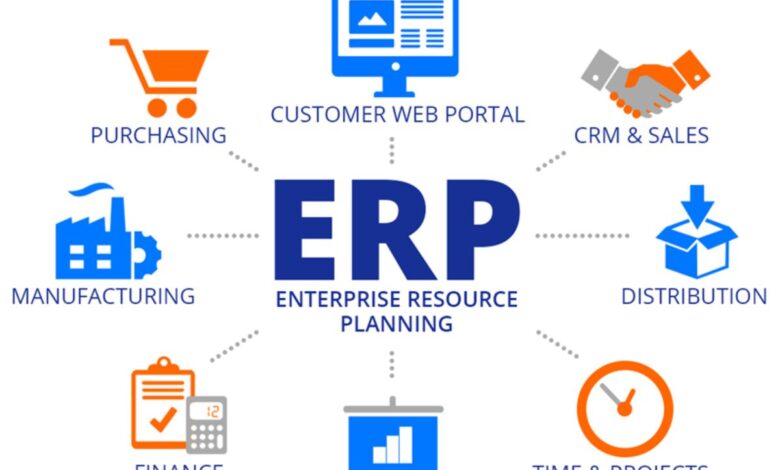
India’s digital transformation has reached a critical inflection point in 2026, with Enterprise Resource Planning software emerging as the backbone of business modernization. The Indian ERP market is projected to reach $815 million by the end of 2026, representing remarkable growth from $375.2 million in 2020. This explosive expansion reflects a fundamental shift in how Indian businesses across manufacturing, retail, pharmaceuticals, textiles, and services manage their operations in an increasingly competitive landscape.
1. Oracle NetSuite: The Cloud Pioneer for Growing Businesses
Oracle NetSuite stands as India’s premier cloud-native ERP solution, serving over 41,000 customers globally with a substantial and growing presence in the Indian market. What distinguishes NetSuite from legacy systems retrofitted for cloud deployment is its original design as a cloud-first platform, ensuring seamless updates, automatic version upgrades, and zero downtime during system enhancements.
NetSuite’s architecture delivers a truly unified suite where financial management, inventory control, customer relationship management, e-commerce capabilities, and business intelligence share a single database and interface. This unity eliminates the data reconciliation challenges that plague businesses using multiple disconnected systems. The platform’s financial management capabilities are particularly sophisticated, supporting advanced revenue recognition standards, multi-entity consolidation, and complex billing scenarios that subscription-based businesses require.
For Indian businesses, NetSuite offers comprehensive localization including Goods and Services Tax compliance, Tax Deducted at Source management, and support for Indian statutory requirements. The system scales effortlessly from small startups to large enterprises, making it particularly attractive for fast-growing companies that don’t want to replace their ERP every few years. Implementation timelines typically range from three to six months depending on complexity, with costs varying based on user count, modules selected, and customization requirements.
NetSuite excels in industries including retail, wholesale distribution, manufacturing, professional services, and software companies. Its native e-commerce integration makes it especially valuable for businesses operating omnichannel retail models. The platform’s SuiteAnalytics provides powerful reporting capabilities drawing from unified company-wide data, enabling executives to make informed decisions based on real-time information rather than outdated reports compiled from multiple sources.
2. SAP Business Solutions: Enterprise-Grade Power with Flexibility
SAP remains synonymous with enterprise resource planning, offering a comprehensive portfolio of solutions tailored to different business sizes and complexities. For large Indian enterprises, SAP S/4HANA represents the pinnacle of ERP capability, delivering in-memory data processing, artificial intelligence-driven workflows, and unmatched depth in logistics, production planning, and compliance management. The system is ubiquitous in industries requiring ultra-precise planning including automotive manufacturing, pharmaceuticals, chemicals, and steel production.
For small and medium-sized businesses, SAP Business One provides a complete ERP solution with strong supply chain and inventory tracking capabilities. Designed specifically for companies with annual revenue below $150 million, Business One offers the reliability and depth of SAP’s technology at a scale and price point accessible to smaller organizations. The system is particularly popular among manufacturing and distribution companies in Europe and North America, with growing adoption in India.
SAP’s strength lies in its ability to handle extraordinarily complex global operations with multiple entities, currencies, languages, and regulatory environments. However, this power comes with significant implementation complexity. SAP projects typically require six to twelve months or longer, with costs frequently exceeding initial budgets. The system demands substantial internal IT resources, dedicated change management efforts, and often ongoing consultant support.
Indian businesses choose SAP when they need proven technology capable of managing intricate manufacturing processes, extensive supply chains, or operations spanning multiple countries. The platform’s industry-specific solutions for sectors including oil and gas, utilities, mining, and aerospace demonstrate its flexibility and depth. Organizations implementing SAP should ensure they have executive commitment, adequate budget reserves, and realistic timelines that account for the system’s inherent complexity.
3. Microsoft Dynamics 365: Ecosystem Integration for Microsoft Users
Microsoft Dynamics 365 provides two distinct ERP pathways depending on organizational size and requirements. Dynamics 365 Business Central targets small to midsize companies with annual revenue typically below $150 million, offering solid financial management, supply chain capabilities, project tracking, and light customer relationship management in a cloud-based package. Business Central boasts approximately 45,000 cloud customers globally, with particularly strong presence in the Americas, Europe, Middle East, and Africa.
For larger organizations, Dynamics 365 Finance and Operations delivers comprehensive ERP functionality rivaling SAP S/4HANA and Oracle Fusion Cloud ERP. This solution provides deep capabilities in financial management, supply chain control, manufacturing, procurement, and cross-border operations. The system integrates seamlessly with Microsoft’s broader ecosystem including Azure cloud services, Power BI analytics, Microsoft 365 productivity tools, and Teams collaboration platform.
The Microsoft ecosystem integration represents Dynamics 365’s most compelling advantage for businesses already invested in Microsoft technologies. Sales managers can approve purchase orders directly from Outlook, finance teams can access automated insights through Power BI without endless spreadsheet exports, and collaboration happens naturally through Teams integration. This familiarity reduces training requirements and accelerates user adoption compared to entirely foreign systems.
Implementation timelines for Business Central typically range from three to six months, while Finance and Operations projects often extend from six to twelve months or longer. Costs vary substantially based on deployment model, user count, and customization requirements. Microsoft employs a partner-sold model, meaning businesses work primarily with third-party implementation consultants rather than directly with Microsoft, making partner selection a critical success factor.
Indian businesses appreciate Dynamics 365’s flexibility, competitive pricing compared to SAP and Oracle, and strong artificial intelligence capabilities for predictive analytics and process automation. However, the system’s origins as multiple acquired products means some modules use different codebases, occasionally requiring additional integration effort and potentially incurring unexpected costs.
4. TallyPrime: India’s Trusted Accounting Foundation
TallyPrime holds a special position in India’s business software landscape as the country’s most widely recognized accounting and basic ERP solution. Used by millions of small and medium-sized businesses across India, TallyPrime has evolved from pure accounting software into a platform offering inventory management, payroll processing, invoicing, and statutory compliance capabilities alongside its core financial functions.
TallyPrime’s greatest strength is its deep understanding of Indian business requirements. The software provides comprehensive support for Goods and Services Tax compliance including return preparation, Tax Deducted at Source calculations, Tax Collected at Source management, and integration with government portals for electronic filing. This localization, combined with user-friendly design and affordability, has made TallyPrime the default choice for countless Indian businesses, particularly in retail and distribution sectors.
The software operates primarily on desktop architecture, though recent versions have added cloud capabilities through TallyPrime Connected. This desktop-first approach ensures reliable offline functionality, which remains important for businesses in areas with inconsistent internet connectivity. Implementation is remarkably fast, often completed within two weeks, with initial costs ranging from five thousand to ten thousand rupees and ongoing licensing fees between nine hundred and three thousand rupees monthly depending on the edition selected.
However, TallyPrime’s focus on accounting means it lacks the comprehensive modules found in full-scale ERP systems. Manufacturing planning, advanced supply chain management, customer relationship management, and business intelligence capabilities are limited compared to enterprise platforms. For businesses whose primary need is robust financial management and regulatory compliance, TallyPrime delivers excellent value. Companies requiring integrated management of complex manufacturing, extensive supply chains, or sophisticated analytics typically need more comprehensive solutions.
5. Odoo: Open-Source Flexibility with Modern Design
Odoo has emerged as a compelling alternative to traditional ERP systems, offering a comprehensive suite of integrated business applications built on open-source technology. The platform provides modules for customer relationship management, sales, e-commerce, inventory management, accounting, manufacturing, human resources, and dozens of other business functions, all sharing a unified database and modern user interface.
What distinguishes Odoo is its modular architecture and affordability. Businesses can start with basic accounting functionality and progressively add modules as needs evolve, paying only for capabilities actually used. This approach dramatically reduces initial investment compared to traditional ERP systems that require upfront licensing for functionality businesses might not need for years. Odoo’s open-source nature empowers a thriving global community that continuously develops new applications and improvements.
For Indian businesses, Odoo now provides comprehensive localization matching TallyPrime’s capabilities including Goods and Services Tax filing, electronic invoicing, electronic waybills, UPI payment integration, multiple branch management, and all statutory requirements. The platform’s maturation of Indian features, combined with superior usability and cloud-based accessibility, has positioned it as a serious challenger to established players.
Performance benchmarks show Odoo recording data approximately thirty percent faster than TallyPrime and eighty percent faster than competing cloud platforms. The system’s web-based design provides efficient shortcuts, artificial intelligence integration, and sub-100 millisecond response times, delivering desktop application responsiveness with cloud accessibility benefits. Implementation timelines typically range from two to six months depending on complexity, with costs significantly lower than enterprise alternatives.
Odoo suits startups, small to medium enterprises, and even larger organizations seeking customizable solutions without vendor lock-in. The platform particularly appeals to businesses valuing flexibility, modern user experience, and the ability to adapt systems to unique processes rather than forcing business operations to conform to rigid software constraints.
6. ERPNext: The Open-Source Enterprise Solution
ERPNext represents the world’s most advanced completely open-source ERP software, providing a genuine alternative to proprietary systems like SAP and Microsoft Dynamics at dramatically lower total cost of ownership. Built on modern web technologies, ERPNext delivers comprehensive functionality spanning accounting, inventory management, customer relationship management, human resources, manufacturing, project management, and asset management.
The platform’s open-source model means businesses can access source code, customize extensively without license restrictions, and avoid vendor lock-in entirely. Organizations with technical capabilities can self-host ERPNext on their own infrastructure, maintaining complete control over data and system configuration. For businesses preferring managed solutions, cloud hosting options provide hassle-free deployment without sacrificing the benefits of open architecture.
ERPNext features user-friendly interfaces that simplify complex workflows, making the system accessible even to users without extensive technical backgrounds. The setup process is straightforward, with many implementations completed through self-service approaches supported by extensive documentation and an active global community. The platform tracks opportunities, prepares quotations, records orders and shipments, manages procurement, handles production planning, and provides comprehensive reporting across all business functions.
Indian businesses particularly appreciate ERPNext’s affordability and flexibility. The system provides excellent value for small to medium manufacturing companies, distribution businesses, and service organizations requiring integrated operations without enterprise software budgets. Implementation costs typically range from moderate consulting fees for setup assistance to zero for technically capable teams handling deployment themselves. Ongoing costs are limited to hosting fees or internal infrastructure expenses.
The primary consideration with ERPNext is technical capability requirements. While setup is not extraordinarily difficult, businesses benefit from having internal technical resources or engaging consultants familiar with the platform. Organizations comfortable with this requirement gain access to enterprise-grade functionality at a fraction of traditional ERP costs.
7. Zoho Books with Zoho One: Integrated Cloud Suite
Zoho Books functions as Zoho Corporation’s accounting core within the broader Zoho One ecosystem of business applications. While Zoho Books alone provides robust accounting capabilities including invoicing, expense tracking, Goods and Services Tax compliance, bank reconciliation, and financial reporting, its true power emerges through integration with other Zoho applications for customer relationship management, inventory management, human resources, project management, and numerous other functions.
This integrated approach allows businesses to coordinate accounting tasks with sales pipelines, inventory levels, and operational workflows seamlessly. The cloud-based architecture ensures accessibility from any device with internet connectivity, supporting distributed teams and remote work arrangements increasingly common in modern businesses. Zoho’s commitment to affordable pricing makes sophisticated business management accessible to small and medium enterprises that might find other solutions prohibitively expensive.
For Indian businesses, Zoho Books provides complete Goods and Services Tax support including automated calculations, return preparation, and electronic filing. The platform handles Tax Deducted at Source, purchase orders, sales orders, basic inventory tracking, and mobile access for on-the-go management. Integration with other Zoho applications creates comprehensive business management capabilities approaching full ERP functionality without enterprise complexity or cost.
Implementation timelines are rapid, often measured in weeks rather than months. Costs are transparent and affordable, with subscription pricing typically ranging from hundreds to few thousand rupees monthly depending on features and user count. Support is available through Zoho’s team and extensive partner network. The platform particularly suits service businesses and retailers seeking straightforward, cost-effective business management without extensive customization requirements.
Zoho Books with Zoho One integration is best for small to medium service companies, retail businesses, and organizations prioritizing ease of use, rapid deployment, and integration with modern productivity tools. Companies requiring deep manufacturing capabilities or highly complex supply chain management may need more specialized solutions.
8. Sage X3: Manufacturing Excellence with Global Reach
Sage X3 has established itself as a powerful mid-market ERP solution particularly strong in manufacturing, distribution, and service industries. The platform delivers deep functionality for production planning, quality management, inventory control, and supply chain optimization while maintaining accessibility for organizations not requiring full enterprise-scale complexity.
What distinguishes Sage X3 is its focus on operational excellence through advanced analytics and business intelligence. The system provides real-time insights into manufacturing processes, inventory positions, financial performance, and operational metrics, enabling managers to identify inefficiencies, optimize resource allocation, and respond quickly to changing conditions. This analytical depth helps businesses move beyond basic transaction processing to strategic operational improvement.
Sage X3 offers flexible deployment options including cloud, on-premises, and hybrid models, allowing businesses to choose infrastructure approaches aligned with their technical capabilities, regulatory requirements, and strategic preferences. The platform supports multiple entities, currencies, and languages, making it suitable for companies operating across multiple Indian states or internationally.
For Indian manufacturing companies, Sage X3 provides tools for demand forecasting, production scheduling, bill of materials management, shop floor control, and quality assurance. Distribution businesses benefit from warehouse management, order processing, and logistics capabilities. The system’s financial modules deliver multi-currency accounting, budgeting, asset management, and comprehensive statutory reporting.
Implementation timelines typically range from four to eight months depending on organizational complexity and customization requirements. Costs position Sage X3 in the mid-market tier between entry-level solutions and top-tier enterprise platforms. The system particularly appeals to growing manufacturing and distribution companies ready to move beyond basic accounting systems but not requiring SAP or Oracle’s enterprise complexity.

9. Infor CloudSuite: Industry-Specific Innovation
Infor CloudSuite represents a collection of industry-specific ERP solutions designed to address unique requirements in sectors including manufacturing, healthcare, hospitality, retail, fashion, and distribution. Rather than forcing businesses to customize generic software, Infor provides pre-configured solutions incorporating industry best practices, regulatory requirements, and specialized workflows out of the box.
This industry focus reduces implementation time, minimizes customization effort, and ensures the system understands sector-specific terminology and processes. For example, Infor CloudSuite Industrial specifically addresses discrete and mixed-mode manufacturing with features for engineering change management, quality control, and complex production scheduling. Infor CloudSuite Fashion targets apparel and footwear companies with product lifecycle management, trend analysis, and seasonal planning capabilities.
Infor’s cloud-native architecture delivers modern user interfaces, mobile accessibility, and integration with emerging technologies including artificial intelligence, machine learning, and Internet of Things sensors. The platform emphasizes user experience, making sophisticated functionality accessible through intuitive design rather than requiring extensive training.
For Indian businesses, Infor’s industry specialization can significantly accelerate value realization compared to generic systems requiring extensive configuration. Companies in specialized sectors benefit from pre-built industry content reducing the burden of defining processes and workflows. However, this specialization means businesses should carefully evaluate whether Infor offers solutions specifically targeting their industry before committing.
Implementation timelines and costs vary substantially based on industry solution selected and organizational complexity. Infor typically engages through partner channels, making partner selection critical to success. The platform suits mid-market to large enterprises in industries where Infor provides dedicated solutions, particularly those valuing industry-specific functionality over generic flexibility.
10. Acumatica Cloud ERP: Flexible Pricing with Comprehensive Capability
Acumatica differentiates itself through innovative licensing based on resource consumption rather than user count, making it particularly attractive for businesses with many users or fluctuating workforce sizes. This consumption-based pricing provides predictable costs without penalizing businesses for giving more employees system access.
The platform delivers comprehensive ERP functionality including financial management, distribution management, manufacturing, customer management, and project accounting in a modern, cloud-native architecture. Acumatica’s open architecture and extensive API support enable integration with virtually any third-party system, making it suitable for businesses with diverse technology ecosystems.
Acumatica particularly excels in project-driven businesses including construction firms, engineering companies, and professional services organizations. The system’s project accounting capabilities track costs, revenue, and profitability by project with granular detail. Manufacturing functionality supports both make-to-stock and make-to-order production, with features for production scheduling, material requirements planning, and shop floor control.
For Indian businesses, Acumatica provides localization support for statutory requirements, though this may require partner assistance for comprehensive compliance. The platform’s flexibility allows extensive customization through development tools, appealing to organizations with technical resources and unique requirements. However, this flexibility means businesses should budget adequate implementation time for configuration and testing.
Implementation timelines typically range from three to six months. Costs position Acumatica competitively in the mid-market, with the consumption-based licensing potentially providing better value than user-count models for businesses with large workforces. The platform suits growing companies seeking modern, flexible ERP solutions without enterprise complexity, particularly in project-driven industries.
Selecting the Right ERP Solution for Your Business
Choosing an ERP system represents one of the most consequential technology decisions businesses make, impacting operations, productivity, and competitive position for years or decades. The selection process should begin with thorough assessment of current pain points, future requirements, and organizational capabilities.
Industry fit is paramount. Manufacturing companies require production planning, bill of materials, and quality management functionality that service businesses don’t need. Retail operations need point-of-sale integration and omnichannel inventory management irrelevant to professional services firms. Specialized industries including pharmaceuticals, food processing, or textiles benefit from solutions understanding sector-specific regulations and processes.
Business size significantly influences appropriate solutions. Small businesses with straightforward operations and limited budgets may find TallyPrime, Zoho Books, or Odoo perfectly adequate. Mid-market companies with growing complexity might consider Oracle NetSuite, Microsoft Dynamics 365 Business Central, or Sage X3. Large enterprises with global operations typically require SAP, Oracle Fusion, or Microsoft Dynamics 365 Finance and Operations.
Deployment preferences matter as well. Organizations prioritizing accessibility, automatic updates, and minimal IT infrastructure overhead generally prefer cloud-based solutions like NetSuite, Business Central, or Acumatica. Companies with specific data residency requirements, limited internet connectivity, or existing infrastructure investments might choose on-premises or hybrid deployments.
Budget considerations extend beyond initial licensing costs to include implementation services, customization, training, ongoing support, and internal resource allocation. Hidden costs often emerge during implementation, making conservative budgeting with contingency reserves essential. Total cost of ownership over five to ten years provides more accurate comparison than initial license fees alone.
Implementation timeline requirements influence vendor selection. Businesses needing rapid deployment might prioritize solutions with shorter implementation cycles like TallyPrime, Zoho Books, or templated configurations of Microsoft Dynamics 365 Business Central. Organizations willing to invest time for comprehensive transformation can consider more complex systems offering greater capability.
The vendor and implementation partner relationship is critical to success. Businesses should evaluate not just software capabilities but also the partner’s industry experience, technical competence, change management support, and long-term commitment. References from similar organizations provide invaluable insight into what implementation and support actually look like beyond marketing materials.
The Future of ERP in India
India’s ERP market shows no signs of slowing down, with analysts projecting continued double-digit annual growth through 2028 and beyond. Several trends are shaping the industry’s evolution and will influence which solutions thrive in coming years.
Artificial intelligence integration is moving from experimental to essential, with modern ERP systems incorporating machine learning for demand forecasting, anomaly detection, process optimization, and predictive analytics. These capabilities enable businesses to anticipate issues before they occur, optimize inventory levels dynamically, and make data-driven decisions with greater confidence.
Mobile-first design is becoming standard as workforces become more distributed and field operations require real-time system access. Modern ERP platforms provide full functionality through mobile interfaces, enabling sales teams to access customer information on-site, warehouse staff to manage inventory from handheld devices, and executives to approve workflows from anywhere.
Industry-specific solutions continue gaining market share as businesses recognize generic software requires extensive customization to address unique sectoral requirements. Vendors developing deep expertise in particular industries can deliver pre-configured solutions incorporating best practices and regulatory requirements, reducing implementation time and cost while improving initial fit.
Integration ecosystems are expanding as businesses recognize no single system can address every need. Modern ERP platforms emphasize open architecture, robust APIs, and pre-built connectors enabling seamless integration with specialized applications for customer experience management, business intelligence, warehouse automation, and countless other functions.
Sustainability and environmental, social, and governance considerations are increasingly influencing ERP selection. Forward-thinking businesses seek systems helping track carbon emissions, manage circular economy initiatives, ensure supply chain transparency, and report on sustainability metrics to stakeholders.
Conclusion
The Indian ERP landscape in 2026 offers unprecedented choice and capability for businesses of all sizes and industries. From global leaders including Oracle NetSuite, SAP, and Microsoft Dynamics 365 to Indian favorites including TallyPrime, to innovative open-source platforms including Odoo and ERPNext, organizations can find solutions aligned with their specific requirements, budgets, and strategic objectives.
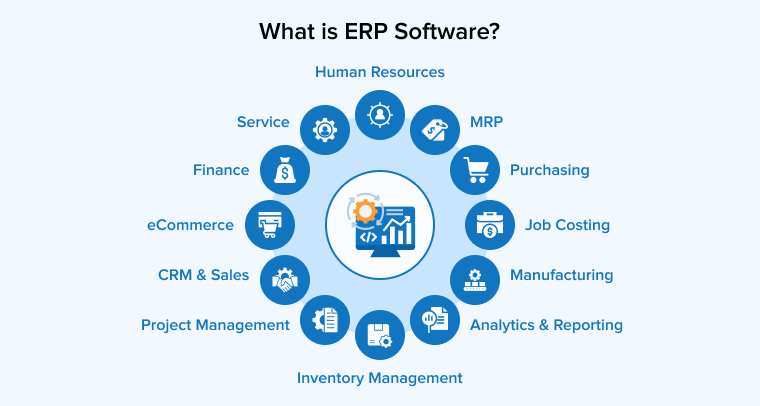
Success with ERP implementation requires more than selecting the right software. It demands executive commitment, adequate resources, realistic timelines, and recognition that ERP transformation is fundamentally about business process improvement rather than technology deployment. Organizations approaching ERP as a strategic initiative rather than an IT project achieve dramatically better outcomes.
The businesses thriving in India’s increasingly competitive market will be those leveraging integrated systems providing real-time visibility, enabling data-driven decisions, and freeing human talent from repetitive tasks to focus on strategic initiatives. Whether managing manufacturing operations in Mumbai, running retail chains across multiple states, or scaling digital businesses from Bangalore, the right ERP system can provide the operational excellence required to compete effectively in 2026 and beyond.
The time for digital transformation is not tomorrow but today. With Indian ERP market maturity providing proven solutions, experienced implementation partners, and competitive pricing, businesses delaying ERP adoption risk falling permanently behind competitors already benefiting from integrated operations. The question is not whether to implement ERP but which solution to choose and when to begin the journey toward operational excellence.