32nd Avenue Group- Another Blusmart In Making: How Founders Use Company Money To Fund Personal Luxuries?
Forbes 30 Under 30 to Judicial Custody: How Dhruv Sharma Allegedly Turned Gurugram's Most Photographed Mall Into a Financial Crime Scene

Sold to 25 Buyers, Owned by None: The ₹500 Crore 32nd Avenue Scandal That Exposes India’s Real Estate Fraud Epidemic
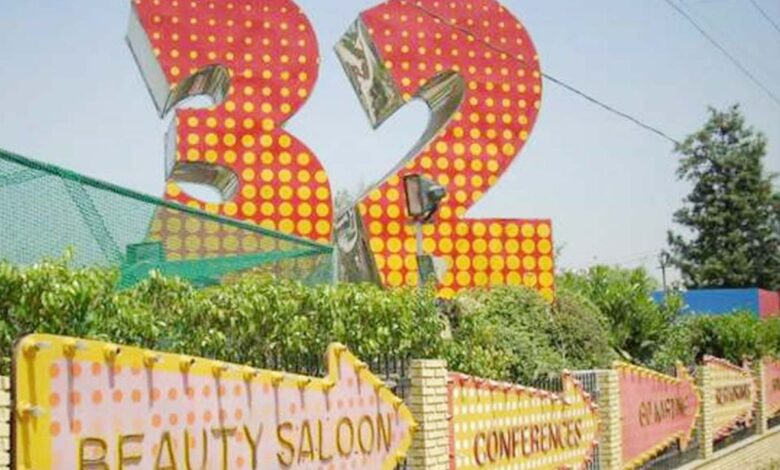
There is a photograph, shared tens of thousands of times across Instagram, of a cobblestone alley, bathed in warm string lights, red-brick walls framing boutique storefronts, wine glasses raised at outdoor tables, laughter suspended mid-air. It could be Notting Hill. It could be Bruges. It is, in fact, the 32nd Avenue complex on National Highway-8 in Gurugram, Haryana.
And behind that exquisitely curated image lies what investigators now allege is one of the most sophisticated real estate frauds in recent Indian memory. A scheme that may have cheated between 500 and 1,000 investors of a combined ₹500 crore, with the money allegedly siphoned off to fund a yacht moored in Goa, luxury villas in Neemrana, and a penthouse in one of the most expensive residential buildings in the country.
This is not just the story of one man’s alleged greed. It is the story of how India’s aspirational middle class, the doctor, the retired bank officer, the NRI, the first-generation entrepreneur, remains structurally defenceless against a class of real estate promoters who have learned to weaponise trust, regulatory opacity, and the sheer glamour of a “branded” address. The 32nd Avenue case is not an aberration, but is a, disturbingly, a template.
The Origin Story: Where Goodwill Becomes Bait
Dhruv Dutt Sharma was born in 1991 and grew up in Gurugram. He studied at Boston University between 2009 and 2013, graduating with a degree in Entrepreneurship, Computer Science, and Hospitality. He returned to India and co-founded GuestHouser in 2014 alongside his sister Shirin Sharma — an Airbnb-style verified vacation rental platform. In 2018, he earned a spot on the Forbes 30 Under 30 Asia list under the retail and e-commerce category. On paper, this was a success story that Gurugram, India’s self-styled millennium city, liked to claim as its own.
But the deeper foundation was the family legacy. Dhruv’s parents, Anubhav and Mamta Sharma, had run Apra Motels, a hospitality business that owned the 32nd Milestone property on NH-8 — a pitstop beloved since the 1990s for its roadside food and go-karting. This was not anonymous money. This was generational goodwill, embedded in a community.
One investor Narendra Singh Malik told with devastating candour: “His father Anubhav Sharma had earned goodwill in the society. And seeing him, it seemed we were investing in the right place.” That sentence should be read and re-read. It is the confession of a system in which proximity to a respected family substitutes for due diligence — and it is the sentence that real estate fraudsters across India have been exploiting for decades.
In 2017, 32nd Avenue was built as a reimagining of that family legacy — a high-concept commercial lifestyle complex with the aesthetic vocabulary of European old towns, designed to appeal to Gurugram’s wealthy and aspirational residents. When Dhruv Sharma began offering commercial units in the complex for sale with guaranteed lease rentals for up to 30 years, buyback options, and monthly income, it appeared to be a legitimate, well-structured investment product. It appeared. That is the operative word.
Then, Where Is The Crime: It Happened When One Floor Was Allegedly Sold 25 Times.
The first formal criminal complaint that unravelled the entire edifice was filed by Traum Ventures Private Limited on January 2, 2026. The company had sent legal notices in October 2023, August 2024, and May 2025, all of which went unanswered.
Traum Ventures alleged that in September 2021, Dhruv Sharma’s authorised representative approached them with an investment pitch, reportedly claiming Sharma would “bring revolution in the real estate industry and rental market through 32nd Avenue.” A 3,000 sq ft commercial unit on the first floor of the 32nd Milestone complex — Unit No. 24 — was offered for ₹2.5 crore. The full amount was transferred. The conveyance deed — the legal document that formally transfers ownership — was never executed.
When Traum Ventures later investigated, the discovery was staggering: between 2022 and 2023, conveyance deeds for the same floor had been executed in favour of 25 different individuals. The same floor. Twenty-five separate buyers. Twenty-five separate transfer documents. All, in all likelihood, equally void or fraudulent. This is not an accounting error. This is not a clerical oversight. This is a carefully orchestrated fraud in which the architecture of property law — the conveyance deed, the lease agreement, the promised rental return — was systematically abused to extract money from as many victims as possible before the structure collapsed.
The Enforcement Directorate, in its press release dated April 16, 2026, confirmed the mechanism with clinical precision: “The accused sold virtual spaces to multiple investors, thereafter took the same on lease and gave attractive rental returns for few months. The same virtual space was altered in the layout maps of the project and sold again to other investors. In this way a fraudulent Ponzi scheme was being run behind the illegal virtual commercial space by cheating the public at large.”
Let that sink in. The very “commercial space” being sold did not, in any stable legal sense, exist. It was a virtual unit, redefined and redrawn on layout maps to be sold again and again to new victims. The rental payments made in the initial months were not income from a real business — they were, in classic Ponzi fashion, money taken from newer investors to reassure older ones.
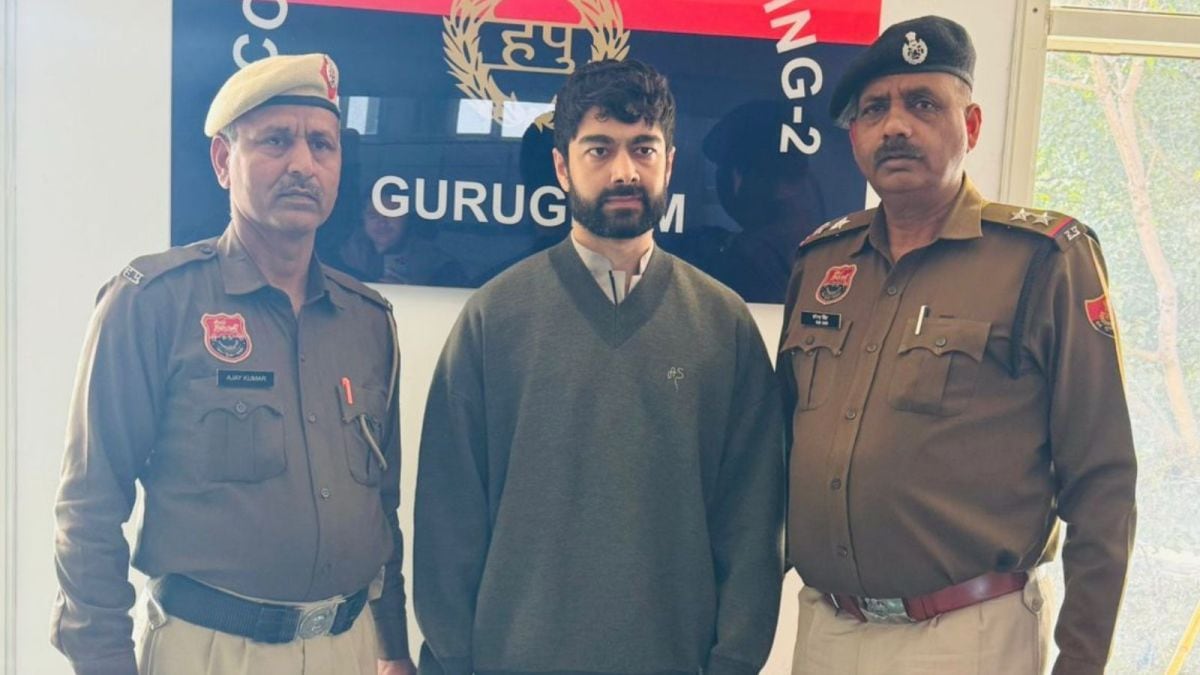
The Economic Offences Wing (EOW) of Gurugram Police arrested Dhruv Dutt Sharma on February 6–7, 2026, and produced him before a local court, which remanded him to six days of police custody. Police officials confirmed that over five FIRs had been filed, with statements recorded from 40–50 complainants, and that the actual number of defrauded individuals could range between 500 and 1,000, with individual losses estimated between ₹1 crore and ₹2.5 crore, pushing the total estimated fraud past ₹500 crore.
The Money Laundering Layer: The ED Enters, and the Stakes Explode
If the EOW arrest was a grenade, the ED’s entry is a nuclear detonation. Because money laundering under the Prevention of Money Laundering Act (PMLA) is not merely a property dispute, but it is a federal financial crime with the capacity to result in long-term asset attachment, prosecution, and, where the PMLA’s strict bail provisions apply, prolonged incarceration.
On April 13 and 14, 2026, the Directorate of Enforcement conducted searches at seven premises across Delhi-NCR, Goa, Jaipur, and Mumbai. The raids resulted in the seizure of cash worth ₹1.05 crore, gold bullion and jewellery amounting to approximately ₹1.5 crore, and the freezing of multiple bank accounts and lockers. The ED also identified several immovable properties, like land, buildings in Gurugram, Goa, and Maharashtra as proceeds of crime.
More damning than the seizures, however, is the ED’s characterisation of the financial structure underlying the alleged fraud. The agency’s official press release states that “Proceeds of Crime in excess of ₹500 Crore were generated by the accused through illegal activities by diverting the funds of investors. The funds were subsequently layered through multiple accounts of shell/benami entities.“
This is the vocabulary of organised financial crime. The identification of shell companies and benami entities as layering vehicles places this case firmly in the category of structured money laundering — not impulsive personal enrichment. This was allegedly a system, not a spree.
The ED confirmed that the promoters were “using the amounts collected from gullible investors to lead a lavish life which included residences at high end apartments in Gurugram and yacht boat at Goa, among others.” During preliminary police questioning, Dhruv Sharma allegedly admitted that investor money was diverted to purchase high-end villas along Goa’s coastline and property in Neemrana, Rajasthan. He is reported to have resided at the DLF Camellias on Golf Course Road, Gurugram, which is arguably the most expensive residential address in the National Capital Region.
As of April 2026, Dhruv Sharma and Shirin Sharma are in judicial custody. Anubhav Sharma and Mamta Sharma, the patriarch and matriarch of the family, both named as accused, are absconding.
The Statutory Fraud Nobody Talks About
The property fraud is the headline. What lies beneath it is arguably more corrosive. Investor Arvind Gupta’s application filed before the Saket Court in Delhi on February 6, 2026 — seeking FIR registration, bank account freezing, forensic audit, and Look Out Circulars — alleges that rental payments ceased from August 2025, that TDS was not deposited with the government from September 2024 despite being deducted from investor payouts, and that the accused defaulted on GST dues, employee provident fund contributions, and ESIC obligations.
The TDS allegation is particularly lethal in its implications. When an investor receives “rental income,” TDS is deducted and is supposed to be reflected in Form 26AS — a government tax record. Investors who were assured their rental would have TDS compliance built in trusted that the arrangement had a legitimate governmental footprint. The alleged non-deposit of TDS is therefore not just tax evasion — it is fraud compounded by fraud, a second layer of deception disguised as regulatory compliance.
These statutory violations, like unpaid PF, ESI, GST, TDS, implicate not just the promoters but raise searching questions about auditors, chartered accountants, and compliance professionals who were presumably engaged by the group during its operational years. Where were the independent directors? Where were the auditors? Where was the RERA body?
The RERA Failure: A Regulator That Watched and Did Nothing
This is the dimension of the 32nd Avenue case that should trigger institutional introspection at the highest level. The Real Estate (Regulation and Development) Act, 2016, RERA was introduced with precisely this kind of fraud in mind. It mandated project registration, escrow accounts for investor funds, timely possession, and transparency in transactions.
Public records confirm that Anubhav Sharma registered a “Commercial Colony” project under HRERA, the Haryana Real Estate Regulatory Authority. Investors who made complaints, sent notices, and eventually filed FIRs did so against the backdrop of a project that was, on paper, RERA-registered.
The question that HRERA must answer, publicly, under RTI if necessary is: How were 25 conveyance deeds executed for the same physical floor space, in a RERA-registered project, without the authority detecting any anomaly? Was there any monitoring of the escrow account? Were possession deadlines tracked? Were investor complaints ever routed through HRERA before the EOW had to intervene?
The silence of the regulator in the years between 2022, when the multiple-sale fraud was actively occurring, and February 2026, when arrests finally came, is a silence that demands an answer.
The High Court Relief: A Legal Question With Disturbing Optics
On March 19, 2026, the Punjab and Haryana High Court, before Justice Subhas Mehla, stayed proceedings in all FIRs against Dhruv Dutt Sharma except the first, FIR No. 262 of 2025 filed at Civil Lines Police Station, Gurugram.
The legal argument advanced by Sharma’s counsel, that multiple FIRs arising from the same cause of action are impermissible is not frivolous. It is a recognised principle of criminal procedure, and courts across the country have quashed multiple FIRs on similar logic. The stay is not an acquittal, and the High Court’s order is not an endorsement of the accused.
But the optics require honest acknowledgement. The primary FIR, untouched by the High Court’s stay carries charges under IPC Sections 409 (criminal breach of trust), 420 (cheating), and 120-B (criminal conspiracy). And the PMLA investigation by the ED is entirely independent of the IPC proceedings — a stay on criminal FIRs does not, and cannot, halt the money laundering probe.
Still, in a country where access to high courts is itself a class privilege, hundreds of investors who cannot afford senior counsel to argue their FIRs have reason to watch this development with anxiety.
Why The History Seems Repeating; Is There Any The Blueprint — And Why It Keeps Working?
The 32nd Avenue case is not unprecedented. It is, in its essential architecture, a pattern that repeats with depressing regularity across Indian cities.
The formula has discernible, reproducible components. First, a credible founder with elite educational credentials and a media-friendly backstory — Forbes lists, startup pedigree, family legacy. Second, a physical asset with aesthetic cachet that photographs beautifully and generates organic social proof — the Instagram-worthy venue that markets itself. Third, a financial instrument dressed in the language of legitimate investment: lease rentals, guaranteed returns, buyback options, monthly income — all designed to sound like a fixed deposit, not a risk asset. Fourth, initial payments made punctually to build trust and generate word-of-mouth referrals. Fifth, a network of shell entities to layer proceeds. Sixth, a regulatory environment that is simultaneously under-resourced, under-empowered, and occasionally porous.
%2520(1).jpg)
This formula has been deployed in Mumbai with residential pre-launches that never materialised. In Bengaluru with farmhouse investment schemes. In Hyderabad with plotted development projects in peri-urban zones. In Noida with commercial towers that were sold floor by floor, unit by unit, and never completed. In each case, the victims share an uncomfortable commonality: they are educated, they are financially literate by ordinary standards, and they trusted a combination of personal referral, institutional-sounding documents, and the halo of the developer’s public image.
What makes the 32nd Avenue case particularly significant as a data point is the alleged specificity of the mechanism: the physical alteration of layout maps to redefine and re-sell the same virtual unit. This is not sloppy bookkeeping. This is forensic manipulation of legal documents — the kind of fraud that requires the complicity, or at minimum the spectacular negligence, of professionals across the documentation chain: architects who certify layouts, revenue department officials who register deeds, lawyers who draft agreements.
Investor Narendra Singh Malik asked directly: “Did the registrars — government employees — know? How could the same piece be sold to multiple buyers? Is the revenue department also involved in this?” A tehsildar at the Gurugram revenue department admitted to the publication that the shift to a virtual registry process has changed the nature of verification. This is an admission that demands follow-up and forensic scrutiny from the ED.
The Silence That Speaks Loudest
There is a pattern in this case that goes beyond the fraud itself and into the nature of institutional response. Traum Ventures sent its first legal notice in October 2023. Investors began staging public protests — dharnas, social media campaigns, visits to the Police Commissioner’s public hearing — well into 2024 and 2025. Letters were sent to ministers, to administrators, and reportedly to the Prime Minister’s Office. The first FIR was registered in January 2026. Arrests followed in February 2026.
That is, at minimum, over two years between the first formal legal notification of fraud and the first arrest. To be precise, there is no direct, documented evidence in public records that this delay was the product of any specific political intervention or patronage. That conclusion would require evidence this investigation has not found in available public records. But the pattern is consistent with an environment in which social capital — proximity to the right clubs, the right addresses, the right names in the right city — functions as a de facto shield, even in the absence of explicit political protection.
A man living at DLF Camellias, appearing on Forbes lists, running an Instagram-worthy venue at a premium address, is not perceived by the system as a fraud risk, until the loss becomes too large, the protests too loud, and the political cost of continued inaction finally exceeds the cost of action. This is not the first time we saw this. Recall the Blusmart Saga– same Camellias, same high-fi dreams, same enormous money flowing, then suddenly comes the fact that money is flowing and going into founder’s personal luxury! That is a systemic failure. It has a name: regulatory capture by social class.
What Justice Looks Like — If It Comes
As of April 17, 2026, the ED’s investigation is ongoing. Anubhav and Mamta Sharma remain absconding. ₹2.55 crore in assets have been seized so far — a fraction of the ₹500 crore in estimated proceeds of crime. The immovable properties identified in Gurugram, Goa, and Maharashtra have been flagged but not yet formally attached under PMLA.
For the 500–1,000 investors, the retired corporate officer living off his savings, the doctor who invested her surplus income, the UP couple who put in ₹64 lakh — justice is not a theoretical proposition. It is the return of money they cannot afford to lose, and the accountability of a system that failed to protect them.
The PMLA process, if it runs to completion, can result in the attachment and confiscation of assets equivalent to the proceeds of crime. That is, in theory, the mechanism by which investors could recover losses. In practice, asset recovery in PMLA cases in India is a long, litigated process in which the Adjudicating Authority, appellate tribunals, and finally the High Courts all have a role. Victims who became investors through what appeared to be legitimate agreements may not even have formal “complainant” status in the PMLA proceedings.
HRERA owes these investors a public accounting of how a registered project became the vehicle for such alleged fraud. SEBI should examine whether the lease-leaseback investment structure constituted an unregistered securities offering. Parliament, if it is paying attention, should note that RERA’s escrow provisions, designed to protect exactly these investors, appear to have been worthless in practice.
Coda: The Fairy Lights Are Still On
As of this piece, the string lights at 32nd Avenue still glow on weekends. The cobblestones still look photogenic. The restaurants still serve their wine. But behind the charming European-village aesthetic, there is now a crime scene — one whose full dimensions are still being uncovered by an ED investigation that has barely begun.
What the 32nd Avenue case tells us, with brutal clarity, is this: in India’s real estate market, the most dangerous investment is the one that looks the most legitimate. The Forbes pedigree, the family trust, the promise of monthly income, the RERA registration — none of it protected a single investor. What protected Dhruv Sharma, for as long as it did, was not the law. It was the appearance of the law.

That is the real scandal. Not just one man. Not just one scheme. But a system that allows the appearance of legitimacy to substitute for its substance — until it is far too late.