ED Attach Properties Worth 702 Crore Against Ozone Group
The Enforcement Directorate has provisionally attached properties worth Rs 702.70 crore belonging to Ozone Group entities, taking the cumulative attachment value to Rs 1,126.07 crore. The investigation into the Rs 1,305.11 crore homebuyer fraud case covers five companies, six residential projects and group Chairman and Managing Director Vasudevan S. According to the ED, funds collected from homebuyers were diverted towards corporate liabilities, loan repayments, refinancing and investor repayments while residential projects remained incomplete. The case exposes the disturbing financial suffering of homebuyers and raises serious questions about banking oversight, regulatory accountability and the protection of purchasers in India's real estate sector.

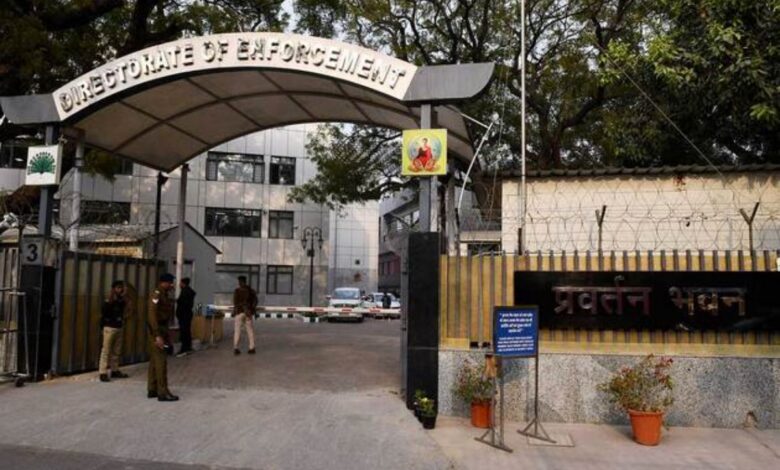
Ozone Group’s Rs 1,305.11 Crore Homebuyer Fraud Case: ED Attaches Rs 702.70 Crore Assets As Buyers Remain Trapped In Financial Misery
For hundreds of homebuyers who entrusted their life savings to Ozone Group, the dream of owning a house has turned into prolonged financial suffering, unfinished construction, outstanding housing loans and exhausting legal battles. On 26.11.26, the Enforcement Directorate (ED), Bengaluru Zonal Office, announced the provisional attachment of immovable properties comprising flats and land worth Rs 702.70 crore under the Prevention of Money Laundering Act (PMLA), 2002, in connection with its investigation against Ozone Urbana Infra Developers Pvt. Ltd. and other associated entities. The attachment was executed through Provisional Attachment Order No. 45 of 2026, dated 25.11.26.
The ED had previously attached properties worth Rs 423.37 crore through Provisional Attachment Order No. 29/2025 dated 04.10.25, taking the cumulative attachment value to Rs 1,126.07 crore. According to the agency, Ozone Group entities and their Chairman and Managing Director, Vasudevan S, defrauded homebuyers to the tune of approximately Rs 1,305.11 crore by retaining and diverting funds collected against residential units that remained undelivered. The findings expose a disturbing pattern of financial mismanagement, broken contractual commitments and the exploitation of homebuyers through attractive property financing schemes.
Five Companies, Six Projects And Rs 1,305.11 Crore Homebuyer Fraud
The ED investigation was initiated following multiple FIRs registered by Karnataka Police and the Central Bureau of Investigation (CBI) under Sections 419, 420 and 120B of the Indian Penal Code, 1860. These included FIRs registered by the CBI’s Economic Offences Wing-I, New Delhi, pursuant to directions issued by the Supreme Court. The criminal complaints concerned cheating, criminal conspiracy, incomplete residential developments, failure to deliver booked apartments and non-refund of money collected from purchasers.
The latest investigation encompasses five Ozone Group companies and six residential projects. These include Ozone Urbana Infra Developers Pvt. Ltd., responsible for Aqua-2 and Avenue; Ozone Infra Developers Pvt. Ltd., associated with the Prime project; Ozone Projects Pvt. Ltd., associated with Metrozone; Ozone Elegant Developers Pvt. Ltd., responsible for WF-48; and Ozone Realtors Pvt. Ltd., associated with Polestar. The ED identified Vasudevan S as the individual controlling and managing these entities.
The involvement of multiple companies and developments demonstrates the extensive nature of the financial irregularities identified by investigators. Homebuyers purchasing properties in separate residential projects found their money exposed to the wider financial obligations of the corporate group.
Attractive Financing Schemes Turned Into A Financial Nightmare
According to the ED, Ozone Group attracted purchasers through subvention schemes, buyback arrangements, zero-down-payment offers and other financial incentives. Buyers were assured that the developer would undertake their pre-EMI or EMI obligations until possession. These commitments made under-construction properties appear financially attractive, particularly to salaried individuals seeking to purchase homes without immediately assuming substantial monthly repayment obligations.
Housing loans were disbursed directly by financial institutions to the developer entities, alongside payments collected from purchasers. Despite receiving substantial funding, the companies failed to complete the residential projects and deliver the booked apartments.
The consequences of such financing arrangements are particularly devastating. While developers receive immediate access to loan proceeds, homebuyers remain contractually associated with the borrowings. When construction stalls and developers default on repayment commitments, purchasers face the prospect of servicing loans for properties they cannot occupy. Their household finances, savings, creditworthiness and future borrowing capacity can become casualties of corporate financial misconduct.
Homebuyers’ Money Diverted Towards Corporate Liabilities
The most disturbing finding in the ED investigation concerns the utilisation of funds collected for residential construction. According to the agency, substantial amounts were transferred between Ozone Group companies through inter-corporate deposits and other financial transactions.
These funds were utilised for servicing and restructuring borrowings, meeting financing expenses, repaying investors and settling corporate obligations instead of completing residential developments.
The Karnataka High Court judgment dated 21.09.26 reproduced earlier ED findings concerning inter-corporate deposits of Rs 49.07 crore to group concerns and transfers exceeding Rs 180 crore to Tuscan Consultants and Developers Pvt. Ltd. According to the recorded findings, substantial amounts were subsequently transferred to the personal accounts of Vasudevan S and his wife, Priya Vasudevan.
The financial pattern raises a fundamental question about the treatment of homebuyers’ money. Residential purchasers paid for specific apartments, yet their funds allegedly became a financing mechanism for unrelated corporate obligations and transactions, leaving construction commitments unfulfilled.
Promised Delivery In 2018, Only 49 Per Cent Completed By 2024
The extent of the suffering becomes clearer from the ED’s earlier press release dated 03.08.25. The agency conducted searches at 10 premises across Bengaluru and Mumbai on 01.08.25, recovering documents concerning project fund diversion.
According to the ED, the Ozone Urbana integrated township in Devanahalli Taluk, Bengaluru, was scheduled for handover in 2018. However, by 2024, only 49 per cent of the project had been completed. Investigators also recovered evidence concerning the double sale of certain flats.
The earlier attachment proceedings identified Rs 927.22 crore collected from around 1,351 homebuyers in the Ozone Urbana township, as recorded in the Karnataka High Court judgment. The latest investigation places the financial magnitude of the wider case at approximately Rs 1,305.11 crore.
For families waiting years beyond the promised possession date, the delay represents lost financial security, disrupted housing plans and prolonged uncertainty. The discovery of evidence concerning double sales further exposes the vulnerability of purchasers who had committed substantial amounts towards securing residential properties.
Promoter’s Arrest And Supreme Court Intervention
On 21.09.26, the Karnataka High Court dismissed challenges to the ED’s 2025 money laundering investigation and provisional attachment proceedings. Subsequently, on 30.09.26, the ED arrested Ozone Group promoter and CMD S. Vasudevan under Section 19 of the PMLA. He was produced before the Special PMLA Court in Bengaluru on 01.10.26 and remanded for 14 days.
The Supreme Court, through its order dated 06.08.26, also directed the CBI to comprehensively examine complaints concerning Ozone Group, financial institutions and land authorities across Karnataka, Maharashtra and Tamil Nadu.
The judicial intervention brings the accountability of lending institutions and regulatory authorities into focus. How were substantial housing loans released while construction remained incomplete? What safeguards were exercised to protect borrowers and monitor developers’ financial commitments? Why did homebuyers have to approach investigating agencies and constitutional courts to seek accountability?
Ozone Group’s Homebuyers Bear The Cost Of Corporate Misconduct
The Ozone Group case exposes the human cost of financial irregularities in India’s real estate sector. Behind the Rs 1,305.11 crore figure are families whose savings, housing aspirations and financial stability have been compromised by prolonged construction failures and questionable corporate transactions.
The cumulative attachment of Rs 1,126.07 crore marks a significant escalation in enforcement proceedings. However, the larger measure of accountability must ultimately be the restoration of homebuyers’ financial interests.
The diversion of residential project funds, failure to honour financing commitments and prolonged non-delivery of apartments expose serious weaknesses in real estate supervision. Homebuyers cannot repeatedly be reduced to financiers of corporate liabilities while developers disregard their contractual responsibilities. The financial protection of purchasers must become central to real estate regulation rather than an afterthought triggered by criminal complaints, judicial intervention and years of suffering.