Earthquake Of 4.2 Magnitude Hits Uttarkashi. Tremors From Japan To South America Signal A Global Surge And A 400 Year Seismic Cycle May Be Closing In
Uttarkashi recorded a 4.2 magnitude earthquake at a time when tremors are being reported across regions spanning India, Japan, Indonesia and South America. The growing frequency of such events is drawing attention to whether these are independent occurrences or part of a larger seismic pattern.

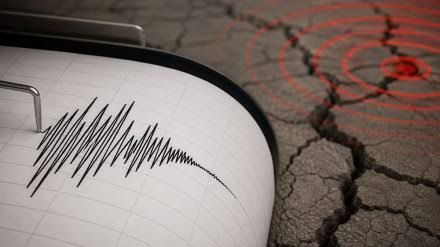
Uttarkashi in Uttarakhand recorded an earthquake of magnitude 4.2, according to the India Meteorological Department (IMD), with tremors felt across nearby hill regions. The quake struck at a shallow depth, making the shaking noticeable for residents, though no immediate reports of casualties or major damage have been reported.
Local authorities said people briefly stepped out of homes as a precaution, while routine activity resumed shortly after. Uttarkashi lies in a highly seismic zone of the Himalayan belt, where low to moderate intensity earthquakes are not uncommon.
The tremor comes days after a magnitude 5.1 earthquake in Arunachal Pradesh, underlining a series of recent seismic movements across northern and northeastern parts of India.
What The Data Is Showing
Earthquakes are not rare events. On average, around 20,000 earthquakes are recorded globally every year, translating to roughly 50 to 60 tremors each day. Most go unnoticed. But what has begun to stand out is not the scale of these quakes, but their frequency and distribution.
In recent months, there has been a visible clustering of mid-range tremors in the 4.0 to 5.0 magnitude range, along with a steady rise in shallow earthquakes – the kind more likely to be felt at the surface. Regions that typically experience periodic activity are now recording multiple events within short time frames.
Seismologists remain divided on what this means. One view attributes the rise to better detection systems and denser seismic networks, which are now capturing smaller tremors that previously went unrecorded. Another points to a possible increase in actual seismic activity, particularly in tectonically active zones.
Not Just India
Japan has reported strong seismic movement in recent weeks, while Indonesia and the Philippines (both sitting along the Pacific Ring of Fire) have experienced repeated tremors within short intervals. In South America, powerful back-to-back earthquakes in Venezuela show how multiple shocks can occur within seconds of each other.
Individually, none of these events are unprecedented. These are all regions known for tectonic activity. But taken together, the timing begins to stand out. Earthquakes are appearing closer together in time, across geographies that are otherwise unconnected.
This does not establish a direct link between them. Tectonic plates operate independently, and seismic events in one region do not trigger those in another. Yet, the clustering raises a broader observation: the ground is not just moving in one place – it is moving in many places, almost at once.
The 400–800 Year Seismic Cycle
Beneath the Himalayas, a much slower and more powerful process is at work. The Indian tectonic plate continues to push northward, sliding beneath the Eurasian plate at a rate of roughly 5 centimetres per year. This movement does not happen smoothly. Large sections of the fault remain locked, quietly accumulating stress over long periods of time.
Studies of seismic history and geological records indicate that parts of the Himalayan arc have not experienced a major rupture in 300 to 500 years. In earthquake science, that absence is not a sign of stability. It points to energy that has been building without release.
Researchers describe this through a recurrence cycle, estimating that large, destructive earthquakes in segments of the Himalayas can occur over intervals of roughly 400 to 800 years. Historical events such as the 1505 and 1555 earthquakes are often cited as markers of past large-scale releases along this belt.
The concern today is not based on a single tremor, but on the gap between major events. When that gap stretches across centuries, it creates what scientists call a seismic gap – a segment that has remained quiet for too long relative to surrounding regions.
In practical terms, this means one thing: the region has been storing strain for generations, and when that strain is eventually released, it does not do so gradually.
Earthquakes – Science vs Signal
Earthquakes, by their nature, are governed by independent tectonic systems. The movement of the Pacific Plate near Japan, for instance, has no direct connection to stress building along the Himalayan arc. Each region follows its own geological timeline, shaped by local fault lines and plate boundaries.
From a scientific standpoint, this means the recent clustering of earthquakes across different parts of the world cannot be treated as a single linked phenomenon. A tremor in Indonesia does not trigger one in Uttarakhand, just as activity in South America does not directly influence seismic shifts in Asia.
Yet, patterns (especially those that appear within short time frames) tend to draw attention. When multiple regions report earthquakes within days of each other, it creates the perception of a broader signal, even if the underlying causes remain separate.
This is where the distinction lies.
Science looks at earthquakes as isolated releases of accumulated stress, each bound to its own fault system. But the frequency and timing of recent events introduce a different question – whether what is being observed is simply coincidence, or a reflection of multiple systems reaching points of release around the same time.
For now, there is no clear answer. The data supports caution, not conclusion.
Climate Link Or Coincidence
In recent years, another angle has entered the conversation – whether changes on the surface of the planet are beginning to influence what happens beneath it.
In the Himalayan region, glacial melt has accelerated, altering the weight and distribution of ice that has sat on the crust for centuries. As glaciers retreat, they reduce pressure on underlying rock, a process that some studies suggest can affect stress along fault lines. Similarly, large reservoirs created by dams and changes in groundwater levels have been linked, in specific cases, to induced seismic activity.
Human intervention (whether through deep drilling, mining, or large-scale infrastructure projects) has also been studied for its potential to trigger smaller tremors. However, these are typically localised effects and do not explain large-scale tectonic shifts.
Scientists remain cautious. There is no definitive evidence that climate change or human activity is directly causing major earthquakes. At most, these factors may influence how and when stress is released in already active regions.
For now, the connection remains suggestive, not proven – an additional variable in a system that is already complex, and not fully understood.
India In The Danger Zone
Large parts of northern India fall within Seismic Zones IV and V, the highest risk categories identified for earthquake vulnerability. This includes Jammu and Kashmir, Himachal Pradesh, Uttarakhand, north Bihar, and the entire North-East, regions that sit along the active Himalayan belt.
The risk, however, is not limited to the mountains. Experts have repeatedly pointed out that a major earthquake in the Himalayas could have far-reaching effects across the northern plains, including densely populated cities such as Delhi. The reason lies in the geology of the plains themselves. Thick layers of alluvial soil can amplify seismic waves, increasing the intensity of shaking far from the epicentre.
This creates a multiplier effect. A high-magnitude earthquake in a sparsely populated mountain region can translate into widespread impact in urban centres, where infrastructure density and population concentration are significantly higher.
Despite this, preparedness remains uneven. Building standards, urban planning, and disaster response systems vary widely across states, leaving several high-risk zones exposed to potential large-scale disruption.
The Last Bit,
Earthquakes rarely arrive without context. They are the result of forces that build slowly, often over centuries, beneath the surface.
What is being seen today (across regions and within India) is not a single event, but a series of movements that point to systems under strain. Some are routine releases. Others may be part of longer cycles still unfolding.
The challenge lies in separating signal from coincidence, and preparedness from assumption. Because while individual tremors may pass without consequence, the conditions that produce them do not reset overnight.
The ground does not shift without reason. It builds, it holds, and eventually, it gives way.