Venugopal Dhoot Declared Bankrupt, From India’s Electronics Giant To A ₹12,668 Crore Fall Of The Videocon Empire
Once a household name in India's consumer electronics market, Videocon is now synonymous with corporate debt, banking controversies and insolvency. Its former promoter, Venugopal Dhoot, has been declared bankrupt over SBI's ₹12,668-crore claim, bringing renewed attention to the rise, expansion and eventual collapse of one of India's once-prominent business empires.

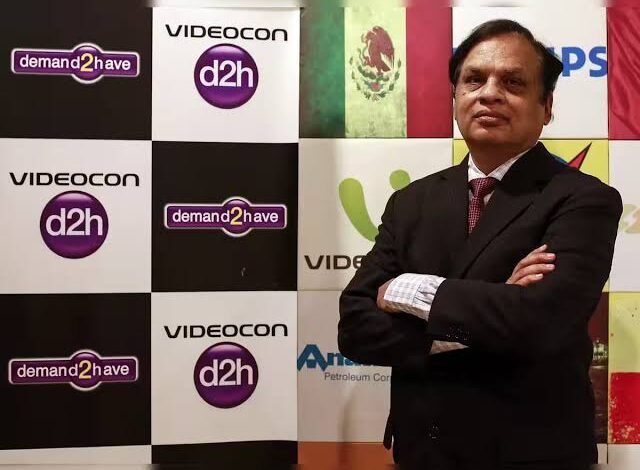
The NCLT, Mumbai Bench, has declared former Videocon Industries promoter and director Venugopal Nandlal Dhoot bankrupt over outstanding dues of ₹12,668.06 crore claimed by the State Bank of India (SBI).
The order, passed on November 5, 2026, follows the failure of Dhoot’s personal insolvency resolution process and a proposed repayment plan that creditors declined to approve.
The bankruptcy proceedings stem from personal guarantees Dhoot had furnished against credit facilities extended to Videocon Industries Limited (VIL) and its associated businesses. These included rupee term loans, facilities connected with Videocon Telecommunications Limited (VTL) and working capital borrowings.
Following defaults by the group, lenders invoked the guarantees in February 2018, seeking repayment of ₹3,171.37 crore under the rupee term loan facilities, ₹676.91 crore under the VTL facilities and ₹795.57 crore under working capital facilities, besides applicable interest and other charges.
The liabilities subsequently increased. In its bankruptcy petition, SBI put the total amount in default, including interest and penalties, at ₹12,668.06 crore as of September 30, 2026. The bank approached the tribunal after Dhoot’s attempt to settle the liabilities through a personal insolvency resolution process failed.
That process had begun in April 2026. Dhoot had proposed repaying creditors ₹600 crore over 36 months through a real estate development project in Siliguri. However, the proposal depended on the project’s future development, regulatory approvals and expected cash flows, without offering any upfront repayment.
The resolution professional also pointed out that the plan had not been prepared in consultation with him as required under the Insolvency and Bankruptcy Code (IBC). Creditors did not approve the proposal.
The NCLT had rejected the repayment plan and terminated the personal insolvency resolution process on July 17, 2026, allowing creditors to pursue bankruptcy proceedings. SBI subsequently filed its petition, which the tribunal admitted after finding that it met the requirements under Section 123 of the IBC.
The tribunal appointed Asish Narayan as the Bankruptcy Trustee and directed that Dhoot’s estate immediately vest in him for administration and distribution among creditors. Dhoot has also been directed to submit his statement of financial position within seven days, while the trustee must invite claims from creditors and submit a preliminary report within 90 days.
The bankruptcy order comes more than eight years after Videocon Industries itself entered corporate insolvency proceedings. Although the group subsequently went through a resolution process, Dhoot’s personal guarantees remained a separate route for lenders to pursue recovery.
The distinction is important: the resolution of the company’s insolvency did not, by itself, extinguish the liabilities arising from guarantees given by its former promoter.
The Making Of The Videocon Empire
Long before Venugopal Dhoot became associated with mounting bank dues, insolvency proceedings and investigations into the group’s financial dealings, Videocon was one of India’s most recognisable consumer electronics brands.
Its televisions and home appliances had a substantial presence in Indian households, particularly during the years when the domestic market was opening up to mass-market consumer durables.
The Videocon Group was founded in 1984 by Dhoot’s father, Nandlal Madhavlal Dhoot, and his sons. The family’s entry into electronics came at a time when colour television was beginning to emerge as a significant consumer market in India. In the early 1980s, the expansion of colour television broadcasting created an opportunity for domestic manufacturers, and the Dhoot family moved into television production.
Venugopal Dhoot went on to become the principal force behind the group’s expansion. After studying engineering, he travelled to Japan for training and explored technical collaborations with established electronics manufacturers. Videocon International was established in 1986, with an initial ambition to manufacture one lakh television sets annually. The company entered into a technical collaboration with Japan’s Toshiba, helping it establish its position in the television manufacturing business.
The company gradually moved beyond televisions into refrigerators, washing machines, air conditioners, home entertainment systems and other household appliances. Its brands and product lines, including Bazooka and Bazoomba televisions, became familiar names in the Indian market. Videocon also built an extensive distribution network, reaching consumers well beyond the larger metropolitan cities.
The company’s growth coincided with a period of rapid change in India’s consumer electronics industry. As international manufacturers entered the market, competition intensified. South Korean companies such as LG and Samsung brought newer technologies and aggressive pricing, while Sony and other international brands competed for a growing consumer base. Videocon, which had built much of its strength in the mass-market segment, found itself competing in an increasingly crowded industry.
For a considerable period, however, consumer electronics and home appliances remained the group’s principal business. The success of this enterprise gave Dhoot the platform and financial ambition to take Videocon beyond its original market. What began as a television manufacturing business was gradually transformed into a diversified conglomerate with interests in telecommunications, oil and gas, real estate and other sectors.
That expansion would eventually become central to the Videocon story. The group had moved from manufacturing products that millions of Indian households recognised to making investments that required substantially larger amounts of capital and financing. The businesses that followed would bring Videocon into contact with major lenders, overseas energy assets and some of India’s most closely scrutinised corporate investigations.
From Consumer Electronics To Telecom And Oil And Gas
Having established itself in India’s consumer electronics market, Videocon began expanding into businesses that required significantly larger investments. Under Venugopal Dhoot, the group moved into oil and gas, telecommunications and direct-to-home television, gradually transforming itself from an appliance manufacturer into a diversified conglomerate.
Its entry into oil and gas began in 1994, when Videocon acquired interests in the Ravva oil and gas field off the Andhra Pradesh coast. The group subsequently expanded its energy portfolio through overseas investments in countries including Oman, Indonesia, Brazil and Mozambique. These operations were conducted through overseas subsidiaries and involved substantial capital commitments.
The Mozambique investment became particularly significant. Videocon acquired a 10% participating interest in the Rovuma Area 1 offshore gas block, which would eventually become one of the group’s most valuable overseas assets. However, developing these energy interests required considerable financing, including loans and credit facilities from domestic and international lenders.
Telecommunications was another major bet. In 2008, Videocon entered the mobile services business through Videocon Telecommunications, acquiring licences across 21 telecom circles and spectrum in 20. The company sought to capitalise on India’s rapidly expanding mobile market, targeting customers in smaller cities and towns.
However, the telecom venture suffered a major setback in February 2012, when the Supreme Court cancelled 122 telecom licences issued in 2008 following its findings in the 2G spectrum allocation case.
Videocon was among the affected operators. Although it subsequently secured spectrum in six circles, the business struggled to establish itself and was eventually wound down. The group later sold its remaining spectrum holdings to Bharti Airtel for approximately ₹4,428 crore in 2016.
The energy business also underwent significant changes. In 2014, Videocon sold its 10% stake in the Mozambique gas block to ONGC Videsh and Oil India for approximately $2.5 billion. The transaction was a major asset monetisation exercise, with the proceeds intended to help address the group’s financial obligations.
By then, however, Videocon’s expansion had created a complicated corporate structure involving domestic businesses, overseas subsidiaries, multiple lenders and substantial borrowing. The investments that were expected to take the group into new markets had also increased its dependence on external financing.
Mounting Debt And The Beginning Of Videocon’s Collapse
Videocon’s financial difficulties were not caused by a single failed business. Its consumer electronics operations were facing increasing competition from international manufacturers, while its ambitious investments in telecommunications and oil and gas had created substantial funding requirements.
The arrival of South Korean manufacturers such as LG and Samsung had changed India’s consumer electronics market. These companies competed aggressively on technology, product features and pricing, putting pressure on established domestic manufacturers. Videocon, which had once enjoyed a strong distribution network and a dominant position in the mass-market television segment, found it increasingly difficult to maintain its competitive edge.
The telecom setback added to the pressure. The company had borrowed heavily to finance its wireless operations, and the cancellation of its licences disrupted the business model it had invested in. Although the subsequent sale of spectrum and other assets generated funds, these transactions did not reverse the group’s broader financial deterioration.
By July 2017, Videocon’s debt had reportedly reached approximately ₹43,000 crore. The group’s oil and gas investments, despite the scale of the assets involved, had not generated the returns needed to offset its mounting financial obligations. Its overseas financing arrangements and domestic borrowings also brought multiple lenders into the picture.
The Reserve Bank of India identified Videocon among the large corporate accounts requiring insolvency action in 2017. SBI subsequently approached the NCLT, and Videocon Industries was admitted into the corporate insolvency resolution process on June 6, 2018. The proceedings were later consolidated with those of 12 other Videocon group companies, reflecting the financial and operational interconnections between the businesses.
The insolvency proceedings exposed the scale of the group’s liabilities and raised questions about how its different businesses, assets and borrowings were structured.
The company that had once been a familiar name in Indian households was now facing a creditor-led resolution process, while its former promoter was increasingly drawn into investigations concerning the group’s lending arrangements and overseas investments.
The ICICI Bank Controversy And The Alleged Quid Pro Quo
As Videocon’s financial position deteriorated, the group came under scrutiny over its borrowing arrangements with ICICI Bank and an alleged financial arrangement involving its former promoter Venugopal Dhoot and the family of the bank’s then managing director and CEO, Chanda Kochhar.
The controversy came into public focus in March 2018, following an investigation by The Indian Express into the relationship between Dhoot, Kochhar’s husband Deepak Kochhar and NuPower Renewables, a company associated with the latter.
The central transaction involved a ₹64-crore investment made by Dhoot through a company he controlled into NuPower Renewables. The CBI alleged that the investment was an undue benefit extended to Deepak Kochhar in return for Chanda Kochhar’s role in sanctioning loans to Videocon Group companies while she was heading ICICI Bank.
One of the transactions under investigation was a ₹300-crore loan sanctioned by ICICI Bank to Videocon International Electronics in August 2009. The CBI alleged that Dhoot transferred ₹64 crore to NuPower Renewables through his company the following day. It further alleged that control of the investment vehicle was subsequently transferred to a trust associated with Deepak Kochhar.
The investigation examined several credit facilities sanctioned to Videocon companies between 2009 and 2011. The CBI alleged that lending decisions had violated banking procedures and that Kochhar had failed to disclose conflicts of interest.
In December 2022, the CBI arrested Dhoot, Chanda Kochhar and Deepak Kochhar in connection with the case.
The Bombay High Court subsequently granted Dhoot interim bail in January 2023, observing that his arrest had not been made in accordance with law. The Kochhars were also granted relief by the High Court in February 2024.
The case brought together questions concerning bank lending, corporate governance and the relationship between borrowers and senior banking officials. The allegations remain subject to judicial proceedings and should not be treated as established criminal findings.
The Mozambique Financing Investigation And Alleged Diversion Of Funds
A separate investigation into Videocon’s overseas oil and gas investments brought another major banking transaction under scrutiny. In June 2020, the CBI registered a case against Dhoot and unidentified officials of a consortium of banks led by SBI, concerning financing arrangements linked to the group’s overseas oil and gas assets.
At the centre of the investigation was a standby letter of credit facility of approximately $2.77 billion sanctioned by the consortium in April 2012. The facility was intended to support Videocon’s overseas oil and gas operations and refinance existing foreign borrowings.
The CBI alleged that the financing arrangement involved irregularities in the handling of an existing loan from Standard Chartered Bank. According to the agency, approximately $530 million was paid towards the foreign borrowing without the consortium securing the necessary charge over the underlying assets. It further alleged that the Mozambique interests were subsequently used to obtain additional credit and that payments were made despite the earlier refinancing.
The agency also examined how funds raised against Videocon’s overseas assets were utilised. It alleged that substantial amounts were transferred to other Videocon accounts and entities instead of being used for the purposes for which the facilities had been sanctioned.
The investigation assumed significance because Videocon had sold its 10% interest in Mozambique’s Rovuma Area 1 gas block to ONGC Videsh and Oil India in 2014 for approximately $2.5 billion. The CBI examined the financing arrangements surrounding the asset and the movement of funds connected with the transaction.
The Enforcement Directorate subsequently pursued the money-laundering angle, conducting searches linked to the group in July 2021.
While the ICICI Bank investigation centred on the alleged benefit extended to Deepak Kochhar in connection with lending decisions, the Mozambique case focused on the financing of overseas assets and the alleged diversion of loan proceeds. Together, the investigations brought further attention to the group’s borrowing arrangements and the questions surrounding the use of funds raised from banks.
Videocon’s Insolvency And The Controversial Twin Star Resolution Plan
Videocon’s financial collapse eventually brought the group into the corporate insolvency resolution process in June 2018, following a petition filed by the State Bank of India. In August 2019, the NCLT consolidated the insolvency proceedings of 13 Videocon group companies, recognising the financial and operational interconnections between them.
The scale of the liabilities became apparent during the resolution process. Financial creditors had admitted claims exceeding ₹61,770 crore when the NCLT approved a resolution plan submitted by Twin Star Technologies, a Vedanta Group company, in June 2021. The proposed resolution value was approximately ₹2,962 crore, representing a haircut of nearly 95.85% against the total admitted claims.
The plan, however, faced objections from dissenting financial creditors, including Bank of Maharashtra, SIDBI and IFCI. In January 2022, the National Company Law Appellate Tribunal (NCLAT) set aside the NCLT’s approval and remitted the matter to the Committee of Creditors for reconsideration. Twin Star subsequently challenged the appellate tribunal’s decision before the Supreme Court, which ordered the maintenance of status quo.
The resolution process has therefore remained subject to prolonged litigation. In another significant development in May 2026, the NCLAT held that Videocon’s foreign oil and gas assets were not part of the consolidated corporate insolvency proceedings.
The proposed Twin Star resolution remains important because it illustrates the enormous gap between the group’s outstanding liabilities and the value offered under the plan. However, the proposed ₹2,962-crore payout should not be presented as money finally recovered by creditors.
The Liabilities That Followed Dhoot Personally
While Videocon’s corporate insolvency proceedings continued through the courts, lenders also pursued recovery from its former promoters under personal guarantees furnished against the group’s borrowings. Dhoot’s personal insolvency proceedings, initiated in April 2026, eventually ended with the NCLT rejecting his proposed ₹600-crore repayment plan in July.
The bankruptcy order of November 5, 2026, now places his personal estate under the administration of a bankruptcy trustee. SBI’s claim of ₹12,668.06 crore includes interest and penalties calculated up to September 30, 2026. The trustee will identify and administer the assets forming part of Dhoot’s bankruptcy estate, invite claims from creditors and oversee distributions under the IBC.
The development marks another chapter in the long-running Videocon debt saga. The company’s corporate insolvency did not automatically release Dhoot from the personal guarantees he had provided, allowing lenders to pursue him separately even as the group’s own resolution process remained entangled in litigation.
The Last Bit, The Long Aftermath Of Videocon’s Collapse
Videocon’s journey from a household electronics brand to a heavily indebted conglomerate is also a story of expansion, borrowing and the difficulties of managing businesses across vastly different sectors. Its insolvency left lenders facing enormous losses, while investigations into its banking arrangements and overseas investments brought further scrutiny to the group’s financial dealings.
Dhoot’s bankruptcy now shifts the focus to his personal assets and the recovery available to creditors. More than eight years after Videocon entered insolvency, the question of how much lenders can recover from the former promoter remains unresolved.