India’s ₹22 Billion Military Procurement Plan. Why India Is Clearing Billions For Military Hardware As Its Security Priorities Expand From The Himalayas To The Seas
India has cleared ₹2.12 lakh crore in military procurement proposals covering everything from artillery guns and surveillance drones to naval defence systems and helicopters. With 82% of the proposed acquisitions earmarked for domestic sourcing, the move highlights India's push to modernise its armed forces while strengthening local defence manufacturing.

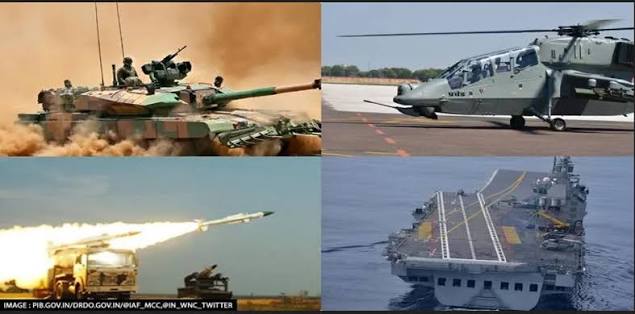
India has cleared defence acquisition proposals worth ₹2.12 lakh crore, approximately $22 billion, covering a wide range of military equipment for the Army, Navy and Air Force. The approvals, granted by the Defence Acquisition Council (DAC) on October 26, 2026, include artillery systems, surveillance drones, air-defence equipment, helicopters and naval protection systems.
The decision comes as India continues to strengthen its military preparedness across multiple fronts, from its high-altitude borders with China to its maritime interests in the Indian Ocean. The proposed acquisitions reflect requirements extending beyond conventional weapons, with greater emphasis on surveillance, precision strikes, counter-drone capabilities and mobility.
A significant feature of the procurement package is its domestic manufacturing component. According to the Defence Ministry, approximately 82% of the proposed acquisitions are expected to be sourced from Indian industry, placing domestic defence manufacturers at the centre of the latest round of military modernisation.
The latest approvals cover a broad range of equipment intended to strengthen the armed forces’ mobility, surveillance, firepower and defensive capabilities. The proposals are spread across all three services, although the Army accounts for the longest list of systems identified in the Defence Ministry’s announcement.
For the Army, the procurement proposals include self-propelled tracked artillery guns, high-mobility vehicles, gunshot response systems, light multi-role helicopters and very short-range air-defence systems. The list also includes counter-unmanned aerial systems designed to protect military platforms against drone threats.
Unmanned warfare forms another important part of the package. The Army has received in-principle clearance for long-range unmanned aerial systems, surveillance UAVs, integrated surveillance and strike systems, and long-range kamikaze drones. These systems are intended to improve battlefield observation, target identification and strike capabilities.
The Navy’s approvals include Active Offboard Decoy Systems, which are designed to strengthen the protection of warships against modern anti-ship missiles, along with other major naval platforms intended to be designed and constructed domestically.
The Air Force, meanwhile, has received approval for helicopters, air-defence systems, weapons and mobile X-band Doppler weather radars. The weather radars are intended to provide high-resolution, localised weather information in forward areas, where rapidly changing conditions can affect military operations.
Taken together, the proposals cover both conventional military equipment and newer technologies associated with drone warfare, electronic countermeasures and battlefield surveillance. The Defence Ministry has not publicly specified the quantities, individual costs or delivery schedules for all the systems included in the package.
The next question is how these proposed acquisitions would translate into operational capabilities, beginning with the Army’s requirements for firepower, surveillance and mobility.
The Army’s Shopping List Includes Artillery, Helicopters and Long-Range Drones
The Army accounts for a wide range of equipment proposals in the latest clearance, covering everything from moving troops and supplies across difficult terrain to detecting incoming threats and improving battlefield surveillance.
Among the approved proposals are High Mobility Vehicles (HMVs), a Self-Propelled Tracked Gun System and a Gun Shot Response System (GSRS). The Defence Ministry says the vehicles are intended to improve operational mobility and logistical support in challenging terrain, while the tracked gun system will give mechanised formations greater mobility and firepower. The GSRS, meanwhile, is expected to improve real-time situational awareness.
The Army’s list also includes Light Multi Role Helicopters (LMRH), which are intended to support reconnaissance, surveillance, combat, search and rescue, and humanitarian assistance and disaster relief operations. The helicopters are intended for use by both the Army and the Air Force.
The proposals extend to Very Short-Range Air Defence Systems (VSHORADS) and platform-based Counter-Unmanned Aerial Systems (C-UAS). The former are intended to engage small, new-generation aerial threats, while the latter are expected to improve the survivability of tanks against drone-related threats on the battlefield.
Long-range unmanned aerial systems, surveillance UAVs, an Integrated Surveillance and Strike System and a Long Range Kamikaze Drone System also feature in the approvals. These systems are intended to strengthen surveillance, targeting and strike capabilities.
From Anti-Missile Defences at Sea to Weather Radars in the Air
The procurement proposals extend beyond the Army, with the Navy and Air Force also set to receive equipment intended to address their operational requirements.
For the Indian Navy, the Defence Acquisition Council has approved the procurement of an Active Offboard Decoy System (AODS), along with other major naval platforms. The AODS is intended to strengthen a warship’s defences against modern anti-ship missiles by helping divert incoming threats away from the vessel. The other naval platforms covered by the approvals are to be designed and constructed indigenously.
The Air Force’s approved proposals include helicopters, air-defence systems, weapons and Mobile X-Band Doppler Weather Radar Systems. Special Utility Helicopters are intended to meet the service’s air transport requirements, while the weather radars will provide high-resolution, localised weather surveillance in forward areas.
Weather information might not sound like the most dramatic part of a military procurement announcement, but it has a practical role in operations.
Reliable local forecasts and observations help personnel assess conditions in areas where weather can affect aircraft movement and other military activity.
The naval acquisitions also underline why the package cannot be viewed solely through the lens of India’s land border with China. Protecting warships against missile threats and improving operational capabilities at sea address a different set of military requirements.
The 82% Domestic Sourcing Push And India’s Defence Manufacturing Ambitions
One of the most significant features of the latest procurement package is the emphasis on domestic sourcing. According to the Defence Ministry, 82% of the proposed acquisitions will be sourced from Indian industry, reinforcing the government’s push to expand the country’s defence manufacturing capabilities.
The policy builds on the broader objectives of Make in India and Atmanirbhar Bharat, which seek to increase domestic production and reduce dependence on imported military equipment. For Indian defence manufacturers, a procurement package of this scale could create opportunities across several categories, including artillery systems, military vehicles, surveillance equipment, electronics and naval platforms.
Why The China Border Remains An Important Part Of India’s Defence Calculus
India’s military requirements along the Line of Actual Control (LAC) with China provide important context for its continued focus on mobility, surveillance, artillery and air defence. The 3,488-kilometre frontier runs through some of the country’s most challenging terrain, where altitude, weather and the availability of roads and logistical support can affect military operations.
The 2020 clashes in the Galwan Valley brought the border dispute into sharper focus, followed by a prolonged period of military deployments and negotiations between the two countries. The experience underlined the importance of maintaining troops and equipment in remote areas, monitoring activity along the frontier and ensuring that forces can respond to changing conditions.
Several of the systems included in the latest procurement approvals address requirements relevant to such environments. High-mobility vehicles can support troop movement and logistics, while surveillance UAVs can improve observation over difficult terrain. Artillery systems and short-range air-defence equipment address different aspects of battlefield readiness.
However, the latest package is not limited to the China border. The Navy’s proposed decoy systems and platforms, alongside the Air Force’s equipment acquisitions, cover requirements across other operational environments as well.
The Last Bit, What Happens After The Approval?
The Defence Acquisition Council’s decision is an important step, but the process of bringing the equipment into service is far from complete.
The next milestones will be the progression of individual proposals towards contracts and the eventual delivery of equipment. For domestic manufacturers, the 82% sourcing commitment also sets up a further test: how much of the proposed procurement translates into actual orders, production and indigenous capability.
For now, India’s ₹2.12 lakh crore clearance establishes the scale and breadth of its latest defence procurement push. The practical impact will depend on what follows the initial approval.