After Allegations Of Extortion From BPTP, Another Allegations Of Extortion From Ankiti Bose & Krishan Rattan Shows A Pattern & Conduct Of Nitin Naresh
When The Voice Recording Of Alleged Phone Call Is Sent To CBI, The Alleged Emails Must Also Be Sent To CBI. The Truth Must Come Out.

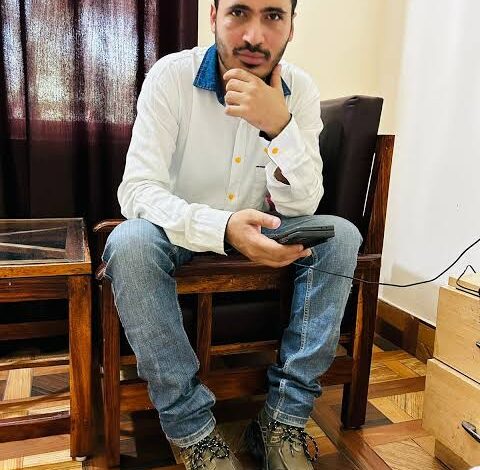
The controversy surrounding Nitin Naresh, publisher and editor associated with Inventiva, has entered a significant new phase, with separate legal proceedings involving BPTP Limited, Ankiti Bose, Krishan Rattan and the Terra Invest dispute drawing attention to the conduct of the publications and communications at the centre of these disputes.
At the heart of the controversy is a question that deserves answers through evidence rather than competing public narratives: when money demands allegedly become connected with the threat of adverse publications, how should investigators establish what actually happened, who sent the communications and whether any unlawful conduct occurred?
The Delhi High Court has already directed a disputed telephone recording in the BPTP litigation to be sent for scientific examination to the Central Forensic Science Laboratory (CFSL) attached to CBI headquarters in New Delhi. Naresh disputed the authenticity of the recording and maintained that it could be an AI-generated clone of his voice. The court considered forensic examination necessary before reaching a conclusion about the recording.
Separately, a Jaipur court rejected Naresh’s anticipatory bail application on October 28, 2026, in a criminal case arising from allegations of monetary demands linked to threatened adverse publications concerning an investment organisation associated with the wider Terra Invest dispute.
These are separate proceedings, involving different complainants, allegations and evidence. Neither the disputed audio recording nor the Jaipur FIR, by itself, establishes criminal guilt. Nevertheless, the allegations raise legitimate questions that demand a thorough, impartial and evidence-based examination.
The principle should be straightforward: if an audio recording is important enough to warrant scientific examination, electronic communications relied upon in a separate extortion investigation should receive equally rigorous scrutiny.
The BPTP Dispute: A Telephone Recording Becomes the Focus of Judicial Scrutiny
The BPTP controversy took a significant turn before the Delhi High Court in September 2026.
In proceedings involving BPTP Limited and Nitin Naresh and others, BPTP alleged that a telephone conversation between Naresh and the company’s authorised representative, Jai Shankar, appeared to involve a demand for money and could amount to a breach of the court’s earlier directions.
On September 22, 2026, the High Court considered an application alleging wilful disobedience of its earlier order. BPTP’s counsel presented an electronic device containing a recording of an alleged telephone conversation lasting approximately 12 minutes and requested that the court examine it.
The court heard the recording and considered the parties’ submissions.
Naresh disputed the allegation. He argued that the recording could be an AI-generated voice clone and denied that the alleged conversation had taken place as described. He also raised an objection concerning the statutory certification of the electronic evidence and requested scientific examination to establish its authenticity.
The court did not treat either party’s version as conclusively established. Recognising the serious implications of the allegations, Justice Tushar Rao Gedela directed that the recording be placed on a pen drive, sealed through the Registrar General and transmitted to CFSL attached to CBI headquarters, Lodhi Road, New Delhi.
The court also directed that the original recording and the original device on which it was allegedly made be surrendered for examination. The laboratory was requested to prioritise the matter, examine the recording’s authenticity and veracity, ascertain its hash value, and furnish a report to the Registrar General for placement before the court in a sealed cover.
This was an important procedural step. The court chose scientific verification over a premature conclusion about a disputed recording.
The fact that the recording was referred for forensic examination does not mean that the court found the alleged conversation genuine or that extortion had been established. Its authenticity was precisely the question requiring investigation.
That distinction is central to understanding the case.
If the Audio Requires Forensic Verification, Why Should the Emails Be Treated Differently?
The logical next question concerns the electronic evidence relied upon in the Jaipur extortion case.
According to the complaint summarised in the Jaipur court’s order, emails dated August 26 and September 3, 2026, allegedly demanded money and threatened further adverse publications if the demands were not met.
The complainant alleged that the communications formed part of a continuing course of pressure. He also relied upon a cash deposit of ₹11,700 made on September 3, 2026, into an account identified in the proceedings as belonging to Nine Network Private Limited, the company described in the order as the owner of Inventiva.
The complainant further alleged that another demand for money arrived after the deposit.
These allegations are serious. Their seriousness, however, makes independent verification more important, not less.
An email printed on paper does not, by itself, conclusively establish who authored it. The recipient’s account of receiving a message must be evaluated alongside the original electronic record and other available evidence.
A proper forensic examination could seek to establish the following:
First, the authenticity of the original emails. Investigators should preserve the original messages in their electronic format, including full headers, message identifiers, timestamps, routing information and available server records.
Second, the identity of the sender. Investigators should examine available account-access records, relevant IP logs, authentication records and other technical information capable of reliably connecting the communications to their actual source.
Third, whether the messages were altered. The original files, available metadata and cryptographic hash values may help establish whether the material supplied to the investigating agency is consistent with the preserved electronic evidence.
Fourth, the relationship between the alleged demands and the payment. Bank transaction records, the deposit slip, the beneficiary account, the timing of communications and the surrounding circumstances should be independently verified.
Fifth, the sequence of events. A reliable timeline should establish when the messages were sent and received, when the alleged payment was made, and whether the communications can be connected to the transaction through independent evidence.
The investigation must also examine the defence’s explanation, including any claim that money was deposited into the account without consent or that the emails did not originate from the accused.
The objective should not be to manufacture a case against any individual. It should be to establish the facts beyond reasonable doubt if criminal proceedings ultimately reach trial.
If CFSL attached to CBI headquarters is considered an appropriate facility by the competent court or investigating authority, the original emails and associated electronic records should be referred there under proper procedures. Alternatively, another competent forensic laboratory may conduct the examination if directed by the responsible authority.
The essential demand is not a predetermined conclusion. It is independent, technically sound and transparent verification.
The Jaipur FIR: Allegations of Money Demands Linked to Threats of Adverse Publications
The Jaipur case adds another significant dimension to the controversy.
FIR No. 267/2026 was registered at Shastri Nagar Police Station, Jaipur, under Sections 308(2), 308(3), 351(2) and 61(2) of the Bharatiya Nyaya Sanhita, 2023. The Jaipur court’s order also refers to Section 3(5) when discussing the alleged offences and the investigation.
The complaint was lodged by Aniruddh Saran Purohit, who stated that he represented Terra Vision Investments LLC, identified in the proceedings with Terra Invest, in India.
An important clarification is necessary here: the Jaipur complaint recorded in the judgment was made by Purohit. It should not automatically be described as a complaint filed personally by Ankiti Bose or Krishan Rattan. The proceedings involving Bose and Rattan are relevant to the broader dispute over publications, but the parties and allegations in each case must be accurately identified.
According to the complaint summarised in the judicial order, Purohit alleged that emails received on August 26 and September 3 demanded money and threatened further adverse publications concerning the organisation and individuals associated with it.
The complaint also alleged that ₹11,700 was deposited through an HDFC Bank cash-deposit machine in Jaipur on September 3. The order records transaction reference 1636 and identifies Nine Network Private Limited as the beneficiary account holder.
The complainant claimed that the payment was made under pressure and that another demand followed.
The defence denied the allegations, disputing that Naresh had sent the emails, demanded money or threatened the complainant. The defence also questioned the connection between the accused and the communications and maintained that the proceedings were intended to harass him.
These opposing positions underline why the electronic records need to be examined directly. The allegations are neither proof of guilt nor matters that should be dismissed without investigation.
The bank transaction is a verifiable event, but determining its significance requires more than the deposit slip. Investigators must establish the circumstances in which the payment was made, the relationship between the payment and the alleged demands, and the identity of those responsible for the communications.
The investigation should answer these questions through evidence, not inference alone.
Jaipur Court Rejects Anticipatory Bail on October 28
On October 28, 2026, the Court of Additional Sessions Judge No. 7, Jaipur Metropolitan-II, presided over by Judge Renuka Singh Hudda, rejected Naresh’s anticipatory bail application in the Jaipur case.
The court considered the complaint, the case diary, the material collected during the investigation and the submissions advanced by the defence, the prosecution and the complainant’s counsel.
The order refers to the alleged emails, the demand for money, the ₹11,700 deposit, the dispute over publications and the need for further investigation. It also records an allegation concerning a threat to the complainant’s advocate outside court premises on October 26, 2026.
The defence denied the allegations and argued that Naresh was cooperating with the investigation and that his arrest was unnecessary.
After considering the material before it, the court concluded that the circumstances did not justify granting anticipatory bail and dismissed the application under Section 482 of the Bharatiya Nagarik Suraksha Sanhita, 2023.
This is a significant procedural development, but its legal meaning must be stated accurately.
The rejection of anticipatory bail is not a conviction. It does not establish that the alleged emails were authored by Naresh or that the elements of extortion have been proved beyond reasonable doubt. The criminal investigation and any subsequent trial must proceed in accordance with law.
The court’s decision nevertheless underscores the seriousness with which it assessed the allegations and the outstanding investigation at that stage.
Ankiti Bose and Krishan Rattan: Separate Civil Proceedings Concerning Publications
The controversy also includes separate civil proceedings brought by Ankiti Uday Bose and Krishan Rattan against Naresh and others concerning articles published by Inventiva.
In an order dated August 24, 2026, the Delhi High Court considered Bose’s suit challenging identified publications as allegedly false and defamatory. The court directed restrictions on dissemination of specified articles through LinkedIn and other social media accounts and restrained further publications that would have the effect of preventing her from exercising her legal rights.
In Krishan Rattan’s suit, the High Court passed an interim order on September 14, 2026, restraining the defendants from publishing further articles containing defamatory imputations against him. The order expressly stated that the interim direction did not preclude the defendants from continuing their fact-finding exercise concerning the allegations against him.
Subsequent proceedings in the Rattan matter included allegations of breach of the interim directions, which Naresh contested.
These cases concern publication-related grievances and the scope of interim civil protection. They are legally distinct from the Jaipur criminal case and the BPTP proceedings concerning the disputed audio recording.
It would therefore be inaccurate to treat the civil suits filed by Bose and Rattan as proof that they personally lodged the Jaipur extortion complaint. Nor do interim injunctions, by themselves, establish criminal misconduct.
Nevertheless, these cases form part of the wider legal context in which the methods used to publish, communicate and substantiate serious allegations are being examined.
The appropriate question is whether the specific evidence in each proceeding supports the claims made by the respective parties.
Does the Record Suggest a Pattern? That Question Requires Evidence, Not Assumptions
When allegations of monetary demands arise in separate disputes involving the prospect of adverse publications, it is reasonable to ask whether there are similarities in the alleged conduct.
But a responsible assessment must distinguish between a pattern alleged by parties and a pattern established through evidence.
The BPTP matter concerns an alleged telephone conversation that Naresh disputes and that the court referred for scientific examination.
The Jaipur FIR concerns alleged emails, a claimed demand for money and a bank deposit of ₹11,700 into an account identified with Nine Network Private Limited.
The Bose and Rattan civil proceedings concern allegedly defamatory publications and interim restrictions relating to particular articles.
These matters involve distinct factual and procedural records. The available orders do not establish that every allegation in one proceeding is connected to the others or that a common unlawful scheme has been proved.
That does not mean comparisons are irrelevant. Investigators can examine whether there are independently verifiable similarities in the timing, content, origin and purpose of the alleged communications, where legally relevant. They can test whether the electronic evidence supports the parties’ competing accounts and whether any common factual links actually exist.
If no such links are established, the cases should remain separate. If reliable evidence does establish relevant connections, those findings can be dealt with through the appropriate legal channels.
The objective must be truth, not the accumulation of allegations for their own sake.
A publisher’s professional role does not place anyone above the law. Equally, the existence of a criminal complaint or a disputed recording does not remove the accused person’s right to a fair process.
Both principles must operate together.
Why the Alleged Emails Should Be Preserved and Examined Independently
The integrity of electronic evidence can be critical in cases involving alleged extortion through emails, messaging platforms and telephone communications.
If investigators rely on a printout without examining the underlying electronic records, important questions about authorship, transmission, alteration and context may remain unresolved.
The appropriate response is to preserve evidence promptly and maintain a documented chain of custody. This is particularly important where the identity of the sender is disputed or where one party claims that electronic material has been fabricated or manipulated.
In the Jaipur matter, the investigating authority should secure the original emails and any available associated records through lawful procedures. It should also obtain the relevant banking records and determine whether the alleged payment can be linked to the communications through independent evidence.
The accused should have an opportunity to raise relevant technical objections through the proper legal process, and any forensic findings should be evaluated by the competent authority and court.
Where a referral to CFSL attached to CBI headquarters is sought, the competent authority should determine the appropriate legal route and scope of examination. The fact that the BPTP recording was referred to that laboratory does not automatically require the same referral in every other case, but it provides a strong basis for asking that comparable electronic evidence receive equally rigorous and independent scrutiny.
The principle should be consistency in evidentiary standards, not selective reliance on whichever form of evidence appears favourable to a particular party.
The Public Interest in Establishing the Truth
The broader controversy raises an important question about the responsibilities that accompany investigative journalism.
Journalism can legitimately investigate businesses, wealthy individuals, corporate governance and allegations of misconduct. Critical reporting, even when uncomfortable for its subjects, is not inherently unlawful. At the same time, the label of journalism does not immunise anyone from scrutiny if credible evidence suggests that unlawful monetary demands or threats have occurred.
The distinction depends on evidence, intent, context and the applicable law.
A demand for clarification, a request for comment, a legitimate legal communication and a threat to publish damaging material in exchange for money are not interchangeable acts. Their legal character must be assessed on the actual communications and surrounding circumstances.
That is why the alleged emails in the Jaipur case should not be treated as a settled account of events before forensic verification. It is also why the disputed audio in the BPTP matter should not be treated as authentic merely because it was played in court.
The public has an interest in knowing whether serious allegations against individuals and companies are supported by verifiable evidence. The public also has an interest in ensuring that allegations against journalists and publishers are investigated fairly, without prejudging the outcome.
The same evidentiary standard must apply regardless of which party stands to benefit from a particular finding.
The Demand Is Simple: Examine the Audio, Examine the Emails, Establish the Facts
The legal proceedings now provide an opportunity for the relevant authorities to replace competing claims with reliable findings.
In the BPTP matter, the Delhi High Court directed the disputed recording and the original recording device to be examined by CFSL attached to CBI headquarters. In the Jaipur matter, the allegations centre on emails, alleged monetary demands and a bank transaction. The evidence in the latter case deserves careful preservation and independent technical examination.
The request is not that any person should be declared guilty in advance. It is that the available evidence should be examined with the same seriousness, regardless of whose case it supports.
If the emails relied upon in the Jaipur FIR are authentic and can be reliably attributed to the person accused, the forensic and investigative findings should establish that. If they are manipulated, misattributed or unsupported by reliable evidence, that too should be established.
Likewise, the disputed BPTP audio must stand or fall on the results of scientific examination rather than speculation about AI-generated voices or assumptions based on how a recording sounds.
The court’s decision to seek forensic verification of the audio reflects the importance of establishing authenticity before reaching conclusions. The same commitment to evidence should guide the examination of the alleged emails.
The bottom line is clear: preserve the original evidence, send the relevant electronic records for independent forensic examination through the appropriate legal process, investigate the financial trail and allow the facts to determine the outcome.
The truth should not depend on which party speaks louder, which publication carries the allegation or which narrative dominates the public debate.
It should depend on what the evidence establishes.
Editorial Note
This article discusses separate proceedings and allegations reflected in court orders. The Jaipur FIR was lodged by Aniruddh Saran Purohit, who stated that he represented Terra Vision Investments LLC in India; it should not be inaccurately described as a complaint filed personally by Ankiti Bose or Krishan Rattan. The BPTP audio recording was referred for forensic examination after Naresh disputed its authenticity. The Jaipur court rejected Naresh’s anticipatory bail application on October 28, 2026, but that order was not a criminal conviction. Allegations in all the proceedings remain subject to the applicable legal process, and no inference of guilt should be drawn merely from the existence of separate complaints, suits or interim orders.