UP Students Are Selling Blood To Pay NEET, SSC Coaching Fees As Middlemen Exploit Their Desperation
For some students in Prayagraj, the cost of chasing a medical seat or a government job has taken a disturbing turn. An investigation by Dainik Bhaskar has found NEET and SSC aspirants selling their blood to pay coaching fees, hostel expenses and meet basic needs, while middlemen allegedly profit from their desperation.

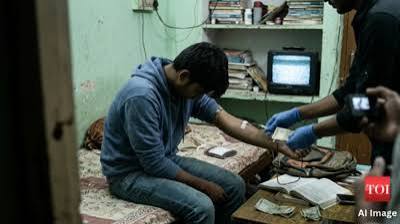
Students preparing for competitive examinations in Prayagraj, Uttar Pradesh, are reportedly selling their blood to pay for coaching classes, hostel accommodation and other educational expenses, exposing the financial desperation facing aspirants from economically weaker families.
An undercover investigation by Dainik Bhaskar has found students offering blood for amounts ranging from ₹4,000 to ₹8,000, while alleged middlemen operate around blood banks, arranging transactions and taking a cut from the money.
For thousands of young people from small towns and farming families, moving to Prayagraj to prepare for examinations such as NEET and SSC is seen as an investment in a better future. But for some students, the cost of pursuing that future has become difficult to sustain.
An investigation by Dainik Bhaskar has uncovered instances of students selling their blood to arrange money for coaching fees, hostel payments and everyday expenses. The newspaper’s undercover reporters, posing as relatives of patients requiring blood, approached students outside the Allahabad Medical Association (AMA) Blood Bank in Prayagraj and recorded their accounts using hidden cameras.
One student preparing for the SSC examination told the reporters that he had turned to selling blood after failing to pay his hostel fees for two months. His father was a farmer, his mother had died, and his two younger sisters continued to live in the village. The family’s agricultural income, he said, was barely enough to meet basic food expenses.
With no money to pay for his accommodation, the student feared that losing his hostel room would mean having to abandon his preparation altogether.
When the undercover reporter asked how much he would charge for providing blood, the student quoted ₹8,000. Asked why he had resorted to selling blood instead of finding some other way to earn money, he pointed to the financial limitations of his family and the high cost of coaching.
The student’s response captured the desperation behind the transactions. Blood, he said, would regenerate, but if he failed to study, he could end up unemployed.
Another student, identified as Anand in the report, was preparing for the SSC examination and had approached a blood bank to arrange money for his coaching fees ahead of Diwali. He had reportedly sold blood just 10 days earlier to pay his mess charges, although that transaction had taken place at a different blood bank.
Anand told the undercover reporters that his father was a farmer who struggled to meet the family’s expenses. Selling blood was something he resorted to when financial emergencies arose. His hope was that securing a government position one day would put an end to the difficulties he and his family were facing.
The investigation also found students preparing for NEET who were relying on similar arrangements. One such student, Ashish, told the reporters that several young people who came to Prayagraj from other parts of the state were arranging money by selling blood.
His family had sent him to the city hoping that he would eventually become a doctor. But repeatedly asking his parents for money to meet smaller expenses had become difficult. Selling blood, he indicated, had become a way of managing those requirements without placing further financial pressure on his family.
The investigation suggests that these were not isolated accounts of students facing temporary financial difficulties. It points to a practice in which young aspirants, already struggling to finance their education, are putting their health at risk to remain in the competition for medical seats and government jobs.
An Alleged Network Of Middlemen Operating Around Blood Banks
Beyond the students themselves, the investigation uncovered the involvement of middlemen who allegedly connect prospective donors with patients and take a commission from the transactions.
According to students interviewed, agents operating around blood banks maintain contact with hostel residents and other students who are willing to provide blood when money is needed. Some reportedly receive calls from these agents after a deal has been negotiated with a patient.
The newspaper’s undercover reporter approached one such middleman, identified as Sonu, outside the AMA Blood Bank in Prayagraj. When asked how much he would pay for one unit of blood, Sonu initially offered ₹4,000.
The reporter pointed out that other students had quoted ₹8,000. Sonu responded that arranging blood directly carried risks because blood bank officials monitored such transactions. He claimed that middlemen made arrangements to prevent students from getting into trouble and therefore deducted a portion of the money as their commission.
After repeated negotiations, Sonu agreed to pay ₹5,000, although he insisted that the student would still have to bear the processing fee.
When the reporter asked whether there would be a problem if he had donated blood just 20 days earlier, Sonu allegedly dismissed the concern. He claimed that students sometimes donated blood twice a month because they could not afford to wait when they needed money.
Sonu also claimed that the network avoided detection by arranging donations through different blood banks. If transactions became difficult to arrange in Prayagraj, he said, they could be shifted to neighbouring districts.
The investigation became more serious when Sonu and his associate Rajesh allegedly claimed that they could arrange more than 12 units of blood in a single day. They further claimed to have access to hospital stamps, fake doctors, prescriptions and demand letters.
According to the two men, forged hospital demand letters were prepared in advance as part of the arrangements to keep donors from being identified.
The revelations point to an alleged organised operation in which financially vulnerable students are recruited as donors, while middlemen profit from transactions that exploit their immediate need for money. The claims made by the agents also raise questions about the use of forged medical documents and the possibility of repeated donations being concealed by shifting between blood banks.
The Rising Cost Of Competitive Exam Preparation
For students from financially struggling families, the cost of preparing for competitive examinations extends far beyond tuition fees. Accommodation, food, study materials and other everyday expenses add to the financial burden, particularly for those who leave their hometowns to study in coaching centres such as Prayagraj.
According to students interviewed, major coaching institutes, including Aakash Institute, Allen Career Institute and Narayana, charge annual fees ranging from ₹1.20 lakh to ₹1.80 lakh. Students said these institutions require the fees to be paid in a single instalment, making it particularly difficult for families with limited savings or irregular incomes.
Accommodation adds another ₹3,500 to ₹5,000 per month, while food and study materials create additional expenses. Even before accounting for meals and other necessities, a student paying ₹1.20 lakh in annual coaching fees and ₹3,500 in monthly accommodation charges would need approximately ₹1.62 lakh a year.
At the higher end of the reported range, coaching and accommodation alone could cost ₹2.40 lakh annually.
For families dependent on small-scale agriculture, such expenses can be difficult to manage. Several students interviewed in the investigation described fathers who were farmers and whose earnings were barely sufficient to meet household requirements.
The financial pressure becomes particularly severe when payments are due immediately. Students may need money to retain their hostel accommodation, pay overdue mess charges or meet coaching fee deadlines. In such circumstances, selling blood has reportedly emerged as a means of arranging money quickly.
The investigation also spotlighted the limitations of government-supported coaching facilities. Uttar Pradesh provides free coaching to eligible students under the Mukhyamantri Abhyudaya Yojana, intended to help candidates preparing for competitive examinations.
However, admission is subject to specified selection criteria, and not every student seeking affordable coaching can secure a place.
The accounts gathered illustrate how the financial burden of competitive examination preparation is falling on students who have limited means of supporting themselves while studying.
For these aspirants, the challenge is not simply securing admission to a medical college or qualifying for a government position. It is also finding enough money to remain in the city and continue preparing for those examinations.
Illegal Blood Transactions And The Dangers Of Repeated Donations
The practice uncovered in Prayagraj also raises serious legal and medical concerns, particularly because some students reportedly sell blood multiple times within a short period.
In India, commercial blood donation is prohibited, and blood banks are required to operate under regulations governing donor eligibility, collection procedures, testing and the supply of blood and blood components.
The Supreme Court’s 1996 intervention in the case of Common Cause v. Union of India led to measures aimed at eliminating professional blood donation and strengthening the country’s regulated blood transfusion system.
Under India’s blood donation framework, donors are required to meet prescribed medical eligibility criteria, including minimum haemoglobin levels, appropriate body weight and mandatory intervals between donations.
However, Dainik Bhaskar’s investigation found students claiming to have donated blood at intervals considerably shorter than those permitted.
One student said he had sold blood just 10 days before approaching another blood bank. During an undercover conversation, an alleged middleman claimed that some students donated blood twice a month and avoided detection by visiting different facilities.
The report also described students allegedly selling blood as frequently as four times a month.
Such practices, if carried out as described, would violate the prescribed donation intervals and could expose donors to significant health risks.
Repeated blood loss without sufficient recovery time can deplete the body’s iron reserves, lower haemoglobin levels and contribute to iron-deficiency anaemia. Depending on the severity, affected individuals may experience fatigue, weakness, dizziness and reduced physical capacity.
The risks are especially concerning when donors conceal previous donations or provide inaccurate medical information to qualify for another collection.
Brajesh Kumar, Assistant Commissioner in Prayagraj’s Food and Drug Administration Department, told Dainik Bhaskar that medical standards and government guidelines regulate blood donation for both men and women.
He warned that donors who conceal their information and donate blood more frequently than permitted could face life-threatening consequences.
The investigation also raised questions about the regulatory monitoring of transactions occurring outside blood bank premises.
According to the report – the blood banks were not directly involved in the alleged sale of blood, although its investigation suggested that facilities were aware of activities taking place outside their premises.
When The Pursuit Of Education Becomes A Question Of Survival
The investigation in Prayagraj shows a troubling contradiction in India’s competitive examination system. For students from economically weaker households, education is often viewed as the most viable route to financial stability and a better future. Yet the cost of accessing that opportunity can become an obstacle in itself.
The students interviewed were not selling blood to finance luxuries or discretionary spending. Their accounts point to immediate necessities: paying coaching fees, retaining hostel accommodation, settling mess bills and, in some cases, sending money back to families struggling to make ends meet.
The involvement of middlemen makes the situation more disturbing. Students facing financial pressure are allegedly being drawn into an informal network in which agents arrange blood transactions, deduct commissions and, according to their own claims, use forged medical documents to circumvent scrutiny.
The investigation does not establish the full extent of this activity across Prayagraj or Uttar Pradesh. However, the accounts of students and the conversations recorded with alleged intermediaries raise serious questions about the safeguards surrounding blood collection and the monitoring of illegal commercial transactions.
For the students involved, the immediate concern remains the same: finding enough money to continue studying. One student’s explanation that blood would regenerate but lost educational opportunities might not is perhaps the starkest illustration of the choices facing these young aspirants.
The larger question is why students pursuing an education that is supposed to improve their economic circumstances are being pushed into risking their health simply to afford the opportunity to study.