ED Seizes 29 Lakh In Illegal Human Egg Extraction Racket
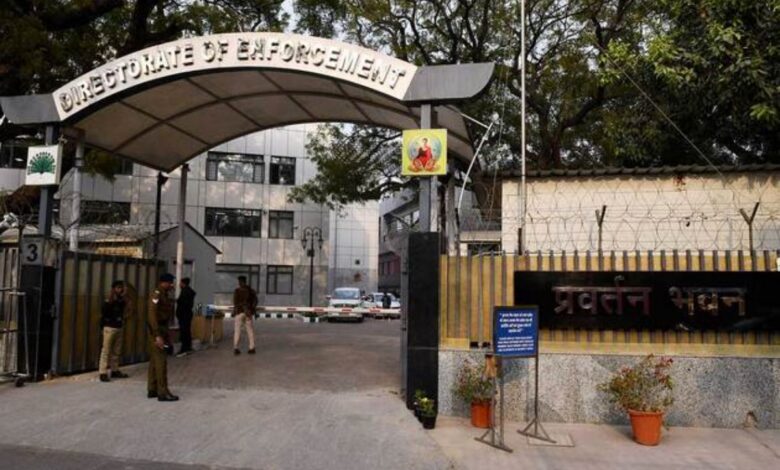
The Enforcement Directorate has launched a comprehensive probe under the Prevention of Money Laundering Act into an organised network operating across multiple locations in Maharashtra that systematically extracted human eggs from financially vulnerable women through forged identities and documents while supplying them to IVF centres and ART banks for monetary gain. Searches conducted at 10 premises spanning hospitals IVF centres and related establishments in Thane Baramati and Nashik on 16.10.2026 led to the recovery of 29 lakh in cash along with a large volume of documents and digital devices. Bank lockers and mutual fund investments stand frozen while multiple immovable properties and investments involving substantial amounts have been identified. The investigation stems from an FIR and subsequent chargesheet filed by Badlapur East Police Station naming Manjusha Wankhede and 16 others and examining more than 250 egg donation cases.

How long can regulatory blind spots allow identity fraud to turn one time egg donation into a commercial conveyor belt of repeated extraction: A story of Illegal Human Egg Extraction
The organised recruitment of women for monetary compensation the deliberate fabrication of identity and medical documents the channeling of payments through intermediary agents and the repeated medical procedures performed under false identities together expose a structural collapse of the very safeguards that the Assisted Reproductive Technology Regulation Act 2021 was enacted to enforce.
On 22.10.2026 the Enforcement Directorate placed on record the results of its searches at 10 premises and the freezing of financial assets yet the deeper questions of how many unique women were subjected to how many retrieval cycles how much money moved through the network and how many registered establishments accepted false records remain unanswered by any public ledger.
The network did not operate in isolation. Financially vulnerable women were identified and approached by donor supply agents operating under different proprietorship concerns. These agents arranged the necessary papers Aadhaar cards PAN cards birth certificates affidavits consent letters blood test reports and insurance documents and then delivered the women to IVF centres and ART banks. Payments from the clinical establishments were routed back through the same agents who retained commissions.
The police investigation that preceded the Enforcement Directorate action had already examined more than 250 egg donation cases and recorded statements from 25 witnesses. By May 2026 a chargesheet of approximately 5000 pages naming 15 accused including 5 doctors had been filed. Later reporting placed the number of women involved at more than 40. One of those women is alleged to have undergone egg retrieval 33 times.
Under Section 27 of the Assisted Reproductive Technology Regulation Act an oocyte donor may donate only once in her lifetime and no more than 7 oocytes may be retrieved from that donor. The donor must be between 23 and 35 years of age. An ART bank cannot supply the oocytes of one donor to more than one commissioning couple. These restrictions exist because ovarian stimulation and egg retrieval carry medical risks that include ovarian hyperstimulation syndrome bleeding infection and complications linked to sedation or anaesthesia.
When identity is deliberately concealed the clinical record of previous stimulation cycles disappears. A woman who has already undergone multiple retrievals can be presented as a first time donor at a new facility. The clinic that accepts the forged papers has no visible history of prior procedures. The insurance coverage required under Section 22 is taken out in a false name. The consent form is signed under an identity that does not belong to the woman on the table.
The Enforcement Directorate has recorded that the documents recovered include precisely these categories of papers. Their use was not incidental. The documents were the mechanism that allowed the same women to be recycled through the system while the paper trail remained clean. The question that follows is unavoidable. How did verification systems at registered ART banks and IVF centres fail to detect repeated use of the same biological donor under different names.
Were biometric checks never performed. Were previous donation histories never cross referenced against the national registry. Were the blood test reports simply accepted without independent verification. Each of these failures multiplies the medical risk borne by the women and multiplies the commercial advantage enjoyed by the intermediaries.
The financial trail is equally opaque. The only quantified seizure is 29 lakh in cash. Bank lockers and mutual fund investments have been frozen yet their aggregate value has not been disclosed. Multiple immovable properties and investments involving substantial amounts have been identified yet no property schedule or valuation has been placed in the public domain. Payments to the women themselves have been reported in the range of 25,000 to 30,000 per procedure. If more than 40 women were involved and if even a modest average of three procedures per woman is assumed the gross outflow to donors alone would already exceed 30 lakh.
Add the commissions retained by agents and the sums paid by clinics for each completed retrieval and the total circulation of money becomes significantly larger. The Prevention of Money Laundering Act requires the Enforcement Directorate to establish that the property in question is derived from criminal activity relating to a scheduled offence. Until the full ledger of clinic payments agent commissions donor compensation and asset acquisitions is reconstructed the 29 lakh cash seizure remains only the visible tip of an unquantified financial structure.
The legal architecture that should have prevented this outcome is clear. Section 21 of the Assisted Reproductive Technology Regulation Act imposes duties on clinics and banks. Section 22 requires written informed consent and insurance coverage for the oocyte donor for 12 months. Section 23 mandates accurate records. Section 27 governs the sourcing of gametes and the one time lifetime limit. Section 29 prohibits the sale transfer or commercial use of human gametes. The originating police case additionally invokes provisions of the Bharatiya Nyaya Sanhita relating to cheating and forgery and provisions of the Drugs and Cosmetics Act.
The Enforcement Directorate is examining the generation of proceeds of crime under the Prevention of Money Laundering Act. Each of these statutes was available. Each of these statutes contains the tools necessary to stop repeated extraction under false identities. The fact that an organised network could operate across Thane Baramati and Nashik for years therefore raises a direct question about enforcement capacity rather than legislative design.
The women at the centre of the network were recruited precisely because of their financial vulnerability. They were paid amounts that appear substantial against the backdrop of limited household income yet trivial against the fees charged by fertility clinics to commissioning couples. The medical risks of repeated ovarian stimulation were borne entirely by them. The possibility of long term reproductive harm the risk of complications from anaesthesia and the absence of genuine informed consent under a true identity were all shifted onto individuals who had the least power to refuse.
When the same woman is presented under successive false identities the clinical duty of care is emptied of meaning. The practitioner who performs the retrieval sees only the papers in front of him. The papers have been engineered to hide the previous cycles. The cumulative physiological burden is invisible on the day of the procedure.
The intermediary structure itself deserves closer examination. Agents operating under different proprietorship concerns performed the dual function of recruitment and document facilitation. They collected the women arranged the papers and delivered them to the clinical establishments. Payments flowed back through the same channel. This arrangement distances the clinics from the original recruitment while still allowing them to obtain donors.
It also creates multiple points at which commissions can be extracted. Whether every clinic that received a donor knew that the identity documents were false remains a matter for the investigation to establish through communications payment patterns and internal records. The existence of repeated identical donor details across different facilities would itself constitute powerful evidence of knowledge or wilful blindness.
The regulatory architecture created by the 2021 Act includes a National Board State Boards a national registry and appropriate authorities. The national registry is intended to maintain information about ART clinics and banks and their services. If more than 250 egg donation cases were examined by the police and if more than 40 women were identified then the question of why the registry and the inspection machinery did not generate earlier alerts becomes unavoidable.
Were registration certificates and renewal records in order. Were inspection reports silent on donor identity verification. Were complaints from public health centres or individual women never escalated. The answer to these questions will determine whether the failure was confined to a criminal network or whether it extended to the supervisory systems that were supposed to detect and interrupt such networks.
The timeline itself is instructive. The Assisted Reproductive Technology Regulation Act came into force on 25.01.2022. The police investigation later indicated that the pattern of activity stretched over approximately three years. The case surfaced on 19.02.2026 after a woman approached a public health centre. By 06.03.2026 seven arrests had been reported. By May 2026 a detailed chargesheet had been filed.
On 16.10.2026 the Enforcement Directorate conducted searches at 10 premises. On 22.10.2026 it placed its findings on record. The gap between the coming into force of the Act and the first public detection of the network measures the period during which the safeguards were either not applied or were successfully defeated by document fraud.
The reported case of 33 retrieval procedures stands as the most extreme illustration of the alleged failure. A lifetime statutory limit of one donation was replaced by a sequence of 33 procedures. Even if the precise clinical records are still under examination the reported figure forces a confrontation with the purpose of the one time limit. That limit exists because the medical literature and the legislative record both recognise the cumulative risks of repeated stimulation and retrieval.
If the figure is substantiated then the woman in question was exposed to a volume of medical intervention that the law expressly sought to prohibit. The fact that such a volume could occur without triggering any cross institutional alert system is itself an indictment of the verification architecture.
The Enforcement Directorate investigation is now focused on the generation and layering of proceeds of crime. The 29 lakh cash seizure the frozen lockers the mutual fund investments and the identified properties form the initial dataset. The larger task is to reconstruct the complete flow of funds from the clinical establishments through the agent proprietorships to the women and then outward into assets.

Only when that reconstruction is complete will it be possible to measure the true financial scale of the network and to determine which assets represent proceeds of crime under the Prevention of Money Laundering Act. Until then any claim that the racket involved only the seized cash is simply unsupported by the available material.
The case therefore presents three interlocking failures. The first is the failure of identity verification that allowed the same women to be presented as successive first time donors. The second is the failure of medical record integrity that allowed previous stimulation cycles to remain invisible to successive practitioners. The third is the failure of financial transparency that allowed commissions and compensation to move through intermediary channels without generating regulatory scrutiny. Each of these failures was made possible by the same set of forged documents.
Each of them placed the medical and financial burden on women who had the least capacity to resist. The Enforcement Directorate searches of 16.10.2026 and the press release of 22.10.2026 have opened the financial dimension of the case. The underlying police investigation has already produced a detailed chargesheet. What remains is the complete reconciliation of donors procedures payments and assets so that the public can see not only that a network existed but exactly how large it was how it functioned and how many institutional safeguards it managed to neutralise.