David Walliams Tried To Silence The Media Over Sexual Misconduct Allegations, But A High Court Battle Uncovered Years Of Accusations Against The Children’s Author
David Walliams, once celebrated as one of Britain's most recognisable comedians and bestselling children's authors, is facing a major public reckoning after around 30 women came forward with allegations of sexual misconduct, grooming and abuse of celebrity power. The controversy has intensified following his failed High Court attempt to prevent publication of the allegations, bringing renewed scrutiny to his conduct, his years in television and publishing, and the institutions that continued to work with him.

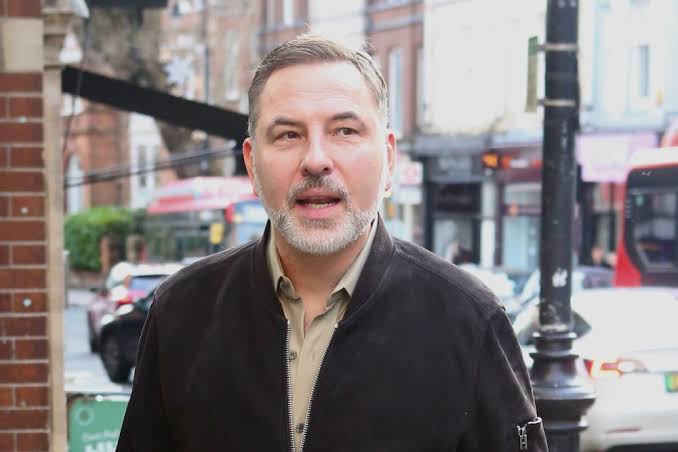
British comedian and bestselling children’s author David Walliams has been named as the celebrity who attempted to prevent The Guardian and ITV News from publishing allegations of sexual misconduct against him, bringing an extraordinary legal battle over press freedom, privacy and the right to life into public view.
The 55-year-old former Britain’s Got Talent judge had approached the High Court in London seeking a permanent injunction against the two media organisations, arguing that publication of the allegations could put his life at risk.
The legal challenge was unusual. Rather than relying primarily on conventional privacy arguments, Walliams’ lawyers invoked his rights under the European Convention on Human Rights, including Article 2, which protects the right to life, and Article 3, which prohibits inhuman or degrading treatment.
His legal team told the court that he had attempted suicide after being approached by journalists seeking his response to the allegations and that publication could trigger another attempt. They also cited his longstanding psychiatric vulnerability and the fear of public humiliation.
On November 3, the High Court rejected his application. Justice Matthew Nicklin acknowledged that publication would pose a serious risk to Walliams’ life and recognised the gravity of his psychiatric condition. However, he concluded that suicide was not inevitable and that responsibility for protecting Walliams rested with the mental health professionals treating him, rather than the court.
Granting an injunction, he reasoned, would impose an exceptionally serious restriction on the media’s freedom of expression.
Although the ruling initially kept Walliams’ identity protected while he considered an appeal, the restrictions were lifted after the deadline passed on November 9 without an appeal being filed. The Guardian and ITV News were consequently able to publish the findings of their joint investigation, which had been underway for three years.
The court’s decision, however, was not a determination of whether the allegations were true. Walliams has denied wrongdoing, insisting that he is not a sexual predator and has not broken the law.
Around 30 Women, Two Decades And Allegations Of Sexual Misconduct
The investigation published by The Guardian and ITV News brings together accounts from approximately 30 women who have described encounters with Walliams spanning more than two decades.
Their allegations range from inappropriate advances and sexual harassment to grooming and alleged sexual assault. Several women claim that Walliams used his celebrity status and professional influence to establish contact with them when they were teenagers or young adults, creating relationships in which the considerable difference in age, fame and professional standing placed them at a disadvantage.
The accounts cover several different settings, including social media interactions, private meetings, celebrity parties, television production environments and the offices of his former publisher, HarperCollins.
Some women describe being approached while still at school, while others recount unwanted advances after meeting the comedian through modelling, entertainment or publishing-related opportunities.
The investigation also raises questions about whether concerns surrounding his conduct were adequately addressed by organisations with which he worked.
Walliams has rejected the allegations through his lawyers, disputing claims of grooming, sexual misconduct and inappropriate workplace behaviour. He has acknowledged that some of his past relationships may have involved thoughtless behaviour and expressed regret that women he encountered felt hurt or angry. However, he maintains that he never abused his position of fame or authority.
The Accounts Of Teenage Girls, Young Models And Fans
Among the most serious allegations in the investigation are accounts from women who say Walliams first approached them when they were teenagers, using his growing celebrity profile to establish contact and, in some cases, offering professional encouragement before the interactions allegedly became sexual.
One of the women, identified as Alex, says she first met Walliams at a Little Britain fan event in January 2004, when she was 15. An aspiring comedy writer, she had handed him copies of scripts she had written, along with a covering letter containing her contact details.
She was surprised when the comedian subsequently called her, praised her writing and encouraged her to stay in touch. Their communication continued through telephone calls and emails over the following two years. Alex says she was initially excited by the attention and believed he could help her pursue a career in comedy.
According to her account, the tone of their correspondence changed in October 2005, when Walliams began asking about her age, requesting photographs and making increasingly sexual comments. Alex says she eventually sent him photographs in her underwear, some of them taken at his request. By spring 2006, when she was 17, she says they had begun having sex at his London home.
She describes the encounters as brief and says she felt uncomfortable with the way he approached her, including an incident in which she says he pushed his tongue into her mouth shortly after she arrived. Although she describes the encounters as consensual, she now believes the relationship involved grooming and an abuse of the considerable age and professional imbalance between them.
Walliams’ lawyers dispute her account. They say he understood Alex to be 18 when she resumed contact with him, does not recall asking her for sexual photographs and denies being pushy or grooming her. They also say he was devastated to learn that their brief relationship had caused her distress.
Another woman, identified as Jade, says Walliams contacted her through MySpace in 2007, when she was 15. She recalls being surprised that a well-known television personality had taken an interest in her and says their conversations initially revolved around school and her future plans.
After arranging to meet at a cafe in Soho, she alleges that Walliams asked whether she had ever had sex before. She says he subsequently kissed her in a nearby street and invited her to his home in north London.
Jade alleges that once inside the house, Walliams kissed her again, lifted her top and bra and touched her sexually. She says she pulled away when he attempted to guide her hand down his trousers. According to her account, he stopped but suggested they should wait until she turned 16 and remain in contact. Jade later came to view the encounter as sexual assault and grooming. Walliams’ lawyers deny that he had any sexual contact with her and say the allegations of serious criminal conduct are false.
The investigation also includes accounts from young models and women who say Walliams pursued them through social and professional connections. Lilly Creightmore, who was 18 when she met him in 2003, alleges that he repeatedly pressed her to share his bed despite her expressing an interest only in friendship.
She says he offered gifts, professional introductions and access to celebrity circles, but that his attention became uncomfortable when she refused his advances. Walliams denies grooming or coercing her, saying the offers of help came without expectations.
Ella, another model, recounts being invited to Walliams’ home for a celebrity gathering in 2008. She alleges that he attempted to kiss her in his bedroom and later placed his head in her lap while asking her to stay overnight. She says she felt intimidated and uncomfortable. His lawyers maintain that he was hoping to pursue a serious relationship and deny that he intended to intimidate her.
A further account comes from Sarah, who says she and a friend were invited to stay at Walliams’ home in 2016. She alleges that after the women had been drinking wine, Walliams attempted to kiss her and later led her towards the upper floors of the house. Sarah says her friend intervened and helped her return to a spare bedroom. Walliams’ lawyers deny that he tried to take advantage of her, saying there was no sexual contact and that neither woman appeared uncomfortable at the time.
Taken together, these accounts form a significant part of the investigation’s examination of how Walliams allegedly used his fame, personal connections and access to young women. He denies targeting teenagers or exploiting his celebrity status to manipulate women into sexual relationships.
Behind The Scenes At Britain’s Got Talent
The allegations are not confined to Walliams’ private interactions with young women. The investigation also examines his conduct behind the scenes of Britain’s Got Talent, where he served as a judge for a decade, from 2012 until 2022.
Several former production staff members describe concerns about his interactions with young female employees, particularly runners assigned to assist the judges during filming.
One 19-year-old runner reportedly showed colleagues messages from Walliams in which he called her “gorgeous” and commented on photographs she had posted on Instagram. The exchanges prompted discussion in a WhatsApp group used by younger production staff, with some questioning whether the comedian would have behaved similarly towards a male colleague.
Another former staff member, who was 24 when she worked as Walliams’ runner in 2017, alleges that he stared at her chest and later referred to her as “the one with the arse”. She described the experience as demeaning and said she felt reduced to her physical appearance. Walliams’ lawyers say he does not recall making the remark but acknowledge that it would have been hurtful if he had. He denies staring at her chest or behaving in a predatory manner.
The investigation also raises questions about access given to teenage fans who were invited backstage and into Walliams’ dressing room. One former fan says she and other teenage girls were left alone with him behind a closed door, without another adult present. His lawyers dispute that description of the circumstances.
Walliams left Britain’s Got Talent in 2022 after leaked recordings revealed derogatory and sexually explicit remarks he had made about contestants during production breaks.
He subsequently apologised for the comments, describing them as private conversations. The latest allegations, however, have brought renewed attention to his interactions with young women working around the show.
HarperCollins And The Allegations Inside The Publishing House
Beyond television, the investigation has also brought renewed scrutiny to Walliams’ relationship with HarperCollins, the publishing house responsible for turning him into one of Britain’s most commercially successful children’s authors.
Signed by the publisher in 2008, Walliams became one of its biggest literary successes, with his books selling more than 26 million copies in the UK alone and generating an estimated £156 million in sales.
However, concerns about his conduct towards female employees reportedly circulated within the organisation for several years. The Guardian’s investigation describes allegations involving junior female staff members, including an employee in her mid-20s who met Walliams at a promotional event in 2017.
She was subsequently sent to his home, where the two began a sexual relationship. Although Walliams’ lawyers describe the relationship as consensual, multiple sources told the investigation that the employee later viewed it as an abuse of power. Colleagues also reportedly began warning one another against visiting his home alone.
Further concerns emerged when a former HarperCollins employee, identified as Katie, approached the company’s human resources department after a junior colleague showed her messages from Walliams asking her out.
The woman had initially met him at a World Book Day promotional event, after which he obtained her email address and invited her to dinner. She did not respond, but he reportedly contacted her again several months later. Walliams’ lawyers said he had been lonely following his divorce and was hoping to meet someone.
At least five female staff members reportedly discussed their experiences during the inquiry, which concluded in 2024. The investigation did not result in immediate action against Walliams, and the publisher continued to release his books for nearly two more years. One employee who participated in the inquiry reportedly received a five-figure settlement and signed a separation agreement containing a non-disclosure clause.
In December 2025, following a change in management, HarperCollins announced that it would no longer publish new titles by Walliams. The publisher said employee wellbeing was a serious priority, while Walliams maintained that the concerns raised during the internal inquiry had never been brought to his attention. His lawyers have denied allegations of sexual harassment and inappropriate workplace behaviour.

From Little Britain To A Bestselling Children’s Author
Walliams’ rise to fame began in the early 2000s when he partnered with comedian Matt Lucas on the BBC sketch comedy series Little Britain. The show became a major television success, making the pair household names through a series of recurring characters and catchphrases.
Its popularity helped establish Walliams as one of Britain’s most recognisable comedy personalities, opening doors to television appearances, live performances and a growing public profile.
In 2008, he began a new chapter with the publication of his first children’s book, The Boy in the Dress. The book’s success marked the beginning of a highly profitable publishing career, followed by titles including Gangsta Granny, Mr Stink, Billionaire Boy and Ratburger. His books went on to sell more than 60 million copies worldwide, with several adapted for television and stage productions.
His public profile expanded further in 2012 when he joined Britain’s Got Talent as a judge alongside Simon Cowell. His comic exchanges with Cowell and his performances as a television personality made him a popular fixture on the programme. He remained on the judging panel for a decade before leaving in 2022 following the controversy over leaked remarks about contestants.
Walliams also cultivated an image as a prominent philanthropist, undertaking high-profile charity challenges, including swimming the English Channel in 2006. In 2017, he was awarded an OBE for services to charity and the arts. His success in children’s publishing, television and charity work helped establish an image of a family-friendly entertainer, making the allegations that have since emerged particularly damaging to his public standing.
However, aspects of his earlier work had already attracted criticism. Little Britain faced renewed scrutiny over its use of blackface, leading to the programme being removed from several streaming platforms in 2020. Walliams and Lucas subsequently apologised for aspects of the show’s content. His children’s books also faced criticism over depictions of class, body image and stereotypes, adding to the growing reassessment of his public work.
Why The High Court Rejected The Injunction And The Fallout
The failure of Walliams’ legal challenge has raised wider questions about the limits of court-ordered reporting restrictions, particularly when an individual argues that publication itself could endanger their life. His case was unusual because his lawyers were not primarily seeking to protect conventional private information. Instead, they argued that allowing the investigation to be published would expose him to a real and immediate risk of suicide, placing the court in breach of its obligations under the European Convention on Human Rights.
During the proceedings, the court considered evidence about Walliams’ psychiatric condition, including two reported suicide attempts following his awareness of the investigation. A jointly appointed psychiatric expert accepted that publication could substantially increase the risk of psychiatric deterioration and suicidal behaviour. However, the expert did not conclude that suicide was inevitable and said that continued hospitalisation, treatment and support could help manage the risk.
Justice Matthew Nicklin ultimately ruled that the responsibility for protecting Walliams rested with the healthcare services already treating him. The state had taken steps to safeguard his life through psychiatric hospitalisation, and the court was not required to eliminate every remaining risk by preventing the media from publishing an investigation into matters of substantial public interest.
The judge also considered the consequences an injunction would have had for the journalists and their sources. Preventing publication would not merely have restricted two media organisations; it would also have effectively prevented the women who had spoken to investigators from making their experiences public.
The ruling therefore recognised the seriousness of Walliams’ circumstances while refusing to establish a precedent that could allow similar arguments to suppress public-interest reporting.
Walliams was given an opportunity to appeal, but his legal team did not pursue the challenge before the deadline. The reporting restrictions were subsequently lifted, allowing the investigation to be published on November 10. Importantly, the court did not rule on the truth or otherwise of the allegations.
The publication has since triggered a series of professional and institutional consequences for Walliams.
His literary agency, Independent Talent Group, dropped him, while the BBC began reviewing programmes featuring him and removing some material from its platforms. His Labour Party membership was also suspended, and Alton Towers announced the immediate closure of its World of David Walliams attraction, which had been inspired by his children’s books.
The Metropolitan Police has confirmed that it contacted The Guardian and ITV News following their investigation to ensure that potential victims knew how to report any alleged criminal offences. The force said it had not received related complaints at the time of its initial statement but would carefully assess any reports submitted.
The developments have also renewed scrutiny of the entertainment and publishing industries, particularly over how concerns about influential personalities are handled when those individuals remain commercially successful.
For David Walliams, the immediate consequences extend beyond the loss of professional associations. His reputation as a family entertainer and bestselling children’s author now faces a significant challenge, even as he continues to deny the allegations and maintains that he has broken no law.