Gurgaonland – where even ₹190-crore penthouses can’t buy a dry street.
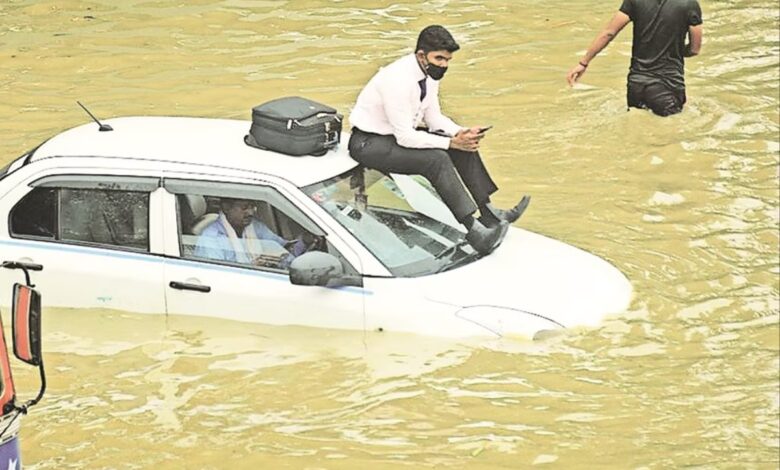
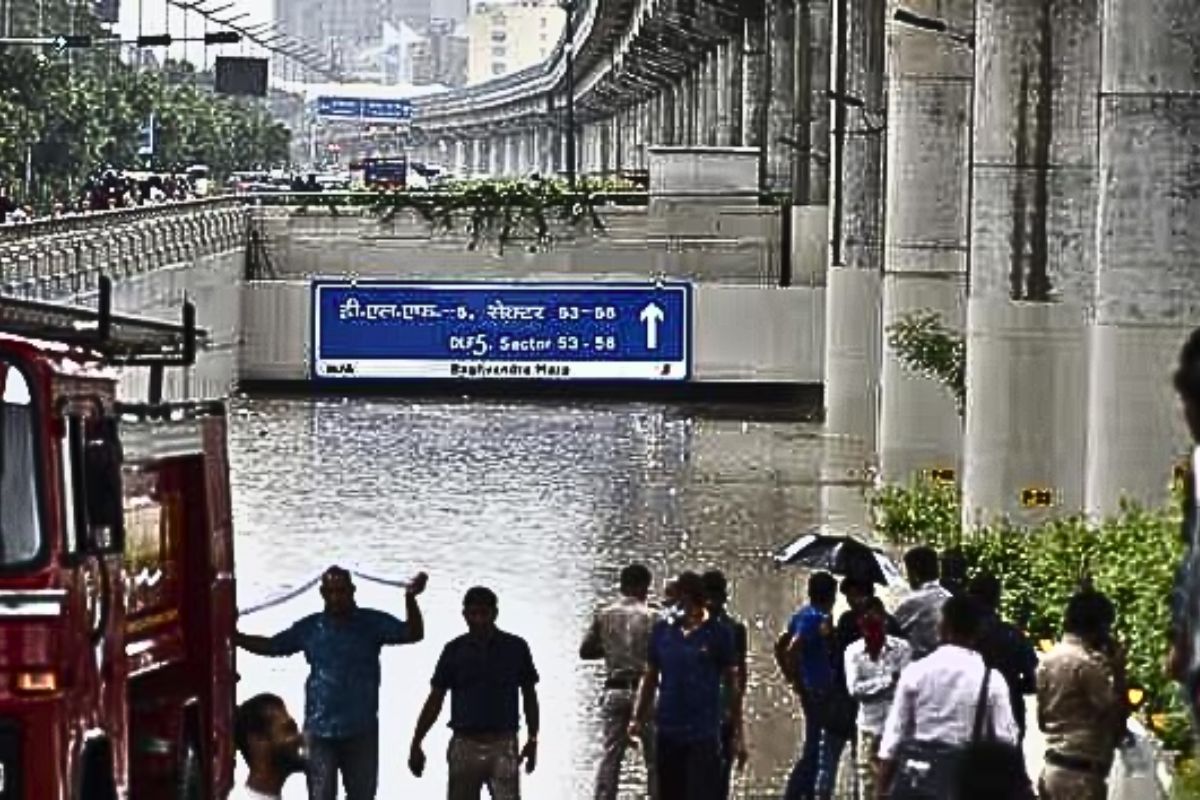
In a single evening downpour, Gurugram’s elite Golf Course Road (home to DLF Camellias and Magnolias) was transformed into lakes. Tennis-court mansions were surrounded by water, luxury SUVs sat afloat, and residents shivered in disbelief. As one local quipped on social media, “Welcome to the condition of roads in front of ₹100 crore Camellias and Magnolias”. A Delhi commuter added to the ridicule: “30 minutes of rain and this is waterlogging as if drains don’t exist.” These images of stranded drivers and flooded underpasses should alarm us; but in India’s richest zip code, wealth meets watery shame.
If you think this is only in north, then wait. Rains doesn’t discriminate between North and South; instead this is one such rare event when north and south unite!
Take the case of Bengaluru: When The IT Hub Sinks!
Bengaluru’s story is no better. India’s tech capital fell prey to a few hours of rain that turned its streets into waterways. “This isn’t rain—it’s a national shame of corruption, vanished flood funds, and ignored drains.”. Five lives were lost and 500 homes flooded as once-aspirational areas like Koramangala and HSR Layout became rivers. Local planners may boast of smart cities, but every monsoon reminds us that water is still smarter. Even Infosys co-founder N. R. Narayana Murthy warned of this fate – in late 2024 he cautioned that cities like Bengaluru, Pune and Hyderabad “are heading toward becoming unlivable”. Today, Bengaluru is proving him right under the monsoon onslaught.

Chennai: Cyclone Chaos
Chennai’s rains have turned biblical. In December 2023, Cyclone Michaung unleashed days of torrential downpours across Tamil Nadu. Reuters described Chennai residents wading through waist-deep floodwaters that swept away cars, eerily recalling the city’s deadly 2015 deluge. Schools, hospitals and highways were incapacitated. Experts now admit that even the city’s upgraded drains “would have helped a lot in moderate and heavy rainfall, but not in very heavy and extremely heavy rains” – precisely the extreme conditions Chennai just endured. And so once again, the East Coast capital paid the price of unfinished infrastructure: millions stuck in their homes and streets, even as official reports touted partial fixes.
Mumbai is no different: Following The Same Financial Deluge
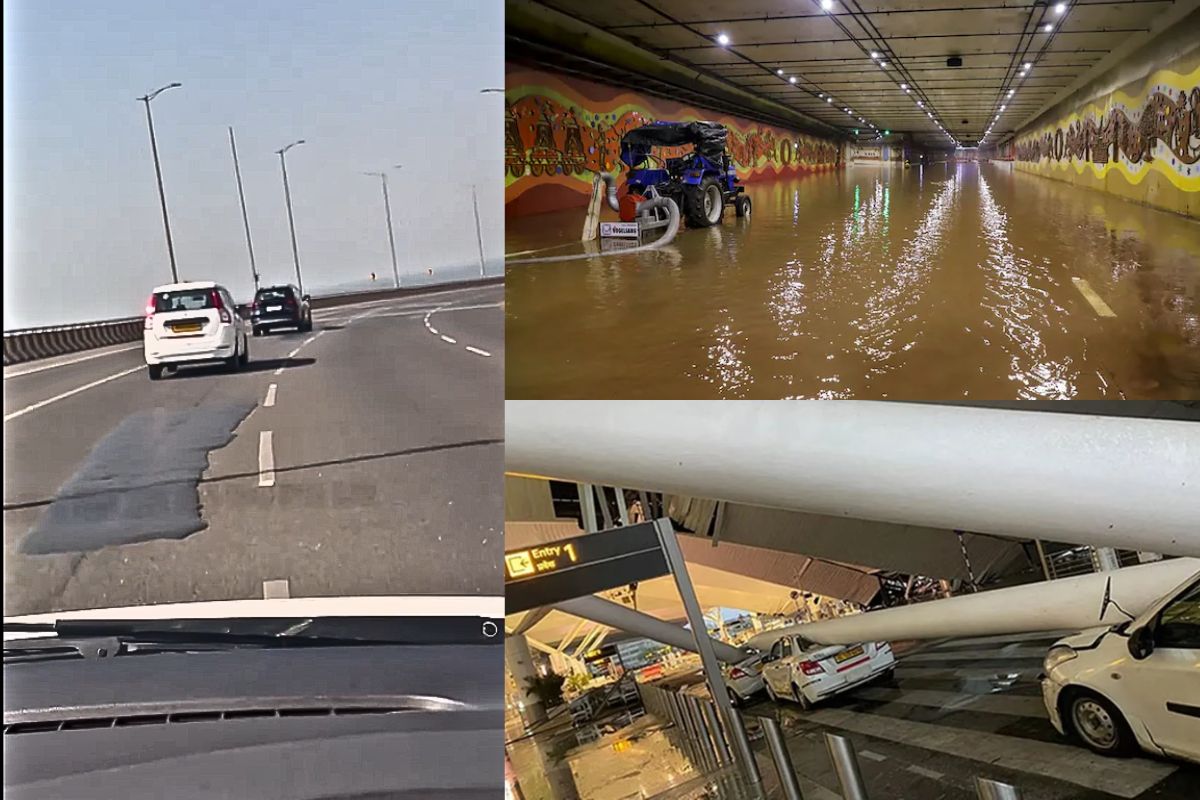
If Chennai and Bengaluru drowns in tech dreams, Mumbai drowns in monsoons. In July 2024, over 300 mm of rain fell in six hours. Commuters waded through knee-deep water on highways, office towers found their parking lots submerged, and flights were grounded. One frustrated BMW owner told, “Mumbai and rain-induced flooding is an annual occurrence. My BMW car is stuck in the floodwater,” capturing the weary frustration of a city that ought to be ready for seasonal rain.
Politicians scrambled for excuses: Maharashtra’s chief minister proudly pointed to a working pump at the Milan subway (which indeed stayed dry under 70 mm), as if that one example justified years of neglect. Critics were unapologetic: Congress leader Varsha Gaikwad said the government’s monsoon promises had “fallen flat”, and Shiv Sena’s Aaditya Thackeray snarled that the Chief Minister’s photo-ops now “hold zero value” as Mumbaikars’ cars float by. In short, Mumbai once again paid its taxes only to drown on its streets.
The Great Delhi (And Beyond): The Capital’s Water Nightmare
Even the national capital isn’t spared. In July 2025, uneven showers brought over 60 mm in parts of Delhi, and it was reported that “rush-hour commuters were stranded on the roads and flights disrupted” as drains overflowed. Outer Ring Road, ITO Junction, Kashmere Gate; none were immune to chest-deep puddles.
Delhi’s PWD minister Parvesh Verma went on TV to claim bottlenecks like the Minto Bridge and ITO had been “fixed” and that remaining problem areas would “soon be fixed”; a promise greeted with derision by people still wading through waterlogged streets. Nor is it just Delhi: Hyderabad and other metros echo the misery. Telangana minister K. T. Rama Rao even warned that “no Indian city is immune” to climate calamities, and recent heavy rains in Hyderabad have proven his point the hard way.
A Flood of Taxes, A Drought of Action
Look at the numbers. India’s fiscal “health” is robust, or rather, bloated. In FY 2023-24 the Union government’s gross tax revenue was ₹34.65 lakh crore, and in 2024-25 it budgeted ₹38.40 lakh crore. The Goods & Services Tax alone raked in ₹22.08 lakh crore in 2024-25. Each rupee collected is hard-won from citizens, and rightly expected to buy public services.
Yet practically none of this wealth translates to dry roads or safe homes. In theory:
- Gross tax revenue (2023-24): ~₹34.65 lakh crore.
- Gross tax (2024-25 estimate): ~₹38.40 lakh crore.
- Total GST (FY 2024-25): ~₹22.08 lakh crore.
With such funds, India could repave every cracked road and replace every collapsing pipe, and still have change to spare. By contrast, Singapore spends a fraction of India’s scale on municipal works and its streets clear within minutes after a storm. Here, our tax intake is enormous, but the rain still paralyzes the metros. Clearly, something has gone wrong at the spending end, or all the money is going towards the dead end of corruption!!!
Narayana Murthy’s Warning: Is It Here Already?
We have been warned. Infosys co-founder N. R. Narayana Murthy prophesied this decades ago: he warned that by mid-century, cities like Bengaluru and Pune “are heading toward becoming unlivable”, plagued by pollution, traffic and strains on infrastructure. He foresaw climate change and mass migration flooding these systems. Now that future seems to be unfolding ahead of schedule. If even our poster-child cities drown every monsoon, it’s hard to see how new smart-towns or satellite cities will fare.
Murthy also highlighted our rural-urban imbalance: worsening droughts and heat would drive millions from villages into already bursting cities. Is adding more taxes to the public till the answer, or just another cycle of spending announcements and empty promises? For now, every flooded basement is a reminder that we the taxpayers financed these failures.
Human Cost and Hypocrisy
This isn’t just satire; it’s life-and-death. Five people died in Bengaluru’s floods, and over a dozen perished in Tamil Nadu’s recent rains. Behind each headline is a family shattered. Meanwhile, some of our finest public servants swap blame and rhetoric. Delhi’s mayor points at Kochi’s drainage, while Bengal’s CM blames Delhi’s roads. Chennai’s ministers lament central neglect as Chennai’s LG points at district officials; the classic “not our fault” game. The common man pays the price.
And let’s be blunt: we pay. Highways have multiple taxes; states pile surcharges on petrol and VAT on fuel, making Mumbai’s petrol tax over ₹30/L. Despite this, every poor drain lives on borrowed time. Why fork out ₹30 to ride a motorbike if a single shower renders the road impassable? Millions of crores flow into exchequers, but not into our sewers. In effect, we fund our own drownings. The only flood we combat is the flood of official excuses.
Imagine an alternate reality: every minister’s private plane replaced with drainage pumps, and every elected official’s bonus tied to a city’s flood-free days. Our economy has the muscle for it as India’s capital expenditure jumped 17% in 2024-25 (mostly on infrastructure), but the dough hasn’t reached the drains. Instead of being celebrated with tax cars and state jets, some of that money could have built the modest resilience to save lives.
At the end: Satire’s Bitter Punchline
The satire now writes itself: ₹100-crore apartments with complimentary moats, ₹10-crore SUVs taking swimming lessons, and technocrats drowning in irony. But the punchline isn’t funny for most people. It’s on us, the taxpayers, who funded this tragedy. After each deluge, officials promise fixes “soon,” the media yells about scams and empty schemes, and we wait for the next monsoon to do it all again.
Narayana Murthy was right to sound the alarm. If cities truly become unlivable, the next generation will ask: what did our taxes and leaders buy? The cynical answer is staring us in the face. And that bitter punchline was written, sad to say, with our own money.