TVS Group’s Boardroom Clash Reveals A Truth It Tried To Bury For 30 Years. Why This Father-Daughter Rift Feels Like 1992 All Over Again
What unfolded inside the TVS Group this past week may appear, at first glance, to be a routine boardroom disagreement. But a sudden reversal of a key executive decision, regulatory attention, and visible faultlines within the promoter family suggest something far deeper - an old conflict quietly resurfacing in a new form.

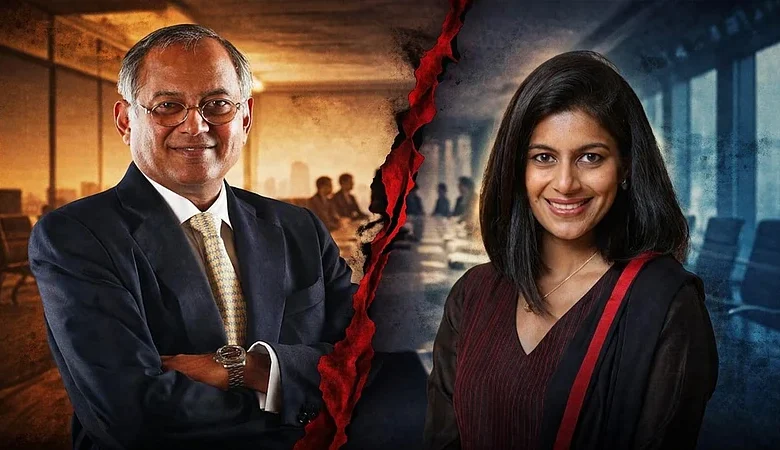
What should have been a routine governance matter quickly spiralled into a full-blown boardroom flashpoint at TVS Holdings, the holding company of TVS Motor.
Within a span of just three days, the board convened twice – first to accept the resignation of company secretary PD Dev Kishan, and then to reverse that very decision in a hastily called follow-up meeting. Such swift reversals are rare in companies known for their procedural discipline, and even rarer in a group long regarded for its conservative and structured approach to governance.
At the centre of this episode was managing director Lakshmi Venu, who is understood to have pushed for the removal of the company secretary, reportedly on the grounds that he was aligned with the broader group establishment rather than her leadership.
The move, however, raised immediate concerns – not just about the decision itself, but about the process. The company secretary was part of a shared services pool within the group, and transitions of this nature typically follow a clearly defined succession plan, not abrupt removal.
The situation placed independent director R Gopalan in a particularly delicate position. Tasked with upholding governance standards while facing evolving family dynamics, Gopalan eventually stepped down as chairman, though he continues to remain on the board as an independent director. His exit from the chairmanship, even if partial, only added to the sense that this was no ordinary internal disagreement.
Regulatory attention has also followed. The Securities and Exchange Board of India (SEBI) is learnt to have sought an explanation from chairman Venu Srinivasan, signalling that the developments have not gone unnoticed beyond the boardroom.
Yet, perhaps the most telling aspect of the episode lies in what followed behind the scenes.
Despite having transitioned to the role of chairman emeritus in 2022, Srinivasan is understood to have stepped in firmly on matters of governance. The message, as conveyed by those familiar with the situation, is clear: while operational control may have been handed over to the next generation, oversight and final authority continue to rest with the patriarch.
This is where the episode begins to move beyond governance and into something more complex.
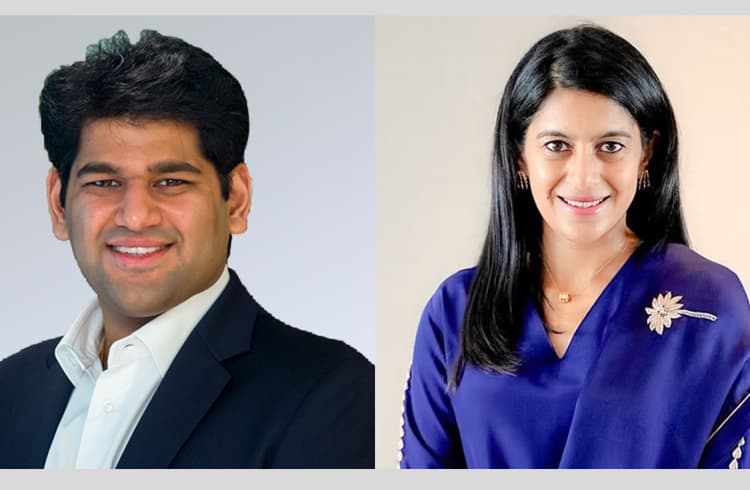
Multiple people close to the developments point to emerging alignments within the family-Srinivasan seen as more closely aligned with his son, Sudarshan Venu, while Lakshmi Venu is believed to be aligned with her mother, Mallika Srinivasan. These alignments, while not formally acknowledged, appear to be shaping the contours of decision-making within the group.
Individually, each of these developments could be explained away as an isolated governance lapse or a transitional challenge in a post-restructuring phase. Taken together, however, they point to a deeper unease-one that cannot be fully understood by looking at the present alone.
A Split On Paper, Not In Practice
The current tensions become easier to understand when viewed against the backdrop of the group’s 2022 restructuring – an exercise that was meant to simplify ownership, reduce overlap, and give each branch of the family clearer operational control.
Under the new arrangement, TVS Motor Company came under the leadership of Sudarshan Venu, while Sundaram Clayton – since renamed TVS Holdings – was placed under Lakshmi Venu. On paper, the separation appeared clean, even progressive. It reflected a generational transition, with defined roles and reduced cross-holdings, aimed at avoiding exactly the kind of friction that typically plagues large family-run businesses.
But in practice, the lines have proved far less distinct.
Sundaram Clayton’s historical position as the holding company of TVS Motor has ensured that the two entities remain deeply intertwined – through sourcing relationships, shared institutional memory, and long-standing management processes. These are not easily unwound, and certainly not within a few years of restructuring. What remains, as insiders describe it, are “residual” issues – legacy overlaps that continue to influence both decision-making and authority.
This is where structure begins to collide with reality.
The recent boardroom developments suggest that while operational responsibilities may have been divided, control – particularly over governance and key appointments – remains contested. The presence of a shared services ecosystem only complicates matters further, blurring the boundaries between independence and interdependence.
At the same time, there are signs that the organisation is still adjusting to its new form.
Leadership churn at the board and executive level, including the transition to a new chief executive, points to a phase of recalibration. Execution, too, appears to have taken a hit. A key land transaction reportedly failed to close before the financial year-end – raising concerns not about intent, but about decision velocity and alignment at the top.
And then there is the inevitable comparison within the family.

TVS Motor, under Sudarshan Venu, has delivered visible growth and market momentum, reinforcing its position as the group’s flagship. In contrast, Sundaram Clayton finds itself in a more complex phase – steady, but under greater internal and external scrutiny. Such contrasts, while natural in diversified groups, often create subtle pressure points, particularly when leadership is closely tied to family identity.
All of this points to a simple but uncomfortable reality:
- The restructuring may have addressed ownership. It did not fully resolve control.
- And when control remains ambiguous, even routine decisions can turn into flashpoints.
Which is perhaps why what is unfolding today feels less like a one-off disruption – and more like something the group has seen before.
1992 – When The Cracks First Appeared
More than three decades ago, the TVS Group found itself facing a very different India – one that was just beginning to open up economically, forcing traditional business houses to rethink how they operated and grew.
It was during this period, in the early 1990s, that the first visible signs of internal strain within the TVS family began to surface. At the heart of the divide was a fundamental disagreement over the future of the group.
On one side were those who believed the time had come to expand – more aggressively, more ambitiously, and with a greater willingness to adopt modern corporate practices. Liberalisation, they argued, would reward scale, speed, and strategic risk-taking.
On the other side were those who remained cautious. For them, the strength of the TVS Group lay in its discipline, its tightly held control, and its measured approach to growth. Rapid expansion, they feared, could dilute both ownership and the values that had defined the group for decades.
This was not merely a difference in business strategy. It was a deeper philosophical divide – between growth and control, between expansion and preservation. Over time, these differences began to manifest in more tangible ways.
Decision-making slowed as consensus became harder to achieve. The absence of a clearly centralised authority meant that multiple voices carried weight, but not always alignment. As different branches of the family exercised influence over different businesses, the idea of a unified “group” began to show signs of strain.
Importantly, these tensions were not explosive. They did not play out in public spats or abrupt exits. Instead, they lingered – quiet, persistent, and unresolved. And that, perhaps, is what made them more significant.
Because while the structure of the group evolved over the years – through expansion, professionalisation, and eventually restructuring – the underlying question was never fully settled.
Three decades later, the context has changed. The businesses are larger, the governance frameworks more formal, and the next generation firmly in place.
But the conflict itself feels strikingly familiar.
Same Family, Same Faultline
What is unfolding within the TVS Group today may appear to be triggered by a specific boardroom decision. But when viewed alongside its own history, it begins to resemble something far more enduring – a pattern the group has encountered before, only in a different form.
Growth vs Control → Governance vs Authority
In 1992, the divide was framed as a question of growth versus control – how fast to expand, and how tightly to hold on.
Today, that same tension has re-emerged, but in a more structured corporate language: governance versus authority. Who decides what and more importantly, who has the final word?
While operational roles may have been handed to the next generation, the recent developments suggest that ultimate oversight still rests with the patriarch. The distinction between running the business and controlling it remains as blurred as ever.
Family Factions → Structured Split, Same Divide
Three decades ago, the faultlines ran across different branches of the family, each influencing different parts of the group. Today, the separation is formalised. Roles are defined. Businesses are divided.
And yet, the underlying alignments remain.
The reported positioning of family members across different camps suggests that while the structure has changed, the internal equations have not. What was once an informal divide has now found expression within a more formal corporate framework.
Governance Then vs Governance Now
In the early 1990s, governance structures were still evolving. Much depended on internal consensus and informal authority. Today, the group operates within a far more regulated environment – complete with independent directors, board protocols, and regulatory oversight.
And yet, the recent episode shows that governance itself can become the arena of conflict.
Decisions around appointments, removals, and oversight are no longer just procedural – they are deeply tied to questions of influence and control. The system is stronger, but the tensions it contains are just as real.
A Generational Divide, Now Personal
Earlier, the divide was generational but distant – different approaches, different comfort levels with risk. Now, it is far more direct.
The lines appear to run within the immediate family – father and daughter, with different centres of alignment shaping decisions at the top. This makes the conflict not just strategic, but personal, and therefore harder to resolve through structure alone.
From Internal Friction To Execution Risk
In 1992, the consequences of these tensions were largely internal – slower decisions, fragmented thinking, a gradual weakening of cohesion. Today, the impact is beginning to show up in more tangible ways.
Boardroom reversals, leadership transitions, and delays in execution point to something more than just disagreement. They suggest that when alignment at the top is uncertain, the ripple effects are felt across the organisation.

A New Variable: Performance Pressure
What makes the current phase even more complex is the presence of internal comparison.
TVS Motor’s growth trajectory under Sudarshan Venu has created a visible benchmark within the group. In contrast, Sundaram Clayton is witnessing a more nuanced phase of transition.
Such differences are not unusual – but within a family-led structure, they can subtly influence perception, expectations, and pressure. Performance, in this context, becomes more than a metric – it becomes part of the internal equation.
Taken together, these parallels point to a larger truth: This is not a new conflict.
It is an old one, returning in a new language – reshaped by time, structure, and scale, but rooted in the same fundamental question that the group has struggled with for decades.
The Last Bit, A Conflict That Was Never Resolved
What makes the current episode within the TVS Group particularly significant is not the decision that triggered it, but the continuity it reveals.
Three decades ago, the group confronted a fundamental question – how to balance growth with control, autonomy with authority. It was never fully answered, only managed, contained, and eventually reorganised through structural changes.
The 2022 restructuring was meant to bring clarity. And in many ways, it did – on ownership, on roles, on operational boundaries. But clarity on paper does not always translate into clarity in practice.
Because at its core, this is not just a question of structure. It is a question of control – who exercises it, how it is shared, and whether it can truly be handed over.
The recent boardroom developments suggest that while businesses may have been divided, authority has not been fully relinquished. And when authority remains contested, even well-defined systems begin to strain under pressure.
That is perhaps the uncomfortable truth at the heart of this moment. The TVS Group did not outgrow its internal conflict. It adapted around it.
And now, years later, that same conflict has found its way back – no longer confined to quiet disagreements, but visible where it matters most: inside the boardroom, at the very centre of power.