The Man Who Almost Walked Free Vikram Wadhwa, the ₹645-Crore IDFC First Bank Fraud Accused, and the Hotel Room That Exposed a System’s Rot
This Clearly Prove If You Have Deep Pockets, You Can Manage Everything In India

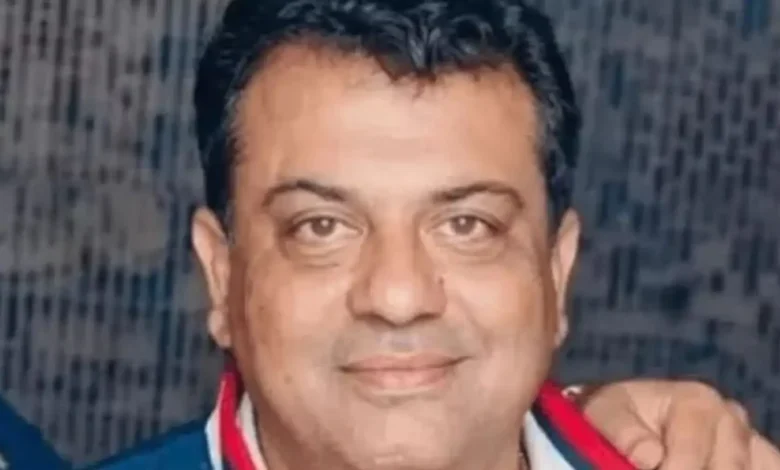
On a Monday evening in early August 2026, inside a nondescript hotel room in Chandigarh’s Sector 17-C, a carefully constructed fiction almost became reality.
Vikram Wadhwa — real-estate developer, hotelier, and undertrial prisoner in one of North India’s most brazen public-fund scams — sat not in Model Jail, Burail, but in the City Hotel. With him were his two sons, Karan and Kunal, and two uniformed Chandigarh Police officers who were supposed to be returning him to custody after a medical examination. Outside, a raid team led by senior officer SPS Sondhi was about to shatter the arrangement.
What police later described as a “pre-planned conspiracy” to help Wadhwa flee lawful custody was foiled within hours. But the episode did more than expose one man’s desperation. It peeled back layers of institutional failure — in banking, in public administration, in policing — that had already allowed hundreds of crores of public money to vanish, and then nearly allowed the man accused of orchestrating much of that vanishing act to disappear as well.
From Guest-House Caretaker to Real-Estate Player
Vikram Wadhwa’s public story begins far from luxury hotels and multi-crore bank transfers. Originally from Malout in Punjab, he moved to Chandigarh in the 1990s and started as a guest-house caretaker earning ₹1,500 a month. Over the next three decades he built a real-estate and hospitality footprint that included Hotel Landmark in Sector 22 and a web of companies and LLPs later named in investigation documents — Prisma Residency, Kinspire Realty, and others.
By early 2026, that rise had become the subject of a far darker narrative. Investigators allege that Wadhwa sat at a critical node in a sophisticated money-laundering and embezzlement network that siphoned public funds parked with IDFC First Bank.
The Anatomy of a ₹645-Crore Diversion
The core of the case, as pieced together by Haryana Vigilance, Chandigarh Police, and the Enforcement Directorate, is brutally simple in concept and elaborate in execution.
Large sums belonging to Haryana government departments, the Chandigarh Administration, the Municipal Corporation, CREST, Chandigarh Smart City Limited, and two private schools in Chandigarh and Panchkula were held in accounts at IDFC First Bank’s Sector 32 branch. Instead of remaining as fixed deposits or official balances, the money was systematically diverted.
Forged debit memos and manipulated bank statements were used. Funds moved through a constellation of shell entities — Capco Fintech Services, Swastik Desh Projects, R S Traders, SRR Planning Gurus, and others. Hundreds of crores were routed to jewellers for conversion into cash. Cash was then allegedly distributed to government officials and businessmen. A substantial portion, the ED has stated, reached entities and accounts linked to Vikram Wadhwa. Investigators claim he received more than ₹70 crore in his personal account alone, in addition to cash and property acquisitions.
The total figure cited across agencies hovers between ₹645 crore and ₹661 crore. More than 2,400 transactions have been traced so far. The scam’s exposure in February 2026 triggered raids, account freezes, and a long list of arrests.
Two bank employees — Ribhav Rishi (who resigned in June 2025) and Abhay Kumar — were arrested by the ED on 11 May 2026. Wadhwa himself was first arrested by Chandigarh Police’s Crime Branch in mid-March 2026 from a hideout in Kharar after weeks of being absconding. The ED took him into custody under the Prevention of Money Laundering Act on 29 May. Since then he has been an undertrial in Model Jail, Burail.
The Escape That Almost Succeeded
Judicial custody is supposed to be the point at which the state’s control becomes absolute. On that Monday in early August, it proved porous.
Wadhwa was produced for a medical examination at the Government Multi-Specialty Hospital in Sector 16. The escorting officers were Sub-Inspector Jagmehar Singh and Assistant Sub-Inspector Surender, both posted at Police Lines, Sector 26. After the check-up, instead of returning their charge to Burail Jail, the two officers took him to the City Hotel in Sector 17-C.
There, according to the FIR and police statements, his sons Karan (27) and Kunal (24) were waiting. Investigators allege the sons had induced the officers with “undue favours or rewards.” The plan, police say, was for Wadhwa to leave custody from the hotel.
A tip-off reached senior officers. The raid followed. All five — father, two sons, two policemen — were found together. An FIR was registered under the Prevention of Corruption Act and relevant sections of the Bharatiya Nyaya Sanhita. Wadhwa was returned to jail. The two officers and the two sons were arrested and later remanded to judicial custody.
The hotel owner is reportedly related to Wadhwa. Police are examining records, registers, and CCTV footage to determine how deep the facilitation went.
What the Episode Reveals
This is not merely the story of one accused man’s attempted flight. It is a concentrated illustration of systemic vulnerabilities.
First, the original fraud itself. Public money belonging to governments and schools was parked in a private bank and then extracted through forged instruments and shell companies with apparent ease. That such a large diversion could continue long enough to reach hundreds of crores suggests failures of internal controls at the bank, of oversight by the departments that owned the money, and of early detection mechanisms.
Second, the custody protocol collapse. Taking an undertrial out of jail for a medical examination is routine. Returning him is not optional. That two officers allegedly accepted inducements and diverted him to a hotel room where his family was waiting points to either individual corruption or a more organised facilitation network. In either case, it is a direct assault on the integrity of judicial custody.
Third, the speed with which the plot was assembled. Wadhwa had already been in custody for months. The fact that a medical outing could be converted so quickly into an escape opportunity suggests prior planning and confidence that the system could be bent.
Fourth, the political and administrative silence that often accompanies such cases. Large public-fund scams in India frequently produce arrests of the visible operators while the deeper networks of political and bureaucratic protection remain only partially illuminated. Whether that pattern will hold here remains to be seen.
Open Questions
Several critical questions remain unanswered in the public domain:
- How extensive was the network of government officials who allegedly received cash?
- What was the precise role of the bank’s internal systems and any compromised employees beyond the two already arrested?
- Were there earlier instances of Wadhwa being taken out of jail under similar arrangements?
- How did the intelligence about the hotel meeting reach senior officers so precisely?
- Will the hotel’s management face criminal charges, or will the probe stop at the five already named?
The Larger Shadow
Vikram Wadhwa’s trajectory — from a ₹1,500-a-month caretaker to a man accused of handling tens of crores of laundered public money, to an undertrial nearly walking out of a hotel room with police officers in tow — is more than a personal story of ambition and alleged criminality. It is a case study in how public resources can be extracted, how custody can be compromised, and how institutional safeguards can fail at multiple points simultaneously.
The raid on the City Hotel stopped one escape. It has not yet answered whether the larger system that allowed the original fraud — and then nearly allowed its principal accused to vanish — has been meaningfully repaired. Until those deeper questions are confronted with the same energy that produced the hotel raid, the Wadhwa case will remain less a closed chapter than a warning still in progress.