Turbulence, Altitude Drop, And An Unresolved Screening: Questions Surrounding Air India’s Phuket-Delhi Flight


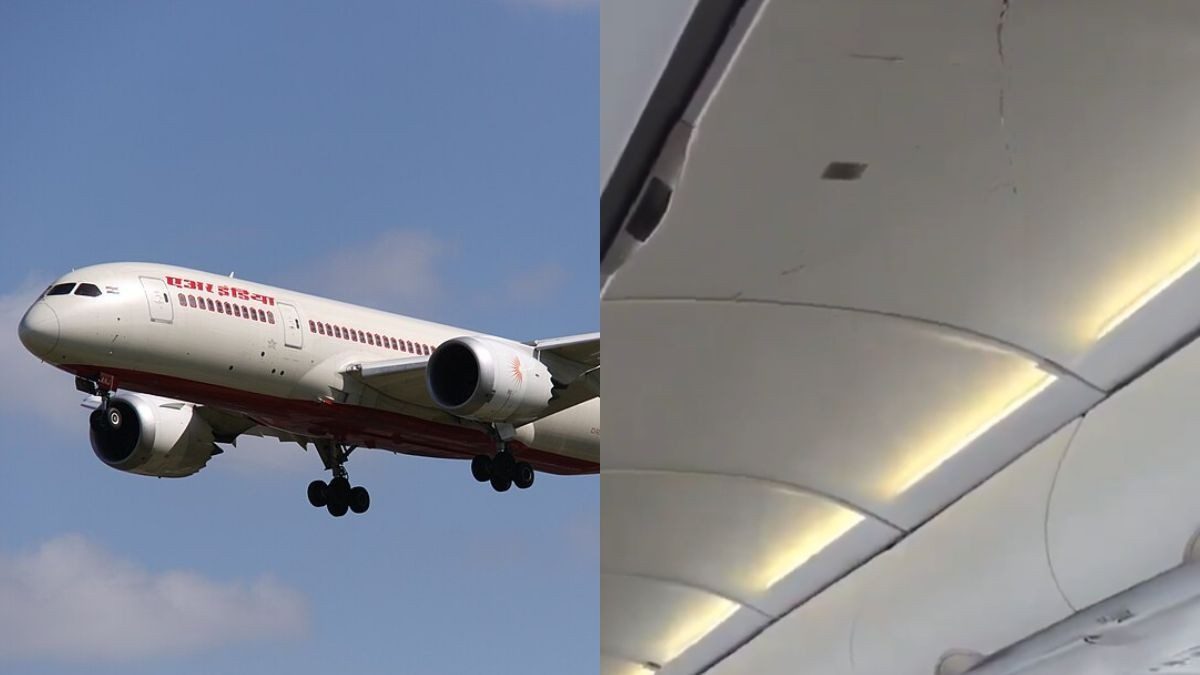
On the morning of August 4, 2026, Air India’s Phuket-Delhi Flight AI2379, an Airbus A320 registered VT-EXO operating from Phuket to Delhi, experienced a sudden and sharp loss of altitude during cruise. Official accounts and flight data references describe a drop of approximately 300 feet, with some tracking analyses indicating a steeper excursion of around 425 feet over roughly 30 seconds at about 36,000 feet while the aircraft was over parts of Odisha. The event was linked to severe turbulence that reportedly lasted four to five minutes.
The aircraft stabilised, continued, and landed safely in Delhi. Yet the aftermath has left more than a dozen people injured, triggered a formal serious-incident investigation, and, days later, focused intense scrutiny on a post-flight psychoactive-substance screening of the pilot-in-command whose initial result required confirmatory laboratory analysis.
The sequence raises legitimate public-interest questions about weather hazards on monsoon routes, operational decision-making, the robustness of post-incident protocols, and the transparency with which safety information reaches passengers and the public. None of the official statements confirm impairment. The confirmatory test result is still awaited. What is confirmed is that both pilots have been taken off the roster pending the outcome of the probe and the laboratory report. That combination of facts—mid-air injury, regulatory off-rostering, and an unresolved screening—demands careful examination rather than premature conclusions.
The Event Of Air India’s Phuket-Delhi Flight That Apparently Caused Turbulence!
Flight AI2379 carried 137 passengers and eight crew members. During the cruise phase the aircraft encountered what Air India and subsequent official descriptions characterised as a sudden loss of altitude. Civil Aviation Minister K. Rammohan Naidu later stated the turbulence episode lasted nearly five minutes and that some cabin crew sustained spinal and neck injuries. A senior DGCA official reported that the pilot-in-command notified authorities of a severe injury to one cabin crew member, an injury to another, and minor injuries among passengers. Numbers of people requiring medical attention after landing have been reported in the range of 13 to 17; most passenger injuries were described as minor, and many of those hospitalised were later discharged.
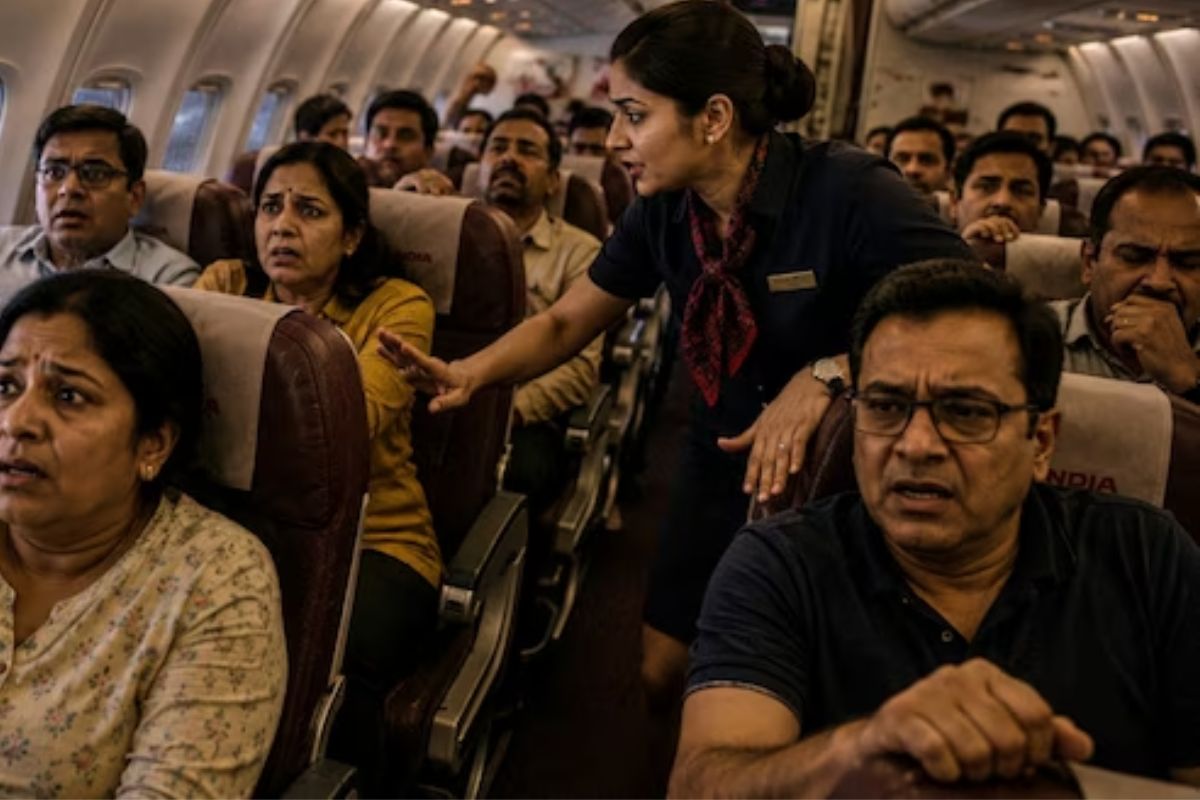
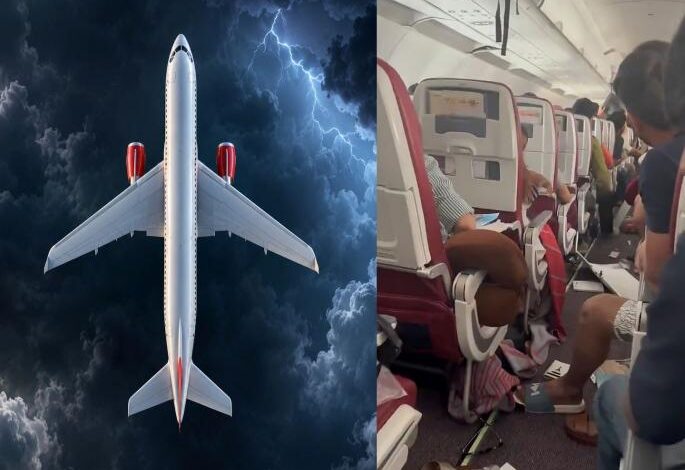
Flight-tracking data placed the aircraft over the Rengali Reservoir area of Odisha at roughly 36,000 feet and high speed when the first significant jolt occurred. One detailed reconstruction suggested an initial loss of about 175 feet followed by a further descent that brought the total change to more than 400 feet in half a minute, accompanied by a noticeable speed reduction. In the cabin the physical effect of a rapid downward acceleration is well understood: unrestrained passengers and crew continue briefly at the previous altitude relative to the descending aircraft, producing the sensation of being thrown upward into the ceiling or against bulkheads. Seat-belt discipline therefore becomes critical precisely when the environment feels calm.
The route itself is not obscure. From Phuket the track crosses the Andaman Sea and Bay of Bengal before entering Indian airspace along the eastern seaboard and proceeding northwest toward Delhi. In August this corridor traverses one of the most convectively active air masses on the planet. Monsoon thunderstorms, embedded convective cells, and clear-air turbulence associated with wind-shear layers are documented hazards. Aviation weather specialists have long noted that Indian monsoon airspace can present rapid, localised vertical motions that are difficult to forecast with precision even with modern onboard radar and ground-based meteorological products.
Whether the crew received adequate weather information, whether a deviation was requested or feasible, and whether the aircraft’s systems and the pilots’ responses were fully effective remain subjects of the formal investigation. The Aircraft Accident Investigation Bureau has classified the occurrence as a serious incident and has secured the flight data recorder and cockpit voice recorder. Those data will be central to reconstructing the vertical and lateral flight path, control inputs, and any system anomalies.
The Screening and the Regulatory Response
As part of standard operating procedures after such an occurrence, both flight-crew members underwent prescribed psychoactive-substance screening upon arrival. The Ministry of Civil Aviation stated that the screening result for the pilot-in-command “indicated a result requiring confirmatory testing.” Samples were sent to a designated laboratory; the final report is awaited. Both pilots were removed from the roster by the DGCA pending completion of the investigation and the confirmatory process. Further action, the ministry said, will depend on the outcome of the investigation and the laboratory results.
Air India has confirmed that a post-flight screening was conducted in accordance with applicable protocols but stated that the results have not been shared with the airline and that it is therefore not in a position to comment on any findings. The carrier also emphasised that it conducts regular drug testing of crew members independently of specific incidents and that it continues to cooperate with authorities. Federation of Indian Pilots representatives have publicly cautioned against treating the initial screening as a confirmed positive result, noting that until the confirmatory analysis is complete any claim of a positive finding lacks proof.
Indian civil-aviation regulations treat a non-negative screening result seriously: the individual is immediately removed from safety-sensitive duties until confirmatory testing is completed. A confirmed positive result for a first offence typically triggers referral for assessment and rehabilitation rather than automatic permanent grounding, though the precise administrative and medical consequences depend on the substance, concentration, and surrounding circumstances. Initial immunoassay screens can produce false positives from certain medications, dietary substances, or other compounds; confirmatory methods such as gas chromatography-mass spectrometry are designed to resolve ambiguity. The fact that confirmatory testing was ordered therefore does not, by itself, establish impairment at the time of the flight. It does, however, place the pilot under regulatory restriction until clarity is obtained.
Expert Perspectives on Causation
Aviation professionals have been careful to separate the turbulence event from speculation about pilot condition. Several pilots and safety commentators have observed that a 300-foot (or even larger) altitude excursion in severe turbulence is not, by itself, evidence of impairment. Clear-air or convective turbulence can impose vertical accelerations that exceed the aircraft’s ability to maintain altitude without significant control inputs or temporary excursions. One assessment described deliberate pilot-induced altitude loss of that magnitude under the reported conditions as “next to impossible.” Wind-shear layers and rapid changes in vertical air mass motion remain plausible meteorological explanations.
At the same time, the investigation will examine whether the crew’s response—altitude selection, speed management, seat-belt sign usage, and communication—was consistent with standard procedures for encountering severe turbulence. Questions have also been raised about the decision to continue to Delhi rather than divert to a nearer suitable airport after the injuries occurred. Those operational choices form part of the AAIB’s brief and should be evaluated on the basis of recorded data and crew statements rather than assumption.
Passenger anecdotes have circulated, including one claim that a pilot was observed walking in an unusual manner after landing. Such observations, offered after media reports of the screening, remain unverified and anecdotal. They illustrate the speed with which public narrative can form, but they do not substitute for laboratory results or investigative findings.
Systemic Angles and Public Concern
The episode intersects several longer-running concerns in Indian commercial aviation. First is the seasonal intensity of monsoon weather on busy international and domestic corridors. Passengers flying during peak convective months have limited practical ability to assess the risk of turbulence; they rely on operators and regulators to manage routing, altitude selection, and real-time weather avoidance. Improved sharing of high-resolution meteorological products, clearer guidance on when diversions are warranted after cabin injuries, and consistent enforcement of the “seat belts fastened when seated” message remain relevant regardless of the final findings in this case.
Second is the architecture of drug and alcohol testing for safety-sensitive personnel. Random and post-incident testing exists precisely because impairment, even if rare, carries catastrophic potential. The current case underscores both the value of the protocol—screening occurred promptly—and the importance of completing confirmatory analysis before public conclusions are drawn. Transparency about timelines for laboratory results and about the medical-review process would reduce the space for rumour.
Third is the broader safety culture of a major carrier operating under intense commercial pressure. Air India has undergone ownership transition and management change in recent years. Public confidence depends on visible, consistent prioritisation of safety over schedule and on open communication when incidents occur. The airline’s measured statement that it does not possess the test results and will cooperate is factually correct; whether that communication fully satisfies passengers who were injured or frightened is a separate question of perception and trust.
Fourth is the role of independent investigation. Classification as a serious incident by the AAIB places the inquiry outside the immediate operational chain of the airline and the day-to-day regulatory functions of the DGCA. That separation is intentional. The public interest is served when the final report addresses not only the meteorological and technical factors but also any human-performance, organisational, or procedural contributors, and when recommendations are tracked to implementation.
The Human Cost and the Information Gap
Seventeen people required hospital attention after an event that lasted minutes. Cabin crew, whose duties require them to be mobile, are particularly exposed when turbulence strikes without warning. Passengers who were not secured suffered the predictable consequences of rapid vertical acceleration. For those individuals and their families the statistical rarity of such events is irrelevant; the experience was immediate and physical. Their right to accurate information about what happened and what is being done to prevent recurrence is not diminished by the fact that the aircraft landed safely.
At present the most sensitive factual gap is the confirmatory laboratory result. Until it is available, responsible reporting must treat the initial screening outcome as provisional. Equally, the absence of a confirmed positive does not close the investigation into the altitude excursion itself. Weather, aircraft systems, crew actions, and organisational factors all remain open lines of inquiry.
Looking Ahead
The AAIB investigation, the confirmatory toxicology report, and any subsequent regulatory or airline administrative decisions will determine the official narrative. In the interim the episode serves as a reminder of several durable realities: monsoon airspace remains demanding; seat-belt discipline is not optional; post-incident testing protocols exist for a reason; and public confidence requires both rigorous investigation and timely, factual communication.
No evidence currently establishes that the pilot-in-command was impaired at the time of the flight. No evidence currently eliminates the possibility that human or organisational factors contributed to the outcome. What is established is that a commercial passenger aircraft experienced a significant altitude excursion in turbulence, that people were hurt, that standard post-occurrence screening produced a result requiring further laboratory work, and that both pilots remain off duty while those processes run their course. Those facts alone justify sustained, careful attention. The final laboratory report and the AAIB findings will either close the most speculative questions or open new ones. Until then, restraint in attribution and persistence in demanding transparency remain the appropriate public posture.