No It May Not Have Been Just Turbulence The Air India Incident Now Shadows A Pilot Dope Test Question
Air India’s Phuket–Delhi flight, which hit severe turbulence leaving 17 injured, is now under deeper scrutiny after one of the pilots reportedly failed a post-flight dope test. For passengers onboard, safety would have seemed a given - few could have imagined the possibility of a compromised cockpit.

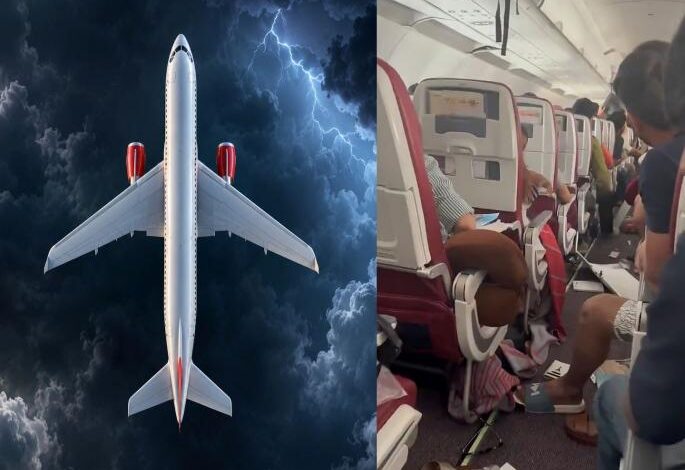
One of the two pilots operating the Air India flight that recently encountered severe turbulence and a sudden loss of altitude on the Phuket–New Delhi route has reportedly failed a post-flight dope test, according to latest media reports.
The sources further confirmed that both pilots have been de-rostered, or removed from duty, pending the outcome of an ongoing enquiry into the incident.
A senior official from the Ministry of Civil Aviation stated that the Directorate General of Civil Aviation (DGCA) is currently probing the matter, and the findings will determine whether a more detailed investigation by the Aircraft Accident Investigation Bureau (AAIB) is required.
Responding to queries, Air India said it had not yet received the results of the post-flight drug screening and was therefore unable to comment on the findings. “We are aware that a post-flight screening test was conducted on the pilots in accordance with applicable protocols. However, the results have not been shared with Air India, and we are not in a position to comment,” an airline spokesperson said, adding that such testing is routinely conducted as part of regulatory compliance.
The development comes days after at least 17 people, including four cabin crew members, were injured when an Air India A320 operating flight AI2379 from Phuket to New Delhi encountered severe turbulence and reportedly dropped around 300 feet mid-air.
The incident, which occurred on August 5, saw turbulence lasting for approximately five minutes, Civil Aviation Minister K Rammohan Naidu said during a press briefing. He added that some crew members sustained spinal injuries near the neck and tailbone areas and had been advised rest by medical professionals.
What a Dope Test Means And Why It Matters
In aviation, a post-flight dope test is not an unusual occurrence. Pilots and crew members are subject to random and periodic drug and alcohol screening under strict civil aviation regulations, designed to ensure that those operating aircraft are physically and mentally fit at all times.
These tests are typically conducted either randomly, pre-flight, or in certain cases, post-flight – especially if there has been an incident that raises safety concerns. The objective is simple: eliminate any possibility that impairment, whether due to substances or medication, could compromise decision-making inside the cockpit.
India’s aviation regulator, the Directorate General of Civil Aviation (DGCA), mandates a zero-tolerance policy when it comes to substance use among flight crew. Even trace levels beyond permissible limits can lead to immediate de-rostering, suspension, and in some cases, cancellation of licence, depending on the severity and recurrence.
What makes the current situation significant is not just the test itself, but the timing. The screening comes immediately after an in-flight incident that involved a sudden loss of altitude and injuries to passengers and crew. While there is no official confirmation yet on the results, the very fact that such a test has become central to the investigation shifts the focus from external factors like turbulence to internal cockpit conditions.
This is where the line between routine protocol and serious red flag begins to blur.
Because while turbulence is a known and often unavoidable aspect of flying, aviation safety frameworks are built on the assumption that human response inside the cockpit remains consistently reliable – regardless of external stressors. Any suggestion that this assumption may have been compromised, even temporarily, raises far deeper questions than the incident itself.
And those questions rarely stay confined to a single flight.
Air India’s Safety Record Under The Scanner
The turbulence scare and subsequent probe come at a time when Air India’s operational and safety record has already been under close regulatory watch.
In recent months, the airline has faced multiple observations and notices from the Directorate General of Civil Aviation (DGCA), flagging gaps across training, crew management and compliance processes. A comprehensive audit earlier this year pointed to several lapses, including issues related to pilot training standards, simulator approvals, and inconsistencies in rostering practices.
Regulators have also raised concerns over crew fatigue management, with instances of duty time limitations being stretched – a critical factor in an industry where alertness and reaction time are directly linked to safety outcomes. In some cases, questions have been raised around whether required positions, such as designated chief pilots for specific aircraft fleets, were adequately staffed at all times.
Alongside this, there has been a noticeable rise in technical snags reported across flights, ranging from minor operational issues to more serious mechanical concerns. While not all of these incidents translate into safety risks, the frequency has drawn attention, particularly in the context of an airline undergoing rapid expansion and fleet integration.
Air India, for its part, has maintained that it is working closely with regulators and is in the midst of a large-scale transformation, upgrading systems, training processes and fleet quality following its transition back to Tata Group ownership. The airline has also reiterated its commitment to safety as a non-negotiable priority.
Yet, incidents like the Phuket–Delhi turbulence event tend to sharpen scrutiny. Because in aviation, safety is not judged by isolated responses, but by consistency over time.
And it is this consistency that is now being quietly questioned.
The Crash That Changed The Conversation
Long before the latest turbulence scare, Air India had already been forced into a far more serious reckoning.
The 2025 crash of an Air India wide-body aircraft, one of the deadliest aviation incidents in recent years, marked a turning point not just for the airline but for the broader conversation around aviation safety in India. The scale of the tragedy – with hundreds of lives lost – brought immediate and intense scrutiny on operational protocols, maintenance practices, and cockpit procedures.
Preliminary findings from the investigation pointed to a critical loss of engine thrust mid-flight, reportedly linked to the movement of fuel control switches. The sequence of events inside the cockpit, including confusion and delayed response, became central to the probe, raising uncomfortable questions about human factors and system safeguards.
In the aftermath, the Directorate General of Civil Aviation (DGCA) ordered extensive checks across similar aircraft in the fleet and sought detailed audit data from the airline. Flights were reviewed, inspections intensified, and operational processes came under a microscope.
For Air India, the crash was not just a crisis; it was a defining moment. It forced a reset in how the airline approached safety, compliance, and oversight, even as it was in the middle of an ambitious transformation under new ownership.
But perhaps more importantly, it changed how incidents involving the airline are now perceived.
Because after a tragedy of that scale, no event is seen in isolation. Even routine disruptions – turbulence, technical snags, or procedural checks – begin to carry a different weight. And that is the shadow under which the current incident is unfolding.
DGCA The Watchdog Under Pressure
At the centre of every aviation incident in India sits the Directorate General of Civil Aviation, the country’s top regulator tasked with ensuring that airlines operate within strict safety and compliance frameworks.
In the case of the Phuket–Delhi flight, the DGCA has moved quickly – launching a probe, examining flight data, and initiating checks that could determine whether the matter escalates further to the Aircraft Accident Investigation Bureau. On paper, the response aligns with protocol.
But the larger question that often follows such incidents is not about response, but about prevention.
Over the past few years, the regulator has repeatedly flagged concerns across airlines, including Air India, through audits, notices, and corrective directives. From training gaps to rostering issues and technical compliance, many of these observations point to systemic pressures within a rapidly expanding aviation sector.
Yet, enforcement has frequently appeared reactive – intensifying only after an incident brings issues into the spotlight. Post-event inspections, emergency audits, and public statements tend to follow moments of disruption, raising questions about whether early warnings translate into timely corrective action on the ground.
Aviation safety is not just about having rules in place – it is about how consistently and proactively those rules are enforced, often long before an incident makes headlines.
Which is why, in situations like the current one, the focus inevitably shifts from what went wrong in the air to what may have been missed on the ground.
Passenger Safety And The Growing Trust Gap
For the aviation industry, safety is often defined in statistical terms. Millions of flights operate each year with minimal incidents, and regulators routinely maintain that overall safety standards remain strong.
But for passengers onboard a flight that suddenly drops mid-air, those numbers offer little reassurance.
On the Phuket–Delhi flight, what unfolded was not just a momentary disruption but several minutes of panic. Passengers were thrown out of their seats, crew members were injured while trying to manage the situation, and what began as a routine journey quickly turned into a traumatic experience for those inside the cabin.
It is in these moments that the gap between technical safety and perceived safety becomes most visible.
Because while turbulence is a known and unavoidable aspect of flying, incidents that result in visible injuries, combined with emerging questions around cockpit conditions, tend to erode confidence far more quickly than any official assurance can rebuild it.
For many passengers, the concern is no longer just about what caused a single incident, but about what it represents. Repeated reports of technical snags, regulatory notices, and high-profile investigations begin to form a pattern – one that shapes perception, regardless of whether each event is individually linked.
And perception, in aviation, is almost as critical as reality. Airlines rely not just on operational safety, but on passenger trust – the belief that every flight is governed by systems that leave little room for error. When that belief begins to weaken, even slightly, the impact extends far beyond a single flight or a single incident.
A Reinvention Under Strain
Air India today is not the airline it was a few years ago. Since returning to Tata Group ownership, it has positioned itself at the centre of an ambitious turnaround – placing massive aircraft orders, expanding international routes, and attempting to rebuild its image as a global carrier.
On paper, the transformation is bold. A modern fleet, improved service standards, and integration with other group airlines are all part of a larger effort to reclaim lost ground in an increasingly competitive market.
But reinvention in aviation is not driven by announcements; it is tested in operations because that is where the challenge lies.
Even as Air India scales up, it continues to face legacy issues, regulatory scrutiny, and operational inconsistencies that have not entirely faded. Each incident – whether a technical snag, a compliance lapse, or a mid-air scare – risks cutting through the story of renewal.
The Phuket–Delhi episode is a case in point. What could have remained a turbulence-related incident has now evolved into a broader question mark, touching on cockpit conduct, regulatory oversight, and systemic reliability.
For an airline trying to rebuild credibility, such moments matter disproportionately. Aviation does not operate on second chances in the eyes of passengers. Trust, once shaken, is far harder to restore than any fleet or balance sheet.
And for Air India, the real test is no longer about how quickly it can expand but how consistently it can convince passengers that every flight, without exception, is as safe as it promises to be.