Abhinandan Varthaman, The MiG-21 Pilot Who Became A National Hero, Has Joined FLY91. The Move Comes As The Regional Airline Bets On Scale
Abhinandan Varthaman, the MiG-21 pilot who became a national hero after the 2019 India-Pakistan aerial engagement, has joined regional airline FLY91 as a pilot. His move comes as the two-year-old airline, led by Manoj Chacko, tries to prove that India’s underserved regional aviation market can be profitable and scalable

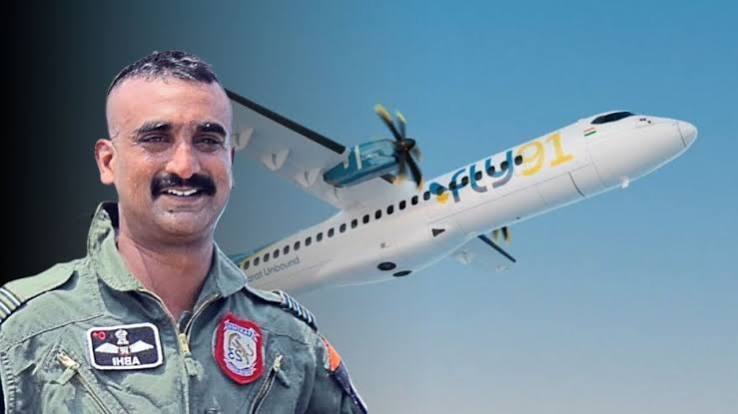
Abhinandan Varthaman, the MiG-21 pilot who became a national hero after the 2019 India-Pakistan aerial engagement, has joined Goa-based regional airline FLY91 as a pilot. Varthaman joined the airline in August, marking his move from military to commercial aviation.
At the time of the 2019 engagement, Varthaman was a Wing Commander with the Indian Air Force’s Srinagar-based 51 Squadron and was flying a MiG-21 Bison. The IAF said he shot down a Pakistani F-16 before his own aircraft was hit, forcing him to eject over territory controlled by Pakistan, where he was taken into custody by the Pakistani Army.
He was released three days later following diplomatic and political pressure from India. In 2021, Varthaman was awarded the Vir Chakra for his actions during the aerial engagement and was subsequently promoted to Group Captain.
FLY91’s Regional Bet
FLY91 is still a young airline. It started flying in March 2024, with Goa as its home base and a fairly straightforward ambition: connect smaller Indian cities that are often left out of the country’s growing aviation network.
The airline flies 70-seat ATR 72-600 aircraft and has been building its network around routes connecting cities such as Goa, Bengaluru, Hyderabad and Sindhudurg, along with flights to Agatti in Lakshadweep. The plan is to gradually expand to 50 cities.
It is a very different proposition from competing for passengers on India’s busiest routes. FLY91 is instead betting that there is enough demand between smaller cities to build a viable airline around those connections.
That bet is now beginning to get tested at a larger scale.
Who Is Manoj Chacko?
FLY91 is being built by Manoj Chacko, an aviation executive who has seen both the promise and the problems of India’s airline business up close. Before starting FLY91, Chacko was a senior executive at Kingfisher Airlines, the airline founded by Vijay Mallya that eventually collapsed under mounting losses and debt.
That experience has shaped the way Chacko talks about FLY91. The airline was designed with some of the lessons from failed carriers in mind, particularly around keeping costs under control, making better use of aircraft and avoiding unnecessary complexity as the business grows.
Chacko is also not looking to build another full-service airline. FLY91’s focus is narrower: smaller cities, short regional routes and an aircraft suited to that market.
FLY91 Gets Its First Taste Of Profit
The first real sign that the strategy might be working came in FY26. FLY91 turned profitable in the third quarter, according to Chacko, although that did not continue into the following quarter.
The airline had added aircraft and was spending more as it expanded, pushing it back into the red in the fourth quarter. Still, reaching profitability this early matters for a carrier that is barely two-and-a-half years into commercial operations.
FLY91 now has six aircraft and operates around 280 flights a week across 12 destinations from Goa and Hyderabad. The bigger question is whether the economics that worked at this size can hold as the airline gets bigger.
Why Regional Airlines Keep Struggling
India’s regional aviation market has never been an easy one. Several airlines have tried to make a business out of connecting smaller cities, only to run into the same problems: thin traffic, high operating costs and routes that are difficult to sustain once the initial support runs out.
The government’s UDAN regional-connectivity scheme has helped airlines open routes that might otherwise not make financial sense. But subsidies alone cannot turn an unviable route into a profitable one.
FLY91 says it is trying to reduce that dependence. Of the roughly 280 flights it was operating each week, 98 were on UDAN routes, leaving the rest to operate without that support. That makes the performance of its non-UDAN routes particularly important to the airline’s larger bet.
The Model Behind FLY91
Chacko’s approach is built around keeping the airline simple. One of his key lessons from watching airlines fail is that aircraft need to be kept flying rather than sitting idle, while the cost of running each route has to remain tightly controlled.
That is one reason FLY91 has chosen ATR 72-600 turboprops. The aircraft are suited to shorter regional routes and smaller airports, where the airline does not have to go head-to-head with the larger carriers operating between India’s biggest cities.
FLY91 also tries to keep its crews based at their operating stations rather than putting them up in hotels. The idea is fairly basic: keep the aircraft and people moving efficiently, while avoiding costs that do not directly contribute to flying passengers.
The airline is also looking for routes where it can create new demand rather than simply fight for passengers already being served by bigger airlines. Of five new “virgin” routes launched by FLY91, the company said three were recording load factors above 70%.
Now Comes The Hard Part: Scaling
For FLY91, getting to profitability is only the beginning. The airline wants to move from its current six-aircraft operation to a much larger network, with plans to connect around 50 cities as it expands.
That will require a lot more money – around ₹600–800 crore to reach a fleet of about 50 aircraft. The airline will also have to take on the costs that come with every new aircraft, station and route — from crews and maintenance to airport operations and the added complexity of running a much larger network.
This is where the model will really be tested. An airline can keep costs and operations relatively simple with six aircraft. Doing the same with 50 is a very different challenge.
FLY91 Is Still A Tiny Player
For all its ambitions, FLY91 remains a very small part of India’s aviation market.
Indian airlines carried 864.04 lakh domestic passengers in the first six months of 2026, up 1.44% from the same period last year. But most of that traffic continues to sit with the country’s two dominant airline groups.
IndiGo accounted for 64.3% of domestic passengers during the period, while the Air India Group had another 25.7%. Together, they controlled more than 90% of the market.
FLY91, by comparison, carried 2.41 lakh passengers and had a 0.3% market share. Its June load factor was 73.2%, ahead of Alliance Air and IndiaOne Air, but still a long way from the scale of the country’s biggest carriers.
That gap is both the opportunity and the challenge for FLY91. There is a large domestic aviation market to tap, but getting from a 0.3% share to a meaningful position will require the airline to grow without losing the cost discipline that got it this far.
The Bigger Question For FLY91
FLY91 has shown that there may be room for a regional airline built around smaller cities, short routes and a relatively lean cost structure. It has also managed to reach profitability, even if only for a quarter.
But the next stage will be harder. The airline has to raise significant capital, add aircraft and open new bases while keeping the economics of its existing operation intact.
For Manoj Chacko, that is the real test. FLY91 does not just need to prove that a small regional airline can make money. It needs to prove that the model can grow without becoming the kind of complicated, expensive airline that has brought down so many carriers before it.