Raheja Builders: ₹2,400 Crore Worth of Questions, ₹2,400 Crore Worth of Attachments — Yet the Promoter Father-Son Duo Remain Out of Custody
Multiple ED searches. Thousands of homebuyers. Hundreds of FIR-related proceedings. Three rounds of property attachments. Insolvency proceedings. Fresh consumer and RERA orders. And yet, no arrest of the two men at the centre of the ED investigation.

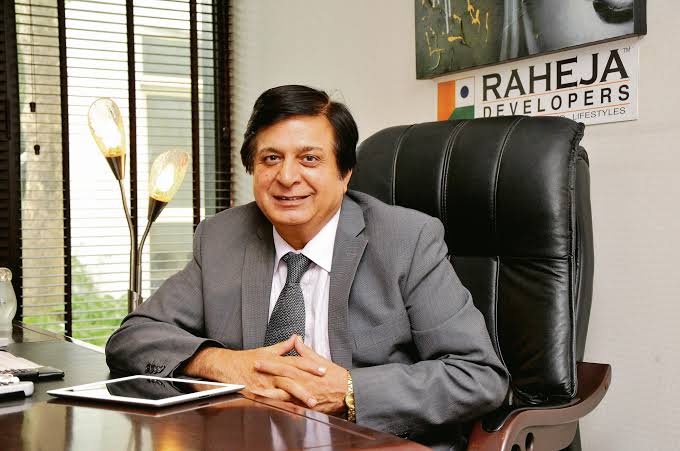
So what exactly does accountability mean in India’s real-estate sector?
When thousands of ordinary Indians allegedly hand over their lifetime savings for homes that remain incomplete, when a central financial-intelligence agency says thousands of crores were collected and a substantial portion was allegedly diverted, and when properties worth nearly ₹2,400 crore are provisionally attached, the obvious public question is not merely what happened to the money?
It is:
Where is the accountability of the people who were allegedly responsible for the money?
And there is an even more uncomfortable question.
Why does a financial-crime investigation of this scale still leave the principal promoter and his son outside custody?
The answer may be entirely legal. It may ultimately be justified by the evidence and the protections available to every accused person. But the extraordinary gap between the scale of the allegations and the coercive action against the individuals warrants uncomfortable scrutiny.
Because ₹2,425.99 crore is not a rounding error.
The Enforcement Directorate says Raheja Developers collected approximately ₹2,425.99 crore from around 4,600 homebuyers across various real-estate projects. It says investigation uncovered evidence indicating that a substantial portion of the money was siphoned through a complex network of related entities and shell companies, ultimately reaching entities controlled by the company’s director, family members and close associates and being used for purposes unrelated to the projects, including acquisition of assets and personal uses.
Those are not allegations made by a disgruntled buyer on social media.
They are allegations formally placed by the Enforcement Directorate, a central agency investigating the matter under the Prevention of Money Laundering Act.
Yet as of the latest publicly available material reviewed for this article, Navin M. Raheja and Nayan N. Raheja have not been taken into custody in this PMLA investigation. A Saket court granted both interim protection from arrest on August 3/4, 2026, while the ED was seeking open-ended non-bailable warrants. The court directed them to join and cooperate with the investigation whenever called.
That is the contradiction screaming for public attention.
The numbers are staggering
Let us begin with the numbers instead of rhetoric.
The ED’s own April 28, 2026 release says:
₹2,425.99 crore — money collected from approximately 4,600 homebuyers.
That works out to an average collection of roughly ₹52.7 lakh per buyer, although actual individual payments obviously varied substantially.
Then came the attachments.
April 28, 2026
The ED provisionally attached immovable properties with an estimated current market value of:
₹1,113.81 crore.
The properties included assets belonging to related entities N.A. Buildwell Pvt. Ltd. and Riyasat Palaces Ltd., along with properties belonging to Navin M. Raheja and family members.
June 15, 2026
Another:
₹503.48 crore.
That pushed cumulative provisional attachments to approximately:
₹1,617.29 crore.
July 31, 2026
Yet another:
₹782.36 crore.
That took cumulative provisional attachments to approximately:
₹2,399.65 crore.
Put the three numbers together:
₹1,113.81 crore + ₹503.48 crore + ₹782.36 crore = ₹2,399.65 crore.
That is approximately 98.9% of the ₹2,425.99 crore that the ED says was collected from homebuyers.
That number is breathtaking.
But it requires one crucial qualification.
An attachment is not a recovery.
A provisional attachment does not mean ₹2,399.65 crore has been deposited into a government account or returned to homebuyers.
It means the agency has taken legal steps to prevent specified assets from being dealt with pending the statutory process. It is not synonymous with confiscation, final adjudication, conviction or actual restitution to buyers.
That distinction matters.
Otherwise journalism simply replaces one exaggeration with another.
But the ED’s allegation is far more serious than “the project was delayed”
Real-estate disputes in India are depressingly common.
Construction gets delayed. Approvals get delayed. Financing collapses. Contractors walk away. Litigation freezes projects. Governments fail to provide infrastructure.
Not every delayed project is a money-laundering case.
The Raheja investigation is different because the ED says it found a financial trail rather than merely a construction problem.
According to the agency, documents and digital evidence seized during its searches indicated that a substantial portion of the homebuyers’ money was allegedly siphoned through a “complex web” of related entities and shell companies. The agency says the money eventually reached entities controlled by the director, family members and close associates and was used for purposes unrelated to the projects, including acquisition of assets and personal uses.
And the agency did not arrive at that position overnight.
It says the investigation arose from multiple FIRs registered by the Economic Offences Wing on complaints from numerous homebuyers.
The ED conducted searches on June 27, 2025, and again on April 25, 2026. During the latter operation, the ED says it seized incriminating documents and digital evidence, along with jewellery and bullion valued at approximately ₹15.82 crore and foreign currency of approximately ₹15 lakh.
So the question is no longer merely:
“Why has Raheja not completed the buildings?”
The much harder question is:
Where did the money go?
And if the agency’s allegations eventually stand proved, the question becomes even sharper:
Who authorised the transfers, who benefited, who controlled the receiving entities, and why did regulators and enforcement mechanisms take so long to catch up?
Seven premises raided — but the story did not end there
On April 25, 2026, ED searched seven locations across the NCR, including Noida, Greater Noida, Sainik Farms and New Friends Colony. The searches targeted locations linked to Navin Raheja, his son Nayan Raheja, other family members and company directors.
That was the second major search operation referred to in the ED’s April 28 release, following the June 2025 searches.
The investigative machinery had therefore escalated:
FIRs → ED investigation → searches → seizure of evidence → provisional attachment → second attachment → third attachment.
And yet the individual-level consequence remains strikingly limited in comparison.
This is the uncomfortable part.
The father-son duo are not in jail — and that is a fact
The article should not manufacture an arrest where none exists.
The current record instead shows something more precise.
On August 3, 2026, Additional Sessions Judge Sheetal Chaudhary Pradhan of Saket Courts granted interim protection from arrest to Navin M. Raheja and Nayan N. Raheja while the court was considering the ED’s plea for open-ended non-bailable warrants.
The ED had argued that although the two men had joined the investigation in 2025, they subsequently failed to appear on four occasions and did not comply with summons issued in April 2026. The defence disputed that characterization and said they had previously appeared and cooperated.
The court said the arguments were incomplete and stressed that the purpose of process such as summons or warrants is to secure attendance. It therefore granted interim protection and directed the two men to join and cooperate with the investigation whenever called by the investigating officer.
That is not an acquittal.
It is not a finding that the ED’s allegations are false.
It is not a judicial declaration that no offence was committed.
And it certainly is not exoneration.
It is interim protection from arrest while the legal process continues.
And here is where public frustration collides with criminal jurisprudence
The phrase “bail is the rule and jail is the exception” has become one of the most frequently repeated propositions in Indian criminal jurisprudence.
But there is an important problem with turning it into a simplistic slogan.
The Supreme Court has repeatedly recognised that personal liberty and presumption of innocence are fundamental constitutional principles. In a May 2026 judgment, the Court again described “bail is the rule and jail is the exception” as a constitutional principle connected with Articles 21 and 22 and presumption of innocence.
But PMLA is not an ordinary criminal statute.
The Supreme Court has specifically held that the stringent bail conditions under Section 45 of the PMLA apply to bail applications in PMLA cases, including anticipatory-bail situations.
That means a newspaper cannot honestly argue:
“There is an ED case, therefore the accused should automatically be jailed.”
That would be poor law and poorer journalism.
The legitimate question is different.
It is:
Has the legal system applied the statutory standards with sufficient urgency and consistency in a case involving alleged diversion of thousands of crores from thousands of homebuyers?
That is a question worth asking.
And repeatedly.
The real problem may not be bail. It may be the speed of justice.
This is where the Raheja case becomes emblematic of India’s wider white-collar-crime problem.
An accused person can legitimately invoke liberty.
But a victim also has a legitimate right to speedy justice.
The Supreme Court has itself recognised that prolonged delay in criminal proceedings can become constitutionally significant and that the right to speedy trial is part of Article 21 jurisprudence.
The tragedy is that delay benefits neither principle when it becomes structural.
Because in a conventional case, the argument is:
Don’t incarcerate a person merely because an investigation is underway.
Fair.
But in a massive financial case, another question immediately follows:
How quickly is the investigation being completed?
If investigation takes years, charges take years, trials take years, appeals take years and recovery proceedings take years, then the system can inadvertently produce a bizarre outcome:
The accused remains outside custody for years while the victims remain outside their homes for years.
The promoter gets liberty.
The buyer gets litigation.
The promoter gets lawyers.
The buyer gets hearing dates.
The promoter gets procedural protections.
The buyer gets procedural exhaustion.
That is precisely where the public begins to lose confidence.
One buyer’s nine-year journey is enough to explain the anger
The wider pattern is not theoretical.
On September 4, 2026, The Indian Express reported that Gurugram homebuyers Rohit Singh and Garima Sachan had invested approximately ₹50.5 lakh in a Raheja Trinity commercial unit in Sector 84.
They had booked the property in 2017.
Their builder-buyer agreement was executed in 2019.
The contractual completion period was 48 months plus a 12-month grace period, making January 15, 2024 the stated possession deadline.
The project remained incomplete.
HARERA ultimately directed Raheja Developers to refund ₹50,49,890 with 10.80% annual interest, and, according to the report, struck off the developer’s defence after it failed to file its response despite repeated directions across six hearings.
There is something brutally revealing about that chronology.
A buyer can pay almost the entire amount.
The promised deadline can pass.
The project can remain unfinished.
The buyer can spend years litigating.
The regulator can eventually order a refund.
And yet the buyer still has to wait to see whether the order will actually translate into money.
This is what India’s real-estate accountability often looks like from the customer’s side:
Pay first. Wait second. Litigate third. Recover—maybe.
And the insolvency route has now become another battlefield
The Raheja Revanta matter has entered the insolvency regime.
The Insolvency and Bankruptcy Board of India’s records show that on June 8, 2026, the NCLT, Principal Bench, New Delhi admitted proceedings concerning Raheja Developers under CP (IB) No. 182(ND)/2024.
The project-level insolvency process itself publishes claim information and CIRP documents for homebuyers and other creditors.
Separately, the Raheja Krishna project saw another Section 7 insolvency order in August 2025, which was later the subject of appellate litigation involving Navin M. Raheja.
This matters because insolvency proceedings are not merely another consumer complaint.
They represent the point at which the financial distress surrounding a project has become serious enough for creditors to invoke the IBC’s collective resolution machinery.
In other words, the problem has moved through multiple legal compartments:
consumer law → RERA → police/EOW → ED/PMLA → NCLT/IBC.
When that many institutional doors are involved, one question becomes unavoidable:
How many doors must a homebuyer knock on before the system delivers the home—or the money?
The company’s defence cannot simply be erased either
A fact-based investigation must present the other side, however inconvenient it may be.
Raheja Developers has denied wrongdoing and fraud.
In its response to the April 2026 searches, the company said it had invested significantly more than customer collections, asserted that this was supported by a RERA-supervised forensic audit, and denied diversion or misuse of funds. It also attributed project delays primarily to inadequate government infrastructure despite payment of EDC/IDC.
That is a serious defence.
And it raises a legitimate evidentiary conflict.
On one side:
The ED says substantial homebuyer funds were diverted through related entities and shell companies and ultimately used for purposes unrelated to the projects.
On the other:
The company says there was no diversion and that it invested more than customers paid, while project delays were primarily infrastructure-related.
Those competing claims can ultimately be tested only through documents, forensic accounting, bank trails, corporate records, witnesses, expert evidence and judicial adjudication.
That is precisely why an investigation must be fast, forensic and transparent.
Not theatrical.
Not selective.
Not interminable.
So, do the Rahejas have “deep political or judicial connections”?
This is where speculation must stop and evidence must begin.
There is no verified evidence in the material reviewed for this article establishing that Navin Raheja or Nayan Raheja have used political connections or relationships with judges to obtain protection in the ED case.
There is no responsible basis to declare:
“They are protected because they know politicians.”
Nor is there evidence sufficient to claim:
“Judges are helping them.”
Making either accusation as fact without documentary evidence would itself be irresponsible.
But the question of influence cannot simply be mocked out of existence either.
Navin Raheja has publicly held prominent positions in industry bodies, including leadership roles associated with NAREDCO, and the company’s own profile describes participation in business delegations involving senior national political leadership.
Those are evidence of access to institutional and business networks.
They are not evidence of illegal influence over judges or investigations.
There is a huge difference.
And investigative journalism should preserve that difference.
The legitimate public-interest question is therefore not:
“Which politician is protecting the Rahejas?”
unless evidence establishes it.
The legitimate question is:
Are political, bureaucratic, regulatory and judicial institutions exercising their powers with the same intensity against powerful developers that they would exercise against an ordinary accused person?
That is a question that can—and should—be tested through records.
The judiciary deserves scrutiny—but not reckless character assassination
Calling the Indian judiciary “criminal”, “scammer-friendly” or “fraudster-friendly” as a factual proposition would be indefensible without evidence.
But questioning the systemic consequences of judicial delay and repeated interim protection is entirely legitimate.
There is a gigantic difference between:
attacking judges personally
and
examining whether the justice-delivery system is adequately protecting victims in long-running financial crimes.
The latter is necessary.
In the Raheja matter, the public sees:
- thousands of allegedly aggrieved homebuyers;
- ₹2,425.99 crore allegedly collected;
- multiple EOW FIRs;
- ED searches;
- seized documents and digital evidence;
- ₹15.82 crore worth of jewellery/bullion reportedly seized in the April 2026 search;
- ₹15 lakh foreign currency reportedly seized;
- three rounds of provisional attachment;
- approximately ₹2,399.65 crore in cumulative attached assets;
- insolvency proceedings;
- ongoing RERA litigation;
- consumer disputes stretching for years;
- and interim protection from arrest for the two principal individuals named in the ED investigation.
Every single one of those facts has an innocent legal explanation available to the accused.
But collectively they create a formidable public-interest accountability question.
₹2,399.65 crore attached—and still no speedy endgame
Here lies perhaps the sharpest criticism.
The ED has done what the public expects a financial-investigation agency to do: trace money, seize evidence and provisionally attach assets.
But an attachment order is only the beginning.
The public needs answers to a much longer chain:
How much money was actually diverted?
Which bank accounts received it?
Which companies were used as conduits?
Who were the beneficial owners?
Which properties represent alleged proceeds of crime?
How much of the attached property can legally be realised?
What is the distinction between the ₹2,399.65 crore market value and the value of the actual alleged proceeds of crime?
What claims will homebuyers ultimately receive through the legal process?
How long will adjudication take?
How long will prosecution take?
Will there be a conviction?
Will victims actually receive their money?
Because the headline number is impressive.
₹2,399.65 crore attached.
But the only number that ultimately matters to a homebuyer is:
₹ received back.
There is another uncomfortable irony
The company describes itself as a major developer with decades of experience.
Its own corporate profile says Navin Raheja began his business career decades ago and that the company has developed millions of square feet of residential and commercial property. The company also highlights its awards and industry credentials.
That makes the allegations more—not less—important.
This is not a story about an unknown fly-by-night operator appearing one morning and disappearing the next.
It concerns an established corporate name, substantial projects, extensive financial transactions and thousands of consumers.
When an established developer becomes the subject of a PMLA investigation involving allegations of the diversion of thousands of crores, the regulatory question is not merely whether the promoter broke a promise.
It becomes:
How did the ecosystem permit the problem to become this large?
And where were the regulators while ordinary families were waiting?
The ED investigation cannot be treated as a substitute for every other regulator.
But the existence of a major money-laundering investigation should trigger institutional introspection.
Homebuyers ordinarily deal with:
developer → RERA → consumer commission → police → civil courts → NCLT → ED
depending on the dispute.
That is an absurd burden for the person who simply wanted a home.
The developer, meanwhile, possesses professional legal teams, accountants, project consultants, corporate structures and financial expertise.
The asymmetry is obvious.
One side fights with money.
The other side fights for money.
“Bail is the rule, jail is the exception”: principle or loophole?
This is perhaps the most politically explosive question arising from the case.
The principle itself is not the problem.
An accused person is not convicted merely because an agency alleges wrongdoing. Presumption of innocence is foundational.
The danger arises when delay transforms procedural liberty into practical impunity.
Imagine a hypothetical sequence:
Investigation takes three years.
Trial takes another five.
Appeals take another several.
During all those years:
The victim does not get the home.
The victim does not get the money.
The accused remains outside prison.
The accused exercises every available legal remedy.
The agency continues investigation.
The courts continue hearings.
And everyone tells the victim:
“Have patience. The law will take its course.”
At what point does “the law taking its course” become the law moving too slowly to be meaningful?
That is the question policymakers and judges must answer.
Not merely in Raheja.
Across India’s white-collar financial-crime landscape.
The answer is not indiscriminate incarceration
There is another important point.
The solution is not to arrest every corporate promoter merely because a project has been delayed.
Nor should courts abandon constitutional protections.
Nor should financial crime investigations become punishment before trial.
Nor should the phrase “financial fraud” automatically become a magic password for imprisonment.
The solution is something far more demanding:
rapid investigation + asset tracing + evidence preservation + statutory compliance + time-bound adjudication + speedy trial + victim protection + effective restitution.
In other words:
Liberty for the accused.
Justice for the victims.
Speed from the State.
All three can coexist.
What cannot coexist indefinitely is:
liberty without accountability,
or
investigation without conclusion.
The father-son question therefore remains
The most legitimate criticism of the Raheja case is not:
“Why weren’t they arrested immediately?”
The more sophisticated question is:
Given the scale of the ED’s allegations, the existence of multiple EOW FIRs, two rounds of ED searches, three rounds of provisional property attachments totalling approximately ₹2,399.65 crore, and ongoing insolvency and consumer proceedings, what precisely is delaying a final determination of individual criminal liability?
And then:
What is the timeline?
Because ₹2,425.99 crore allegedly collected from 4,600 homebuyers is too large for indefinite procedural drift.
An investigation of this magnitude cannot become a permanent investigation.
A provisional attachment cannot become a permanent headline.
An interim protection order cannot become a substitute for adjudication.
And a homebuyer’s complaint cannot become an heirloom passed from one legal forum to another.
The real scandal would be if everyone eventually moves on
The most dangerous outcome would not necessarily be an acquittal.
An acquittal after a fair, speedy trial is justice.
A conviction after a fair, speedy trial is justice.
A demonstrated absence of criminal wrongdoing is justice.
Even a finding that government infrastructure failures, rather than diversion, caused the delays can be justice—provided the evidence actually establishes it.
What would be a systemic failure is something else:
Years pass.
Buildings remain unfinished.
Buyers continue litigating.
Assets remain under attachment.
Investigations remain pending.
Accused remain protected from arrest.
And eventually public attention moves elsewhere.
That would be the perfect recipe for impunity—not because a court declared anyone innocent, but because time itself became the escape route.
A demand for a faster, harder and more transparent investigation
The answer should therefore not be another sensational raid.
It should be a deadline-driven investigation.
The ED should publicly establish, consistent with investigative confidentiality, the broad status of the money trail: project-wise collections, identified transfers, related-party transactions, assets provisionally attached, entities identified as conduits and the stage of adjudication.
The EOW investigation should be brought to a definitive prosecutorial stage wherever evidence permits.
The insolvency process should be conducted with maximum protection for homebuyers.
RERA and DTCP should aggressively monitor stalled projects rather than merely adjudicating complaints years after defaults.
And the criminal courts should prioritise the trial once prosecution complaints/charges are properly before them.
The judicial system should protect liberty.
But it should protect the right to speedy justice with equal seriousness.
Opinion: India cannot afford a two-speed justice system
The deepest concern here is not that two wealthy businessmen obtained interim protection.
They have legal rights. They are entitled to defend themselves. Until convicted, they remain legally innocent of the criminal allegations.
The concern is the broader phenomenon visible whenever financially powerful accused persons become embroiled in complicated cases.
The more complicated the corporate structure, the longer the investigation.
The more documents there are, the more hearings there are.
The more entities are involved, the more jurisdictions appear.
The more jurisdictions appear, the easier it becomes for accountability to disappear into paperwork.
That cannot be the final definition of justice.
A judicial system should never become:
fast for the poor,
slow for the powerful,
or
procedural for the victim and strategic for the accused.
That is not an accusation against every judge.
It is a challenge to the architecture of justice itself.
The question India should now ask
So, do Navin Raheja and Nayan Raheja have political connections powerful enough to influence the investigation?
No verified evidence located in the sources reviewed establishes that.
Do they have publicly documented relationships with influential business and institutional circles?
Yes—Navin Raheja’s corporate profile records senior industry-body positions and participation in high-level business delegations. But those facts do not establish illegal influence over the judiciary or government.
Has any court convicted the father-son duo of the PMLA allegations described above?
Not on the record reviewed for this article.
Has the ED formally alleged large-scale diversion of homebuyer funds?
Yes.
Has the ED provisionally attached assets approaching the amount it says was collected?
Yes—approximately ₹2,399.65 crore in three reported attachment actions.
Are Navin and Nayan Raheja currently reported as having been arrested in this ED case?
No. They obtained interim protection from arrest, subject to cooperation with the investigation.
Has that interim protection cleared them of the allegations?
Absolutely not.
And is the case over?
No. The ED investigation remains ongoing.
The bottom line
The Raheja story has moved far beyond the familiar Indian real-estate cliché of “possession delayed.”
The official record now describes:
₹2,425.99 crore allegedly collected.
Approximately 4,600 homebuyers.
Multiple EOW FIRs.
ED investigation under PMLA.
Multiple searches.
₹15.82 crore in jewellery/bullion seized in the April 2026 search, according to ED.
₹15 lakh foreign currency seized, according to ED.
₹1,113.81 crore provisionally attached in April.
₹503.48 crore provisionally attached in June.
₹782.36 crore provisionally attached in July.
₹2,399.65 crore cumulative provisional attachment.
NCLT insolvency proceedings.
Fresh RERA orders involving long-delayed projects and refunds.
And still:
no final criminal adjudication,
no conviction,
and no reported arrest of the father-son duo in the ED investigation.
That does not prove political protection.
It does not prove judicial corruption.
It does not prove that the accused are guilty.
But it does establish a legitimate democratic question:
How long does India intend to investigate an alleged ₹2,425.99-crore financial crime before the public sees a final answer?
Because homebuyers cannot live in provisional orders.
They cannot live in attachments.
They cannot live in adjournments.
They cannot live in investigations that never end.
They need their homes, money and justice.
And if the law ultimately establishes that the accusations are false, the accused deserve acquittal and their reputation restored.
But if the allegations are proved, then the consequences must be swift, uncompromising and proportionate.
India’s financial-crime system cannot continue producing enormous headlines, enormous attachments and enormous litigation—with enormous delays in between.
A ₹2,400-crore case deserves ₹2,400-crore seriousness from every institution involved.
STRONG LEGAL & JOURNALISTIC DISCLAIMER
The contents of this article are based on publicly available reports, judicial/regulatory records and statements attributed to the Enforcement Directorate and Raheja Developers. The allegations of fund diversion, money laundering, fraud, siphoning of homebuyer funds and use of shell/related entities are allegations under investigation and must not be treated as established criminal guilt. The Enforcement Directorate’s findings described above are investigative allegations, not a judicial conviction. Raheja Developers has denied wrongdoing and has stated that no funds were diverted and that project delays were substantially attributable to infrastructure-related issues.
No court of law has, on the material reviewed for this article, convicted Navin M. Raheja or Nayan N. Raheja of the PMLA allegations described herein. The grant of interim protection from arrest is not an acquittal or exoneration. Provisional attachment of assets is likewise not equivalent to final confiscation or recovery of money for homebuyers. All questions of criminal liability must ultimately be decided through due process, evidence and a competent court.
Nothing in this article should be construed as alleging corruption, political influence, judicial misconduct or criminal conspiracy on the part of any politician, judge, government official, regulator or other person unless and until supported by reliable evidence and established through appropriate legal proceedings. The opinions expressed regarding systemic delay, accountability and the functioning of the justice-delivery system are matters of public-interest opinion based upon the documented procedural history and are not findings of fact against any individual.
The public-interest demand is therefore simple: a time-bound, forensic, independent and transparent investigation; expedited adjudication of property attachments; effective preservation and tracing of alleged proceeds of crime; speedy criminal proceedings wherever charges are justified; and a legally effective mechanism through which genuine homebuyers can obtain restitution without being condemned to years of litigation.
Justice must be neither purchased by wealth nor denied by poverty. But equally, liberty cannot be converted into impunity and allegations cannot be converted into convictions. The answer must come from evidence, a speedy trial and a final judicial determination.