CBI Files 20th Chargesheet In Homebuyer Fraud Cases: How Many More Required To Punish The Indian Real Estate Mafia?
False Promises, Resold Flats and Bank Collusion, The Systematic Harassment of Homebuyers Exposed by CBI: Why Homebuyers Keep Paying the Price for a Real Estate System That Protects the Powerful?

The Central Bureau of Investigation filed its 20th chargesheet in the Supreme Court monitored investigation into large scale homebuyer fraud on 10 September 2026.
The chargesheet names Noida based builder Ajnara India Limited its promoters and directors as well as 15 public servants linked to ICICI Bank Limited, HDFC Bank Limited, and PNB Housing Finance Limited.
The case relates to alleged fraudulent activities in the Ajnara Ambrosia housing project in Sector 118 Noida. According to the CBI the accused induced homebuyers and investors through false assurances and fraudulent representations and obtained financial benefits by resorting to illegal and deceptive means. The filing was made before the Special Judge CBI at the Rouse Avenue District Courts in New Delhi.
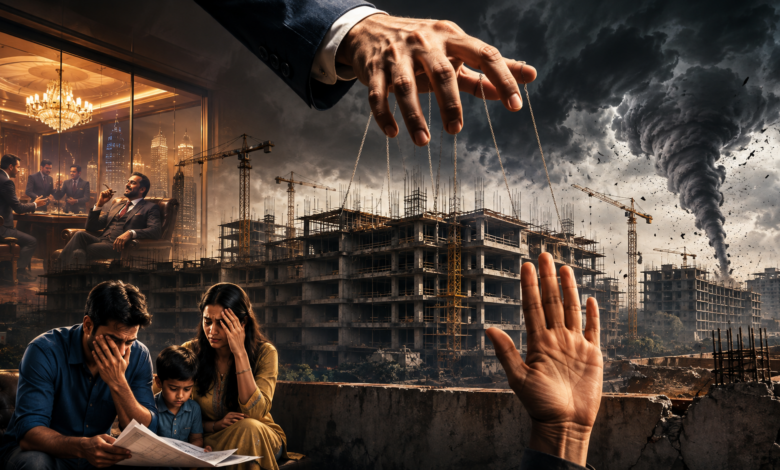
This 20th chargesheet is not an isolated action. It is the latest in a long sequence of filings that together expose a systematic pattern of deception extraction and abandonment directed at ordinary Indian homebuyers. The Indian real estate sector has perfected a form of quiet violence against middle class citizens. It operates through glossy brochures, impossible timelines, inflated advertisements and a network of developers bankers and intermediaries who extract money and then leave families trapped in years of dual payments incomplete projects and financial ruin. The successive chargesheets filed by the CBI under Supreme Court directions have begun to map this machinery in detail yet the harassment continues almost unchecked.
Earlier the CBI had filed chargesheets against a long list of companies and their directors. These include M/s Rudra Buildwell Constructions Pvt Ltd, M/s Dream Procon Pvt Ltd, M/s Jaypee Infratech Ltd, M/s AVJ Developers India Pvt Ltd, M/s CHD Developers Pvt Ltd, M/s Sequel Buildcon Pvt Ltd, M/s Logix City Developers Pvt Ltd, M/s Manju J Homes India Ltd, M/s Shubhkamna Buildtech Pvt Ltd, M/s Ninex Developers Ltd, M/s Decent Buildwell Pvt Ltd, M/s Rudra Buildwell Projects Pvt Ltd, and others. In several of these cases officials of banks and financial institutions were also named.
The common thread running through the chargesheets is criminal conspiracy cheating and criminal breach of trust. Homebuyers were allegedly lured with false assurances of timely possession attractive payment plans and sometimes schemes claiming no pre EMI until delivery. Once substantial amounts were collected projects stalled funds were allegedly diverted and buyers were left servicing loans while continuing to pay rent for alternative accommodation.
In the case of Rudra Buildwell Constructions the CBI found that 672 flats had been sold after false promises of possession. Homes that already had owners were resold and information about the previous sale was concealed. Buyers who sought refunds after cancelling bookings were refused. One documented instance involved a flat already sold in 2017 that was later resold to another buyer while the original loan account remained open forcing the first buyer to clear remaining dues from personal funds.
The agency accused the company of inducing banks to sanction loans on the misrepresentation that the property was free from encumbrances. Similar allegations appear in chargesheets relating to projects in Greater Noida Bengaluru and other locations. Builders were accused of entering into criminal conspiracy to lure buyers with misleading representations and then misappropriating funds without delivering apartments.
In Bengaluru the CBI filed chargesheets against Ozone Urbana Infra Developers Pvt Ltd and its director. Further filings named Ithaca Estate Pvt Ltd LGCL Urban Homes India LLP and officials of HDFC Bank and ICICI Bank. The agency alleged that builder directors and bank officials acted together to enable unlawful financial gains. In the case of AVJ Developers the CBI described the use of proxy buyers to secure fraudulent loans and the routing of funds through related entities to obscure their origin.
Bank employees were accused of bypassing norms to provide undue advantages to the builders. By mid 2026 the agency had already filed more than a dozen such chargesheets and was investigating dozens of additional cases registered pursuant to Supreme Court directions against various builder companies and unknown officials of financial institutions across the country.
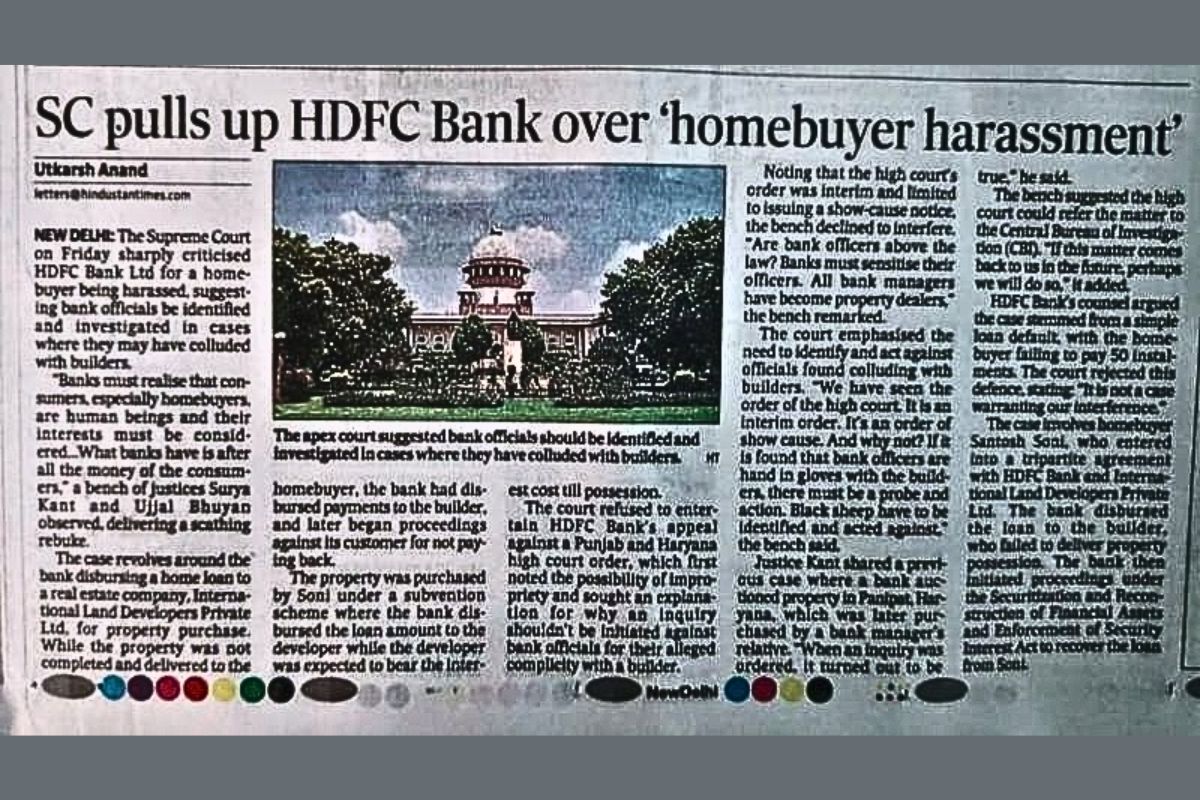
The involvement of bank officials in multiple chargesheets points to a deeper structural problem. When lending institutions allegedly collude in the sanctioning of loans on the basis of false representations or fail to monitor the end use of funds the entire system of checks collapses. Home loans that should have been a tool of financial inclusion become instruments of extraction. Buyers are left fighting both the developer and the bank that financed the incomplete project. Regulatory authorities can order interest for delay or refunds but enforcement is slow and many developers simply absorb the penalties as a cost of doing business while continuing operations elsewhere under different corporate names.
What makes the situation particularly concerning is the repeated nature of the conduct. The same methods appear across different companies different cities and different years. False possession timelines. Concealment of earlier sales. Diversion of buyer funds. Use of related entities to move money. Collusion with financing institutions. The CBI has documented these patterns in successive chargesheets including the 20th yet the underlying incentive structure remains largely intact. A developer who delays a project for five or seven years can still raise new capital for another project. A director named in one chargesheet can reappear in a different corporate avatar. The legal process moves slowly while the financial damage to families compounds daily through EMIs interest and rent.
The Supreme Court monitoring that led to these investigations is itself a response to the failure of ordinary regulatory mechanisms. Ordinary buyers lack the resources to fight prolonged litigation. Many settle for partial refunds or accept incomplete units simply to escape the cycle of payments. Others form associations and protest outside unfinished towers only to be met with indifference or legal counter measures. The cumulative effect is a quiet transfer of wealth from the middle class to a relatively small set of developers and their associates.
Behind the formal language of the chargesheets lie thousands of individual stories of exhaustion and betrayal. A family that booked a flat in 2015 or 2016 on the assurance of possession within three years finds itself a decade later still waiting while continuing to pay both EMI and rent. The original calculation that home ownership would bring stability has been inverted. The apartment that was meant to be an asset has become a liability that drains resources without providing shelter. Children grow up in temporary accommodation. Education and marriage plans are postponed. Some buyers face recovery proceedings from banks even though the apartment they paid for does not exist in a deliverable state.
The CBI has stated that it remains committed to ensuring accountability in cases involving economic offences and public fraud particularly those impacting common citizens and homebuyers. That commitment is necessary but insufficient if it remains confined to the filing of chargesheets. Conviction rates in such complex economic offences are historically low. Assets attached or recovered rarely restore buyers to the position they would have occupied had the project been completed on time. Meanwhile new projects continue to be launched with the same marketing techniques that have already been shown to be deceptive in earlier cases.
The real estate mafia does not operate in isolation. It thrives in an environment where regulatory oversight is fragmented enforcement is selective and political and financial influence can delay consequences for years. Homebuyers are left to navigate a system that appears designed to protect the powerful while extracting the maximum from those with the least ability to fight back. Each new chargesheet including the 20th is evidence that the problem has been recognised at the highest investigative level. It is also evidence that recognition has not yet translated into systemic protection for the ordinary citizen who simply wanted a place to live.

Until the cycle of false promises fund diversion and delayed accountability is broken the harassment of homebuyers will continue. The chargesheets already filed by the CBI provide a detailed map of how the system works. The question that remains is whether the institutions of the state will use that map to dismantle the machinery or merely to document its continued operation.
For the families still waiting outside unfinished buildings the answer will determine whether they ever receive the homes they paid for or whether they will spend the rest of their working lives paying for a dream that was never intended to be delivered. The 20th chargesheet is another entry in a long and growing record of systemic failure. It should serve as a warning rather than a conclusion.