CBI Enquiry In DLF: How DLF Primus Exposes Real Estate Stunt Of Brochure Lies And Homebuyer Harassment?
The Supreme Court has directed the CBI to conduct a preliminary enquiry into DLF's Primus project in Gurugram, after finding that a promised 24-metre road shown in the brochure never materialized. Court-ordered verification revealed that of a 147-metre stretch, roughly 52 metres had been converted into a green patch and most of the rest into resident parking — leaving almost two-thirds of the road unavailable. The bench also faulted Haryana for failing to acquire land needed to link the site to the sector road, and warned of stronger orders if the shortfall isn't corrected before the next hearing.

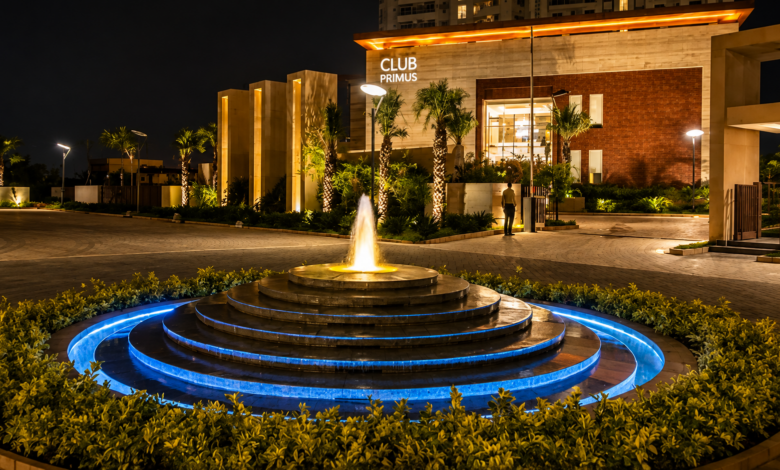
When the Brochure Becomes a Weapon: DLF Primus, the Erased Road, and the Regulatory Silence That Forced Buyers to the Apex Court
The Supreme Court of India has once again been forced to confront a familiar and deeply troubling pattern in the Indian real estate sector. In the case of DLF Primus in Gurugram, a bench of Justices Ahsanuddin Amanullah and R. Mahadevan has directed the Central Bureau of Investigation to examine serious deviations from the project brochure and sanctioned plans. At the centre of the dispute is a 24-metre-wide internal road that was prominently shown in the marketing material and layout presented to homebuyers.
On the ground, that road largely does not exist. Of a 147-metre stretch earmarked for it, approximately 52 metres have been converted into a green patch and a substantial remaining portion is being used for parking. Nearly two-thirds of the promised roadway has effectively disappeared. The Court has described the deviation as substantial and has expressed clear dissatisfaction that, despite repeated opportunities, the project has still not been brought into conformity with what was sold to buyers.
This is not a minor planning adjustment or an aesthetic preference. It is the erasure of a core infrastructural feature that formed part of the very proposition for which 624 families paid substantial sums, often more than one crore rupees per apartment. The brochure sold them a continuous, functional internal road that would support accessibility and circulation within the project.
What they received was a fragmented stretch of landscaping and parked vehicles. The gap between representation and reality is not incidental. It is the direct result of a business practice that treats the brochure as a sales tool rather than a binding commitment, and it is an act of prolonged harassment against ordinary homebuyers who have already committed their life savings.
What DLF did? They used the Brochure as a Tool of Persuasion, Not a Promise of Delivery!
When DLF launched Primus in Sector 82A, Gurugram, in 2012, the project was marketed as a premium residential development. The brochure and promotional material highlighted specific layout features, including the 24-metre-wide internal road running across a defined stretch of the site. Prospective buyers were shown plans that presented seamless internal circulation and connectivity as integral to the living experience. These were not decorative flourishes. For families investing large amounts of money, often financed through long-term housing loans, the layout and infrastructure shown in the brochure formed part of the product they believed they were purchasing.
The original buyer agreements provided for possession within 42 months, targeting February 2016. That timeline itself was not met cleanly. A partial occupation certificate was issued in October 2016, months after the contractual period had expired, even as permanent utilities, complete internal roads and other basic infrastructure remained incomplete. Buyers continued to raise concerns about the condition of the project. Yet the deeper problem was not merely delay. It was that a material element of the marketed layout had been altered without corresponding transparency or correction.
Developers frequently argue that changes during construction are inevitable and that brochures are only indicative. That defence collapses when the change involves the disappearance of a major access and circulation feature that was specifically highlighted to induce purchase. A continuous 24-metre road is not a landscaping detail. It affects traffic flow, emergency access, the character of the development and the daily experience of residents. When nearly two-thirds of that stretch is converted to other uses, the project delivered is materially different from the project sold. The Supreme Court has now made clear that such representations cannot be dismissed as mere marketing. They are promises that the developer is expected to honour.
The Human Cost of the Gap Between Paper and Ground
For the 624 families who bought into Primus, the consequences have been concrete and cumulative. They paid the bulk of the consideration years before receiving a fully functional home. They serviced loans while living with incomplete infrastructure, temporary arrangements for water and power, and uncertainty about basic access. The eventual discovery that a major internal road shown in the brochure had been substantially eliminated added a further layer of grievance. Residents were left with a layout that did not match what they had been shown, yet they remained locked into the project financially and legally.
This is the definition of harassment through process. The buyer is induced by a carefully prepared brochure and layout plan. Once the money is paid, the developer proceeds with alterations that suit its own convenience or commercial calculations. The buyer then faces the choice of accepting a diminished product or embarking on years of expensive and exhausting litigation. Most lack the resources, time or institutional support to sustain such a fight. Those who do persist must navigate consumer forums, higher commissions and eventually the Supreme Court, all while continuing to bear the financial and emotional burden of an incomplete or altered home.
The Primus case illustrates how this power imbalance operates in practice. The National Consumer Disputes Redressal Commission recorded findings of deficiency in service and unfair trade practice. The matter reached the Supreme Court, which ordered a CBI fact-finding exercise.
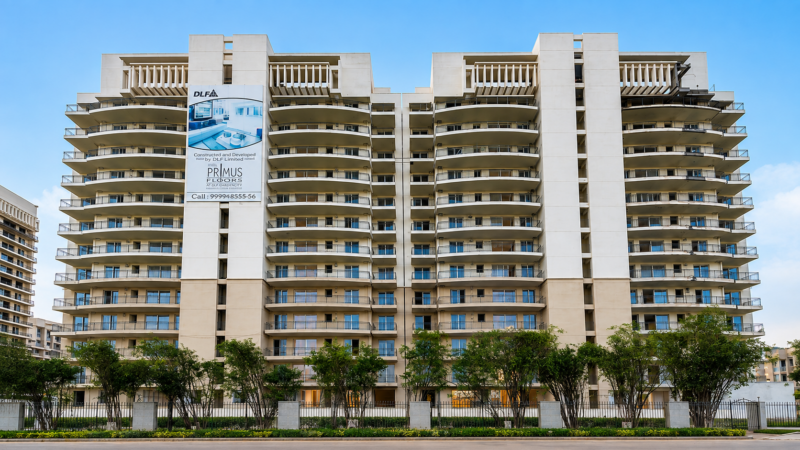
The CBI’s status report confirmed the absence of the road as represented. Only then did the full scale of the deviation become formally documented before the highest court. By that time more than a decade had passed since the original launch and nearly a decade since the promised possession date. For the affected families, this timeline is not a series of legal milestones. It is years of EMIs, stress, uncertainty and the slow realisation that the home they were sold existed more fully on paper than on the ground.
Regulatory Silence and the Failure of Safeguards
The most disturbing aspect of the Primus episode is not only the developer’s conduct but the apparent failure of the regulatory system to prevent or correct the mismatch at an earlier stage. Large residential projects require multiple layers of approval: land-use permissions, sanctioned layout plans, development licences, infrastructure clearances and occupation certificates. Each of these stages is meant to serve as a check. Yet a project of this scale reached the stage of partial occupation and possession while a major internal road shown in the approved and marketed plans remained substantially unrealised.
The Supreme Court has also criticised the State of Haryana for failing to acquire the roughly 100-metre stretch needed to connect the project to the 60-metre sector road and for not resolving related issues that have obstructed the proper functioning of the residents’ association.
The Court’s observations raise the question of whether the planning and regulatory authorities adequately scrutinised the access arrangements and the fidelity of the layout to what had been represented. If a continuous 24-metre road was part of the sanctioned plan and the brochure, how did large portions of it come to be used for parking and green space without timely corrective intervention?
The CBI’s involvement has expanded the inquiry beyond the physical deviation. The agency has examined whether representations made to authorities and to buyers were consistent, and whether official actions or omissions facilitated the progression of the project despite unresolved questions. These are not peripheral issues. They go to the heart of whether the regulatory architecture designed to protect homebuyers actually functions when confronted with a powerful developer and incomplete delivery.
A Pattern Larger Than One Project
Primus does not stand in isolation. DLF has faced repeated litigation from homebuyers over delayed possession, one-sided contractual terms, additional charges and the gap between marketing claims and actual delivery. Earlier competition law proceedings examined the imbalance in apartment buyer agreements. Other consumer cases have addressed prolonged delays and the adequacy of compensation. While each dispute has its own facts, the recurring theme is the same: buyers commit large sums on the strength of representations, only to find that the delivered product diverges in material ways, after which they must fight for years to obtain even partial redress.

This pattern is not unique to one company. Across the Indian real estate sector, glossy brochures remain a primary sales instrument. Layouts show wide roads, generous open spaces, clubhouses and amenities that frequently appear in truncated or altered form on the ground. Occupation certificates are sometimes issued while critical infrastructure remains incomplete. Buyers are left to absorb the cost of the shortfall through higher effective prices, prolonged loan servicing and the opportunity cost of years spent without a fully usable home. The Primus road is simply a particularly visible and measurable example of a wider practice.
The Supreme Court’s current stance offers a limited but important corrective. By treating the brochure as a binding representation, by ordering an independent CBI inquiry, by expanding the investigative team, by criticising state inaction and by warning that further non-compliance will invite appropriate orders, the Court has signalled that the old assumption—that deviations can be managed after the fact—will no longer be accepted without consequence. The next hearing on 12 October 2026 will test whether the project is finally brought into conformity or whether the Court will be compelled to take stronger measures.
Yet judicial intervention after a decade of buyer suffering is a poor substitute for a regulatory system that prevents such mismatches in the first place. Homebuyers should not have to reach the Supreme Court to enforce the basic expectation that the road shown in the brochure will exist as a road. They should not have to fund prolonged litigation to establish what should have been verified at the stages of plan sanction, construction monitoring and occupation certification.
The DLF Primus dispute ultimately reveals a simple and damaging truth. When developers treat the brochure as a flexible sales document rather than a commitment, and when regulators fail to enforce fidelity between approved plans and actual construction, ordinary families who invest their savings in a home are subjected to a form of structural harassment. They pay for one product and receive another. They are then left to fight for the difference while continuing to bear the financial and emotional costs.

The missing 24-metre road in DLF Primus is the physical evidence of that practice. The years of litigation required to expose it are the human cost. Until both the industry and the regulatory framework treat representations to homebuyers as enforceable obligations rather than aspirational marketing, cases like Primus will continue to reach the highest court, and ordinary buyers will continue to pay the price of the gap between paper and reality.