Is Vantara A Symbol Of Smuggling?
Bangladesh’s Stolen Lemurs, Vantara’s Unanswered Questions: The Missing Chain Of Custody Behind A Cross-Border Wildlife Controversy

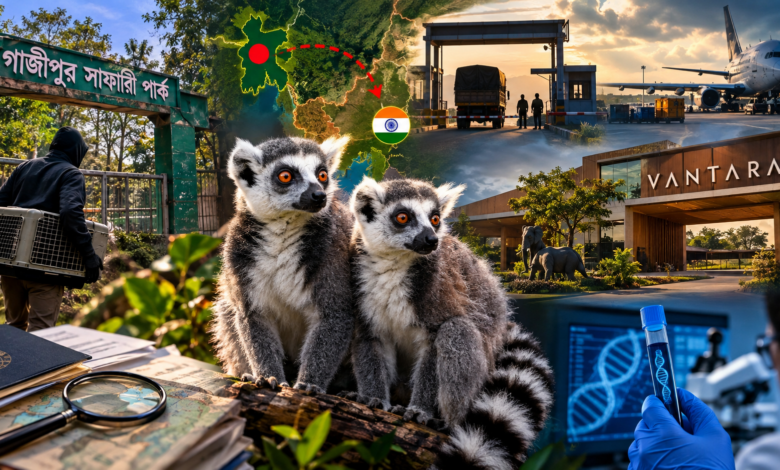
A wildlife trafficking investigation that began with the disappearance of three ring-tailed lemurs from Bangladesh’s Gazipur Safari Park has now reached one of India’s most prominent private wildlife institutions. Reports circulating in September 2026 claimed that two lemurs stolen from Bangladesh had been traced to Vantara, the wildlife rescue and conservation centre associated with Anant Ambani in Gujarat. The allegation immediately generated a familiar social-media reaction: outrage, accusations of smuggling, questions about corporate privilege and a wider debate over whether powerful Indian institutions receive excessive protection from scrutiny.
But beneath the sensational headlines lies a more complicated and considerably more important question.
Were the two lemurs at Vantara actually the same animals stolen from Bangladesh?
That question has not yet been conclusively answered in the reporting available on the matter.
The distinction is crucial. Bangladesh’s Criminal Investigation Department has reportedly established that two of the animals stolen from Gazipur Safari Park were trafficked into India. However, according to a detailed report published by The Business Standard of Bangladesh on September 11, 2026, the CID had not confirmed that the two animals associated with Vantara were the stolen animals. The agency reportedly said that scientific verification, including DNA testing, was required before that connection could be established.
This is not a minor technicality. It is the central fact around which the entire controversy must be understood.
There is a substantial difference between saying that stolen animals were trafficked into India and saying that those animals were definitively found at a particular institution. There is an even greater difference between saying that animals may have been traced to a facility and alleging that the facility itself participated in smuggling.
A serious investigation must therefore proceed through evidence rather than outrage. It must examine the theft, the alleged trafficking network, the cross-border route, the reported financial transactions, the animals’ acquisition history, their identification records, the DNA evidence and the response of the institution at the centre of the controversy.
The story is serious enough without exaggeration. In fact, the unresolved facts make it more serious.
The story began with a theft in Bangladesh, not with Vantara
The animals at the centre of the controversy were ring-tailed lemurs, a species native to Madagascar. Their presence in Bangladesh was itself connected to an earlier wildlife-trafficking history. According to reporting cited in the investigation, the animals had originally been seized in Bangladesh in 2018 after being trafficked through Hazrat Shahjalal International Airport. They were subsequently transferred to Gazipur Safari Park in Sreepur, Gazipur.
Over time, the animals reportedly formed a family group. Two adult lemurs produced two male offspring, although one of the offspring died in early 2022. By March 2025, three lemurs remained in the relevant group.
On March 23, 2025, three ring-tailed lemurs were reportedly stolen from Gazipur Safari Park. The park’s acting officer filed a case at Sreepur Police Station, initiating a criminal investigation into how the animals had been removed from the facility.
This is the first important point that should not be lost in the later controversy: the theft was not merely an unverified social-media claim. It was the subject of a formal criminal investigation in Bangladesh.
The disappearance of animals from a safari park raises questions about security, staff access, surveillance, enclosure management and the possibility of insider involvement. Protected wildlife cannot ordinarily be removed from a professionally managed facility without someone noticing, unless there are serious security failures or deliberate cooperation from individuals with access to the animals.
The investigation therefore began with a basic but important question: who had the opportunity to remove the lemurs, and who had the means to transport them?
One animal was recovered, but the other two disappeared across the border
The case took a significant turn in April 2025.
One of the stolen lemurs was reportedly found in an abandoned cage beneath a bridge at Shyambazar in Dhaka on April 18, 2025. It was recovered and returned to Gazipur Safari Park, but later died. A preserved sample from the animal reportedly became relevant to the subsequent DNA investigation.
The recovery of the third animal was important for two reasons.
First, it confirmed that at least one of the stolen animals had moved through an organised network outside the safari park. The animal was not simply lost or accidentally displaced. It had allegedly been taken away and abandoned in a different location.
Second, the preserved biological material potentially provided investigators with a reference point for genetic comparison.
The remaining two animals, however, were not recovered in Bangladesh. According to the investigation reported by The Business Standard, Bangladesh CID concluded that two lemurs had been trafficked into India. The alleged route involved several intermediaries and a chain of transactions that reportedly began with the theft at Gazipur Safari Park.
That is where the case moved from a domestic theft investigation into an international wildlife-trafficking matter.
The disappearance of two animals across an international border introduces an entirely different level of complexity. Investigators must now establish not only who stole the animals, but who arranged their movement, who received them, how they crossed the border, who paid for them and where they ultimately went.
The alleged trafficking network and the money trail
The Bangladesh investigation reportedly identified a network of individuals who allegedly handled the stolen lemurs.
According to the reporting summarised in the investigation, Jewel Mia was allegedly involved in arranging the theft and receiving the animals. Delwar Hossain Tawshif was reportedly accused of purchasing the three lemurs for Tk 7 lakh and reselling them for Tk 9 lakh. Two other individuals, identified as Babul and Shiplu, were reportedly involved in taking two of the animals into India.
These names and allegations are important, but they must be treated as part of an ongoing criminal investigation rather than as established convictions. The existence of an accused person’s statement or the reported arrest of an intermediary does not automatically prove every allegation made against that person.
Nevertheless, the reported financial figures raise questions that cannot be ignored.
The alleged purchase price of three lemurs was Tk 7 lakh. The reported resale price was Tk 9 lakh. That suggests an alleged difference of Tk 2 lakh between two stages of the transaction. The figures may represent an intermediary margin, but they do not necessarily establish the final value of the animals or the complete financial chain.
A proper investigation would need to establish whether these were cash transactions, whether bank accounts or mobile financial services were used, whether the animals were sold together or separately, and whether the reported prices refer to the same transaction or different stages of the alleged trafficking chain.
The financial trail could be decisive.
If the animals were sold onward to another intermediary, investigators should identify that person. If they were sold directly to an Indian buyer, that buyer should be identified. If the animals were eventually transferred to a recognised wildlife institution, the transaction documents should reveal whether the institution acquired them directly or through another party.
The crucial question is not merely how much the animals were allegedly sold for.
It is:
Who was the final purchaser, and what documentary trail accompanied the transfer?
The alleged India route remains a critical missing link
The Siasat report, as reflected in the material reviewed, stated that Bangladeshi investigators believed the animals were taken into India through the Darshana border in Chuadanga. It also referred to intermediaries allegedly connected to Kolkata and Mumbai.
However, the precise route, transport arrangements and documentary trail have not been independently established in the available material.
This is one of the most important unresolved aspects of the case.
An animal crossing an international border is not an ordinary commercial transaction. The movement of protected wildlife can involve multiple layers of regulation, including customs procedures, veterinary certification, import and export permissions, quarantine requirements and species-specific documentation.
If the animals entered India legally, there should ordinarily be records.
If they entered illegally, investigators must determine how the border was crossed and whether officials, transporters or intermediaries were involved.
If false documents were used, the nature of those documents becomes relevant.
If the animals were moved through unofficial routes and later transferred into a legitimate wildlife institution, the investigation must reconstruct the transition between the illegal movement and the eventual institutional possession.
The entire controversy therefore depends on a missing chain of custody.
The animals were reportedly stolen in Bangladesh in March 2025. Two were allegedly trafficked into India. But the exact path between the theft and their alleged appearance in Gujarat remains insufficiently established in the public record.
That gap is where the most important investigative work must take place.
The headline says “traced to Vantara”. The evidence is more cautious
The social-media controversy intensified after a report circulated under the headline:
“Lemurs stolen from Bangladesh Safari Park traced to Ambani’s Vantara.”
The wording creates the impression that the animals’ identity and location have already been conclusively established.
But the detailed Bangladesh reporting provides a more cautious picture.
According to The Business Standard, Bangladesh CID had confirmed that two stolen lemurs were trafficked into India, but had not confirmed that the animals at Vantara were the same animals stolen from Gazipur Safari Park. The agency reportedly said that DNA testing and scientific verification were necessary.
That distinction changes the nature of the story.
The available evidence supports the following proposition:
Two lemurs stolen from Bangladesh were allegedly trafficked into India.
The available evidence does not yet conclusively establish:
The two lemurs at Vantara are definitely those stolen animals.
And it certainly does not establish:
Vantara participated in the theft or knowingly acquired illegally trafficked wildlife.
Those are separate conclusions requiring separate evidence.
The headline may have emerged from investigative leads, photographs, information provided by suspects or similarities between the animals. But an investigative lead is not the same as a final finding.
A photograph can raise suspicion. A suspect’s statement can identify a possible destination. A media report can expose a possible connection. But the connection must still be verified.
The central question is whether the animals can be individually identified through reliable evidence.
Why DNA testing matters?
The preserved sample from the lemur that was recovered in Dhaka and later died could be central to resolving the controversy.
If the recovered animal was part of the same family group as the two animals allegedly at Vantara, genetic testing could potentially establish a relationship between them. That would provide stronger evidence than photographic resemblance alone.
However, even DNA evidence must be interpreted carefully.
There is a difference between proving that animals are related and proving that they are the exact individuals stolen from Bangladesh.
For example, if the recovered animal was a juvenile and the two animals at Vantara were its parents, a parent-offspring relationship could strongly support the claim that the animals belonged to the same family. But if the test only establishes that the animals are genetically related, it may not conclusively prove every aspect of their individual identity without additional reference material.
The strength of the evidence would depend on:
- The quality of the preserved sample.
- The genetic markers used.
- The relationship between the recovered animal and the two animals allegedly at Vantara.
- Whether earlier genetic records exist.
- Whether the comparison can establish individual identity or only family relationship.
- Whether the chain of custody of the biological sample is reliable.
The possible outcomes are therefore not all equal.
A strong genetic match to an earlier verified sample could establish identity, depending on the methodology. A parent-offspring relationship could support the claim that the animals came from the same family group. A failure to obtain a meaningful match could weaken the allegation, although sample quality and methodology would still matter.
The most unsatisfactory outcome would be for the controversy to remain unresolved because the testing was never completed.
For both Bangladesh and India, and for Vantara itself, independent DNA testing is potentially the most effective way to move the debate away from speculation.
Vantara’s response is important, but it is not the end of the investigation
Vantara has denied involvement in the theft.
According to the reported response, the institution said it had no involvement in the theft, had received no notice or request from any investigating agency, and had no association with the individuals named in connection with the alleged trafficking. It also stated that its animals were housed under applicable Indian law and regulatory supervision.
Vantara reportedly further said that it had submitted records concerning its two ring-tailed lemurs to relevant authorities and welcomed independent verification, including DNA testing by competent authorities in Bangladesh and India.
This is a meaningful response.
It does not merely reject the allegation in general terms. It reportedly points towards records and scientific verification as the means by which the matter should be resolved.
That is the correct direction.
However, a corporate statement cannot independently establish the facts. Nor can a denial, by itself, prove wrongdoing.
The relevant question is what the records show.
If Vantara’s acquisition documents establish that the animals were acquired before the Bangladesh theft, that would be highly relevant evidence against the specific allegation that they were the stolen animals.
If the animals were acquired after March 2025, that would not automatically prove wrongdoing, but it would make the acquisition timeline and chain of custody particularly important.
If the animals came from another recognised institution, that institution’s records would also need to be examined.
If the animals were acquired through an intermediary, investigators would need to identify that intermediary and establish the legality of the transfer.
The key issue is provenance.
Where did the animals come from, and can that history be independently verified?
The absence of a clear individual identification system is a serious issue
One of the difficulties reported in the case concerns the absence of definitive individual identification records or microchips that could immediately establish whether the animals at Vantara were the same animals stolen from Bangladesh.
This is not merely a technical problem. It raises broader questions about wildlife-management standards.
In a professionally managed wildlife facility, particularly one dealing with rare or exotic species, individual animal identification is extremely important. Such identification may include microchips, veterinary records, birth records, photographs, transfer documents, DNA profiles and other unique markers.
Without reliable individual identification, the investigation becomes dependent on circumstantial evidence.
Photographs may show similar animals, but ring-tailed lemurs share many common physical characteristics. Their tails, fur patterns and facial features may look similar even when the animals are not the same individuals.
A unique scar, injury, deformity or other distinguishing feature may help. But where such evidence is absent, DNA and documentary records become more important.
This raises a larger question for the wildlife sector:
Should every internationally transferred protected or exotic animal be required to have a reliable individual identification record before entering a major wildlife facility?
The answer should be yes.
The larger the institution, the more sophisticated its record-keeping should be.
The absence of a microchip does not prove that an animal was illegally acquired. But it makes the process of independently verifying provenance more difficult. That is precisely why animal identification systems are important.
The chain of custody must be reconstructed from Bangladesh to Gujarat
The phrase “traced to Vantara” compresses a complicated series of events into a single conclusion.
A proper investigation must reconstruct the animals’ movement step by step.
The first stage is the theft from Gazipur Safari Park. Investigators must establish who had access to the animals, whether there were security failures, whether staff members were involved and how the animals were physically removed.
The second stage concerns the local intermediaries. Who received the animals after the theft? Where were they housed? Who paid for them? Who arranged their transport? Were there communications, photographs or payment records?
The third stage is the international border. Which route was used? Were the animals transported through Darshana or another crossing? Were any documents used? Were the animals concealed? Did the transport involve commercial carriers, private vehicles or other means?
The fourth stage is India. Who received the animals after they crossed the border? Were they taken to a private individual, a broker, a wildlife facility or another location? Were they sold more than once?
The fifth stage is Vantara. When did the animals arrive? Who authorised the acquisition? What source was recorded? What documentation accompanied them? Were they transferred from another facility? What was their previous ownership history?
Until these stages are connected, the allegation remains incomplete.
The investigation must move beyond the question of whether two lemurs look similar to photographs of stolen animals. It must establish whether the animals’ histories match.
The legal question is not simply who possessed the animals
A major danger in reporting wildlife-trafficking cases is the tendency to collapse possession, acquisition and participation into one conclusion.
They are not the same.
If the animals at Vantara are not the stolen animals, the specific allegation may be based on mistaken identification.
If they are the stolen animals but were acquired by Vantara through an intermediary without knowledge of their illicit origin, the legal questions would concern the circumstances of acquisition, the institution’s due diligence and the conduct of the intermediary.
If the animals are the stolen animals and evidence shows that the receiving institution knew or should reasonably have known their unlawful origin, the implications would be more serious.
If forged or misleading documents were used, that would raise separate legal questions.
If the animals were trafficked illegally before being transferred to a legitimate institution, the investigators would need to determine who committed the illegal acts and whether the receiving institution was involved or unaware.
The mere fact that an institution possesses an animal does not automatically establish that it stole the animal.
But possession of an allegedly stolen protected animal is also not a matter that can be dismissed without verification.
The legal question is:
How did the animal reach the institution, and what did the institution know about its origin?
That is the question investigators must answer.
CITES, customs and the legality of international wildlife movement
The international movement of ring-tailed lemurs raises questions under national wildlife laws and potentially under the Convention on International Trade in Endangered Species of Wild Fauna and Flora, commonly known as CITES.
The relevant issue is not simply whether the animals crossed from Bangladesh into India.
It is whether their movement was legally authorised and properly documented.
A legitimate wildlife transfer may require:
- Import and export permissions.
- Customs declarations.
- Veterinary health certificates.
- Quarantine documentation.
- Ownership-transfer records.
- Transport permits.
- Individual animal identification.
- Species-specific documentation.
- Relevant CITES paperwork, where applicable.
If the animals entered India through a legal route, the records should help establish that fact.
If they entered illegally, the investigation must establish how the movement occurred and who facilitated it.
If they were initially moved illegally but later acquired by a legitimate institution, the law must determine whether the receiving institution knew or should have known their origin.
A conservation centre cannot legitimise an illegally trafficked animal merely by taking custody of it.
At the same time, an institution cannot be presumed guilty solely because an animal allegedly passed through an illegal network before reaching it.
The evidence must establish the actual sequence of events.
The financial discrepancies deserve closer examination
The reported transaction values in the available material do not appear to be fully reconciled.
One account refers to an alleged purchase of three lemurs for Tk 7 lakh and a resale for Tk 9 lakh. Another report referred to different valuations and a final alleged transaction involving approximately ₹4.8 million.
These figures may reflect different stages of the alleged trafficking process, but they should not be treated as a single confirmed financial transaction without further verification.
The financial questions are important because they could help identify the final buyer.
Investigators should examine whether the alleged payments were made through bank transfers, mobile financial services, cash transactions or informal channels. They should identify the accounts, intermediaries and communications associated with the transactions.
If the animals were sold to an Indian buyer, the transaction should leave some trace.
If the final buyer was a private individual or another wildlife institution, that entity must be identified.
If the animals were transferred to Vantara through a third party, the third party’s role becomes critical.
The money trail could potentially establish whether the animals moved through a conventional commercial transaction, an informal wildlife network or a series of intermediaries who obscured their origin.
But until the underlying financial evidence is made available, the reported figures should be treated as allegations rather than fully established facts.
The statements of accused persons require independent corroboration
The Bangladesh CID reportedly arrested eight people in connection with the case, with seven allegedly giving confessional statements before a court.
This is a significant development in the criminal investigation.
However, statements made by accused persons must be examined carefully.
There is a legal and evidentiary distinction between:
- A suspect’s statement.
- A confession legally admissible against a particular person.
- A statement implicating another individual.
- Independent corroboration.
- Documentary evidence.
- Proof that a specific animal reached a specific facility.
A suspect may provide information that helps investigators locate animals or identify intermediaries. But the information must still be independently verified.
Investigators should compare the statements against:
- Phone records.
- Messages.
- Bank transactions.
- Travel records.
- Border records.
- Transport details.
- Photographs.
- CCTV footage.
- Veterinary documentation.
- DNA evidence.
The key question is not whether someone said that the animals went to India.
The question is whether independent evidence confirms where they went.
What is actually established, and what remains unproven?
The available reporting allows a careful separation between established facts, reported investigative findings and unresolved allegations.
It is strongly supported that three ring-tailed lemurs were stolen from Gazipur Safari Park in March 2025. It is also reported that one was later recovered in Dhaka and subsequently died.
Bangladesh CID reportedly established that two of the stolen animals were trafficked into India.
The investigation also reportedly identified intermediaries involved in the alleged theft and movement of the animals.
However, it has not been conclusively established in the cited reporting that the two animals at Vantara are the same animals stolen from Bangladesh.
Nor has it been established that Vantara participated in the theft or knowingly acquired illegally trafficked wildlife.
The distinction must be preserved.
The facts currently support an investigation into the alleged Vantara connection. They do not yet support a definitive conclusion that Vantara was involved in smuggling.
That is not a defence of the institution. It is a statement about the state of the evidence.
What Vantara’s acquisition records should reveal
If Vantara has submitted records to the relevant authorities, those records should be central to resolving the controversy.
The public-interest questions are straightforward.
When were the two ring-tailed lemurs acquired? From whom were they acquired? Were they obtained directly or through an intermediary? Were they imported into India or transferred domestically? What was the source institution or individual?
Are there import permits, customs records, veterinary certificates, transfer agreements or quarantine documents? Do the animals have individual identification numbers or microchips? Are there photographs showing their presence at another facility before March 2025? Are there historical records establishing where they were located before the Bangladesh theft?
If the animals were acquired before the theft, that would be highly relevant.
If they were acquired after the theft, the transaction must be examined in greater detail.
If the animals came from another recognised facility, that facility’s records should be examined.
If the animals were obtained through a private intermediary, investigators should identify the intermediary and verify the legality of the transaction.
These are ordinary due-diligence questions for a major wildlife institution.
They are not unreasonable demands.
Why the institution’s public profile makes transparency more important
Vantara is associated with one of India’s most prominent business families and has positioned itself as a major wildlife rescue, rehabilitation and conservation institution.
That public profile makes the provenance of its animals especially important.
A facility operating at such scale should be expected to maintain comprehensive records of every animal in its care.
That includes:
- The origin of the animal.
- The identity of the previous holder.
- The legality of the acquisition.
- Import and export records.
- Veterinary documentation.
- Individual identification.
- Transfer history.
- Quarantine records.
- The source of the animal.
- The legal basis for its possession.
The more resources an institution has, the greater its ability to conduct due diligence.
This does not mean that Vantara should be presumed guilty because it is associated with a wealthy promoter.
It means that its institutional capacity makes transparency both possible and necessary.
The standard should not be lower because the institution is prestigious.
It should be higher.
The earlier Supreme Court investigation is relevant, but not a universal answer
Vantara has previously faced legal and public scrutiny over its animal acquisitions, welfare standards, international transfers and regulatory compliance.
In August 2025, the Supreme Court constituted a four-member Special Investigation Team headed by former Supreme Court judge Justice Jasti Chelameswar to examine allegations surrounding Vantara’s wildlife acquisitions and related legal issues.
The SIT reportedly reviewed permits, import and export records and other relevant information. Its report was submitted to the Supreme Court in September 2025, and the Court accepted the findings in the matters examined. The reported conclusions were favourable to Vantara’s compliance with the applicable legal and regulatory framework.
This is important background.
It means that Vantara was not simply operating outside scrutiny. It had already been subject to a court-supervised investigation concerning broad allegations about its operations.
But that earlier investigation must not be misused.
It does not automatically establish that every future allegation concerning every animal associated with Vantara is false.
Nor does the new Bangladesh allegation establish that the earlier Supreme Court findings were wrong.
The correct position is that the 2025 SIT inquiry is relevant context, but the Bangladesh lemur matter concerns a specific alleged theft and cross-border trafficking route that requires its own evidence.
The available material does not establish that the 2025 SIT specifically investigated these two Bangladesh lemurs.
Therefore, it would be misleading to claim that the Supreme Court has already resolved this particular issue.
The broader conservation paradox
The controversy raises a difficult question about the international wildlife-rescue industry.
Wildlife rescue and rehabilitation centres increasingly receive animals from multiple countries. Their stated objectives may include conservation, rehabilitation, species protection, captive breeding and veterinary care.
But the international movement of exotic animals creates a complex provenance problem.
The more animals a facility receives from different jurisdictions, the more important it becomes to establish the origin and legal history of every animal.
A rescue centre should not unintentionally create demand for illegally trafficked wildlife.
If an animal can be stolen in one country, moved across a border and eventually absorbed into a prestigious institution in another country, the system risks rewarding the very trafficking networks it claims to oppose.
This is why provenance is not a bureaucratic detail.
It is the foundation of legitimate conservation.
A facility cannot simply say that an animal is now safe and therefore the circumstances of its acquisition no longer matter.
The history of the animal matters.
The legality of its movement matters.
The identity of the previous holder matters.
The documentation matters.
The source matters.
The danger of turning a wildlife investigation into a corporate loyalty contest
The social-media discussion surrounding the controversy appears to have divided into two broad positions.
One side argues that major Indian corporations and their promoters have become “soft targets” for criticism and that institutions making significant contributions to the country should not be casually attacked.
The other side argues that large corporations and billionaire-linked institutions deserve greater scrutiny because of their influence, resources and public visibility.
Both arguments may have some merit in different circumstances.
But neither is a substitute for evidence.
The “soft target” argument becomes problematic when it is used to dismiss a serious allegation without investigating it.
The “symbol of smuggling” argument becomes equally problematic when it converts an unconfirmed allegation into a definitive accusation against an institution.
A company or institution should not be protected from scrutiny because it is prominent.
Nor should it be declared guilty because it is prominent.
The appropriate standard is evidence.
If Vantara has legally acquired the animals, the records should establish that fact.
If the animals are not the stolen lemurs, the identification should be corrected.
If the animals are the stolen lemurs, the investigation should determine how they reached the institution.
And if wrongdoing is established, the responsible individuals or entities should face the legal consequences.
The phrase “symbol of smuggling” goes beyond the available evidence
One of the most problematic aspects of the social-media debate is the use of language that converts an unresolved allegation into a conclusion about corporate criminality.
Describing an institution as a “symbol of smuggling” can imply that the institution itself participates in criminal activity.
That is a serious allegation.
The available evidence currently establishes a wildlife-trafficking investigation and an unconfirmed possible connection to Vantara.
It does not establish that Vantara participated in the theft.
It does not establish that Vantara knowingly acquired illegally trafficked animals.
It does not establish that the institution was involved in the alleged trafficking network.
A more accurate formulation would be:
Questions have emerged over the provenance of two ring-tailed lemurs associated with Vantara after Bangladesh CID reportedly said that two animals stolen from Gazipur Safari Park were trafficked into India. The CID has not conclusively confirmed that the animals at Vantara are the stolen animals, and DNA verification remains necessary.
That formulation remains critical.
It does not hide the allegation.
It does not protect the institution from scrutiny.
But it also does not present an unresolved claim as a proven criminal finding.
That is the difference between investigative journalism and reputational accusation.
What the Bangladesh authorities must still establish
The Bangladesh CID has reportedly made progress in establishing the trafficking route into India. But the investigation still needs to establish the exact identity and destination of the animals.
The authorities should ideally clarify:
How were the three animals removed from Gazipur Safari Park? Who had access to the enclosure? Were staff members involved? What transport arrangements were used? Who received the animals after the theft? Who paid for them? Who arranged the cross-border movement? Which route was used? Who were the Indian intermediaries? Where were the animals housed before reaching India? What evidence connects them to the animals at Vantara?
The DNA testing is especially important.
If the preserved sample from the deceased lemur establishes a strong genetic relationship with the animals at Vantara, the Bangladesh claim would gain significant support.
If the test does not establish a relationship, the allegation would need to be reconsidered.
If the testing remains incomplete, the matter will continue to exist in a state of uncertainty.
That is not satisfactory for Bangladesh, which is seeking accountability for the theft of its wildlife. It is not satisfactory for Vantara, which faces a serious allegation. And it is not satisfactory for the public, which deserves an evidence-based conclusion.
What Indian authorities should investigate independently
The Indian side of the case should not depend entirely on Bangladesh’s investigation.
If two protected animals allegedly crossed into India through an unofficial route, Indian authorities should examine the border and customs aspects of the matter.
The relevant agencies may need to examine:
- Border intelligence.
- Customs records.
- Wildlife Crime Control Bureau information.
- State forest department records.
- Wildlife transport routes.
- Import and quarantine documentation.
- The alleged Indian intermediaries.
- The source of the animals.
- The acquisition records of the animals at Vantara.
- Any relevant CITES documentation.
The Indian investigation should establish whether the animals entered India legally, whether they were transferred legally and whether the animals associated with Vantara match the animals described in the Bangladesh case.
Cross-border wildlife trafficking cannot be resolved by one country’s allegations alone.

It requires cooperation between authorities in both countries.
The case is also about the economics of wildlife trafficking
The reported financial transactions suggest that the animals were allegedly treated as commercial commodities.
That is a troubling aspect of the case.
Wildlife trafficking is often sustained not merely by poachers but by networks of buyers, brokers, transporters and intermediaries. Animals move through a chain in which each participant may profit from the next transfer.
The reported difference between the alleged purchase and resale price indicates that the animals may have been treated as valuable assets in an informal market.
But the final economics remain unclear.
Were the animals sold to a private collector? Were they sold to another facility? Was there a broker in India? Was the alleged final transaction direct or indirect? Was the amount reported in Indian rupees connected to the same transaction described in Bangladeshi taka?
These questions matter because financial evidence can establish relationships that verbal statements cannot.
A payment trail may reveal the identity of the buyer.
A phone record may reveal the identity of the transporter.
A message may reveal the intended destination.
A photograph may establish that the animals were in a particular location at a particular time.
The investigation should therefore combine financial, digital, documentary and biological evidence.
Why a complete animal-provenance system is essential
The controversy also raises questions about the standards governing private wildlife institutions.
A properly maintained animal-provenance system should allow investigators to trace an animal from its origin to its current location.
That system should include:
- Individual identification.
- Birth or seizure records.
- Ownership history.
- Veterinary records.
- Import and export documentation.
- Transfer agreements.
- Quarantine records.
- Photographic documentation.
- DNA profiles where appropriate.
- Records of previous facilities.
- Details of the legal basis for acquisition.
If such records exist, they can often resolve allegations quickly.
If they do not exist, even legitimate institutions may struggle to establish the history of an animal in their care.
That is why the issue is bigger than Vantara.
It concerns the governance of wildlife movement in general.
A conservation institution should not merely be able to say that it has animals.
It should be able to demonstrate where those animals came from.
The public-interest standard must be evidence, not reputation
The Vantara controversy is particularly sensitive because it involves a prominent business family, a major conservation institution and allegations concerning protected wildlife.
But the public-interest standard should remain consistent.
A major institution deserves recognition for genuine conservation work.
It also deserves scrutiny when credible allegations arise.
The public should not have to choose between admiration and condemnation.
It should be able to demand documentation.
The same principle applies to government-run safari parks, private zoos, rescue centres, wildlife trusts and international conservation organisations.
The question is not whether an institution is rich or powerful.
The question is whether its animals were acquired legally and ethically.
The question is not whether the institution is admired.
The question is whether its records withstand scrutiny.
The question is not whether the allegations are embarrassing.
The question is whether they are true.
The unresolved questions are more important than the social-media outrage
The controversy has already generated strong opinions.
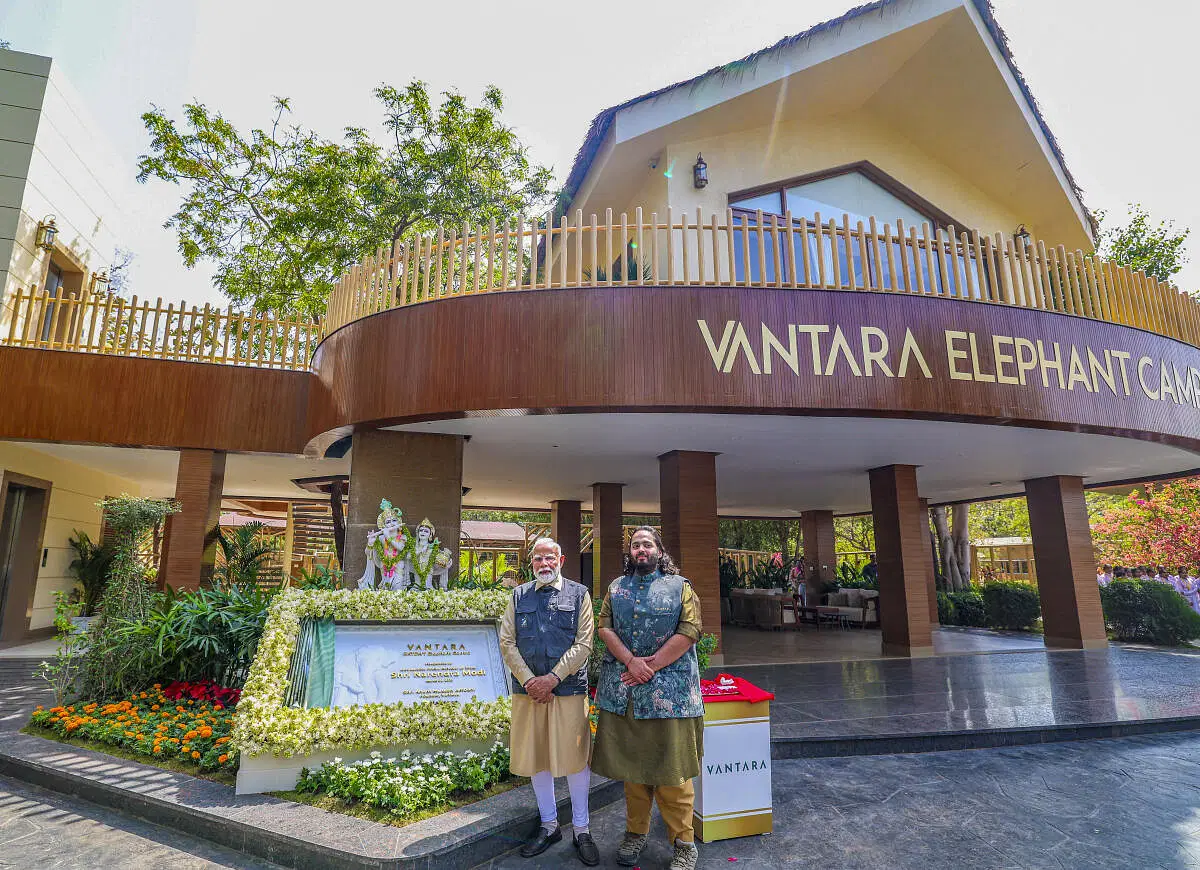
Some have described major corporate brands as “soft targets”. Others have used language suggesting that institutions have become symbols of smuggling.
But the actual investigative questions are more specific and more difficult.
Where are the two lemurs stolen from Bangladesh?
Are the animals at Vantara the same animals?
When were they acquired?
Who was the previous holder?
Were they imported legally?
Do they have individual identification records?
What does the DNA evidence show?
What do the customs and veterinary records show?
Who were the Indian intermediaries?
What does the financial trail reveal?
Has Bangladesh formally requested assistance from Indian authorities?
Have Indian wildlife authorities independently examined the matter?
These questions cannot be answered through social-media arguments.
They require documents, laboratory results, official statements and independent verification.
What would a conclusive investigation look like?
A credible final investigation would need to combine several categories of evidence.
The first would be DNA testing. The preserved sample from the recovered lemur should be compared with the two animals allegedly at Vantara through a competent laboratory using a transparent methodology.
The second would be acquisition records. Vantara’s records should establish the date, source and legal basis of acquisition.
The third would be chain-of-custody evidence. Investigators must reconstruct the movement of the animals from Bangladesh to India and identify every relevant intermediary.
The fourth would be financial evidence. The reported payments must be traced to establish who purchased, sold and received the animals.
The fifth would be independent official verification. Bangladesh and Indian authorities should establish whether the animals are the same and whether any laws were violated.
Only when these elements are examined can the controversy move from allegation to finding.
The danger of premature certainty
The current controversy illustrates a recurring problem in digital journalism: the movement from an allegation to an identity, and from an identity to a conclusion.
The sequence often looks like this:
Three animals are stolen.
Two are allegedly trafficked into India.
A possible destination emerges.
Photographs circulate.
The destination becomes a confirmed location.
The location becomes an allegation against an institution.
The allegation becomes a statement of criminal identity.
Each step increases the seriousness of the claim.
But the evidence may not increase at the same speed.
The available reporting supports the theft.
It supports the alleged trafficking into India.
It supports the need to investigate the Vantara connection.
It does not yet conclusively establish that the animals at Vantara are the stolen animals.
And it does not establish that Vantara participated in the theft.
That is why the language used in reporting matters.
An investigative publication can be strong without being reckless.
It can ask difficult questions without declaring unproven guilt.
It can expose institutional gaps without inventing facts.
The real test for Vantara is transparency
The most important test for Vantara is not whether it can withstand criticism on social media.
It is whether its records can withstand independent examination.
If the animals were legally acquired, the documentation should establish that.
If the animals are not the stolen lemurs, scientific testing should clarify that.
If the animals are the stolen lemurs, the institution should explain how they reached its custody.
If an intermediary was involved, that intermediary should be identified.
If there are gaps in the records, those gaps should be addressed.
A major wildlife institution should not fear independent verification if its acquisition history is lawful and properly documented.
At the same time, the public should not treat the existence of an allegation as proof of institutional wrongdoing.
The truth lies in the evidence.
Conclusion: The controversy is unresolved, and that is precisely why it deserves investigation
The Bangladesh lemur case is not a trivial social-media dispute.
Three animals were reportedly stolen from Gazipur Safari Park. One was recovered and later died. Bangladesh CID reportedly established that two were trafficked into India. Several intermediaries were allegedly arrested. The animals were reportedly moved through a network involving commercial transactions and cross-border intermediaries.
The possibility that the two animals may have reached Vantara is serious enough to warrant a transparent and independent investigation.
But the available reporting does not conclusively establish that the animals at Vantara are the stolen animals.
Nor does it establish that Vantara participated in the theft or knowingly acquired illegally trafficked wildlife.
That is the current evidentiary position.
The investigation must now focus on DNA testing, acquisition records, import and customs documents, veterinary records, individual identification, financial trails and the alleged chain of custody.
If the animals are confirmed to be the stolen lemurs, the next question will be how they reached the facility and who was responsible.
If they are not the stolen animals, the reports must be corrected.
If Vantara’s records establish lawful acquisition, those records should be independently examined and, where legally possible, made available.
If wrongdoing is established, the responsible individuals or institutions must face the consequences.
The public does not need a corporate loyalty contest.
It needs the truth about two animals whose journey from Bangladesh to India remains only partially reconstructed.
The strongest investigative question is therefore not:
“Is Vantara a symbol of smuggling?”
It is:
“Can the provenance of the two lemurs associated with Vantara be independently established, and if they are the animals stolen from Bangladesh, how exactly did they reach the institution?”
That is the question that matters.
Because in wildlife conservation, reputation cannot replace provenance.
Institutional prestige cannot replace documentation.
And a headline cannot replace DNA evidence.
The theft must be investigated. The trafficking route must be reconstructed. The animals must be identified. The records must be examined. And only then should responsibility be assigned.