Why India’s News Publishers Are Challenging The DPDP Act And Asking If Data Privacy Could Come At The Cost Of Investigative Journalism
The DNPA has challenged the Digital Personal Data Protection (DPDP) Act, 2023, in the Supreme Court, arguing that the absence of a journalism exemption could hamper investigative reporting, expose confidential sources and affect press freedom. The case raises questions about balancing data privacy with the public's right to know.

The Supreme Court on Tuesday sought the Centre’s response to a petition filed by the Digital News Publishers Association (DNPA), challenging provisions of the Digital Personal Data Protection (DPDP) Act, 2023, and its accompanying rules. The association argues that the absence of a specific exemption for journalistic activities could make investigative reporting more difficult and affect press freedom.
A bench comprising Chief Justice of India Surya Kant and Justices Joymalya Bagchi and V Mohana issued notice on the petition and an application seeking an interim stay on the challenged provisions. The court did not grant the stay at this stage and scheduled the matter for November 17.
The case raises questions about how data protection requirements should apply to news organisations, particularly when journalists investigate matters of public interest.
Why News Publishers Are Challenging The DPDP Act
At the heart of the dispute is the absence of a specific exemption for journalism under the DPDP Act. The DNPA has argued that earlier versions of the proposed data protection legislation included journalistic exemptions, but the final law does not offer similar protection.
The concern is that requirements relating to notice, consent and the deletion of personal data could complicate investigative reporting. A journalist examining alleged corruption, for instance, may need to analyse documents containing personal information or investigate the activities of an individual without alerting them beforehand. Seeking consent from the person being investigated could compromise the inquiry.
Senior Advocate Madhavi Divan, appearing for the DNPA, raised this concern before the Supreme Court. Questioning the practical implications of requiring consent, she asked, “If I have to ask for permission and consent, what is the point?” She warned that the requirements could introduce a form of pre-censorship by making it difficult for journalists to publish reports without the approval of those they are investigating.
The association had previously approached the government over the issue. Divan told the court that the DNPA submitted a representation to the Ministries of Information and Broadcasting and Electronics and Information Technology on August 10, 2026, followed by a meeting with ministry officials on August 25.
The DNPA represents the digital arms of 21 major news organisations, including The Indian Express, The Hindu, India Today, the Times Group, Zee, NDTV and Network18.
It has challenged nine provisions of the Act and three rules, arguing that the framework does not adequately account for the requirements of public-interest journalism.
The timing of the challenge is also relevant. Although the DPDP Rules were notified in November 2025, the implementation of the framework has been staggered. Most of the substantive provisions of the Act and Rules are scheduled to take effect in May 2027. The petition therefore seeks to address the potential implications of the law before its main compliance requirements become operational.
How The Law Could Affect Investigative Reporting
The DNPA’s concerns extend beyond consent to the protection of confidential sources. The association argues that certain provisions empowering the Centre to seek information from organisations handling personal data could expose sensitive newsroom information if adequate safeguards are not in place.
For investigative journalists, source confidentiality can be crucial. Whistleblowers and people with knowledge of wrongdoing may be reluctant to share information if they believe their identities or communications could be exposed. The publishers contend that the absence of clear protections could discourage such disclosures and make investigations into corruption and misconduct more difficult.
The association has also questioned the government’s power to restrict public access to information, arguing that it could be used to limit the dissemination of news. These objections form part of a wider challenge to the scope of the government’s powers under the data protection framework.
The petitioners’ concerns have not yet been adjudicated by the Supreme Court. The question is whether the provisions contain sufficient safeguards to prevent legitimate journalistic work from being hindered while still protecting individuals against the misuse of their personal data.
Concerns Over The Data Protection Board
The DNPA has separately questioned the independence of the Data Protection Board of India, which is responsible for investigating alleged violations of the Act and imposing penalties.
The association has pointed to the executive-led process for appointing the Board’s members and the absence of a requirement for a judicial member. It argues that the Board’s structure raises concerns about its independence, particularly when it will be responsible for overseeing compliance with a law that publishers believe could affect their work.
The challenge puts the Board’s composition and safeguards under scrutiny. However, whether its structure is constitutionally inadequate remains a matter for the court to consider.
The Separate Battle Over The RTI Act
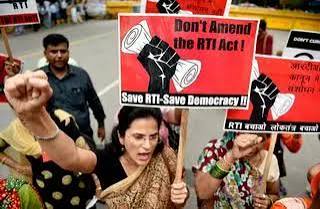
The DNPA’s petition also challenges an amendment to the Right to Information (RTI) Act, 2005, introduced through the DPDP legislation. The amendment changes the framework governing the disclosure of personal information under the RTI Act and has been in force since November 2025.
The RTI framework allows citizens and journalists to seek information held by public authorities. Such requests can help uncover government expenditure, conflicts of interest and alleged irregularities. The concern raised by the publishers is that restricting access to personal information could make it harder to obtain records relevant to public accountability, even where disclosure serves a larger public interest.
The petitioners argue that the amendment weakens the balance between an individual’s right to privacy and the public’s right to know. They have cited the Supreme Court’s 2024 electoral bonds judgment in support of their argument that the right to information is an important component of the constitutional guarantee of freedom of speech and expression.
The RTI challenge is distinct from the DNPA’s objections to the application of data protection requirements to journalism, although both concern access to information in the public interest. In February 2026, the Supreme Court referred petitions challenging the RTI amendment to a three-judge bench.

India’s Wider Press Freedom Concerns
The legal challenge comes against the backdrop of concerns about press freedom in India. In the 2026 World Press Freedom Index published by Reporters Without Borders (RSF), India ranked 157th among 180 countries, down six places from its 2025 position of 151st. RSF classified the country’s press freedom situation as “very serious”.
The organisation has cited several concerns, including legal action against journalists, physical violence and online harassment, concentrated media ownership and economic pressures that can affect editorial independence. Reliance on government advertising revenue is another factor identified as potentially limiting the independence of news organisations.
The ranking does not establish that the DPDP Act will restrict journalism. It does, however, provide a broader context for the debate over the legal and institutional conditions in which newsrooms operate.
The Last Bit, What’s To Follow
The Supreme Court will hear the matter on November 17, when the Centre’s response and the DNPA’s request for interim relief will be considered. The court has yet to rule on the constitutional challenge.
The case ultimately raises a question that extends beyond news publishers: how can the law protect personal information without creating unnecessary barriers to reporting that serves the public interest?
The court’s consideration of the competing concerns will help determine how the challenged provisions are to be assessed against the constitutional protections for privacy and freedom of expression.