The Investigation That Has Put The Liquor Industry On Edge, Why India’s Scotch Whisky Import Probe Is Rattling Global Liquor Majors And Indian Manufacturers
India's investigation into bulk Scotch whisky imports has brought global liquor majors and domestic manufacturers together in an unusual dispute over customs duties. At the centre is a tariff concession under the India-UK trade agreement, and a disagreement over whether bulk Scotch qualifies for the reduced rate.

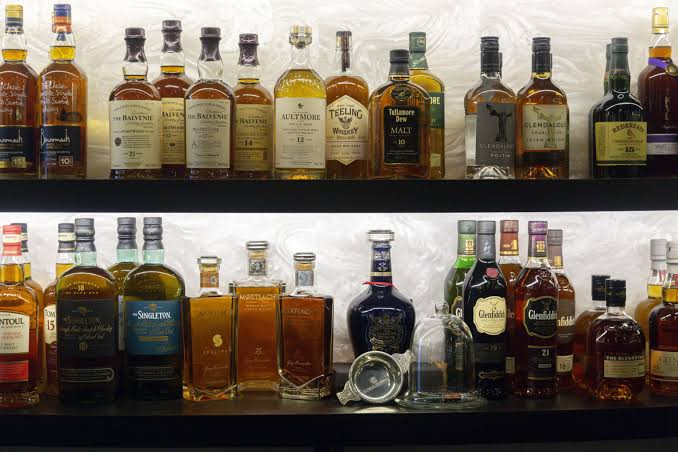
An investigation by Indian customs authorities into bulk Scotch whisky imports has brought some of the world’s largest liquor companies into a dispute over import duties, product classification and the benefits promised under the India-UK free trade agreement.
Companies including Diageo, Pernod Ricard, Radico Khaitan and Allied Blenders and Distillers have found themselves caught up in the scrutiny, with officials questioning whether bulk Scotch imported for use in Indian-made whisky qualifies for the reduced customs duty agreed under the trade pact.
The investigation has reportedly involved searches at the offices of several liquor companies in recent weeks. At the centre of the dispute is a relatively technical question with significant commercial implications: should Scotch whisky imported in bulk containers receive the same tariff concession as Scotch whisky imported in finished bottles?
Indian authorities are reportedly arguing that bulk imports used in beverage manufacturing fall under a separate customs classification introduced earlier this year. That classification covers compound alcoholic preparations used in the manufacture of beverages and attracts the older 150% import duty.
The liquor industry, however, disputes this interpretation. Companies argue that bulk Scotch remains Scotch whisky, regardless of whether it arrives in retail bottles or large containers for further processing. The disagreement has now drawn in both foreign liquor majors and Indian manufacturers, while also prompting concerns in Britain over the treatment of its whisky exports.

What India Promised Britain Under The Trade Agreement
The dispute is unfolding against the backdrop of the India-UK Comprehensive Economic and Trade Agreement (CETA), which came into force on July 15, 2026. Negotiated over several years, the agreement was intended to improve market access for businesses in both countries, with Scotch whisky among the British products expected to benefit from India’s decision to reduce import duties.
Import tariffs on Scotch whisky were one of the more difficult issues during the negotiations.
Before the agreement, imported Scotch faced a basic customs duty of 150%, making India one of the more expensive major markets for British whisky exporters. Under the agreement, India committed to reducing this duty to 75% immediately upon implementation, with a further gradual reduction to 40% over the following 10 years.
For British whisky producers, the reduction represented a significant opening in a market that has become increasingly important to the Scotch industry. India is the world’s largest Scotch whisky export market by volume, and lower import duties were expected to make British whisky more competitive while creating additional opportunities for exporters.
The tariff concession was also relevant to Indian consumers and liquor companies. While state-level excise duties, distribution costs and other taxes continue to influence retail prices, a reduction in customs duty could improve the economics of importing Scotch into India. For companies manufacturing whisky domestically using imported Scotch malts, the concession was particularly relevant because bulk imports form a substantial part of their supply chains.
However, the agreement has now run into a disagreement over precisely which imports qualify for the reduced duty. While the tariff reduction appears straightforward on paper, the government’s interpretation of the customs classification applicable to bulk Scotch has created a complication that neither the foreign exporters nor Indian liquor manufacturers had anticipated.
Bottled Scotch Versus Bulk Scotch The Customs Classification Dispute
The disagreement between the government and the liquor industry essentially comes down to how Scotch whisky is classified when it enters India. While the distinction might appear technical, it has a direct bearing on how much companies pay in import duties.
Scotch whisky imported in finished bottles for retail sale is eligible for the reduced 75% customs duty under the trade agreement. However, Indian customs authorities are reportedly taking a different position on bulk Scotch, which is imported in large quantities and subsequently used in manufacturing whisky products in India.
Officials have argued that such imports should fall under a customs classification introduced earlier this year for “compound alcoholic preparations of a kind used for the manufacture of beverages”. Products falling under this category attract the earlier 150% duty rather than the reduced rate negotiated under the India-UK agreement.
The liquor industry disagrees with this interpretation, arguing that bulk Scotch whisky cannot be treated as a compound alcoholic preparation simply because it is imported for manufacturing purposes – compound alcoholic preparations are essentially flavoured or modified alcohols, whereas bulk Scotch is a distilled alcoholic beverage produced from malted barley and water.
The distinction is important because the form in which a product is imported does not necessarily change what the product actually is. According to the industry, Scotch whisky should retain its identity and classification whether it arrives in a retail bottle or a bulk container.
The industry’s position is also supported by the tariff concessions negotiated under the trade agreement, which were intended to cover bulk as well as bottled Scotch whisky. This is now becoming a central point of contention, with companies arguing that the benefits secured through the FTA should not be restricted through a separate customs interpretation.
For the companies involved, the difference between the two classifications is substantial. A 150% duty instead of 75% could significantly increase the cost of importing Scotch for domestic manufacturing, affecting product pricing, margins and the economics of their Indian operations.
Why Bulk Scotch Imports Matter So Much To India’s Whisky Industry
To understand why the dispute has attracted such a strong reaction, it is important to look at how Scotch whisky actually enters and is used in the Indian market. India is not merely a major destination for finished bottles of imported Scotch. It is also a significant manufacturing market where imported Scotch malts are used in the production of whisky brands tailored to Indian consumers.
According to the Scotch Whisky Association, India received the equivalent of more than 220 million bottles of Scotch whisky from Britain in 2025, making it the largest export market for Scotch by volume. However, industry estimates suggest that around 80% of these imports arrive in bulk rather than in finished retail bottles.
Much of this bulk Scotch is used in the production of Indian-Made Foreign Liquor (IMFL) whisky. These products are manufactured in India by blending imported Scotch malts with Indian grain spirits and other permitted ingredients. The resulting whisky is sold under Indian brands and caters to a large domestic consumer base.
Pernod Ricard’s Blenders Pride provides a familiar example. The company describes the product as a blend of Indian grain spirit and imported Scotch malts sourced from Chivas Brothers. This model allows manufacturers to incorporate Scotch whisky into products designed around Indian consumer preferences, without importing every bottle as a finished product from Britain.
Several international and Indian liquor companies operate within this manufacturing ecosystem. Bulk imports allow them to source Scotch components while undertaking blending, bottling, distribution and other manufacturing activities within India.
This is why the customs classification dispute extends beyond the price of imported Scotch. If bulk imports attract the higher 150% duty, companies that depend on them could face a substantial increase in input costs. It could also change the relative economics of manufacturing whisky in India compared with importing finished products.
For an industry that relies heavily on imported Scotch as a component of locally manufactured brands, the outcome of this dispute could have consequences extending well beyond the import counter.

Why Diageo, Pernod And Indian Liquor Companies Are Objecting
For international liquor companies operating in India, the customs classification dispute has implications for both their supply chains and the economics of their Indian businesses. Companies such as Diageo and Pernod Ricard rely on imported Scotch whisky for several products manufactured and sold in India. If bulk imports are subjected to the earlier 150% customs duty, the cost of sourcing these inputs could rise considerably, potentially affecting production costs, margins and pricing decisions.
The International Spirits & Wines Association of India (ISWAI), which represents major international liquor companies including Diageo and Pernod Ricard, has reportedly raised concerns that the classification issue could undermine an important market-access benefit negotiated under the India-UK trade agreement.
The objection is not limited to multinational companies. Indian liquor manufacturers, including Radico Khaitan and Allied Blenders and Distillers, are also concerned about the potential impact on their businesses. Both domestic and international companies use imported Scotch in different capacities, making the treatment of bulk imports relevant across the industry.
Allied Blenders and Distillers, in an investor presentation last week, identified itself as one of India’s largest bulk Scotch importers and said the UK trade agreement would improve accessibility to its luxury portfolio. The company’s comments underline the commercial importance of the tariff concession for Indian manufacturers that source Scotch from Britain.
The industry is therefore arguing that the benefits of the trade agreement should extend to bulk imports as well, rather than being restricted to finished bottled products. With several major players dependent on these imports, the dispute has become an issue affecting a significant part of India’s organised spirits industry.
Why Indian Manufacturers Are Also Worried About The Dispute
The involvement of Indian liquor manufacturers adds another dimension to the disagreement. While the initial focus was largely on multinational companies such as Diageo and Pernod Ricard, domestic industry representatives have now joined the objections, arguing that the government’s interpretation could have unintended consequences for local manufacturing.
The Confederation of Indian Alcoholic Beverage Companies (CIABC), which represents domestic liquor manufacturers, has also raised concerns about the treatment of bulk Scotch imports. In a letter dated October 27, the industry body argued that excluding bulk Scotch from the tariff concession could create an incentive for companies to import finished whisky products instead of manufacturing them locally.
The argument centres on the economics of production. Indian manufacturers currently import Scotch in bulk, use it as an ingredient in locally produced whisky blends and undertake the subsequent manufacturing and bottling activities within India. If these bulk imports attract a 150% duty while finished bottled Scotch benefits from the lower 75% rate, the cost advantage associated with domestic manufacturing could narrow.
This could create an unusual outcome.
A trade agreement intended to improve market access and encourage commercial activity between India and Britain could, under the disputed interpretation, make importing finished whisky relatively more attractive than bringing in bulk Scotch for local production.
CIABC has therefore linked the issue to India’s broader domestic manufacturing objectives. Its objection is not simply about the additional customs duty but also about maintaining the commercial viability of manufacturing operations within the country.
The argument also brings foreign and domestic liquor companies together on an issue where their commercial interests would otherwise differ. Both groups want the tariff concessions on bulk Scotch to be recognised, although the implications for their individual businesses may vary.
Whether the government’s interpretation ultimately changes the economics of local whisky production remains to be seen. However, the industry’s objections indicate that the dispute is no longer confined to importers and exporters. It has become a wider question about how India’s trade commitments interact with its domestic manufacturing ecosystem.
Britain Steps In As The Trade Dispute Escalates
The disagreement over bulk Scotch imports has also attracted attention in Britain, where the tariff concessions were viewed as an important achievement of the India-UK trade agreement. With the customs classification issue threatening to complicate access to the Indian market, British officials have begun engaging with New Delhi to seek a resolution.
Following an earlier report on the scrutiny of liquor companies in India, a UK government spokesperson said Britain was working with the Indian government to resolve the issue and ensure that UK businesses could export under the tariffs agreed in the trade deal.
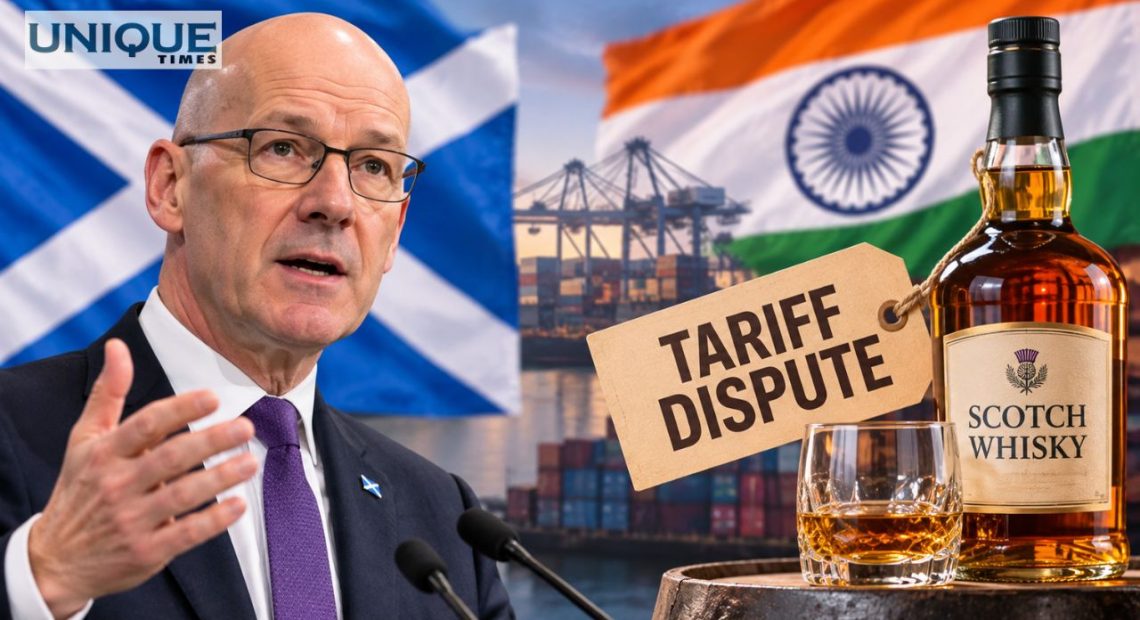
The issue was also raised by Scotland’s First Minister John Swinney during his visit to India, which concluded last week. Swinney discussed the treatment of bulk Scotch whisky exports with the Indian government, bringing the concerns of Scotland’s whisky industry directly into the conversation.
Meanwhile, the Indian government is preparing to hold discussions with representatives of the liquor industry. Senior Commerce Ministry officials are scheduled to meet executives from both multinational and domestic liquor companies on November 2 to discuss the customs classification dispute.
The meeting is significant because it brings together companies that have challenged the government’s interpretation and domestic industry representatives who have separately warned about the implications for Indian manufacturing.
The Indian government has not publicly commented on the dispute so far. The discussions are expected to provide an opportunity for the industry to present its position on why bulk Scotch should qualify for the reduced tariff under the trade agreement.
What Happens Next And What Is At Stake For The Trade Agreement
The immediate question is whether the Indian government will reconsider its interpretation of the customs classification applicable to bulk Scotch whisky or maintain that such imports fall under the separate category attracting the 150% duty.
For liquor companies, the outcome will determine whether the tariff concessions negotiated under the India-UK agreement translate into lower import costs for the bulk Scotch used in domestic manufacturing. For British exporters, it will influence the extent to which they can benefit from the improved market access promised under the agreement.
The dispute also raises a broader question about the implementation of trade agreements. Negotiating lower tariffs is one part of the process; ensuring that businesses can actually access those concessions through customs procedures and product classifications is another.
For now, both sides have an interest in finding clarity. The liquor industry wants the agreed tariff benefits to be recognised, while India must determine how the relevant customs classifications apply to the products being imported.
The November 2 discussions could provide an indication of how the government intends to approach the issue. Until then, the dispute remains an important test of how India’s trade commitments will be interpreted in practice, particularly when they intersect with domestic manufacturing and customs policy.