Nitin Naresh’s Jaipur Extortion Case, The ₹11,700 Deposit, Alleged Email Impersonation And The Bigger Question Of Investigative Journalism, Legal Accountability And Where The Two Meet
The rejection of Nitin Naresh's anticipatory bail plea in a Jaipur extortion case has brought renewed attention to a series of legal disputes involving the Inventiva publisher. At the centre are a disputed ₹11,700 deposit, alleged email impersonation and larger questions about investigative journalism and legal accountability.

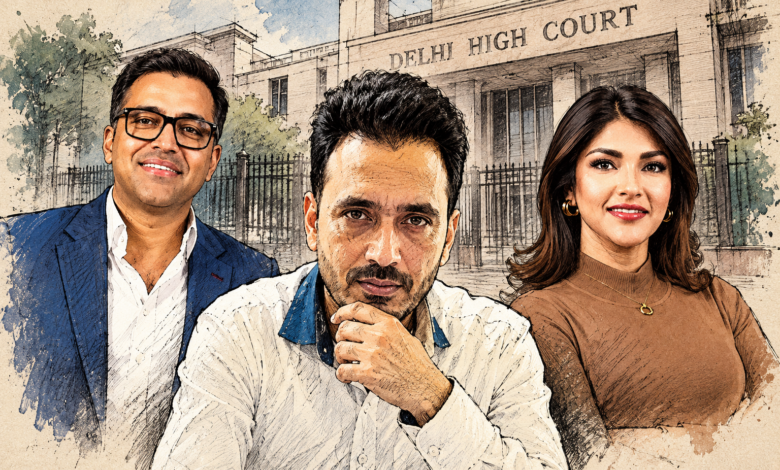
A Jaipur district court on October 28, 2026, rejected the anticipatory bail application filed by Nitin Naresh, publisher of Inventiva, in connection with an extortion case registered against him in the city.
The case centres on allegations that emails were sent to a complainant demanding money in exchange for stopping adverse publications, along with a disputed cash deposit of ₹11,700 into the account of Nine Network Private Limited, the company associated with Inventiva.
The rejection of anticipatory bail marks an important development in a dispute that has unfolded alongside several other legal proceedings involving Naresh, Inventiva and individuals including Ankiti Bose and Krishan Rattan.
The Jaipur case, however, concerns a separate criminal complaint and allegations that will have to be examined through the ongoing investigation.
The FIR was registered on September 14, 2026, following proceedings before the competent magistrate. Naresh has disputed the allegations and maintained that he has been falsely implicated. His defence also raises the possibility that emails allegedly used to establish a demand for money were sent by someone impersonating him.
The court’s rejection of anticipatory bail does not amount to a finding of guilt. It means that the request for pre-arrest protection was declined at this stage, leaving the investigation to proceed in accordance with law. The central questions surrounding the alleged emails, the bank transaction and the identity of the person responsible for the communications remain matters for investigation.
The ₹11,700 Deposit And The Extortion Allegations
The Jaipur case originates in an FIR registered on September 14, 2026, bearing number 267/2026. The complainant, Aniruddh Saran Purohit, alleged that he had received communications demanding money in connection with publications by Inventiva. The complaint also referred to an alleged cash deposit of ₹11,700 into the bank account of Nine Network Private Limited.
According to the complaint, emails dated August 26 and September 3, 2026, formed part of the alleged demand. The complainant’s case was that money was being sought in return for stopping or preventing adverse coverage.
These allegations became the basis for invoking provisions of the Bharatiya Nyaya Sanhita (BNS), including Sections 308(2) and 308(3), which deal with extortion and related conduct, alongside provisions concerning criminal intimidation and common intention.
The FIR also refers to Sections 351(2), 61(2) and 3(5) of the BNS. Broadly, these concern criminal intimidation, criminal conspiracy and acts done by several persons in furtherance of a common intention. The inclusion of these provisions reflects the nature of the allegations made in the complaint; it does not establish that the offences have been committed.
The proceedings leading to the FIR reportedly began with an application before the magistrate under Section 175(3) of the Bharatiya Nagarik Suraksha Sanhita (BNSS), which empowers a magistrate to direct the police to investigate a cognisable offence in appropriate circumstances. Following the court’s direction, the Jaipur police registered the FIR and initiated an investigation.
At the centre of the complaint are two distinct elements: the alleged emails and the ₹11,700 deposit. The complainant’s version links the communications to the payment made into the company’s account. The authenticity, origin and circumstances of these communications and the transaction are therefore significant to the investigation.
For Naresh, however, the same material forms the basis of a disputed account. He denies sending the emails and contests the suggestion that the deposit establishes an extortion demand by him. His position, as set out in Inventiva’s coverage, is that the communications may have involved impersonation and that the transaction has been used to construct a case against him.
Nitin Naresh’s Version And The Alleged Email Impersonation
While the complainant’s case rests on the alleged emails and the ₹11,700 deposit into Nine Network Private Limited’s account, Naresh has disputed the foundation of the allegations. His version, as presented in Inventiva’s account of the dispute, is that he did not send the emails dated August 26 and September 3 and that the communications may have been sent by someone impersonating him.
The alleged impersonation forms a central part of Naresh’s defence. He has questioned whether the emails can be reliably attributed to him and has suggested that an email account may have been used to create the impression that he was demanding money in exchange for stopping adverse coverage.
The possibility of impersonation also raises questions about the origin of the communications, the identity of the sender and the digital trail associated with the account.
Naresh has also disputed the significance attached to the ₹11,700 deposit. The fact that the amount was allegedly deposited into the company’s bank account does not, by itself, establish who initiated the transaction, why it was made or whether it was connected to any demand for money.
The article published by Inventiva also raises questions about the complainant’s claimed association with Terra Vision Investments LLC and the circumstances in which the payment was made. Naresh’s account suggests that the transaction and the alleged emails need to be examined together rather than treated as conclusive evidence of an extortion demand.
Naresh has further alleged that the Jaipur complaint is connected to earlier disputes involving individuals who had initiated legal proceedings against him and Inventiva. That contention forms the basis of his broader explanation of the events leading to the criminal case. It also brings two other significant legal disputes, involving former Zilingo chief Ankiti Bose and businessman Krishan Rattan, into the picture.
How The Ankiti Bose Dispute Entered The Picture
The dispute involving Ankiti Bose predates the Jaipur extortion FIR and forms an important part of the background presented by Naresh. Bose, the former chief executive of fashion technology company Zilingo, had been involved in a legal dispute with Inventiva over publications concerning her and the controversies surrounding the company.
The disagreement eventually moved into the courts, with Bose initiating defamation proceedings against Naresh and the publication. The proceedings brought the content of Inventiva’s articles, the allegations made in them and the limits on further publication before the Delhi High Court.
The court proceedings resulted in interim directions concerning the material being published about Bose. Such interim relief is intended to operate while a case is pending and should not be confused with a final determination of the underlying defamation claims. The precise scope of the directions, including the publications and statements covered, is important when understanding the subsequent developments.
Naresh’s account connects the Bose litigation to the wider sequence of events that eventually led to the Jaipur FIR. He has suggested that the criminal complaint should be viewed against the background of the earlier legal confrontation and the restrictions imposed through court proceedings.
The dispute is relevant for another reason.
It establishes that the disagreements between Bose and Inventiva were already before the judiciary before the alleged extortion communications surfaced in August and September 2026.
The subsequent criminal complaint therefore emerged against the backdrop of an existing legal conflict, rather than as an entirely unrelated episode.
The Krishan Rattan Dispute And The London Litigation
The legal dispute involving businessman Krishan Rattan forms another part of the background to the proceedings involving Nitin Naresh and Inventiva. Like the dispute with Ankiti Bose, this disagreement developed around publications by Inventiva and subsequently moved into the courts, bringing questions of defamation and the publication of allegations into focus.
Rattan initiated legal proceedings against Naresh and Inventiva over articles concerning him. The dispute also extended beyond India, with litigation involving the Voltaire Group in London. The proceedings became part of the wider legal history that Naresh has referred to while presenting his version of the Jaipur extortion case.
In India, the dispute with Rattan also involved defamation-related proceedings and questions about the publication of material concerning him. These proceedings ran alongside the separate litigation involving Bose, creating two distinct legal fronts for Naresh and Inventiva.
Naresh has sought to place the Jaipur complaint within this wider context, alleging that the criminal case emerged against the backdrop of these earlier confrontations. His position is that the disputes involving Bose and Rattan are relevant to understanding the circumstances in which the extortion allegations surfaced.

The BPTP Dispute, The Disputed Audio Recording And The Forensic Examination
Another significant legal dispute involving Inventiva concerns real estate developer BPTP and its representatives. Unlike the proceedings involving Bose and Rattan, this dispute also brought a disputed audio recording and questions about its authenticity before the Delhi High Court.
The disagreement centred on publications concerning BPTP and the language used to describe the company and individuals associated with it. The developer objected to certain descriptions, including the use of terms such as fraud and scamster, and the matter subsequently became the subject of court proceedings.
The Delhi High Court examined the publication-related dispute and made observations concerning the language used in the coverage. The proceedings also involved a recording of a telephone conversation, approximately 12 minutes long, which became a contested piece of material.
Naresh disputed the authenticity of the recording and raised the possibility that the voice attributed to him could have been manipulated or generated using artificial intelligence-based voice cloning technology. The allegation brought a technical dimension to the dispute, since establishing whether a recording is genuine requires more than simply comparing the voices heard in it.
The matter led to the recording being referred for forensic examination by the Central Forensic Science Laboratory (CFSL) of the Central Bureau of Investigation (CBI).
The forensic examination is particularly relevant because the recording has been cited in the wider disagreement between the parties. If questions have been raised about whether the recording was altered, manipulated or generated using synthetic voice technology, the forensic findings could help establish what the audio actually contains and whether it can reliably be attributed to the person concerned.
Naresh has referred to this dispute as another example of the legal confrontations involving Inventiva and its reporting. The BPTP proceedings are separate from the Jaipur extortion FIR, but they form part of the broader sequence of legal disputes that Naresh has cited while explaining his position. Together with the Bose and Rattan cases, they provide the context in which the allegations against him subsequently emerged.
The Alleged October 12 Meeting And The Events Before The FIR
Apart from the disputed emails and the bank transaction, Naresh’s account also refers to an alleged meeting at the Leela Ambience in Gurugram on October 12, 2026. The meeting is significant because it introduces another set of allegations concerning the circumstances surrounding the Jaipur complaint.
According to the account published by Inventiva, Naresh has alleged that he was threatened during the meeting. He has presented the episode as part of the sequence of events connected to the disputes involving Bose, Rattan and the subsequent extortion allegations.
The account also raises questions about the people present at the meeting, the purpose for which it was arranged and the circumstances in which the conversation took place. These details are relevant because Naresh’s contention is that the Jaipur case cannot be viewed independently of the earlier legal disagreements.
The sequence of events also includes police action following registration of the FIR. According to Inventiva’s reporting, Naresh received a police notice on October 18 requiring him to appear in connection with the investigation. The subsequent proceedings culminated in the rejection of his anticipatory bail application by the Jaipur court on October 28.
The Earlier OYO Litigation And Inventiva’s Legal History
The disputes involving Bose, Rattan and BPTP are not the only instances of legal proceedings involving Inventiva and its publisher.
The publication’s earlier litigation involving OYO and Nine Network Private Limited also forms part of the background discussed in Naresh’s account.
The OYO dispute involved disagreements over published material and subsequent legal proceedings concerning the publication. The case is relevant because it predates the current controversies and illustrates that Inventiva had previously faced litigation over its reporting and the material it published.
The proceedings also brought questions concerning compliance with court directions and the boundaries of publication-related commentary into focus. As with the later disputes, the distinction between allegations made by the parties and findings recorded by the court remains important.
Naresh has referred to the OYO litigation as part of a broader history of legal confrontations involving the publication. Viewed alongside the proceedings initiated by Bose, Rattan and BPTP, it provides additional context for understanding the legal challenges faced by Inventiva.
Investigative Journalism, Legal Accountability And The Fine Line Between The Two
Investigative journalism often involves reporting on individuals, businesses and institutions that may not necessarily welcome scrutiny. Stories involving alleged financial irregularities, corporate disputes, questionable transactions and business practices can lead to legal disagreements, particularly when those named in publications dispute the accuracy of the reporting or believe that their reputations have been harmed.
For publishers, this creates a difficult balance. The right to investigate and report on matters of public interest comes with the responsibility to substantiate allegations, verify information and comply with judicial directions. Equally, individuals and companies that believe they have been wronged by a publication have the right to seek legal remedies through the courts.
The proceedings involving Nitin Naresh and Inventiva bring these competing considerations into focus. The disputes with Bose, Rattan and BPTP involve questions concerning published material, defamation and court-directed restrictions, while the Jaipur FIR introduces a separate set of criminal allegations concerning an alleged demand for money and disputed communications.
With the Jaipur District Court rejecting Naresh’s anticipatory bail application on October 28, the investigation into the extortion allegations continues. The central issues remain the authenticity of the emails dated August 26 and September 3, the circumstances surrounding the ₹11,700 deposit and whether the communications can be attributed to Naresh.
His defence continues to dispute the allegations and raises the possibility of impersonation. The complainant’s allegations, meanwhile, form the basis of the criminal investigation.
The separate legal proceedings involving Bose, Rattan and BPTP also remain relevant to the wider background, although they do not determine the merits of the Jaipur case.
For now, the competing accounts remain before the investigative and judicial processes. The evidence gathered during the investigation, including digital records and banking material, will be important in determining how the case proceeds.