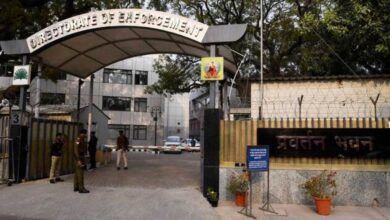
Two Private Jets, Six Plots And Windmills Among ₹510 Crore Assets Attached, ED’s Anil Ambani Group Probe Now Spans Six Companies And ₹23,100 Crore
The Enforcement Directorate's latest attachment of ₹510.17 crore in assets belonging to the Anil Ambani Group has pushed the cumulative value of assets attached or seized in its investigations to approximately ₹23,100 crore. Behind the mounting figure lies a sprawling probe into alleged bank fraud, fund diversion and money laundering across multiple group companies.

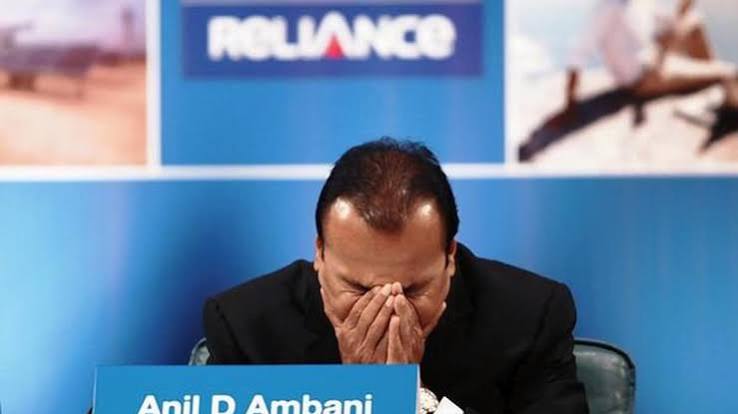
The Enforcement Directorate (ED) has provisionally attached fresh assets worth ₹510.17 crore belonging to companies associated with the Reliance Anil Ambani Group in connection with two separate bank fraud-linked money laundering investigations involving Reliance Communications (RCOM), Reliance Home Finance (RHFL) and Reliance Commercial Finance (RCFL).
The latest attachment comprises assets worth ₹247.12 crore in the RCOM investigation and ₹263.05 crore in the RHFL and RCFL cases.
In the RCOM case, the attached assets include two chartered aircraft, a Dassault Falcon 2000 (VT-AAT) and an Embraer EMB-135BJ (VT-OMM), six land parcels and an office premises in Maharashtra.
The RHFL and RCFL investigation has resulted in the attachment of two windmills in Tamil Nadu, alongside bank balances, fixed deposits, investments and receivables. With the latest action, the cumulative value of assets attached or seized across the ED’s investigations involving the group has reached approximately ₹23,100 crore under the Prevention of Money Laundering Act (PMLA) and the Foreign Exchange Management Act (FEMA).
The agency said its investigations, initiated on the basis of multiple FIRs registered by the CBI and the Economic Offences Wings of Delhi and Mumbai, cover six companies: RCOM, RHFL, RCFL, Reliance Infrastructure, Reliance Power and Reliance Capital.
The ED has alleged siphoning of public funds from banks and financial institutions, misuse of insolvency proceedings to ring-fence corporate assets for personal benefit and diversion of funds from India to offshore tax havens. It has reported 10 arrests, six prosecution complaints under PMLA and one complaint under FEMA.
The investigations involving Anil Ambani’s Reliance Group have gradually expanded beyond individual companies and loan defaults to encompass allegations of bank fraud, diversion of funds and money laundering across multiple corporate entities.
What initially emerged through complaints concerning Reliance Communications (RCOM), Reliance Home Finance (RHFL) and Reliance Commercial Finance (RCFL) has since developed into a wider investigation involving several group companies, multiple lenders and separate proceedings by the Central Bureau of Investigation (CBI) and the Enforcement Directorate (ED).
The ED’s investigation is being conducted through multiple Enforcement Case Information Reports (ECIRs), based on separate complaints and FIRs.
These include investigations concerning Reliance Power, RHFL and RCFL, and RCOM. The underlying cases involve allegations relating to loans extended by Yes Bank, the State Bank of India-led consortium, Union Bank of India and other financial institutions. Reliance Infrastructure and Reliance Capital have also featured in the broader investigation into the alleged movement of funds between group entities.
RHFL, RCFL And The Alleged Diversion Of Bank Funds
A significant part of the investigation centres on Reliance Home Finance and Reliance Commercial Finance, two non-banking financial companies that borrowed extensively from banks and financial institutions before accumulating substantial defaults.
The ED alleges that more than ₹11,000 crore raised by the two companies from lenders eventually turned into non-performing assets, with funds allegedly diverted to other entities within the Reliance Group through a network of shell companies, dummy entities and related-party transactions.
One of the key transactions under investigation involves Yes Bank’s investments in the two finance companies between 2017 and 2019. According to the ED, Yes Bank invested approximately ₹2,965 crore in RHFL and ₹2,045 crore in RCFL through non-convertible debentures and commercial papers. By December 2019, the outstanding amounts had fallen into default, with ₹1,353.50 crore remaining outstanding in RHFL and ₹1,984 crore in RCFL, according to the agency.
The ED has alleged that the transactions involved a circuitous movement of funds, with money received by Yes Bank from the erstwhile Reliance Nippon Mutual Fund allegedly being channelled into the two finance companies. The agency is examining whether this arrangement was used to circumvent restrictions on direct investments in connected entities. These allegations form part of the wider money-laundering investigation and remain subject to the ongoing legal process.
The agency has also alleged that funds raised by RHFL and RCFL were transferred to other group companies, including Reliance Infrastructure, Reliance Power, RCOM and Reliance Capital.
According to its investigation, several intermediary entities with limited financial capacity and little or no genuine business activity were allegedly used to route the money. The ED is examining whether these transactions were genuine commercial arrangements or mechanisms to move funds between interconnected companies.
The investigation also extends to RCOM, where the agency has alleged large-scale diversion and evergreening of loans. Its December 2025 disclosures referred to more than ₹13,600 crore in alleged loan evergreening and over ₹12,600 crore in transfers to connected parties. These figures relate to the RCOM investigation and should be distinguished from the separate RHFL and RCFL exposures.
The central question across these investigations is whether loans raised by the companies for legitimate business requirements were subsequently diverted through interconnected entities, leaving lenders with substantial unpaid dues. The CBI and ED are examining the transactions, the entities involved and the individuals who allegedly facilitated them.
Yes Bank, SBI, Bank of Baroda And The Banking Connection
The investigations into the Reliance Group’s financial dealings involve several banks that extended credit to its companies before reporting substantial defaults. While Yes Bank’s investments in RHFL and RCFL form a major part of the ED’s money-laundering probe, separate complaints by the State Bank of India (SBI), Bank of Baroda and other lenders have triggered investigations into Reliance Communications and its financing arrangements.
In the RCOM case, the CBI registered an FIR in August 2025 following a complaint by SBI, the lead bank of an 11-bank consortium, alleging wrongful losses of ₹2,929.05 crore.
The complaint concerns alleged diversion of loan funds, inter-company transactions, misuse of bill discounting facilities and transfers through related entities. The CBI subsequently filed its first chargesheet in May 2026, naming 16 accused, including RCOM, five company executives and 10 bank officials.
The chargesheet covered alleged irregularities involving SBI‘s ₹1,200 crore term loan, Bank of Maharashtra‘s ₹500 crore letter of credit and Syndicate Bank‘s ₹350 crore letter of credit.
A separate investigation was initiated in February 2026 following a complaint by Bank of Baroda, which alleged losses exceeding ₹2,220 crore involving loans extended by Bank of Baroda and its erstwhile associates, Vijaya Bank and Dena Bank. The CBI alleged that loan funds were diverted through fictitious related-party transactions and manipulation of RCOM’s books.
The account had been classified as a non-performing asset in 2017, while the bank’s fraud classification had faced legal proceedings before the complaint was registered.
The RHFL and RCFL investigations also extend beyond Yes Bank.
Union Bank of India, formerly Andhra Bank, and Bank of Maharashtra feature in separate lending complaints being examined by the agencies. Together, these cases have brought the lending practices, fund utilisation and financial reporting of multiple Reliance Group companies under scrutiny. However, the alleged losses in the individual complaints must be treated separately, as they arise from different lending arrangements and investigations.
From SEBI’s Findings To The ED’s ₹23,100 Crore Investigation
The regulatory scrutiny of the Reliance Group’s financial dealings predates the latest ED action. In August 2024, the Securities and Exchange Board of India (SEBI) barred Anil Ambani and 24 other entities from the securities market for five years following its investigation into Reliance Home Finance.
The regulator alleged that funds had been diverted from the company through connected entities and that the arrangements were used to conceal the company’s financial position. SEBI also imposed a penalty of ₹25 crore on Ambani. The order established a separate regulatory track that subsequently became relevant to the wider scrutiny of the group’s financial transactions.
The investigation has also brought insolvency proceedings under the Insolvency and Bankruptcy Code (IBC) into focus. In March 2026, the Supreme Court examined allegations presented by the ED concerning an arrangement referred to as Project Help.
According to the agency’s status report, claims of approximately ₹2,983 crore were allegedly settled for just ₹26 crore, with funding for insolvency acquisitions reportedly arranged through a group of eight non-banking financial companies.
The ED alleged that insolvency proceedings were misused to protect corporate assets and facilitate transactions benefiting connected parties. The Supreme Court directed the agencies to investigate the allegations, while making it clear that it was not expressing any opinion on their merits.
Meanwhile, the ED’s investigation has resulted in successive searches, arrests and provisional attachments involving residential properties, corporate holdings, financial investments and other assets. Its actions have extended to companies including Reliance Infrastructure, Reliance Power and RCOM, alongside the two finance companies. The agency has also reported 10 arrests and six prosecution complaints under PMLA, in addition to a separate FEMA complaint.
The latest action, announced on November 3, 2026, involves the provisional attachment of assets worth ₹510.17 crore, including two aircraft, six land parcels, an office property and two windmills, taking the cumulative value of assets attached or seized across the group’s ED investigations to approximately ₹23,100 crore.
The Investigation Is Far From Over
The latest attachment of ₹510.17 crore marks another expansion of the Enforcement Directorate’s investigation into the Reliance Anil Ambani Group, taking the cumulative value of assets attached or seized to approximately ₹23,100 crore. With multiple companies, lenders and financial transactions under scrutiny, the investigation now extends well beyond the original bank default cases involving RCOM, RHFL and RCFL.
The ED’s allegations of fund diversion, misuse of insolvency proceedings and offshore transfers are being examined through separate legal proceedings, while the CBI continues to investigate the underlying bank fraud complaints.
For Anil Ambani, the expanding investigations represent mounting legal and financial pressure, with multiple group companies, past borrowing arrangements and alleged fund diversions all under scrutiny.
The growing scale of asset attachments, alongside continuing CBI and ED proceedings, also raises questions about the future of the group’s remaining businesses and its ability to resolve outstanding obligations.