THE AMERICAN DREAM SOLD AS A ₹60-LAKH PACKAGE: ₹30.38-CRORE CASH TRAIL, 414 TRANSACTIONS, 5.9 KG GOLD, 313 KG SILVER AND THE ARREST OF DELHI-BASED TARUN KHOSLA — INSIDE THE ALLEGED INTERNATIONAL DUNKI ROUTE NETWORK
How an alleged illegal immigration syndicate turned desperation for an American future into a highly lucrative cross-border business; ED's investigation exposes alleged international facilitators, suspicious cash movements, forged travel documents, foreign handlers and a network that allegedly charged ordinary Indians tens of lakhs to navigate dangerous routes to the United States.

There is perhaps no more cynical way of exploiting an ordinary Indian family’s aspirations than selling its dream of a better future, collecting tens of lakhs of rupees, and allegedly sending its members on an illegal, dangerous and potentially life-threatening journey across continents.
For thousands of families in Punjab, Haryana and other parts of India, travelling to the United States is not merely a holiday aspiration. It represents an opportunity to escape economic limitations, secure a better livelihood, repay family debts and build a future that may appear impossible at home. Unfortunately, this aspiration has also created a lucrative market for immigration intermediaries, unscrupulous agents and alleged international trafficking networks.
The latest developments in the Enforcement Directorate’s (ED) investigation into the infamous Dunki Route business have brought the alleged mechanics of this operation into sharp focus.
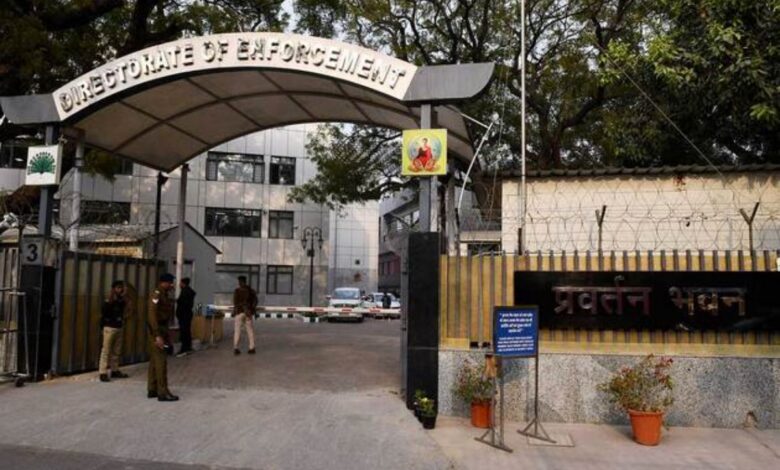
The arrest of Delhi-based ticketing and travel agent Tarun Khosla on 23 October 2026 by the ED’s Jalandhar Zonal Office under the Prevention of Money Laundering Act (PMLA), 2002, has raised serious questions about the alleged financial and operational architecture of the network.
And the numbers disclosed by the investigating agency are difficult to dismiss as an ordinary immigration consultancy’s routine business activity.
According to the ED’s press release dated 27 October 2026, investigators identified cash deposits amounting to ₹30.38 crore through 414 cash-credit transactions in the bank account of Tarun Khosla’s proprietorship firm, M/s BJ International, during financial years 2022–23 to 2024–25.
The investigation further attributes to premises associated with Tarun Khosla the seizure of approximately ₹4.62 crore in cash, gold bars and coins weighing approximately 5.9 kilograms, and silver bars weighing approximately 313 kilograms, with the total value of the seized assets stated at approximately ₹19.14 crore.
The ED alleges that Tarun Khosla was not merely arranging ordinary air tickets. It describes him as a key facilitator and decision-maker in an alleged international network, with responsibilities extending to visa arrangements, ticket bookings, foreign airport coordination, immigration-clearance facilitation, payment coordination and liaison with overseas handlers.
The allegations are grave. The financial figures are substantial. The geographical footprint is international.
And the most important question is no longer merely how people were allegedly sent to the United States through these routes. It is how such an elaborate operation allegedly functioned across multiple jurisdictions, generated substantial cash flows and depended upon an interconnected chain of domestic and overseas intermediaries.
The investigation must now answer those questions with evidence, not merely press releases.
The investigation began with deportation flights — but the alleged business was much bigger than illegal immigration
The ED’s investigation is rooted in multiple FIRs registered by Punjab Police and Haryana Police following the deportation of Indian nationals from the United States in February 2025.
The deportations exposed an extensive illegal migration problem. Individuals who had allegedly paid immigration agents substantial sums to reach America through supposedly legitimate arrangements were instead found to have travelled through irregular routes involving multiple South and Central American countries.
The ED’s October 2026 press release refers to more than 300 Indian nationals deported in February 2025. Its earlier press release dated 19 December 2025 specifically referred to 330 deportees. There is, however, a numerical distinction worth recording: the Ministry of External Affairs informed Parliament that 333 Indian nationals were directly deported from the United States on three flights landing on 5, 15 and 16 February 2025. Another 55 arrived through Panama on commercial flights, taking the total deported since January to 388 in the government’s response. These figures describe different categories of deportation and should not be casually interchanged.
The scale of the problem was already evident from Punjab Police’s investigations in February 2025. An investigation published by The Indian Express on 27 February 2025 reported that police had registered 19 FIRs based on deportees’ statements. Those FIRs referred to journeys through at least 32 countries.
The report identified 36 agents, their aides and family members as having been booked in those 19 FIRs. It further reported that 19 deportees had collectively paid ₹7.89 crore to agents. Preliminary information collected by the Punjab government, including unregistered complaints, placed the estimated amount paid to these agents at approximately ₹44.70 crore.
These were not small transactions involving ordinary travel consultancy charges. Families were reportedly selling agricultural land, mortgaging properties, borrowing money and exhausting lifetime savings to finance journeys to America.
Consider the sheer absurdity of the alleged business model.
A family would hand over tens of lakhs to an agent, often through intermediaries. The family believed it was purchasing an opportunity to migrate legally. The investigation, however, suggests that the arrangements could involve transit visas, multiple countries, overseas handlers, illegal border crossings, additional demands for money and considerable physical danger.
An enterprise that allegedly markets itself as an immigration solution can, in reality, become a nightmare for the people who pay for it.
The ED has specifically stated that its investigation revealed instances in which migrants were allegedly tortured, extorted for additional money and made to undertake illegal activities during their journeys. These are allegations arising from the investigation and require victim testimony, documentary evidence and judicial examination.
The alleged international architecture: Not a ticket-booking operation, but an end-to-end migration chain
The ED’s description of the network is particularly significant because it identifies several different categories of alleged facilitators.
The investigation refers to travel agents, middlemen, local donkers, overseas associates, hawala operators, and individuals providing accommodation and logistical assistance.
The distinction matters.
A conventional travel agency books tickets and facilitates legitimate journeys. It does not ordinarily require an organised chain of foreign handlers to move passengers across several national borders outside immigration law.
The ED’s case is that the alleged operation was structured around the coordination of different activities at different stages of the journey. Indian agents allegedly identified and recruited prospective travellers, collected their money and passports, and passed their details to other intermediaries. International contacts allegedly coordinated transit arrangements and the subsequent movement of passengers towards the US-Mexico border.
In such a system, the domestic agent, international facilitator, ticketing intermediary, visa arranger and border-crossing handler may perform different functions. Yet the entire operation can depend on the coordination of all of them.
That is precisely why identifying one person and conducting a few searches cannot constitute the end of the investigation.
The ED must establish who recruited the passengers, who received their money, who arranged their documents, who financed the foreign handlers, who coordinated their movement and who ultimately retained the profits.
The alleged international network cannot be dismantled merely by arresting an intermediary in Delhi while leaving its overseas infrastructure unexplored.
ED’s own route diagram exposes the scale of the alleged operation
One of the most revealing elements of the 27 October 2026 press release is the geographical diagram reproduced on its second page.
The diagram describes three different routes associated with the investigation.
The first route involves air travel to El Salvador, followed by road travel to Mexico and Tijuana before an attempted entry into the United States. The ED’s diagram puts the indicative cost of this route at approximately ₹35 lakh to ₹40 lakh per person.
The second route involves transit through Dubai or Addis Ababa to Guyana, followed by a journey involving Brazil, Ecuador, Colombia, the Panama jungle, Guatemala, Mexico and Tijuana. The indicative price stated in the diagram is approximately ₹25 lakh to ₹30 lakh per person.
The third route describes a deportee’s journey through Guyana, Brazil, Bolivia, Peru, Colombia, Panama, Costa Rica, Nicaragua, Honduras, El Salvador, Guatemala and Mexico, before reaching the US border.
The third route is expressly described in the diagram as a journey recounted by a deportee. It should not be misrepresented as proof that every passenger followed it or that every leg was personally arranged by Tarun Khosla.
Nevertheless, the geographical spread demonstrates the extraordinary complexity of the routes being examined. These are not short trips with a slightly altered itinerary. They involve numerous international jurisdictions, air and ground transportation, border crossings, foreign intermediaries and potentially dangerous transit corridors.
The ED’s broader investigation states that prospective travellers were allegedly charged approximately ₹30 lakh to ₹60 lakh.
The route-specific figures in its diagram range from ₹25 lakh to ₹40 lakh. These figures are not necessarily contradictory because the general figure could cover different routes and individual arrangements, but the agency should publish a clearer transaction-wise account of the pricing structure.
What is particularly disturbing is that people were allegedly paying luxury-car money for journeys that offered no lawful certainty of entry, no genuine guarantee of immigration clearance and no protection against exploitation.
The money was substantial. The risk was extraordinary. The promised outcome was precarious.
Tarun Khosla: The alleged Delhi-based facilitator and the role attributed to him by ED
The most consequential part of the investigation concerns the role attributed to Tarun Khosla.
According to the ED, agents operating in Punjab and Haryana used to collect the passports and money of individuals wishing to travel to the United States and hand them over to Tarun Khosla in Delhi.
The ED alleges that Tarun Khosla subsequently arranged visas and air tickets to transit countries in South America, including Guyana, Suriname, Ecuador and El Salvador.
His alleged responsibilities, however, were not limited to booking tickets.
The agency describes him as a key decision-maker who allegedly determined the routes and pricing for individual passengers. It further alleges that he facilitated the movement of individuals towards the US border through illegal and dangerous routes, working with foreign handlers.
This distinction is central to the investigation.
The ED is not merely examining whether a ticketing agent booked an ordinary international flight. It is investigating whether travel arrangements were allegedly being used as an operational component of a larger illegal migration network.
The agency’s description places the alleged facilitator in Delhi at an important intersection between the domestic collection of money and passports and the international coordination of travel and onward movement.
If this operational role is established through admissible evidence, the investigation would have to examine not only the transactions but also the decision-making structure, the instructions given to intermediaries and the distribution of money across the network.
The alleged fake documents: Immigration stamps, visas and yellow fever certificates
Another particularly serious dimension concerns the documentation allegedly used in the operation.
The ED’s earlier searches on 9 and 11 July 2025 covered 19 locations. The agency reported recovering incriminating documents, records, digital devices, bogus immigration stamps and bogus visa stamps relating to Nicaragua and Ethiopia.
The October 2026 press release further alleges that arrangements included visa clearances for South American countries and the procurement of fake or forged yellow fever vaccination certificates.
These allegations merit much closer examination.
International travel involves several checks, including passport verification, visa requirements, health documentation where applicable, airline boarding procedures and immigration scrutiny. A journey involving several transit countries creates multiple points at which documentary irregularities may arise.
The obvious questions are: Who allegedly prepared the documents? Who supplied them? Where were they produced? Which travel records were used? Were the passengers knowingly carrying false certificates, or were they misled into believing the documentation was genuine?
And when the ED refers to the coordination of visa clearances, what exactly does it mean by clearance? Did the alleged intermediaries arrange legitimate visas and then exploit them to facilitate onward illegal migration, or were forged documents allegedly used at particular stages?
These are questions of evidence, not speculation.
The investigating agency must obtain the original documents, verify their authenticity with the relevant foreign authorities and establish who arranged, paid for and supplied them. Merely recovering a bogus stamp does not establish the identity or culpability of everyone who may have handled the relevant travel documents.
The mobile-phone chats: ‘Mike’, ‘Ali’, ‘Kristi’ and the alleged foreign connection
Perhaps the most significant investigative lead in the October 2026 press release concerns digital communications reportedly recovered from seized mobile phones.
The ED states that the data revealed chats suggesting that Tarun Khosla acted as an immigration-clearance fixer.
The press release refers to communication with an international contact and coordination at foreign airports. It describes the collection of money for immigration clearance, ticket arrangements, passenger handling, payments in US dollars and instructions concerning “OK to Board” endorsements.
The ED also identifies three overseas contacts by the names or aliases appearing in the communications: “Mike” in Mexico, “Ali” in Brazil and “Kristi” in Mexico.
According to the agency, these individuals were associated with managing the donkers involved in crossing passengers through the alleged route and coordinating the associated payments.
These are important allegations because they point towards a possible division of responsibilities between India-based agents and foreign-based handlers.
The ED also alleges that coordination involved airline and immigration personnel. That statement requires careful and particularly rigorous investigation.
An instruction concerning an airline boarding endorsement does not, by itself, prove that an airline employee or an immigration official knowingly participated in criminal activity. The agency must identify the actual individuals, communications, instructions, payment records and circumstances surrounding each alleged clearance arrangement.
The investigative burden is to distinguish legitimate professional processes from any deliberate misuse of those processes.
The names “Mike”, “Ali” and “Kristi” are not sufficient to establish identities or criminal culpability. Their real identities, locations, financial connections and roles must be established through digital forensics and international cooperation.
If an international network was operating as alleged, the investigation must not stop at three nicknames in a mobile-phone extraction report. It must establish the complete chain of beneficiaries and facilitators.
That is the difference between documenting a conspiracy and dismantling one.
₹30.38 crore in cash deposits: The financial trail that demands answers
The most financially significant disclosure in the ED’s press release concerns M/s BJ International, the proprietorship firm identified with Tarun Khosla.
According to the ED, investigators identified ₹30.38 crore in cash deposits through 414 cash-credit transactions between FY 2022–23 and FY 2024–25 in the firm’s bank account.
This is not a figure that should be buried in the middle of a routine enforcement announcement.
It deserves a complete financial investigation.
A simple calculation puts the scale into perspective. If the reported deposits are averaged across 414 transactions, the average transaction value works out to approximately ₹7.34 lakh. Across the three financial years, the average annual cash deposits would be approximately ₹10.13 crore.
These are mathematical averages derived from the ED’s reported figures, not additional findings of the agency.
The important question is where this cash originated, who deposited it, why the transactions were structured in cash, how they were recorded in the firm’s books and whether the amounts correspond to passengers, intermediary agents, foreign associates or other commercial activities.
More importantly, how much of this money, if any, can be traced to the alleged illegal immigration business?
The ED’s press release does not provide a transaction-wise explanation or establish that every rupee deposited in the account was proceeds of crime. That distinction must be maintained. Nevertheless, the disclosed volume makes a detailed examination of the account essential.
Investigators should reconcile the deposits against invoices, airline ticket purchases, passenger records, visa applications, tax returns, GST records, income disclosures, banking statements and the identities of cash depositors.
They should also establish whether the money was subsequently withdrawn, transferred to other entities, paid to overseas intermediaries or converted into assets.
A business account receiving ₹30.38 crore through 414 cash-credit transactions over three financial years deserves more than a superficial examination of its ledger.
The question is not merely how much money entered the account. The question is what economic activity generated it and where it ultimately went.
Until this trail is reconstructed, the financial architecture of the alleged operation remains only partially exposed.
₹4.62 crore cash, 5.9 kg gold and 313 kg silver: What exactly was recovered?
The December 2025 searches had already raised serious questions about the scale of the assets found during the investigation.
In its press release dated 19 December 2025, the ED reported that searches at 13 locations across Punjab, Haryana and Delhi had resulted in the recovery and seizure of substantial amounts of cash and precious metals.
The agency’s reported inventory included cash of ₹4.68 crore, approximately 5.9 kg of gold bars valued at ₹8.07 crore, gold coins weighing approximately 20 grams valued at ₹2.7 lakh, and approximately 313 kg of silver bars valued at ₹6.42 crore.
The cumulative value disclosed in that release was approximately ₹19.20 crore.
The ED’s subsequent press release dated 27 October 2026 specifically states that cash of approximately ₹4.62 crore, gold bars and coins weighing approximately 5.9 kg, and silver bars weighing approximately 313 kg, with a total value of approximately ₹19.14 crore, were seized from the premises of Tarun Khosla.
That is a substantial recovery.
There is an important distinction between the two official disclosures: the earlier December statement describes the aggregate search operation across multiple locations, while the later statement specifically attributes the ₹4.62 crore cash and precious-metal recovery to Tarun Khosla’s premises. The difference between the two cash figures should therefore be reconciled through the underlying seizure inventories rather than automatically treated as an inconsistency.
The 2026 release also states that more than 50 original passports belonging to third parties, diaries, transaction records, property documents and digital devices were recovered from other premises.
It would be incorrect to claim that all those passports were recovered from Tarun Khosla’s residence. The ED expressly distinguishes those recoveries from the seizures at his premises.
Nevertheless, the presence of hundreds of kilograms of silver, several kilograms of gold and crores in cash in the searches is a significant investigative development.
It raises legitimate questions regarding the ownership, acquisition, source of funds, accounting treatment and beneficial ownership of the seized assets.
Were these accumulated from declared business income? Were they purchased through banking channels? Were invoices, purchase agreements and tax records available? Were the assets held for personal investment or on behalf of other individuals? Were any assets connected to the alleged overseas network?
These questions cannot be answered merely by publishing the estimated market value of seized property.
The ED must investigate the acquisition history and financial provenance of every major asset. If any asset is ultimately established to represent proceeds of crime, the appropriate legal processes for its confiscation must follow.
A seizure is an investigative step. It is not a judicial determination that the seized property is criminally derived.
That is precisely why forensic financial investigation and a defensible prosecution case are necessary.
An important distinction: The ₹5.41 crore property attachment involved other agents
There is another detail that deserves clarification because the various ED announcements can easily be misunderstood.
On 15 December 2025, the ED announced the provisional attachment of movable and immovable properties worth approximately ₹5.41 crore.
The agency specifically identified three individuals in that attachment announcement: Shubham Sharma, Jagjit Singh and Surmukh Singh.
The attached assets reportedly included agricultural land, residential and business premises and bank account balances held in the names of the agents and their family members.
The ED described those assets as representing or being equivalent to proceeds of crime allegedly generated through illegal immigration activities.
This ₹5.41 crore attachment should not be represented as an attachment against Tarun Khosla. The official attachment announcement identifies the three other agents. Tarun Khosla’s connection to the investigation is separately documented through the searches, seizures, financial trail and October 2026 arrest.
This distinction is important for investigative accuracy.
At the same time, the attachment shows that the ED’s investigation was examining a wider group of alleged facilitators rather than a single Delhi-based operator.
The agency should publish a comprehensive, updated account of the properties attached, the individuals against whom attachments have been made, and the financial links, if any, established between different accused persons.
An international network cannot be understood by examining individual bank accounts in isolation.
The earlier legal challenge by Tarun Khosla: What happened before the Delhi High Court?
There is also a significant earlier court proceeding involving Tarun Khosla himself that merits examination.
On 7 August 2026, the Delhi High Court passed an order in Tarun Khosla v. Union of India & Others, W.P. (CRL.) 797/2026, concerning proceedings under the PMLA.
The petition sought the quashing of ED’s Original Application No. 32/2026 dated 16 January 2026, the recording of reasons dated 5 February 2026 under Section 8(1) of the PMLA, and a show-cause notice dated 6 February 2026.
The principal contention raised on behalf of Tarun Khosla was that the search and seizure proceedings were not conducted in accordance with Section 17(4) of the PMLA because the relevant Original Application had not been filed by the officer who conducted the search and seizure.
The ED disputed that contention.
The High Court recorded that a final order had been passed during the pendency of the writ petition and that the final order was already under challenge before the statutory appellate authority under Section 26 of the PMLA.
Tarun Khosla’s counsel then sought permission to withdraw the writ petition without prejudice to the arguments and grounds raised, so the statutory appellate authority could first decide the issue.
The High Court disposed of the petition as withdrawn and directed the appellate authority to decide the appeal expeditiously, including the objection relating to Section 17(4). All objections and contentions were expressly left open.
This judicial proceeding is particularly relevant because it establishes that Tarun Khosla had previously challenged aspects of the ED’s search-and-seizure process before the October arrest.
However, the legal position must be accurately stated.
The Delhi High Court did not declare the ED’s search illegal. It also did not reject Tarun Khosla’s contention on merits. The petition was withdrawn so that the statutory appellate authority could decide the disputed issue in the first instance.
It is therefore incorrect to portray the August order either as a clean chit to Tarun Khosla or as a judicial endorsement of every ED action.
The status and outcome of the statutory appeal should be transparently disclosed. The issue deserves adjudication on its merits.
Investigative agencies must act firmly, but their actions must also withstand judicial scrutiny. Strong enforcement and due process are not competing objectives.
The wider Dunki Route cases: Other investigations have already exposed human-trafficking allegations
The ED’s investigation involving Tarun Khosla is not the only major enforcement action arising from the illegal migration network exposed after the February 2025 deportations.
The National Investigation Agency has separately investigated an illegal human trafficking case registered as RC-04/2025/NIA/DLI, originating from Punjab Police FIR No. 95/25 dated 18 February 2025 at Police Station Goindwal, Tarn Taran.
That investigation concerns a complaint by Gursewak Singh, who allegedly paid ₹45 lakh to an agent, Gagandeep Singh alias Goldy, to secure entry into the United States.
According to the Punjab and Haryana High Court’s order dated 24 March 2026 in appeals arising from the NIA case, Gursewak travelled through Spain, El Salvador, Guatemala and Mexico, was allegedly physically assaulted by foreign handlers, had money taken from him and was eventually apprehended by US Border Patrol before being deported to India on 15 February 2025.
The NIA subsequently arrested Gagandeep Singh alias Goldy in March 2025.
On 2 October 2025, the NIA announced that it had chargesheeted two additional accused, Sunny of Dharamshala and Shubham Sandhal alias Deep Hundi of Delhi.
The NIA described Sunny as an alleged donkar who had been based in Mexico between 2021 and 2023 and allegedly coordinated illegal border crossings and the unlawful detention of victims. The agency also described Shubham Sandhal as a Delhi-based hawala agent allegedly facilitating the movement of funds between India, Mexico and the United States.
The NIA stated that its investigation had identified coordination involving both bank transfers and hawala payments.
The developments in that separate case are significant because they illustrate the kind of operational and financial structure that investigators have alleged in other Dunki Route prosecutions.
However, the distinction must be maintained: the NIA case involving Gagandeep Singh, Sunny and Shubham Sandhal is a separate proceeding. The available records reviewed do not establish that Tarun Khosla was an accused in that particular NIA case or that all the accused in the separate proceedings were part of one common conspiracy.
Nor should Shubham Sandhal be confused with Shubham Sharma, who was named in the ED’s separate ₹5.41 crore attachment announcement.
A serious investigation must establish actual connections through evidence rather than similarities in names, geography or methods.
The Punjab and Haryana High Court’s March 2026 order
The wider network has also attracted judicial attention.
On 24 March 2026, the Punjab and Haryana High Court dismissed regular-bail appeals filed by Gagandeep Singh alias Goldy and Shubham Sandhal alias Deep Hundi in the separate NIA case.
The order discusses the prosecution’s allegations concerning victims, witness statements, banking transactions and the alleged hawala arrangements. It refers to 133 witness statements recorded during the investigation and financial transactions examined by the NIA.
The court considered the seriousness and international dimensions of the allegations while declining regular bail. Importantly, it expressly recorded that its observations would not affect the merits of the trial.
This is not a conviction. It is a bail-stage judicial order in a separate case.
The lesson from these proceedings is that illegal migration networks cannot be effectively investigated as isolated ticket-booking complaints. Their financial, operational and international components require coordinated investigation.
Arrest on 23 October 2026: Seven days of ED custody, followed by judicial custody
After an investigation lasting more than a year, the ED arrested Tarun Khosla on 23 October 2026 under the PMLA.
He was brought from Delhi on transit remand and produced before a Special PMLA Court in Jalandhar. The court granted the investigating agency seven days of custody, extending until 30 October 2026.
Subsequently, Dainik Jagran reported on 30 October that the court sent him to judicial custody after the completion of the ED remand.
The arrest represents a significant development in the investigation, but it also places an additional responsibility on the agency: the evidence gathered during the investigation must now be converted into a coherent, legally sustainable prosecution case.
The ED’s press release concludes that further investigation is underway.
That statement should not become an excuse for an indefinitely expanding investigation without measurable progress. The public deserves to know whether the agency has identified additional agents, traced the foreign payments, established the beneficial ownership of the seized assets and identified the people who allegedly financed and operated the international network.
An arrest is an important step. It is not the finish line.
The unanswered questions that the investigation must confront
The disclosures so far raise several substantial investigative questions.
First, the ED must establish the complete source of the ₹30.38 crore deposited into BJ International’s bank account. Every substantial cash-credit entry should be examined, including the identity of the depositor, the underlying commercial transaction, the corresponding invoice or travel arrangement and the ultimate recipient of the money.
Second, the agency must identify the people allegedly operating the domestic collection network. The individuals collecting passports and money in Punjab and Haryana cannot remain anonymous links in an investigation of this magnitude. Their financial relationships with the Delhi-based facilitator and other intermediaries need to be established.
Third, the identities of the foreign handlers must be verified. “Mike”, “Ali” and “Kristi” are only the names or aliases referred to in the ED’s press release. Investigators must establish their actual identities, locations, communications, financial accounts and respective responsibilities.
Fourth, the alleged use of forged immigration stamps, visa stamps and vaccination certificates requires examination through the relevant foreign embassies, immigration authorities and public health authorities. Investigators should establish where these documents originated and who prepared and supplied them.
Fifth, the references to “OK to Board” endorsements and coordination with airline and immigration personnel require a detailed audit. Passenger name records, booking histories, ticket payment records, boarding endorsements, travel dates, airport communications and relevant immigration records must be preserved and examined. Any allegation of official involvement must be supported by evidence rather than broad insinuation.
Sixth, the more than 50 third-party original passports recovered from other premises deserve separate investigation. The ED should establish the identities of their owners, how those documents came into the possession of the people from whose premises they were recovered, whether the owners are victims or witnesses, and whether their passports were used for any illegal purpose.
Seventh, the seized gold, silver and cash must undergo a proper financial provenance investigation. Asset ownership, acquisition history, payment instruments, tax disclosures and the possibility of beneficial ownership by other persons should be examined.
Finally, investigators must establish whether the alleged network was connected to additional countries, intermediaries and financial channels beyond those identified in the first round of investigation.
These are not peripheral questions. They go directly to the heart of the alleged operation.
The bigger failure: Why did an alleged international network become visible only after deportations?
The story also raises uncomfortable questions about the regulatory and enforcement framework governing immigration consultancy and international travel facilitation.
Illegal migration is not a new phenomenon. Nor is the exploitation of individuals who are desperate to relocate abroad.
The February 2025 deportations exposed the human consequences of this business. The subsequent Punjab and Haryana Police investigations, ED searches and NIA proceedings demonstrated that the problem was not limited to a few individuals making false promises.
There were alleged domestic agents, overseas contacts, financial intermediaries and people facilitating different stages of the journey.
The authorities must now examine how these operations were advertised, how passengers were recruited, how payments were collected, how passports were handled, and how the alleged arrangements escaped meaningful scrutiny for extended periods.
There should be no confusion between lawful immigration consultancy and illegal migration facilitation. Legitimate businesses should not be tarnished by allegations against particular operators. At the same time, the respectable vocabulary of consultancy, ticketing and visa assistance cannot be used as a protective cover for criminal activity if the evidence establishes deliberate facilitation of illegal migration.
The regulatory authorities should also examine whether entities or individuals were operating without the required permissions or registrations, whether their public representations were misleading, and whether their actual transactions corresponded with their declared business activities.
The Income Tax Department, GST authorities, banking regulators and relevant law-enforcement bodies should examine matters falling within their respective jurisdictions.
The purpose must not be to produce another round of sensational raids. It must be to identify the entire financial and operational structure, establish accountability and prevent the same business model from resurfacing under different names.
Enforcement agencies must move beyond headline-grabbing arrests
The ED has already announced substantial seizures, provisional attachments involving other alleged agents, recoveries of suspicious travel documents, digital evidence and an arrest in the case.
The Punjab Police have registered multiple FIRs. The NIA has separately prosecuted accused individuals in an illegal human-trafficking investigation.
Yet the larger question remains: how many victims have received meaningful justice, how much money has been traced, how many overseas facilitators have been identified, and how much of the alleged international network has actually been dismantled?
An effective investigation should produce more than a long list of seizures.
There must be a time-bound effort to identify every beneficiary, every intermediary and every financial channel. International cooperation should be pursued wherever the evidence points to foreign-based handlers. The investigation should use available lawful mechanisms for obtaining foreign banking records, immigration information, digital communications and travel documentation.
Victims and their families should be encouraged to provide statements and supporting financial documents without fear of intimidation. Their identities and personal information must be protected where legally appropriate.
Where financial recovery is legally permissible, the authorities should pursue restitution and compensation through the appropriate judicial mechanisms.
Most importantly, prosecution complaints and chargesheets must be filed within the applicable statutory framework once the evidence is ready. The matter should then receive effective case management and an expeditious trial before the competent court.
There is no public interest in allowing cases involving alleged exploitation of hundreds of people to disappear into years of procedural delay.
The judicial system must move quickly without compromising the accused’s right to a fair trial. Speedy justice means both an effective prosecution and a fair opportunity to defend against the allegations.
The uncomfortable financial question: Who ultimately profited from the American dream?
The ED’s disclosures suggest that the alleged operation was not simply about transporting individuals from one country to another.
The alleged charges of ₹30 lakh to ₹60 lakh per person, the ₹30.38 crore cash deposits in BJ International’s account, the seizure of cash and precious metals, and the communications reportedly recovered from mobile phones collectively create a substantial investigative picture.
But they do not yet answer the ultimate financial question.
Who received the money at the end of the chain?
Was the money retained by domestic agents? Was it divided among overseas intermediaries? Were hawala operators used? Were payments made to the people who allegedly managed border crossings? Did any part of the money enter property transactions or other investments?
The ED must establish the actual movement of funds rather than relying solely on cash deposits and asset seizures.
It should also determine whether other persons were beneficial owners of the funds and assets under investigation.
An alleged network that operates across countries may have multiple financial beneficiaries, and identifying only the person who handles tickets or coordinates transit arrangements could leave the larger financial structure intact.
That would be an incomplete investigation.
A final demand: Investigate the entire network, prosecute the guilty and deliver justice to the victims
The alleged Dunki Route business represents an especially disturbing form of exploitation because its potential victims are often people who have placed their entire financial future in the hands of immigration intermediaries.
A person who pays ₹30 lakh, ₹40 lakh or ₹60 lakh to reach the United States is not merely purchasing an air ticket. In many cases, that money represents years of savings, family property, borrowed capital and enormous personal sacrifice.
For such people, the promise of a better future can become a financial and physical nightmare.
The ED’s investigation into Tarun Khosla must therefore be pursued with the seriousness that the alleged scale and international dimensions of the case demand.
The agency should establish the complete financial trail of BJ International, identify all domestic and foreign intermediaries, verify the seized documents, investigate the alleged forged certificates, trace the overseas payments and determine whether other persons benefited from the alleged operation.
Punjab Police and Haryana Police must coordinate effectively with the ED and NIA wherever their respective investigations intersect, without confusing separate cases or attributing allegations across proceedings without evidence.
The investigation must not end with the arrest of one Delhi-based facilitator, just as the recovery of cash and precious metals must not be mistaken for the recovery of the entire alleged proceeds of crime.
India needs convictions based on credible evidence, not merely arrests followed by prolonged investigations. It needs a dismantled network, not another temporary disruption. It needs accountability for those who allegedly profited from human desperation, not another case that slowly disappears into the machinery of delayed justice.
The American dream should not become a business in which Indian families pay lakhs, surrender their passports and ultimately find themselves navigating dangerous jungles, foreign detention facilities and deportation flights.
And those who allegedly convert that dream into a lucrative illegal migration enterprise must face a thorough investigation, a fair but speedy trial and the full consequences of the law if their guilt is established.
The question before the enforcement agencies is straightforward: Will they expose the entire alleged international network, follow every rupee and identify every beneficiary, or will the case end with one arrest and another collection of impressive seizure figures?
The country deserves an answer.