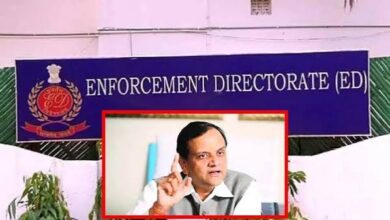
From Unproven Defamation To FIR And Extortion: What More Nitin Naresh Will Have To Face To Discharge His Duty Of Independent Journalism?

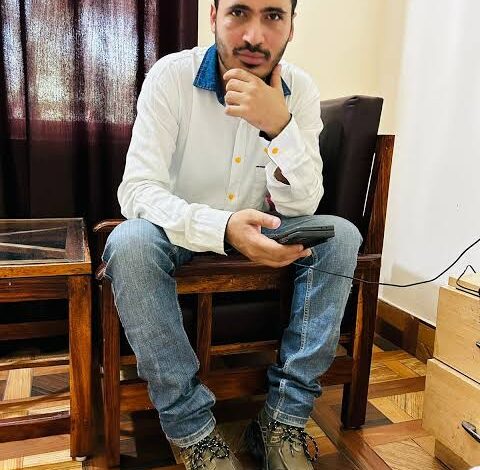
The legal machinery being deployed against independent journalist Nitin Naresh has little to do with genuine reputational injury and everything to do with silencing uncomfortable questions.
Ankiti Bose and Krishan Rattan, the faces behind Terra Invest, have turned to a battery of civil suits, interim restraints and a criminal FIR over a laughably small ₹11,700 cash deposit. The message is clear: dig into their past, and the cost of asking will be made higher than the value of the truth.
Start with the record that Ankiti Bose would prefer remains buried. In March 2022 she was suspended as CEO of Zilingo. By May she was terminated “with cause” after a Kroll forensic investigation into serious financial irregularities. Public reporting pointed to more than US$7 million in questionable vendor payments, revenue-recognition discrepancies and accounting practices that left the board and investors alarmed. Cumulative losses ran into the hundreds of millions. The company later collapsed into liquidation.
Ankiti Bose has always denied wrongdoing and claimed she was denied full access to the reports. Those reports have never been placed fully in the public domain. That silence is not neutral. It is convenient.
Nearly two years later, in April 2024, Ankiti Bose walked into a Mumbai police station and filed an FIR against her former co-founder Dhruv Kapoor and former COO Aadi Vaidya. The allegations included sexual harassment, stalking and a demand for sexual favours linked to her continued role as CEO in 2021. Kapoor and Vaidya rejected the claims as retaliatory.
The FIR has produced no charge sheet and no judicial finding on the merits. A separate GST criminal complaint against Ankiti Bose, Zilingo Global and others has since been added to the pile. These are not ancient history. They form the backdrop against which any serious journalist must examine her current ventures. Pretending otherwise is simply narrative management.
Instead of answering the questions, Ankiti Bose and Krishan Rattan have chosen litigation as strategy. Ankiti Bose first secured an ex-parte injunction from the Dwarka District Court in June 2026. When further articles appeared, she filed a fresh suit in the Delhi High Court.
On 24 August 2026 the court restrained social-media circulation of specified pieces and further publications that might interfere with her legal rights. Rattan followed with his own suit. On 14 September the High Court restrained further “defamatory imputations” against him, while carefully noting that the order did not prevent continued fact-finding into the allegations. That carve-out is important. It is also inconvenient for anyone hoping the courts would simply shut the investigation down.
The same day Krishan Rattan obtained his restraint, an FIR was registered in Jaipur. The complainant, Aniruddh Saran Purohit, claiming to represent Terra Invest in India, alleged threatening emails and a demand for money. The centrepiece was a cash deposit of ₹11,700 into an account linked to Inventiva’s company. Naresh has denied sending the emails and raised the possibility of impersonation. On 28 October a Jaipur sessions court rejected his anticipatory bail application. That is a procedural setback. It is not a finding of guilt. It is not proof that he authored the communications. And the sum involved, ₹11,700, raises the obvious question of whether this complaint is proportionate justice or tactical pressure.
Meanwhile, in the parallel BPTP matter, the company produced a roughly twelve-minute telephone recording claimed to contain an extortion demand. Nitin Naresh denied the conversation and pointed to the ease with which AI can now clone and modulate voices. The Delhi High Court did the only responsible thing: it ordered the recording, the original device and hash-value verification sent to the CFSL attached to CBI Headquarters. Until that forensic report is in, neither side’s version can be treated as established. In an age of synthetic media, courtroom theatrics with disputed audio are no substitute for science.
What we are watching is not a level contest between reputation and free speech. It is a resource mismatch. An independent digital publisher Nitin Naresh absorbs legal costs, compliance burdens, High Court appearances and the threat of criminal process in another state. A well-funded investment platform and its founders can absorb the same costs as a line item. Multiple overlapping proceedings create a chilling effect even when each individual order is formally interim. The right to reputation matters. So does Article 19(1)(a). Courts must protect both. They cannot allow the machinery of litigation to become a tool for pricing independent scrutiny out of existence.

An interim injunction is not a verdict that the journalist invented facts. An FIR is not a conviction. A rejected anticipatory bail application is not proof of extortion. A disputed recording is not conclusive until forensically tested. The public interest lies in insisting on these distinctions rather than treating every legal setback for Naresh as validation of the complainants’ broader narrative.
Independent journalism that examines powerful commercial interests will always generate friction. The real test is whether that friction is resolved through evidence, due process and proportionate remedies, or whether it is resolved by making the cost of asking questions higher than the cost of staying silent. The proceedings against Nitin Naresh make that choice uncomfortably clear. The answer should not depend on who can hire more senior counsel or sustain more parallel cases.