Shah Rukh Khan’s Anant Ambani Moment Has Become A Legal Battle. But Where Does Social Media Commentary End And Defamation Begin?
A few seconds of footage involving Shah Rukh Khan and Anant Ambani triggered a social media storm, an influencer's defence of free speech and reports of a defamation notice. But when Khan's authorised lawyers denied issuing it, the controversy took an unexpected turn, raising questions about virality, verification and accountability.

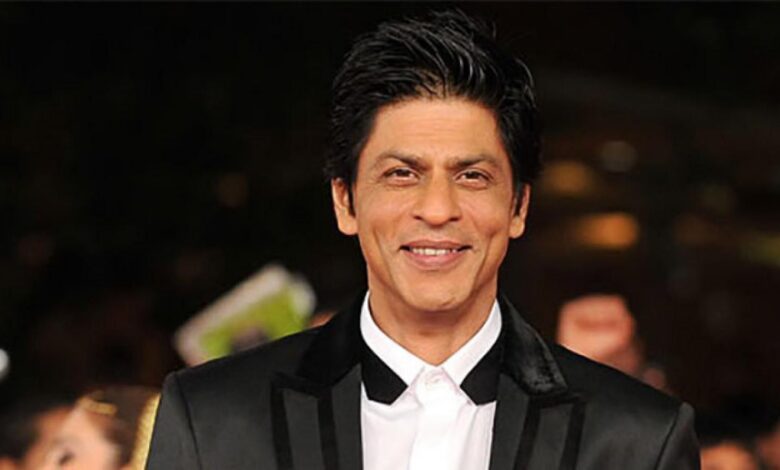
A brief exchange between Shah Rukh Khan and Anant Ambani has managed to turn a high-profile public gathering into a social media controversy, raising questions about celebrity status, wealth and who gets to command attention in a room.
What appeared to be an ordinary interaction between two prominent personalities was soon interpreted as something considerably more loaded: a moment in which even Bollywood’s Badshah was allegedly being told to keep quiet.
The incident took place at the Global Peace Honours 2026, held on November 21 at Mumbai’s Gateway of India. The event, organised by the Divyaj Foundation associated with Amruta Fadnavis, brought together spiritual leader Sadhguru, business personalities and entertainment figures. Both Khan and Ambani were among those present.
Footage from the gathering subsequently began circulating online. In one widely shared segment, Ambani is seen raising a finger while interacting with Sadhguru. Another clip captures an exchange involving Khan and Ambani. At one point, Ambani appears to make a hand gesture, while Khan’s expression changes briefly before he smiles.
That was enough for the internet to reach its own conclusions. With limited audio available in the circulating footage, viewers began interpreting the gesture as an instruction to remain silent. The image of one of India’s biggest film stars supposedly being asked to hold his tongue by a member of the country’s most influential business family proved irresistible to social media.
But there was a problem. The footage showed a gesture; it did not, by itself, establish what was being said or intended. Yet the interpretation quickly began travelling as though the context had already been established.
And that is where the controversy moved beyond the event itself.

When A Viral Reel Turned Into A Legal Controversy
The episode gained another dimension after Instagram content creator Suvigya Sharma, who operates the account @ram.bhakt.suvi, shared a reel combining footage from the gathering with commentary suggesting that Shah Rukh Khan had been told to remain quiet during his interaction with Anant Ambani.
The framing struck a chord because it brought together two very different forms of influence: Khan’s enormous cultural standing and the Ambani family’s extraordinary economic power. The suggestion that even the Badshah of Bollywood could not interrupt Anant Ambani became the central hook, turning a few seconds of footage into a wider discussion about status and deference.
The matter then took a legal turn, or appeared to. A document dated November 23, purportedly issued on Khan’s behalf, began circulating online. It described the reel as misleading and defamatory, disputed the suggestion that the actor had been instructed to keep quiet and invoked Section 356 of the Bharatiya Nyaya Sanhita, 2023, which deals with defamation.
The document reportedly demanded that Sharma remove the reel, stop circulating the allegation, preserve the original material and confirm compliance within 48 hours.
Sharma subsequently responded through another video, questioning the objection to his commentary and invoking freedom of expression.
However, the story took an unexpected turn on November 26. Hirani Associates, the law firm identifying itself as Shah Rukh Khan’s authorised legal representatives, publicly denied issuing the purported notice.
The firm clarified that Khan had neither issued the document nor instructed any advocate or law firm, including Hirani Associates, to send it on his behalf. It also asked media organisations and social media accounts to correct or remove reports attributing the notice to the actor.
That clarification changes the complexion of the controversy considerably. What had initially been reported as a celebrity taking legal action against an influencer now raises another question: who issued the document, and how did it come to be attributed to Shah Rukh Khan?
The distinction matters. A document circulating online is not proof that a public figure has authorised legal proceedings. And in a controversy already fuelled by interpretations of a few seconds of footage, the authenticity of the purported legal response has become a story in its own right.

The Influencer’s Defence And The Question Of Who Issued The Notice
For Suvigya Sharma, the controversy was not simply about a viral video anymore. It had become a question of whether social media creators could interpret and comment on the conduct of powerful public figures without facing the threat of legal action.
In a follow-up video, Sharma questioned the alleged objection to his reel and defended his right to comment on what he believed the footage showed. His argument rested on freedom of expression. He also questioned why the focus had shifted to his commentary rather than the conduct he believed the footage depicted.
Sharma’s interpretation of the interaction was not necessarily an established account of what transpired between Khan and Ambani. The footage circulating online offered only fragments of the exchange, leaving considerable room for interpretation. A creator can express an opinion about a public event, but presenting an inference as an established fact raises a different set of questions.
This leaves two separate issues. The first concerns Sharma’s freedom to comment on an interaction involving prominent public figures. The second concerns the authenticity and origin of a document that was widely reported as a legal notice from Khan.
Until its origin is independently established, the purported notice cannot be treated as an authorised legal action by the actor. And that makes verification just as important as the original debate over the viral footage.
What Indian Law Actually Says About Defamation
The controversy also brings attention to a legal distinction that is frequently lost in the speed of social media discussions: the difference between criticism, an unflattering opinion and a defamatory statement.
India recognises both civil and criminal defamation. Civil defamation generally allows an individual to seek remedies for injury to reputation, including damages and, in appropriate cases, injunctions. Criminal defamation is governed by Section 356 of the Bharatiya Nyaya Sanhita (BNS), 2023, which replaced the corresponding provision under the Indian Penal Code when the new criminal laws came into force on July 1, 2024.
Section 356 covers the making or publication of an imputation concerning a person with the requisite intention or knowledge that it will harm that person’s reputation. The provision also extends to imputations concerning companies, associations and identifiable groups.
However, the law does not automatically treat every criticism or negative comment as criminal defamation. Its exceptions recognise circumstances in which statements may be legally protected. These include imputations that are true and made for the public good, opinions concerning the conduct of public servants in the discharge of their duties, and opinions on the conduct of a person touching a public question. Good-faith statements made to protect legitimate interests or for public good may also qualify for protection, subject to the conditions laid down in the law.
That distinction becomes particularly relevant when social media creators comment on public events involving celebrities and influential business personalities. A person’s public profile does not make their reputation legally irrelevant. Equally, the fact that a public figure dislikes a particular opinion does not automatically make that opinion defamatory.
The Supreme Court has also recognised the importance of balancing reputation with freedom of expression. In its 2016 judgment in Subramanian Swamy v. Union of India, the court upheld the constitutionality of criminal defamation while recognising reputation as an aspect of the right to life under Article 21 and considering its relationship with the freedom guaranteed under Article 19(1)(a).
The central question, therefore, is not whether someone is entitled to criticise a celebrity. They are. It is whether the particular statement crosses the legal threshold into a false and reputation-damaging imputation, without the benefit of an applicable defence.

When A Few Seconds Of Footage Become An Entire Story
The controversy exposes one of the most persistent problems with social media: the ability of a short video clip to acquire a meaning far larger than what it actually establishes. A few seconds of footage, accompanied by a provocative caption, can travel across thousands of accounts before anyone stops to ask what happened immediately before or after the recorded moment.
In the Shah Rukh Khan–Anant Ambani episode, the central issue is precisely this gap between what viewers can see and what they are being told to believe. The circulating footage shows gestures and fragments of an interaction, but does not independently establish the words exchanged or the intention behind them. The interpretation that Khan was being instructed to remain silent became the dominant talking point, even though the available clip did not conclusively establish that version of events.
This is how social media commentary increasingly operates. The video provides the visual material, the caption supplies the interpretation and the audience supplies the outrage. Once the interpretation gains traction, subsequent discussions often revolve around the claim rather than the original evidence.
The problem is not that influencers should refrain from offering opinions. Social media has created space for individuals outside traditional media organisations to question public figures, challenge established hierarchies and participate in public conversations. But the distinction between asking a question and presenting an unverified inference as fact remains important.
The subsequent confusion surrounding the purported legal notice only reinforces the problem. A document was reported as an official communication from Khan before his authorised legal representatives publicly denied issuing it.
In a digital environment where publication takes seconds but correction can take days, verification is no longer a minor editorial responsibility. It is central to whether public discussion remains informed or becomes an exercise in amplifying assumptions.
The Real Story Is Bigger Than A Viral Interaction
For all the attention surrounding the brief exchange at the Global Peace Honours, the episode has now acquired a second dimension.
What began as speculation about an interaction between Shah Rukh Khan and Anant Ambani has developed into a controversy involving an influencer, a purported legal document and an unusually public clarification from the actor’s authorised lawyers.
The November 26 statement from Hirani Associates is particularly significant because it overturns the premise on which much of the subsequent coverage was based. Khan’s legal representatives have explicitly stated that he neither issued nor authorised the purported November 23 notice. The firm has also asked media organisations and social media accounts to correct or remove reports attributing the document to him.
That leaves important questions unanswered. Who prepared and circulated the purported notice? What was the basis for attributing it to Khan? And how did a document whose authenticity was subsequently disputed become the foundation of widespread reporting?
These questions deserve attention because misinformation does not become harmless simply because it concerns celebrities. An unverified interpretation of a video can distort public perception, while an unauthenticated legal document can create an equally misleading impression about someone’s actions.
There is a larger lesson here for both influencers and media organisations. Social media creators have the freedom to question public figures, but that freedom should be accompanied by an obligation to distinguish evidence from assumption. News organisations, meanwhile, cannot afford to treat screenshots and circulating documents as sufficient verification, particularly when reporting legal developments.
The internet may have turned a few seconds of footage into a national talking point, but the more consequential story is what followed. In the rush to interpret, accuse, defend and report, the basic responsibility to establish what actually happened appears to have taken a back seat.
And perhaps that is the real controversy worth examining.