Trump Wants Another Round Of Tariffs On India And China. But Courts, Congress And A Political Rebellion Could Stand In His Way
Donald Trump is preparing to reopen his tariff war, this time using a different legal weapon after the US Supreme Court struck down his earlier sweeping duties. But the road ahead may be considerably harder, with legal challenges, a Democrat-controlled Congress and India's own trade interests complicating Washington's plans.

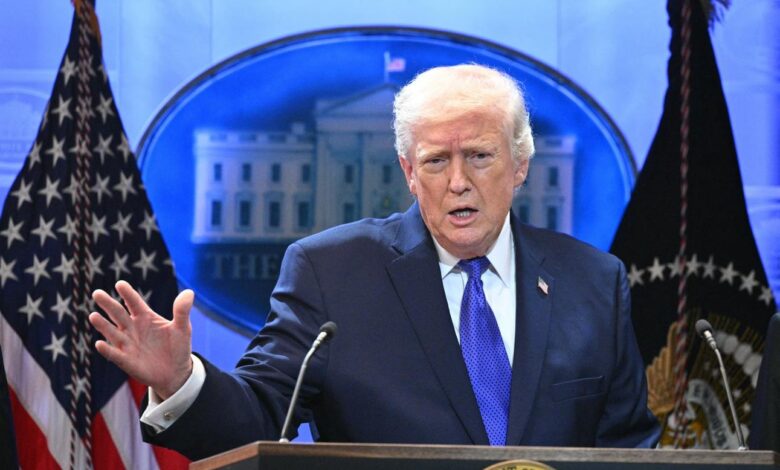
US President Donald Trump is preparing another round of tariffs targeting 16 major trading partners, including India, China, the European Union, Japan and South Korea, in what could become the next major escalation in Washington’s trade war.
This time, however, the administration is attempting to build its case under Section 301 of the Trade Act of 1974, a provision that could allow it to revive much of the tariff programme that was dealt a setback by the US Supreme Court earlier this year.
The US Trade Representative’s office is expected to release the findings of its investigation into alleged excess industrial capacity in these economies, with additional import duties likely to follow. The proposed tariffs could range between 15% and 25%, although the final country-specific rates, exemptions and implementation details remain uncertain. The administration could also begin with lower duties and increase them if governments fail to address Washington’s concerns.
The investigation covers 16 economies: India, China, the European Union, Japan, South Korea, Mexico, Vietnam, Taiwan, Thailand, Malaysia, Indonesia, Switzerland, Norway, Singapore, Bangladesh and Cambodia.
The immediate justification is that several major manufacturing economies are producing more goods than their domestic markets can absorb, with government subsidies, cheap financing and industrial support allowing manufacturers to export surplus production at prices that American companies allegedly cannot compete with.
China is particularly prominent in this investigation. Washington has repeatedly accused Beijing of supporting industries that produce excessive quantities of steel, aluminium, electric vehicles, solar products and other manufactured goods. China, however, has rejected the allegations, arguing that its export competitiveness reflects its industrial capabilities rather than unfair government intervention.
For India, the development is particularly uncomfortable. It comes when New Delhi is still attempting to stabilise its trade relationship with Washington and secure a more favourable arrangement for Indian exporters.

Why Section 301 Has Become Trump’s Preferred Weapon
The legal foundation of Trump’s latest tariff strategy is important because it represents an attempt to overcome the limitations imposed by the Supreme Court.
In February 2026, the US Supreme Court struck down Trump’s earlier sweeping global tariffs imposed under the International Emergency Economic Powers Act (IEEPA). The court ruled that the emergency powers legislation did not give the president the authority to impose import duties in the manner his administration had attempted.
The ruling was a significant setback for Trump’s trade policy, which had relied heavily on tariffs as an instrument of economic pressure and international negotiations.
But Section 301 offers a different route.
Introduced under the Trade Act of 1974, the provision authorises the US Trade Representative (USTR) to investigate foreign government policies and practices considered unreasonable, discriminatory or harmful to American commerce. If an investigation establishes that such practices are burdening US businesses, Washington can respond with trade restrictions, including additional tariffs.
Unlike the emergency powers legislation used previously, Section 301 explicitly provides for tariff action.
The Trump administration launched its excess industrial capacity investigation in March 2026, covering the 16 economies now facing the possibility of additional duties. Washington’s argument is that state subsidies, industrial incentives and other forms of government assistance have encouraged excessive manufacturing capacity abroad, allowing foreign producers to flood international markets and undercut American manufacturers.
Trump is no longer relying on the argument that an economic emergency justifies sweeping import duties. Instead, his administration is attempting to establish that the industrial policies of individual trading partners constitute unfair trade practices under existing US law.
This could make the new tariffs more difficult to overturn. However, it also means the administration must demonstrate a credible connection between the policies being investigated, excess production and the damage allegedly caused to American commerce.

India Could Face Another Round Of Tariff Pressure
India’s position is particularly complicated because the country is already dealing with multiple layers of US trade restrictions.
The latest Section 301 investigation is not the only tariff-related action affecting Indian exports. In July 2026, Washington introduced additional duties following a separate investigation into whether countries were adequately enforcing restrictions on imports produced using forced labour. India was among approximately 60 economies covered by that exercise.
The proposed excess-capacity duties could therefore add another layer to the existing tariff burden.
The precise impact will depend on the final rates, product-level exemptions and how the different tariff measures interact. Reuters has reported that countries with existing trade arrangements, including the European Union, Japan and South Korea, could retain overall tariff rates of 15% or lower. India and Vietnam could face higher rates depending on their respective arrangements with Washington.
China could face particularly high duties, given the administration’s allegations concerning its industrial subsidies.
There is another important consideration for New Delhi. Washington has identified India’s trade surplus with the US and manufacturing capacity in sectors such as solar modules, petrochemicals and steel as part of its concerns. India has rejected the allegations made in the investigation, arguing that the claims do not establish unfair trade practices. It submitted its response to the USTR in April, firmly disputing the accusations.
For Indian businesses, the concern extends beyond the headline tariff percentage. Higher import duties could make Indian products less competitive in the American market, particularly in industries where exporters operate on relatively thin margins.
Sectors dependent on US demand could face pricing pressure, while businesses may have to absorb part of the additional duty or pass the cost on to American buyers.
The uncertainty could also complicate investment decisions. Exporters planning capacity expansion, new supply contracts or long-term commitments with American customers may find it difficult to calculate their future costs while the tariff investigations remain unresolved.
The Courts Could Become Trump’s Next Obstacle
Although Section 301 gives Washington substantial authority to impose tariffs, it does not place those decisions beyond judicial scrutiny.
American importers affected by the proposed duties could challenge the USTR’s findings before the US Court of International Trade. Appeals can subsequently move to the Federal Circuit.
The central legal question would be whether the administration has established that identifiable government policies or practices in the countries under investigation are unreasonable or discriminatory and place a burden on American commerce.
A trade surplus, by itself, does not automatically establish an unfair trade practice. Nor does the existence of excess manufacturing capacity necessarily prove that government intervention has distorted international competition.
For the tariffs to withstand legal scrutiny, the administration would have to explain how government subsidies, financing arrangements or other industrial policies have contributed to excess production and how that production has harmed American businesses.
Importers could challenge the quality of the evidence, the methodology used in the investigation and whether the resulting tariff rates are reasonably connected to the alleged economic injury.

There is also a broader constitutional question.
A recent analysis by the Centre for Strategic and International Studies (CSIS) has spotlighted concerns about using Section 301, traditionally associated with targeted investigations into specific unfair trade practices, as the foundation for a much broader tariff programme involving numerous economies.
Critics could argue that Congress never intended the provision to become an alternative mechanism for imposing sweeping global tariffs.
This argument draws on the Major Questions Doctrine, under which executive actions involving issues of extraordinary economic or political significance require clear congressional authorisation.
However, the administration has a substantial counterargument. Unlike IEEPA, Section 301 explicitly authorises tariff measures. It also allows investigations into multiple trading partners, provided the statutory requirements are met.
There is another complication for challengers. American courts have historically upheld Section 301 tariffs, including the duties imposed on Chinese goods during Trump’s first presidency.
Consequently, while legal challenges are possible, overturning the new tariffs will not necessarily be straightforward. The outcome will depend heavily on the quality of the USTR’s investigation and the legal reasoning supporting its decisions.
Democrats are preparing to challenge Trump’s trade agenda and the legal uncertainty is being compounded by an equally significant political development.
The November 2026 midterm elections have changed the balance of power in Washington. Democrats have secured at least 259 seats in the House of Representatives and a 56-seat majority in the Senate, giving them control of both chambers when the new Congress convenes in January 2027.
This is significant because Congress has constitutional authority over tariffs and international trade.
With control of key committees, including the House Ways and Means Committee and the Senate Finance Committee, Democrats will have the ability to scrutinise the administration’s trade policy more aggressively.
They can summon USTR officials, demand documentation and investigate whether the findings supporting the new tariffs are backed by sufficient evidence.
More importantly, they could attempt to amend Section 301 itself, narrowing the circumstances in which the executive branch can impose duties or introducing requirements for congressional approval.
However, there is a substantial obstacle: Trump retains presidential veto powers.
Even with control of both chambers, Democrats would need a two-thirds majority in each chamber to override a presidential veto. Their current numbers are insufficient to achieve that independently.
This means Democrats cannot simply vote to cancel Trump’s tariff programme and expect it to disappear.
Nevertheless, their control of Congress could make the administration’s position considerably more difficult. Investigations, hearings and demands for supporting evidence could expose weaknesses in the USTR’s case and provide additional material for businesses challenging the tariffs in court.
In other words, Democrats may not be able to immediately dismantle Trump’s tariffs, but they can make it considerably harder for the administration to implement and defend them without scrutiny.

Could Congress Actually Reverse The Tariffs?
One possible route available to Democrats is the Congressional Review Act (CRA), a mechanism that allows Congress to overturn certain federal agency rules through an expedited legislative process.
A Congressional Research Service report has raised the possibility that final Section 301 tariff actions could qualify as reviewable rules because they create legal obligations for importers.
However, the mechanism has never been routinely used to overturn Section 301 tariff actions. Whether the new measures qualify would therefore become a separate legal question.
Congress could potentially seek a determination from the Government Accountability Office on whether the tariff actions fall within the scope of the legislation.
Even if Democrats successfully pursue this route, the resulting resolution of disapproval would still face the possibility of a presidential veto.
Another option would be to attach restrictions on Trump’s tariff authority to larger spending legislation or other must-pass bills. This could create a political dilemma for the White House because rejecting the broader legislation could carry consequences beyond trade policy.
But none of these options offers an immediate or guaranteed solution.
The more realistic possibility is that congressional oversight could strengthen the legal challenges brought by American importers. If Democrats uncover gaps in the administration’s evidence or inconsistencies in its methodology, those findings could become relevant in subsequent court proceedings.
The political battle and the legal battle could therefore reinforce each other.
India Could Find An Escape Route Through Trade Negotiations
For India, the most immediate opportunity may not come from American courts or Congress but from negotiations with the Trump administration.
New Delhi and Washington have been working towards a bilateral trade agreement, although negotiations have encountered repeated complications over market access, tariffs and other economic disagreements.
The proposed Section 301 duties introduce another variable into those discussions.
The CSIS analysis point to a possible strategy under which Washington could initially impose relatively high tariffs and subsequently reduce or suspend them in exchange for negotiated commitments.
This is particularly relevant to India, which has yet to finalise its trade agreement with the US.
Such an arrangement could involve commitments on industrial subsidies, market access, supply-chain transparency and measures to prevent Chinese goods from being rerouted through third countries to avoid American tariffs.
Section 301 itself allows the USTR to modify or terminate tariff measures under certain circumstances. It also provides for negotiated agreements as a way of resolving trade disputes.
This gives Washington considerable flexibility.
For India, however, the possibility of tariff relief could come with difficult conditions. New Delhi may be expected to make concessions on industrial policy, open selected sectors further to American businesses or align certain trade and export-control policies with Washington’s strategic priorities.
The challenge will be to secure better access to the American market without compromising India’s broader economic and strategic interests.
There is also the question of timing. With the US administration preparing its latest tariff announcements and the bilateral trade agreement still under negotiation, Indian exporters face another period of uncertainty.

The Bigger Question Is Whether Trump’s Tariff Strategy Can Survive
Trump’s latest tariff initiative is about more than imposing additional duties on foreign goods. It is also a test of the limits of presidential authority over American trade policy.
The Supreme Court has already demonstrated that emergency powers cannot automatically be converted into unlimited authority to impose tariffs. Section 301 provides the administration with a stronger statutory foundation, but that does not mean every tariff imposed under it will automatically survive judicial scrutiny.
The incoming Democratic Congress adds another layer of uncertainty, while American businesses themselves could become important participants in the legal fight if higher import duties increase their costs.
For India, the immediate concern is that another round of tariffs could undermine its efforts to secure predictable access to the American market. The longer-term concern is that trade relations with Washington may increasingly become dependent on political negotiations and concessions rather than stable, transparent trade rules.
The irony is that Trump’s attempt to restore his tariff programme could end up producing precisely the kind of prolonged uncertainty that businesses and investors generally seek to avoid.
The administration may have found another legal route to impose tariffs. Whether it can sustain that strategy against courts, Congress and the economic consequences at home is an entirely different question.