Who Controls Tata Sons? The ₹65 Crore Legal Battle That Could Redefine Tata Trusts’ Power Over The Tata Empire
A ₹65 crore legal battle has brought one of India's most powerful corporate empires to a defining governance test. As Tata Trusts challenge N. Chandrasekaran's reappointment, the fight goes far beyond who occupies the chairman's office. It raises a bigger question: who really controls Tata Sons, its boardroom and the future of the Tata Group?

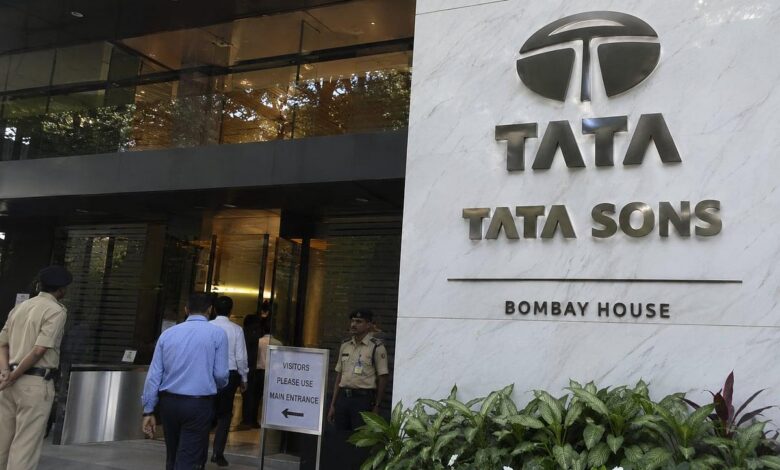
The power struggle at Tata Sons has moved beyond boardroom disagreements, with two of the country’s most influential charitable trusts preparing to take the company’s leadership to court.
Sir Dorabji Tata Trust and R.D. Tata Trust have passed separate resolutions authorising legal action against Tata Sons and six of its directors over the reappointment of N. Chandrasekaran as executive chairman for another five-year term. The trusts are seeking a combined ₹65 crore in damages, turning what was initially a disagreement over a boardroom decision into a significant corporate governance dispute.
The proposed legal action challenges the September 17, 2026, board resolution that approved Chandrasekaran’s continuation. The Sir Dorabji Tata Trust is seeking ₹50 crore, while the R.D. Tata Trust is seeking ₹15 crore, along with interest at 18% annually from the date of filing until payment. The trusts are also seeking a declaration that the reappointment resolution is invalid and want the court to restrain Tata Sons from acting upon it.
The timing is particularly significant. With another Tata Sons board meeting scheduled for November 30, the trusts are seeking judicial intervention before the board has another opportunity to take decisions under the disputed governance arrangements.
Their concern is not limited to Chandrasekaran’s position. They are also seeking clarity on whether the board can use a casting vote to overcome disagreements between Tata Trusts’ nominee directors when the company’s Articles of Association prescribe specific voting requirements.
At the heart of the dispute is a larger question about the balance of authority within Tata Sons. The trusts, which collectively hold the majority stake in the holding company, argue that their governance rights cannot be bypassed through a conventional boardroom majority.
Tata Sons, however, maintains that the September resolution was validly passed. The proposed court battle will therefore test not only the validity of one chairman’s reappointment but also the extent of shareholder influence over the company’s boardroom decisions.

The Boardroom Vote That Triggered The Crisis
The dispute can be traced to a September 17 board meeting where Chandrasekaran’s reappointment became the subject of a division among directors. Noel Tata, chairman of Tata Trusts and a nominee director, voted against extending Chandrasekaran’s tenure. Venu Srinivasan, another Tata Trusts nominee on the board, supported the reappointment. The disagreement exposed a split among the very representatives expected to safeguard the trusts’ interests within Tata Sons.
With the two nominee directors taking opposing positions, the resolution was carried with the help of a casting vote exercised by Harish Manwani, who chaired the meeting. That decision became the central point of contention. The trusts argue that the reappointment required affirmative support from a majority of the relevant Tata Trusts-appointed directors under Article 121 of Tata Sons’ Articles of Association. In their interpretation, a casting vote by the meeting’s chairperson cannot substitute for the affirmative consent required under that provision.
The distinction is crucial. A casting vote is generally used to break a tie when directors are equally divided. However, the trusts contend that the special voting protections written into Tata Sons’ governing documents impose an additional requirement that cannot be overridden by the ordinary mechanics of a board meeting. In effect, they are arguing that a resolution can secure a numerical majority and still fail to meet the company’s separate constitutional requirements.
Tata Sons disputes this interpretation and considers the reappointment valid. The disagreement has consequently moved beyond whether Chandrasekaran received sufficient votes to continue as chairman. It concerns how the company’s Articles of Association should be interpreted, whether the protections available to Tata Trusts’ nominees were respected and how future board decisions involving those provisions should be handled.
The September vote has therefore become much more than a question of leadership continuity. It has exposed a fundamental disagreement over the relationship between Tata Sons’ board and its largest shareholder, setting the stage for a legal contest that could have consequences well beyond Chandrasekaran’s tenure.

Who Actually Owns Tata Sons And Who Controls It?
To understand why the dispute has become so consequential, it is necessary to look at the unusual ownership structure of Tata Sons. Unlike many large Indian business groups where a promoter family directly controls the parent company, Tata Sons is majority-owned by a network of philanthropic trusts that fund education, healthcare, rural development and other charitable activities. Collectively, these trusts hold approximately 65.9% of Tata Sons, making them the company’s largest shareholder bloc.
The Sir Dorabji Tata Trust holds 27.98%, while the Sir Ratan Tata Trust owns 23.56%. Other Tata-affiliated charitable trusts account for the remaining shareholding. The second-largest shareholder is the Shapoorji Pallonji Group, which holds approximately 18.37%. Tata Group companies collectively own around 12.86%, with the remaining shares held by individuals and other shareholders.
Tata Sons occupies a central position in the group’s corporate structure. It is the principal investment holding company and promoter of the Tata Group’s businesses, with stakes in companies spanning automobiles, steel, information technology, aviation, power, hotels and consumer products. Its influence extends across a sprawling business empire, although individual Tata companies operate independently under their respective boards.
This makes control over Tata Sons particularly important. Decisions taken at the holding company level can influence the group’s strategic direction, leadership appointments, capital allocation and major corporate transactions.
However, majority ownership does not automatically translate into unrestricted authority over every boardroom decision. Tata Sons operates under its own Articles of Association, which establish specific rights for its shareholders and directors. These provisions give the two principal trusts, Sir Dorabji Tata Trust and Sir Ratan Tata Trust, particular governance protections as long as their combined shareholding meets the prescribed threshold of 40%.
Under Article 104B, the two trusts can jointly nominate one-third of Tata Sons’ board and also exercise the right to remove a director. With Tata Sons currently having six directors, two positions are occupied by their nominees, Noel Tata and Venu Srinivasan.
The distinction is important. Tata Trusts’ 65.9% ownership gives it substantial shareholder influence, but its ability to exercise specific rights within the boardroom also depends on the company’s Articles of Association. It is precisely this intersection between majority ownership and specially protected governance rights that has brought Tata Sons’ leadership into conflict with its largest shareholder.
The Voting Rules At The Heart Of The Dispute
The most consequential part of the Tata Sons dispute lies in the interpretation of its Articles of Association, particularly Articles 104B, 115, 118 and 121. These provisions form the governance framework that determines how the Tata Trusts’ nominees participate in board decisions and how the company’s chairman is appointed.
Article 104B establishes the nomination rights available to the Sir Dorabji Tata Trust and Sir Ratan Tata Trust as long as they collectively maintain at least 40% of Tata Sons’ shareholding. Article 115 deals with board meeting quorum requirements, stipulating that the presence of a majority of the relevant trust-nominated directors is necessary for a valid meeting. Article 121 goes further by requiring certain board decisions to receive the affirmative vote of a majority of these nominee directors.
It is Article 121 that has become the centre of the Chandrasekaran controversy. The trusts argue that because Noel Tata and Venu Srinivasan were the two eligible nominee directors, both needed to support the reappointment for the required majority to be achieved. With Noel opposing the proposal and Srinivasan backing it, the trusts maintain that the additional voting condition was not satisfied.
Tata Sons has taken a different position. Its interpretation is that the casting vote available to the chairperson of the meeting could resolve the disagreement between the nominee directors, allowing the reappointment to proceed. The company has also questioned whether Article 118, which provides for a selection committee in the appointment of a chairman, applies to the reappointment of an incumbent chairman.
The distinction between Articles 118 and 121 is particularly important because the dispute is not limited to how votes were counted. It also concerns whether the prescribed process for appointing a chairman was followed in the first place.
In effect, the trusts are arguing that special protections written into the company’s governing documents cannot be overridden by ordinary boardroom voting procedures. Tata Sons maintains that its interpretation of those same provisions permits the decision to stand.
The courts may ultimately have to determine how these provisions interact. Until then, the dispute exposes a fundamental question about corporate governance at Tata Sons: whether the board’s authority can operate independently of the special shareholder protections embedded in the company’s own constitution.

The Battle Within Tata Trusts
The dispute over Chandrasekaran’s reappointment has exposed another fault line within the Tata Group: divisions among the trustees themselves. While Noel Tata has emerged as the principal voice challenging the September 17 board decision, not all trustees have supported his approach.
The disagreement has increasingly extended beyond the chairman’s tenure to questions surrounding Tata Sons’ proposed listing, its regulatory obligations and the future direction of the holding company.
The divisions were visible in the October exchanges over whether Tata Sons should remain privately held or move towards a public listing. Noel Tata, Neville Tata, Bhaskar Bhat and Darius Khambata questioned the positions taken by vice-chairmen Venu Srinivasan and Vijay Singh, who had expressed support for listing the holding company.
The four trustees argued that the company’s longstanding position had been to remain unlisted and that any departure from it required proper consultation. Srinivasan and Singh, meanwhile, challenged the criticism, raising questions about the responsibilities of trust nominees and whether preserving the existing structure was necessarily in the institutions’ best interests.
The disagreement has since become more complicated. In the November 25 circular resolutions authorising legal action against Tata Sons, Noel Tata, Neville Tata and Bhaskar Bhat voted in favour, while Vijay Singh and Venu Srinivasan opposed the move. The resolution was therefore carried despite opposition from two trustees.
The significance of this division goes beyond the immediate legal challenge. Tata Trusts are not simply shareholders exercising voting rights through a unified leadership. They are institutions with multiple trustees, fiduciary responsibilities and differing views on how their influence over Tata Sons should be exercised.
The disagreements also raise questions about how the trusts will approach other contentious decisions, particularly the proposed listing, regulatory restructuring and the future relationship between the board and its principal shareholder.
For a group whose corporate identity has long been associated with a relatively cohesive leadership structure, the public emergence of these differences marks a significant governance challenge. The question is no longer only whether Tata Sons can proceed with Chandrasekaran’s reappointment. It is also whether Tata Trusts can maintain a common position on the decisions that will shape the group’s future.
From Cyrus Mistry To Chandrasekaran: A Recurring Question Of Control
The present confrontation has inevitably brought back memories of the bitter dispute between Ratan Tata and Cyrus Mistry, which culminated in Mistry’s removal as Tata Sons chairman in October 2016. Mistry, who had taken over from Ratan Tata in December 2012, was removed by the Tata Sons board after less than four years in the position.
The decision triggered a prolonged legal battle involving the Shapoorji Pallonji Group, which holds approximately 18.37% of Tata Sons, and raised fundamental questions about shareholder rights, board authority and the influence of Tata Trusts.
The dispute eventually reached the Supreme Court after the National Company Law Appellate Tribunal ordered Mistry’s reinstatement in December 2019. In March 2021, the Supreme Court overturned that decision and ruled in favour of Tata Sons. It rejected the argument that Mistry’s removal from the chairmanship, by itself, amounted to oppression or mismanagement of minority shareholders.
However, one aspect of the judgment is particularly relevant to the current confrontation. The Supreme Court upheld the validity of the special affirmative voting rights enjoyed by Tata Trusts’ nominee directors under the company’s Articles of Association. These rights were challenged by the Mistry group, which argued that they gave the trusts disproportionate influence over the company’s board. The court did not accept that challenge, recognising that the special provisions were part of Tata Sons’ governing framework.
The judgment did not, however, settle the precise question now confronting the company: what happens when the two Tata Trusts-appointed directors disagree on a decision that requires their affirmative support? That is the legal issue at the centre of the Chandrasekaran dispute.
There is an important difference between the two episodes. The Mistry case concerned the removal of a chairman and allegations of oppression and mismanagement. The current dispute concerns the interpretation and application of existing governance provisions during a reappointment process. Yet both confrontations point to the same underlying tension: how far can the authority of Tata Trusts extend within a company whose board is responsible for its corporate decisions?
The Supreme Court’s 2021 ruling has established that the special rights cannot simply be dismissed as invalid. The present legal challenge will test how those rights operate when the trusts’ own representatives are divided.

The Bigger Battle: Tata Sons’ IPO, RBI And The Shapoorji Pallonji Stake
The dispute over Chandrasekaran’s reappointment is unfolding alongside an equally consequential disagreement over the future of Tata Sons: whether the holding company should remain privately owned or prepare for a stock market listing. The Reserve Bank of India (RBI) has added pressure to the debate by reiterating that Tata Sons must comply with regulations applicable to upper-layer non-banking financial companies (NBFCs), including the requirement to list.
In a November 16 communication, the central bank explicitly referred to the listing obligation, following its September 11 rejection of Tata Sons’ application to surrender its core investment company registration.
Tata Trusts, however, has been pushing for an alternative restructuring plan that could allow Tata Sons to retain its unlisted status. The proposal involves merging Tata Electronics Systems Solutions and Tata Consulting Engineers into the holding company, potentially changing its business profile and regulatory classification.
The proposal would require the necessary corporate approvals and the RBI’s consideration. It has not been established that the regulator has accepted this route as an alternative to listing.
The disagreement also has significant financial implications for the Shapoorji Pallonji Group, which owns approximately 18.37% of Tata Sons. The group, led by Shapoor Mistry, has been seeking ways to unlock value from its holding amid its own debt and liquidity requirements. Mistry has reportedly approached Prime Minister Narendra Modi twice seeking intervention to resolve the prolonged impasse over Tata Sons’ listing.
For the SP Group, a public listing could provide a route to monetise part of its investment, while Tata Trusts has resisted a move that could alter the holding company’s ownership and governance structure.
The November 30 board agenda has brought these competing interests together. Directors are expected to consider IPO-related steps, including a proposed six-month listing timeline, as well as options involving the SP Group’s shareholding.
The discussions could include a buyback or capital reduction, alongside valuation and funding considerations. What is at stake is not simply whether Tata Sons enters the stock market, but who determines the structure through which the Tata Group will be controlled in the years ahead.
November 30 And The Road Ahead
The November 30 board meeting is now emerging as a critical test of how Tata Sons will handle its competing governance, regulatory and shareholder pressures. Originally scheduled for November 26, the meeting was postponed after Noel Tata objected to the short notice given to directors and the late circulation of supporting documents. The company subsequently moved the meeting to November 30, giving directors additional time to examine the agenda.
The revised agenda reportedly includes the proposed IPO, possible arrangements for the Shapoorji Pallonji Group’s stake and Chandrasekaran’s reappointment. The board will also have to consider the regulatory position following the RBI’s explicit reiteration of the listing requirement. Meanwhile, the trusts’ proposed court action introduces another layer of uncertainty over the September 17 decision.
Chandrasekaran’s current term is due to end on February 20, 2027, making the timing of the dispute particularly important. Whether the board proceeds with the listing route, examines the trusts’ restructuring proposal or reaches a compromise over the SP Group’s stake, the decisions will have consequences extending beyond the immediate leadership question.
Ultimately, the legal challenge is about more than one chairman’s tenure. It is about the limits of boardroom authority, the rights of majority shareholders and the governance arrangements that have shaped one of India’s largest business groups.
The outcome could determine not just who leads Tata Sons, but how much power its principal shareholder can exercise over the company.