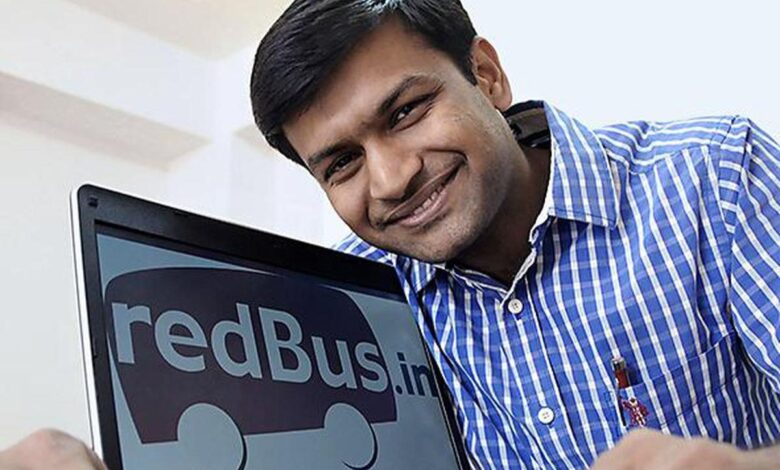
Phanindra Sama’s story is a testament to how a simple inconvenience can inspire a transformative idea. In 2005, when the young engineer from Bangalore struggled to find a bus ticket home to Hyderabad for Diwali, he encountered a fragmented, opaque booking system that relied entirely on phone calls and travel agents. Instead of succumbing to frustration, Sama saw a clear opportunity: a seamless online platform, which will be called as Redbus, offered real-time seat selection, transparent pricing, and the convenience of booking from anywhere.
With this vision, 25-year-old Phanindra Sama made a bold decision. He left his secure job at Texas Instruments and, along with two friends and an initial investment of Rs 5 lakh, set out to create what would eventually become Redbus. Launched in August 2006, Redbus was built on a simple premise: put the power of choice and information directly into the hands of travelers.
The Early Challenges: Building Trust in a Nascent Market
Redbus began humbly, working with just one bus operator and a mere five available seats. But Sama quickly realized that the challenges went far beyond merely introducing an online platform. The traditional bus industry was deeply entrenched in offline practices, with agents and operators skeptical about giving up their margins or shifting to a software-based approach. Even offering their Bus Operator Software Solution (BOSS) for free wasn’t enough to convince operators to embrace the new model. To complicate matters, venture capitalists were hesitant to fund a concept that, at the time, didn’t appear to be a market of significant size.

Rather than be deterred, Sama tackled these challenges head-on. He started by calculating the potential financial benefits for operators—breaking down route revenues and highlighting how a transparent, technology-driven system could increase profitability. It was a convincing argument, and soon operators began to adopt Redbus. By 2007, the platform had partnered with 50 operators, reaching an impressive sales figure of Rs 5 crore.
Gaining Momentum of Redbus: Early Investments and Rapid Growth
With early signs of success, Redbus captured the attention of Seedfund, which invested Rs 3 crore in early 2007. With this support, the company began refining its user experience, offering customers seat selection, verified ratings, and even options to reserve seats for women travelers. These thoughtful features helped establish trust and loyalty among users, allowing Redbus to differentiate itself in an increasingly competitive market.
By 2008, Redbus had scaled sixfold, achieving Rs 30 crore in sales. With continued growth came additional funding: Inventus Capital Partners invested Rs 8 crore in 2010, enabling Redbus to introduce innovative services like real-time bus tracking and expanding its network of operators. What had started as a small idea to address one traveler’s inconvenience was fast becoming a nationwide phenomenon.
Expanding the Reach: Serving Agents and Governments
Phanindra Sama understood that true scale required more than just appealing directly to individual customers. Recognizing the potential of travel agents, Redbus launched its “Seat Seller” app, offering a 6% commission and empowering agents to reach even more customers. The strategy paid off—by 2011, Redbus had grown to Rs 120 crore in sales, with more than 35 lakh bookings.

As Redbus matured, it also began to tackle the complex world of state-run bus systems. Partnering with state road transport corporations in Delhi, Goa, Rajasthan, and Karnataka, the company provided software solutions that modernized ticketing for both private and government operators. By 2013, Redbus had achieved a staggering 70% market share, processing bookings worth Rs 600 crore annually and cementing its place as the go-to platform for bus travelers across India.
The Big Moment: A Landmark Acquisition
The steady, exponential growth of Redbus had not gone unnoticed. In 2013, the Ibibo Group, a major travel player, sought a strong, fast-growing platform to solidify its foothold in the Indian market. Redbus, by then selling 10 lakh tickets each month, was the perfect match. In June 2013, the acquisition was announced. The deal, valued at Rs 800 crore, marked one of the largest overseas acquisitions of an Indian startup and underscored the immense value Redbus had created in just seven years.
A Lasting Legacy: Transforming an Industry
Today, Redbus remains the largest online bus ticketing platform in India, selling 6 crore tickets annually and operating 50,000 buses daily across 10,000 pin codes. Its impact on the travel industry is undeniable: by introducing transparency, ease of access, and robust technology, Redbus has revolutionized how Indians plan and book their journeys. What was once a fragmented, labor-intensive process has become a streamlined, user-friendly experience.

Phanindra Sama’s journey is a powerful reminder that great ideas are often born from personal challenges. His willingness to leave a comfortable career, his determination to build trust within a traditional industry, and his ability to innovate at every stage of growth turned Redbus into a household name. By consistently putting customers first and finding creative solutions to complex problems, Sama not only built a thriving business but also transformed the way an entire nation travels.