ED Attach Properties In Money Laundering Case Of Vuenow Group
The Enforcement Directorate has provisionally attached assets worth Rs 39.73 crore in its ongoing money laundering investigation against Vuenow Group, taking cumulative attachments to Rs 236.95 crore. The investigation revealed that the group collected Rs 3,717 crore from investors by selling non-existent digital infrastructure under its MyCloudParticle investment scheme, promising assured monthly rentals for up to 120 months. While Rs 1,800 crore was returned to initial investors, approximately Rs 1,917 crore was diverted. The case exposes a disturbing financial operation built around inflated technological infrastructure, money rotation, luxury acquisitions, questionable corporate transactions and the systematic exploitation of investors seeking financial security.

Vuenow Group’s Rs 3,717 Crore Cloud Particle Scam: How Investors Were Sold Digital Assets That Never Existed
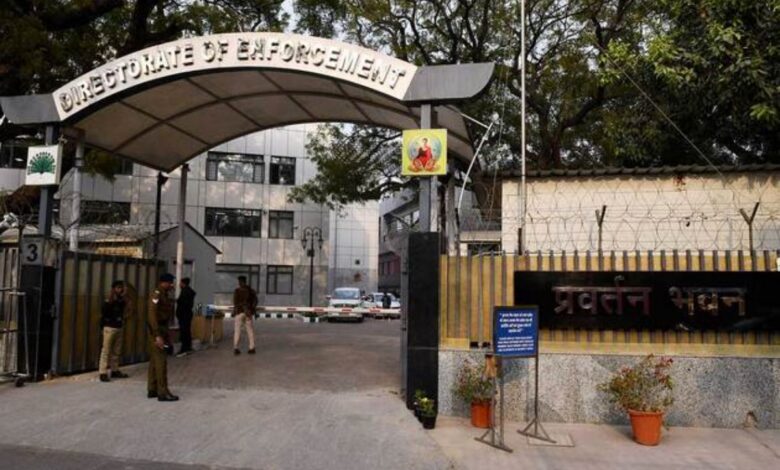
The Directorate of Enforcement (ED), Jalandhar Zonal Office, in a press release dated 26.11.26, announced the provisional attachment of movable and immovable properties worth Rs 39.73 crore in its ongoing money laundering investigation against the Vuenow Group. The Provisional Attachment Order, dated 17.11.26, was issued under Section 5(1) of the Prevention of Money Laundering Act (PMLA), 2002.
The investigation has exposed a financial operation involving Rs 3,717 crore collected from investors against digital infrastructure that, according to the ED, never existed with the company. Of this amount, Rs 1,800 crore was returned to initial investors, while approximately Rs 1,917 crore was diverted, leaving affected investors without their promised returns or invested capital. What was marketed as an opportunity to participate in India’s expanding data centre industry turned into a financial trap for thousands of investors.
Selling Non-Existent Digital Infrastructure
The ED initiated its investigation based on an FIR registered at Police Station Sector 58, Gautam Budh Nagar, Noida, Uttar Pradesh, alongside other FIRs registered in different states. At the centre of the investigation is Vuenow Group‘s MyCloudParticle offering, through which investors were encouraged to purchase purported data centre assets, described as Cloud Particles, under a sale-and-lease-back business model. The company promised assured monthly rental payments for periods extending up to 120 months, presenting the arrangement as a decade-long source of passive income.
The business proposition capitalised on the growing commercial significance of cloud computing, digital storage and data centre infrastructure. Investors were offered an opportunity to earn recurring income without directly managing technological assets or operating data centres. However, the ED investigation revealed that the storage capacity marketed to investors substantially exceeded the actual operational capacity of the company’s servers.
Consequently, Rs 3,717 crore was collected against Cloud Particles that did not exist with the company. The fundamental asset on which the entire investment proposition was constructed was grossly overstated, exposing the dangerous contradiction between the company’s commercial representations and its operational reality.
Rs 1,917 Crore Diverted While Investors Lost Their Money
The financial trail uncovered by the Enforcement Directorate indicates that Vuenow Group returned Rs 1,800 crore to initial investors, while approximately Rs 1,917 crore was diverted. Earlier investigative findings revealed that rental income received from actual data centre customers was either negligible or non-existent, exposing the operation as a money rotation arrangement rather than a commercially sustainable technology business. Payments to existing investors depended on continued investment inflows instead of revenue generated through the infrastructure marketed to them.
The apparent regularity of rental payments helped sustain investor confidence despite the underlying commercial deficiencies. The ED subsequently identified multiple channels through which investor money was diverted for purposes unrelated to the represented business activity. These included substantial commissions to channel partners, purchases of luxury vehicles, acquisition of gold and diamonds, property investments and the movement of hundreds of crores through shell entities.
When fresh investments stopped following the commencement of enforcement proceedings, rental payments also ceased, exposing the financial vulnerability of the entire operation. Investors who had committed their savings in anticipation of long-term income were left struggling to recover their own money.
ED Attaches 61 Immovable Properties And Bank Balance
The latest provisional attachment comprises 61 immovable properties, including flats, residences and commercial plots, collectively valued at approximately Rs 39.29 crore. Additionally, the agency attached one movable asset comprising a bank account balance of approximately Rs 44.31 lakh. These assets are held in the names of Vuenow Infotech Private Limited and various individuals and entities connected with the diversion and utilisation of proceeds of crime.
The latest attachment follows earlier enforcement actions against the group. Through a Provisional Attachment Order dated 06.02.25, the ED attached assets worth approximately Rs 178.12 crore, including 6 immovable properties, balances maintained across 73 bank accounts and 26 luxury vehicles. Another provisional attachment order dated 30.01.26 covered assets worth Rs 19.1 crore, including immovable properties, fixed deposits and listed stockholdings. The addition of assets worth Rs 39.73 crore has increased the cumulative provisional attachment value to Rs 236.95 crore. Against the approximately Rs 1,917 crore identified as diverted, the cumulative attachment value represents around 12.36 per cent, highlighting the enormous financial scale of the case.
Three Arrests, Multiple Raids And Prosecution Proceedings
The Enforcement Directorate conducted searches at premises associated with Vuenow Marketing Services Limited and related entities on 26.11.24 and 17.01.25. The investigation subsequently resulted in the arrest of Arif Nisar, a founding member of the group, on 24.02.25. Vuenow Group founder and CEO Sukhwinder Singh Kharour and his wife, Dimple Kharour, were arrested on 28.02.25. A prosecution complaint against the accused individuals and associated corporate entities was filed before the Special Court under PMLA in Jalandhar on 24.04.25.
The investigation expanded further on 14.08.25, when the agency searched 10 residential and commercial premises across Punjab, Haryana and Maharashtra. The operation covered individuals and entities associated with the group, including Vuenow Infratech Limited and its director Rahul Anand Bhargav. The searches resulted in the seizure of cash worth Rs 23.90 lakh and the freezing of shares and immovable properties valued at Rs 63.49 crore and Rs 9.99 crore, respectively. The cumulative value of assets seized or frozen during this operation stood at Rs 73.72 crore. These successive enforcement actions demonstrate the extensive network of financial transactions, corporate entities and asset acquisitions involved in the investigation.
A Disturbing Failure Of Financial And Corporate Oversight
The Vuenow Group case raises serious questions about corporate governance, financial supervision and the marketing of unconventional investment products in India. How did a company mobilise Rs 3,717 crore against digital assets that were substantially disconnected from its actual technological infrastructure? How were long-term rental commitments undertaken without sufficient commercial revenue to support them? Where were the mechanisms of corporate accountability while enormous amounts of investor money were being channelled into luxury purchases, properties and unrelated corporate transactions?
The technical complexity of digital infrastructure created a considerable information imbalance between the company and ordinary investors. Unlike conventional physical assets, cloud storage infrastructure is difficult for individual investors to independently assess, making transparency regarding server capacity, ownership and commercial utilisation particularly important. The promise of assured rentals further concealed the economic vulnerability of an arrangement dependent on fresh capital.
For thousands of affected investors, the consequences extend far beyond corporate misconduct and financial irregularities. Their pursuit of financial security has instead resulted in the loss of invested capital and anticipated income. While the Enforcement Directorate continues its investigation, the Vuenow Group case stands as a disturbing example of how technological sophistication, aggressive investment mobilisation and promises of assured returns can become instruments of large-scale financial exploitation, with ordinary investors ultimately bearing the consequences.