ONE CRORE MASKS, USD 22.5 MILLION AND A USD 6.75 MILLION BANK GUARANTEE: ANKITI BOSE’S ZILINGO PANDEMIC DEAL LEAVES A TRAIL OF UNANSWERED QUESTIONS
When India was desperately procuring protective equipment during COVID-19, Zilingo secured a USD 22.5 million contract to supply one crore KN95 masks. The government recorded missed delivery deadlines, senior Health Ministry officials later alleged substandard masks and forged inspection certificates, and a USD 6.75 million bank guarantee was encashed. Six years later, the public still deserves answers about the quality of the products, the supply chain, the inspection documents and the responsibility of the management that stood behind the deal.

There are moments in a nation’s history when commercial ambition must give way to public responsibility. The COVID-19 pandemic was one such moment. Hospitals were overwhelmed, healthcare workers were risking their lives, and governments across the world were desperately scrambling to procure protective equipment. Masks, gloves, protective gowns and other medical supplies were not ordinary commercial commodities. They were essential instruments of survival.
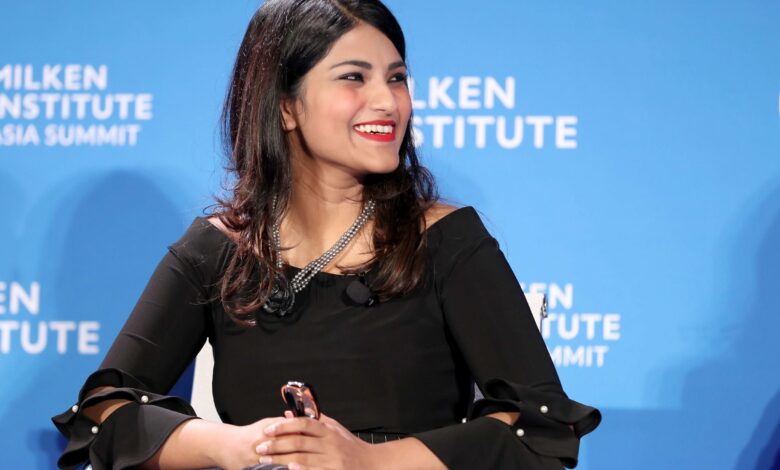
It was in this extraordinary environment that Singapore-based fashion and technology company Zilingo Pte. Ltd., co-founded and then led by Ankiti Bose as its Chief Executive Officer, entered into a substantial arrangement for the supply of KN95 respiratory masks to India.
The numbers were not insignificant. Ten million masks. A contract worth USD 22.5 million. A bank guarantee of USD 6.75 million. An Indian government procurement arrangement routed through HLL Lifecare Ltd.
What followed was a contractual controversy involving repeated delivery deadlines, an incomplete supply, a bank guarantee invocation, allegations of substandard Chinese masks and questions about allegedly forged third-party inspection certificates.
The matter raises a particularly uncomfortable question: when a company seeks an opportunity to make money from an emergency procurement exercise involving equipment intended to protect human lives, who takes responsibility when the transaction becomes embroiled in serious quality and compliance allegations?
And when the company is headed by a high-profile founder, is the chief executive’s responsibility limited to collecting the credit for the commercial opportunity, or does it also extend to answering difficult questions about the product, the supplier, the certification and the delivery?
The Zilingo transaction deserves considerably more scrutiny than it has received.
The USD 22.5 Million Pandemic Procurement Contract
The contractual arrangement was entered into in April 2020 between the High Commission of India in Singapore and Zilingo Pte. Ltd., with HLL Lifecare Ltd., Thiruvananthapuram, acting as the channelising company.
The contract required Zilingo to supply 10 million KN95 respiratory masks for a total consideration of USD 22.5 million.
Thirty per cent of the relevant invoice value was secured through a bank guarantee of USD 6.75 million, issued by DBS Bank Ltd., Singapore.
The scale of the transaction becomes particularly important when viewed against the circumstances prevailing in India at the time. The country was experiencing an unprecedented public-health emergency. The government needed dependable supplies, manufacturers needed to meet stringent specifications, and inspection procedures were essential to ensure that protective equipment was actually capable of performing its intended function.
This was not an ordinary fashion supply-chain transaction. It was not about delayed garments, defective accessories or dissatisfied retail customers.
It concerned respiratory protective equipment during a global pandemic.
The difference should have been obvious to everyone involved.
A company entering this market had an elementary responsibility: ensure that the products being offered were compliant, properly inspected, supported by authentic documentation and delivered within the agreed timelines.
A compelling startup story, a celebrated founder, impressive fundraising numbers and an international business footprint cannot substitute for those basic obligations.
Six Point Eight Million Masks Delivered. Three Point Two Million Still Outstanding.
The Delhi High Court’s order dated 15 October 2020 in M/s Zilingo Pte. Ltd. v. Union of India & Others, W.P.(C) 8001/2020, provides a particularly revealing account of the dispute.
The government informed the Court that the original contract had been entered into in April 2020 and that initial supplies were expected in May 2020.
According to the government’s submission, several delivery extensions had been granted. The final extension expired on 15 September 2020.
Yet, at the time the matter came before the Court, only 6.8 million masks had been supplied. The remaining 3.2 million masks were still outstanding.
The government expressly informed the Court that it did not wish to accept the remaining quantity because Zilingo had allegedly breached several delivery deadlines.
Consider the scale of that shortfall.
Out of one crore masks contracted, 32 lakh remained undelivered at the relevant stage.
That represents 32 per cent of the contractual quantity.
For a transaction undertaken during a national emergency, this is not a minor administrative discrepancy. It is a significant procurement failure that demands a proper explanation.
The government was not purchasing an optional consumer product. It was attempting to secure protective equipment during a period when shortages could have serious consequences.
Zilingo, on the other hand, maintained before the Court that it was ready and willing to complete the remaining supply and that testing protocols had prevented completion.
That was the company’s position. The government’s position was that repeated deadlines had been breached and that it no longer wished to receive the balance.
The Court did not finally adjudicate this contractual dispute in its October 2020 order. Nevertheless, the figures and the conflicting positions are part of the judicial record.
The basic question remains: how did a company that entered into a USD 22.5 million pandemic procurement contract find itself unable to complete the full contracted supply within the extended deadline?
The More Serious Allegation: Substandard Chinese KN95 Masks and Forged Inspection Certificates
The controversy took a more serious turn in August and September 2022.
A report published by Mint on 1 September 2022, citing two senior officials of the Union Health Ministry, reported allegations that Zilingo had attempted to dispatch millions of substandard Chinese KN95 masks to India by using forged third-party inspection certificates.
According to the officials quoted in the report, HLL Lifecare had engaged inspection agencies to conduct pre-dispatch inspections at manufacturing locations.
The reported discrepancies were detected by HLL’s dispatch inspection team.
The allegations were particularly serious.
They were not merely about whether a shipment had arrived late or whether a supplier had failed to meet a delivery schedule.
They concerned whether the masks being presented for dispatch met the required specifications and whether the inspection documents accompanying them were authentic.
If independently established, the use of forged inspection certificates in an emergency medical procurement exercise would raise grave questions of contractual integrity, corporate governance and potential criminal liability.
A certification document is not decorative paperwork. It is supposed to establish that a product has undergone the required checks and meets the applicable standards.
A respiratory mask that fails the relevant performance requirements cannot become acceptable merely because somebody attaches a certificate to it.
And an inspection certificate whose authenticity is in doubt raises a question even more fundamental: who inspected the product, what was actually inspected, and what did the responsible management know?
These allegations deserve a thorough and transparent investigation.
However, an important qualification must be made. The allegations were attributed to two unnamed senior government officials in media reporting. The full underlying inspection reports, laboratory results, certificate records and the identities of the allegedly involved individuals have not been established through the publicly available judicial orders discussed here.
The allegations have not been established as judicial findings.
Zilingo’s Denial: A Dispute That Cannot Be Allowed to Disappear Into Explanations
Zilingo disputed the allegations of unethical behaviour.
Its spokesperson referred to changing certification standards, production capacity and pricing during the early months of COVID-19, arguing that these developments affected PPE procurement worldwide.
The company’s response deserves to be recorded. A fair investigation must consider both the allegation and the response.
But explanations concerning global supply-chain difficulties cannot, by themselves, answer the most important factual questions.
Which manufacturers were selected? What were the applicable specifications? Which inspection agencies issued the certificates? Were the certificates genuine? What did HLL’s inspection team actually discover? Were any batches rejected? Did any products that failed inspection enter the Indian supply chain?
And, most importantly, which executives approved the sourcing, certification and dispatch process?
Zilingo was not an anonymous sole-proprietorship operating without management oversight. It was an internationally funded company with a high-profile leadership team.
Its chief executive at the time was Ankiti Bose.
That fact makes her management role a legitimate subject of public scrutiny. It does not, by itself, establish personal criminal responsibility.
A chief executive cannot reasonably seek recognition for the successes of an enterprise while expecting every question concerning the company’s most consequential business decisions to be dismissed as somebody else’s problem.
The public deserves to know what her actual role was in this transaction.
Did she approve the supplier? Did she know the manufacturing locations? Was she informed of the inspection discrepancies? Did she receive reports concerning the delivery failures? Were compliance concerns brought to her attention?
These are not personal attacks. They are basic questions of executive accountability.
The USD 6.75 Million Bank Guarantee: What the Delhi High Court Actually Ordered
The legal proceedings surrounding the bank guarantee provide another important dimension to the controversy.
Zilingo approached the Delhi High Court in W.P.(C) 8001/2020 after the High Commission of India in Singapore sought encashment of its USD 6.75 million bank guarantee.
On 14 October 2020, Justice Prathiba M. Singh initially restrained DBS Bank from making payment under the guarantee until further orders.
At that stage, the Court recorded Zilingo’s position that it remained willing to complete the supply and that the testing protocol had prevented it from doing so. The Court also noted that 68 per cent of the contracted supply had been made and that the reasons for invoking the guarantee were not clear at that stage.
The company was directed to extend the bank guarantee for a further 30 days.
However, the situation changed the following day.
On 15 October 2020, the government appeared before the Court and placed its position on record. It informed the Court that Zilingo had breached several delivery deadlines, that the final extension had expired on 15 September 2020 and that the government did not wish to accept the outstanding 3.2 million masks.
The Court also recorded that DBS Bank would not process an extension of the guarantee unless the High Commission of India withdrew or rejected its claim.
The bank guarantee was due to expire on 15 October 2020.
Faced with the approaching expiry, conflicting positions and the practical need to secure the interests of both parties, the Court directed that the full USD 6.75 million be encashed.
But there was an important safeguard.
The Court expressly ordered that the money be credited to the High Commission of India in Singapore, maintained in an identified account and not used for any other purpose. The amount would remain subject to further orders of the Court.
This distinction matters.
The Court did not declare Ankiti Bose personally liable. It did not convict Zilingo of fraud. Nor did it finally determine the alleged falsification of inspection certificates.
It secured the disputed money while the contractual controversy remained unresolved.
In fact, the subsequent procedural history makes the matter even more important.
February 2024: The Zilingo Petition Was Dismissed for Want of Prosecution
The case continued to remain on the Delhi High Court’s docket.
On 22 February 2024, Justice Sudhir Kumar Jain dismissed Zilingo’s writ petition in default for want of prosecution.
The Court recorded that none appeared on behalf of the parties when the matter was called. It further observed that nobody had been appearing for the petitioner for a considerable period and that the petitioner appeared uninterested in prosecuting the case.
The petition was consequently dismissed in default, and the Court clarified that the interim order, if any, stood vacated.
This is a significant procedural development.
But it is equally important not to misrepresent it.
Dismissal for non-prosecution is not a judgment on the merits. It does not establish that the government was right about every allegation or that the alleged inspection certificates were forged. Nor does it constitute a criminal conviction of the company’s former CEO.
The result is nevertheless unsatisfactory from a public-accountability perspective.
A transaction involving one crore protective masks, USD 22.5 million in contractual value and a USD 6.75 million guarantee should not be reduced to a file that disappears from public attention because one party stops pursuing its litigation.
The public deserves clarity about the ultimate treatment of the money, the quality of the products, the completion status of the contract and the outcome of the reported inspection discrepancies.
The Larger Zilingo Crisis: Financial Irregularities, Boardroom Conflict and an Abrupt Collapse
The mask controversy was not the only serious episode surrounding Zilingo.
In March 2022, the company’s board suspended Ankiti Bose pending an internal investigation into complaints of alleged financial irregularities.
On 20 May 2022, Zilingo announced that it had terminated her employment following an investigation conducted by an independent forensic consultancy, Kroll.
The company’s statement referred to complaints of serious financial irregularities and reserved the right to pursue appropriate legal action.
Contemporary reporting raised questions about payments to service providers totalling more than USD 7 million, which, according to people familiar with the investigation, had been signed off by Bose without the knowledge of some senior executives.
The investigation also reportedly considered Zilingo’s accounting practices and financial reporting.
This was not a minor internal disagreement about management style.
It concerned a company that had raised hundreds of millions of dollars from institutional investors and had built a significant international business profile.
Bloomberg reported in May 2022 that Zilingo and its board had not publicly detailed all the allegations against Bose.
Bose denied wrongdoing. She argued that all company payments were supported by appropriate documentation and that relevant finance, technology or operations personnel were aware of the transactions.
She also maintained that she had been terminated because of an alleged lack of cooperation with the investigation rather than because actual financial improprieties had been established.
In a subsequent interview, she questioned the fairness and transparency of the process, including the fact that she had not been provided with the investigation report.
The controversy did not end there.
An investigative report published by Inc42 in April 2023 discussed allegations concerning payments to service providers and financial reporting discrepancies. It referred to transactions involving entities connected with technology and legal services and reported that certain employee and investor accounts questioned the explanations for those payments.
The report also discussed differences between revenue figures circulated to investors and figures appearing in other financial records.
Bose, through her spokesperson, disputed the allegations and maintained that the payments were legitimate and properly approved. The report itself noted that it had not been provided with copies of the Kroll and Deloitte reports.
These allegations must therefore be treated as contested corporate-governance issues, not established findings of criminal guilt.
Nevertheless, the scale of the dispute warrants attention.
When investors commit hundreds of millions of dollars to a company, they are entitled to accurate financial reporting, transparent management decisions and proper oversight of significant vendor payments.
The public has a legitimate interest in understanding why such serious allegations emerged, what the forensic investigations actually established and why the company’s management dispute deteriorated to such an extent.
The Ultimate Collapse: Zilingo Entered Creditors’ Voluntary Liquidation
In January 2023, Zilingo entered provisional liquidation.
In February 2023, the company’s members resolved to place Zilingo Pte. Ltd. into creditors’ voluntary winding up, after the company declared that it could not continue its business because of its liabilities.
The company had previously attracted significant institutional investment. In 2019, it raised USD 226 million at a reported valuation of USD 970 million.
Singapore’s Ministry of Finance also confirmed in a parliamentary reply dated 7 February 2023 that state-linked investors EDBI and Temasek had invested in Zilingo between 2018 and 2020.
The company’s collapse was not simply an unsuccessful business experiment.
It was the end of a heavily funded enterprise that had become a prominent example of Southeast Asia’s startup ambitions.
There was another regulatory development.
Singapore’s Accounting and Corporate Regulatory Authority confirmed enforcement action against Zilingo for failing to submit annual returns for 2020 and 2021. The company had not filed annual financial statements for those years.
These corporate compliance issues are additional reasons to examine the governance failures that surrounded the company’s collapse.
They do not, however, establish that Bose personally committed a criminal offence.
The important point is that Zilingo’s downfall left substantial questions about management, financial controls, investor reporting and regulatory compliance.
The COVID-era mask procurement controversy should be examined in that wider corporate context, without assuming that every allegation arising in one dispute proves another.
The 2024 Sexual-Harassment FIR: A Serious Complaint, but Also a Matter Requiring Independent Investigation
Another important chapter emerged in April 2024.
Media reports confirmed that Ankiti Bose lodged a complaint with Mumbai Police against Zilingo co-founder Dhruv Kapoor and former Chief Operating Officer Aadi Vaidya.
An FIR was registered following her complaint.
The allegations included cheating, criminal intimidation, conspiracy, mental harassment and sexual harassment. Bose alleged, among other things, that the former colleagues had misled her and investors and attempted to coerce her into relinquishing her shares and business interests.
She also alleged that sexually explicit and abusive messages had been sent to her.
The allegations were serious.
But the accused publicly denied them.
Dhruv Kapoor described Bose’s allegations as baseless, untrue and malicious. Aadi Vaidya also denied the allegations and characterised the complaint as retaliatory.
The complaint must therefore be investigated on its own evidence.
An FIR is not a conviction, and a denial is not proof of innocence.
It would be equally irresponsible to declare that the complaint was fabricated merely because it followed Zilingo’s earlier management dispute. The timing may be relevant to an investigator examining the chronology, but timing alone cannot determine whether allegations of sexual harassment are genuine or false.
The real questions are whether the police investigated the alleged communications, electronic records, witness accounts and other supporting material, whether a chargesheet was filed, and whether a court has reached any conclusion.
No final judicial finding establishing that Bose fabricated this complaint has been identified in the records reviewed for this report.
The demand for accountability must apply equally to every person involved.
If the complaint is substantiated, those responsible must face the consequences. If investigation establishes deliberate fabrication, the law must apply without favour.
There must be no selective justice.
A Separate Jaipur Extortion FIR and the Conflict With Inventiva: What Can Actually Be Established?
A further controversy has emerged in 2026 involving an extortion FIR reportedly registered in Jaipur in connection with allegations made against Inventiva’s publisher, Nitin Naresh.
This dispute should not be confused with the 2020 Zilingo procurement litigation.
Reports concerning the Jaipur matter describe allegations of extortion, criminal intimidation and conspiracy. The publisher disputes those accusations and alleges impersonation and the deliberate creation of circumstances intended to implicate him.
There is, however, an important question of attribution.
The material reviewed for this report does not establish that Ankiti Bose personally lodged the Jaipur FIR or that she directed its registration. Reporting concerning the complaint identifies a representative associated with Terra Vision Investments rather than establishing Bose as the person who personally filed it.
It would therefore be inaccurate to publish as an established fact that Bose herself filed a false FIR against an independent journalist.
What is publicly verifiable is that separate civil defamation proceedings have also been initiated.
On 24 August 2026, Ankiti Bose instituted CS(OS) 756/2026 before the Delhi High Court against Nitin Naresh and others, seeking declaratory and injunctive relief concerning publications she alleged were defamatory.
The Court passed interim directions restricting the dissemination of specified articles through social media and further publications having the effect of restraining her from exercising her legal rights. The Court directed that the defendants be given an opportunity to respond.
On 14 September 2026, Krishan Rattan instituted a separate civil suit, CS(OS) 815/2026, against Nitin Naresh and others.
The Delhi High Court passed an ad-interim direction restraining further publication of articles containing defamatory imputations against Rattan.
But the September order contains an important clarification: the interim direction was not intended to prevent the defendants from continuing their fact-finding exercise concerning the allegations.
These are interim judicial directions, not final findings that every disputed publication is false or that every allegation against the plaintiffs is true.
There is a legitimate public-interest concern whenever investigative reporting and criminal complaints become intertwined with reputational litigation.
At the same time, an ongoing defamation dispute cannot be treated as proof that the complainants are acting maliciously.
The proper course is to examine the source documents, electronic evidence, financial trails, court orders and police records.
A serious newspaper must do precisely that—even when the dispute concerns its own publisher.
The Questions Ankiti Bose and the Former Zilingo Management Must Answer
The mask transaction cannot be dismissed as a routine commercial disagreement.
The public-interest questions are straightforward.
Who identified and approved the Chinese manufacturers from whom the KN95 masks were to be procured?
What were the specifications agreed upon by Zilingo and the Indian procurement authorities?
Which third-party agencies were appointed to inspect the masks?
Who issued the inspection certificates later alleged by senior Health Ministry officials to have been forged?
What were the precise discrepancies detected by HLL’s dispatch inspection team?
Were the masks tested in accredited laboratories? What were the batch-wise results?
Were any masks rejected, and if so, where were those rejected masks subsequently stored, returned or disposed of?
Who within Zilingo approved the manufacturing and shipping arrangements?
Was Ankiti Bose informed about the alleged inspection discrepancies? Did she participate in any decision concerning the procurement, quality assurance or delivery?
Why were the contractual deadlines not met despite repeated extensions?
What became of the USD 6.75 million bank-guarantee proceeds after the Delhi High Court’s subsequent dismissal of the writ petition?
Were the allegations referred to any investigating authority, and what was the result?
The public should not have to depend indefinitely on snippets of litigation and anonymous official statements to understand a transaction of this scale.
A full documentary reconstruction is necessary.
Regulators Must Stop Treating Pandemic Procurement Disputes as Ordinary Commercial Disagreements
The responsibility for resolving these questions cannot be left entirely to private litigation.
The Ministry of Health and Family Welfare, HLL Lifecare, the Ministry of External Affairs and the competent investigating authorities should establish a complete documentary record of the procurement.
The authorities should identify the manufacturing entities, suppliers, inspection agencies, batch numbers, technical specifications, testing reports, shipping records and individuals who approved the relevant documentation.
The financial trail should also be reconstructed.
The USD 22.5 million contract, the USD 6.75 million bank guarantee, the payments made, the sums withheld and the ultimate disposition of the encashed proceeds should be documented.
Where evidence indicates cognisable criminal offences, the competent police and economic-offences authorities should investigate without unnecessary delay.
Where the investigation reveals material falling within the Enforcement Directorate’s statutory jurisdiction, including evidence of proceeds of crime linked to a scheduled offence, the ED should examine the matter in accordance with law.
The same principle must apply to the allegations concerning Zilingo’s internal financial management and the subsequent complaints between its former executives.
The authorities should not selectively investigate allegations depending on the identity, wealth, influence or public profile of the person concerned.
A well-known startup founder deserves the same legal scrutiny as an ordinary corporate executive. Equally, an allegation against a founder should never be converted into a conviction merely because it makes for an attractive headline.
The need of the hour is evidence, speed and accountability.
Long-pending investigations should not become permanent substitutes for justice. Relevant witnesses should be examined, digital evidence should be preserved, financial trails should be traced and legally sustainable cases should be taken to trial without unnecessary delay.
A Pandemic Is Not a Business Opportunity Without Accountability
There is nothing inherently wrong with a technology company entering the medical-supply market during an emergency. Businesses have a legitimate role in responding to shortages, organising manufacturing capacity and helping governments obtain essential products.
But commercial opportunity comes with commercial responsibility.
When the product is a respiratory mask, a company cannot treat quality assurance as a secondary administrative exercise.
When the customer is a government procuring emergency equipment, delivery commitments cannot be treated as flexible marketing promises.
And when senior officials subsequently raise allegations about defective products and allegedly forged inspection documents, the proper answer is not silence, deflection or an endless exchange of statements.
It is the production of records and a credible investigation.
Ankiti Bose was the chief executive of Zilingo during the period when the company entered into this contract. Her role therefore warrants legitimate scrutiny.
But scrutiny must be evidence-led. If she approved the relevant decisions, the records should establish that. If she had no knowledge of the alleged quality issues, she should be able to explain who was responsible and produce supporting documents.
The public does not need another round of corporate storytelling.
It needs answers.
One crore masks were promised. Thirty-two lakh remained outstanding at the stage recorded before the Delhi High Court. A USD 6.75 million bank guarantee was encashed and placed in a separate account under judicial directions. Senior Health Ministry officials subsequently made serious allegations concerning substandard masks and inspection certificates. The company’s former CEO was later dismissed following a separate internal forensic investigation into financial irregularities, allegations she denied. The company ultimately entered liquidation.
These are substantial facts and substantial unresolved questions.
The pandemic may have ended, the startup may have collapsed and its founder may have moved on to other ventures. But the responsibility to account for a government procurement transaction does not evaporate with the disappearance of the company.
The public deserves to know whether the one-crore-mask contract failed because of operational incompetence, supplier-side misconduct, inadequate quality control, fraudulent documentation or some combination of these factors. It also deserves to know who was responsible.
A CEO’s reputation cannot be a substitute for an audit. A company’s denial cannot substitute for an independent inspection. And a judicial dismissal for want of prosecution cannot substitute for a factual investigation into the underlying public-health allegations.
The most important question is no longer whether Zilingo was once a celebrated startup.
It is whether the complete truth about its pandemic-era procurement transaction will ever be established.