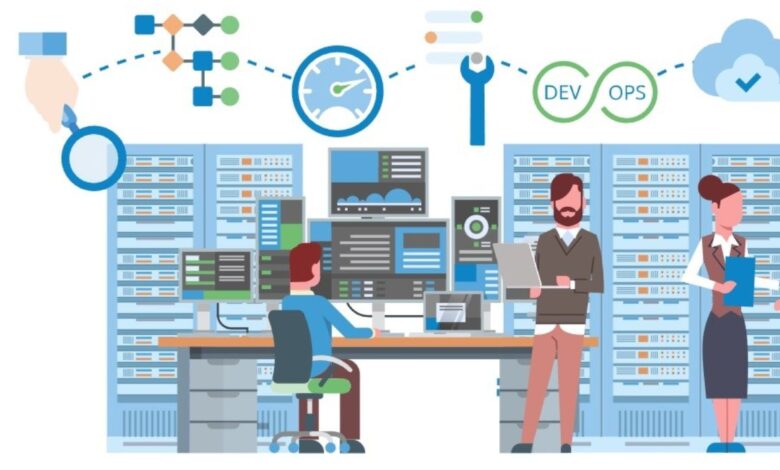
Every application your organization runs, every transaction your bank processes, every government service delivered digitally — none of it exists without IT infrastructure underneath it. Servers, storage systems, networking equipment, data centers, cloud platforms, and the managed services that keep all of it running: this is the foundation layer of the modern digital economy, and in India, it has never been more strategically important.
India’s IT infrastructure market is undergoing a profound transformation. The country’s explosive cloud adoption, the government’s Digital India push, the rapid expansion of data center capacity in cities like Mumbai, Chennai, Hyderabad, and Pune, and the arrival of global hyperscalers who have committed billions of dollars to Indian infrastructure — all of these forces are reshaping what it means to be an IT infrastructure company in 2026. Organizations are not simply buying servers anymore; they are making long-term architectural decisions about hybrid cloud, edge computing, software-defined networking, and AI-ready infrastructure that will define their technology capabilities for the next decade.
Against this backdrop, choosing the right IT infrastructure partner is a decision of considerable strategic weight. This article profiles the top 10 IT infrastructure companies operating in India in 2026, assessed on the depth of their infrastructure capabilities, market presence, innovation track record, and overall relevance to the demands of today’s enterprise and public sector customers.
1. Tata Communications
Tata Communications is one of India’s most important and comprehensive IT infrastructure companies, and understanding its role requires appreciating the unique assets it sits atop. The company owns and operates one of the world’s largest submarine cable networks — giving it a genuine physical infrastructure advantage that most competitors cannot replicate. Beyond connectivity, Tata Communications offers cloud infrastructure services, managed security, unified communications, IoT connectivity, and media services through a global network presence that reaches over 190 countries.
In India specifically, Tata Communications plays a foundational role in connecting enterprises to domestic and international networks, providing data center colocation services, and enabling the cloud transformation journeys of large Indian organizations. Its IZO platform — a cloud-managed network infrastructure platform — represents the company’s commitment to software-defined infrastructure that can be managed and orchestrated centrally, a critical capability for enterprises managing distributed IT estates across multiple locations. For Indian enterprises with global ambitions, Tata Communications provides a rare combination of Indian market depth and genuinely global infrastructure reach.
2. Wipro Infrastructure Engineering
While Wipro is broadly known as an IT services giant, its Infrastructure Engineering division represents a distinct and specialized business that designs and manufactures precision-engineered IT infrastructure components — including hydraulics, aerospace components, and water treatment systems — alongside its IT infrastructure services practice. On the IT services side, Wipro’s infrastructure management practice covers data center operations, cloud infrastructure management, network services, and workplace infrastructure, serving large enterprises across industries globally.
Wipro’s FullStride Cloud Services framework, which helps organizations design and execute cloud infrastructure strategies, is central to its infrastructure consulting and implementation engagements. Its significant investments in automation tooling for infrastructure management — reducing the manual effort required to operate complex hybrid IT environments — reflect a conviction that the future of infrastructure services is AI-augmented operations rather than labor-intensive monitoring and maintenance. For Indian enterprises undertaking large-scale cloud migration or data center consolidation, Wipro’s combination of strategic advisory and hands-on infrastructure delivery is a proven combination.
3. HCL Technologies – Infrastructure Management Services
HCL Technologies has built what is arguably India’s most sophisticated infrastructure management services practice. Its DRYiCE AI and automation platform sits at the heart of its infrastructure offerings, enabling what HCL describes as “autonomics” — infrastructure operations that are self-healing, self-optimizing, and self-managing to a degree that dramatically reduces the need for reactive human intervention.
HCL manages infrastructure for some of the world’s largest organizations across data center operations, end-user computing, network management, cloud operations, and security operations. In the Indian market, it serves both large domestic enterprises and the Indian operations of multinational corporations, and its scale gives it purchasing leverage with OEM partners that translates directly into cost advantages for clients. HCL’s engineering-led DNA — rooted in its origins as a hardware company — gives its infrastructure practice a technical depth and reliability orientation that distinguishes it from firms that came to infrastructure management primarily through IT services.
4. Sify Technologies
Sify Technologies is one of India’s most vertically integrated IT infrastructure companies, and the breadth of its capabilities across the infrastructure stack is genuinely impressive. Sify owns and operates a network of data centers across India — in Mumbai, Delhi NCR, Chennai, Bengaluru, Hyderabad, Kolkata, and Pune — giving it a physical infrastructure footprint that very few India-based companies can match. Built on this foundation, Sify offers cloud services (its Sify CloudInfinit platform), managed network services, digital transformation consulting, and IT infrastructure managed services.
What makes Sify particularly relevant to Indian enterprises is its understanding of the specific operational challenges of running infrastructure in India — power reliability, last-mile connectivity, regulatory compliance, and the complexity of serving distributed locations across the country’s diverse geography. Its SafeVault disaster recovery services and its expertise in deploying Software-Defined WAN (SD-WAN) for enterprises with distributed branch networks are capabilities that address real and persistent pain points for Indian infrastructure teams. For organizations that want a single Indian infrastructure partner capable of owning the full stack from physical data center to managed cloud, Sify is a natural and credible choice.
5. NTT India (formerly Netmagic)
NTT India, operating the Netmagic brand built over decades of data center operations in India, is one of the country’s most trusted colocation and managed infrastructure providers. Netmagic pioneered the managed hosting and colocation concept in India and has maintained a leadership position through consistent investment in data center capacity, infrastructure automation, and managed services capabilities.
NTT India’s data centers in Mumbai, Bengaluru, Chennai, Delhi NCR, and Hyderabad collectively represent a significant portion of India’s carrier-neutral colocation capacity. Its managed infrastructure services — spanning network management, security operations, cloud management, and IT service management — are delivered through an ITIL-aligned operational framework that meets the governance requirements of India’s most demanding enterprise and financial services clients. As part of the global NTT Group, Netmagic/NTT India offers Indian enterprises a path to global infrastructure consistency — the ability to extend their India infrastructure model to international locations through a single provider relationship.
6. Sterlite Technologies (STL)
STL is a Pune-headquartered technology company that has built a distinctive infrastructure position around optical fibers, cables, and network deployment — the physical layer that underlies both telecom and enterprise IT networks. STL is one of the world’s largest manufacturers of optical fiber and fiber optic cables, and its infrastructure services arm deploys and manages large-scale network infrastructure for telecom operators, cloud companies, and governments across India and globally.
In the Indian context, STL has played a significant role in the deployment of BharatNet — the government’s ambitious program to connect India’s gram panchayats with high-speed broadband — as well as in the rollout of 5G network infrastructure for Indian telecom operators. For organizations seeking an infrastructure partner with deep expertise in the physical connectivity layer that everything else depends upon, STL’s manufacturing capability, deployment experience, and managed network services create a genuinely end-to-end infrastructure proposition.
7. Inspira Enterprise
Inspira Enterprise is a Mumbai-based IT infrastructure and cybersecurity company that has built a strong reputation among Indian enterprises for combining deep technical infrastructure expertise with a client-focused delivery model. Inspira works across network infrastructure design and deployment, data center build and management, cloud infrastructure, unified communications, and security infrastructure — making it a comprehensive infrastructure partner for mid-to-large enterprises.
What distinguishes Inspira from larger IT services companies is its agility and the quality of senior technical attention it brings to engagements. As an organization that is large enough to handle complex enterprise infrastructure projects but focused enough to avoid the bureaucratic friction of Tier 1 IT giants, Inspira occupies an important market position. Its strong OEM partnerships with companies like Cisco, Palo Alto Networks, VMware, and NetApp give it access to best-of-breed infrastructure technologies, and its ability to integrate these into coherent, optimized architectures is a skill that clients across BFSI, manufacturing, and healthcare sectors have consistently recognized.
8. CtrlS Datacenters
CtrlS is India’s largest Tier IV certified data center operator, and that distinction matters more than it might initially appear. Tier IV is the highest data center certification level — it implies fully redundant infrastructure components, fault-tolerant site infrastructure, and a guaranteed uptime level of 99.995%. Very few data center operators in India have achieved this certification for their facilities, and CtrlS’s commitment to this standard reflects the level of engineering rigor embedded in its operations.
Headquartered in Hyderabad with facilities in Mumbai, Bengaluru, Chennai, and Noida, CtrlS serves Indian enterprises, banks, government bodies, and the Indian operations of global companies that require the highest available levels of infrastructure reliability and compliance. Its hyperscale data center infrastructure — designed to support cloud and colocation at very large scale — positions it to benefit from India’s ongoing digital infrastructure expansion. For organizations whose business continuity absolutely depends on infrastructure availability, CtrlS’s engineering standards and operational discipline make it a compelling choice.
9. Bharti Airtel (Enterprise Infrastructure Division)
Airtel Business, the enterprise division of Bharti Airtel, brings a unique infrastructure proposition that is rooted in its ownership of India’s most extensive telecom network — a backbone of fiber, towers, and spectrum that reaches into virtually every corner of the country. Built on this connectivity foundation, Airtel Business offers cloud services (Nxtra data centers, Airtel Cloud), managed IT infrastructure services, SD-WAN, IoT connectivity, and cybersecurity infrastructure to Indian enterprises and government organizations.
Airtel’s infrastructure advantage is most pronounced for organizations that need reliable, high-performance connectivity as an integral part of their IT infrastructure story — particularly those with distributed branch networks, manufacturing plants in semi-urban locations, or retail networks spanning hundreds of outlets. The convergence of connectivity and compute infrastructure that Airtel Business offers through its combined network and cloud portfolio is a differentiated model in the Indian market. Its Nxtra data center subsidiary, which operates carrier-neutral colocation facilities across India, reinforces its position as a genuine full-stack infrastructure provider.
10. Technovert
Technovert is a Hyderabad-based technology company that has built a focused and increasingly recognized position in cloud infrastructure and digital transformation services for Indian and global clients. While smaller in scale than the Tier 1 IT giants on this list, Technovert brings a depth of cloud-native infrastructure expertise — particularly around Microsoft Azure, AWS, and modern data infrastructure — that makes it a strong choice for mid-sized enterprises navigating infrastructure modernization.
Technovert’s Axle Data Platform and its cloud infrastructure practice reflect a product-first engineering philosophy unusual in a company of its size. Its work includes cloud infrastructure architecture, data center migration, infrastructure-as-code implementations, and managed cloud operations. For organizations that want the technical depth and personalized engagement of a specialist firm — rather than being one of thousands of accounts at a large IT company — Technovert represents an increasingly credible infrastructure partner, particularly for cloud-first infrastructure engagements.
How to Evaluate an IT Infrastructure Partner for Your Organization
Choosing the right IT infrastructure company is rarely just a technical decision — it is an operational and strategic one. The most important dimension to evaluate is alignment between your infrastructure trajectory and the partner’s core competency. If your primary challenge is data center consolidation and colocation, a company like CtrlS or NTT India (Netmagic) brings decades of specialized expertise. If cloud migration and hybrid infrastructure management is your priority, the managed services practices of HCL, Wipro, or Sify may be more appropriate. If connectivity is as important as compute, Airtel Business or Tata Communications offer infrastructure models built around network ownership.
Beyond technical fit, consider the partner’s operational stability, the quality of their SLA commitments, their experience in your industry vertical, and their investment in automation — because infrastructure that requires extensive manual management is infrastructure that will eventually become a constraint on your organization’s agility. The best IT infrastructure companies do not just sell you hardware or rack space; they build a foundation that actively supports your business ambitions rather than simply keeping the lights on.

Final Thoughts
India’s IT infrastructure landscape in 2026 is a story of rapid maturation and genuine global competitiveness. The ten companies profiled here represent the deepest and most reliable infrastructure expertise available in the Indian market — spanning data center operators, connectivity-led infrastructure providers, managed services giants, and specialist cloud infrastructure firms. As India’s digital economy continues its remarkable expansion, the infrastructure layer that supports it will only grow in strategic importance. Investing in the right infrastructure partner today is one of the highest-return technology decisions an Indian enterprise can make.