ED Attach Properties In Illegal Sand Mining In Nagpur
The Enforcement Directorate’s provisional attachment of properties worth ₹16.23 crore on 19 November 2026 marks the latest stage in a multi-year probe into organised illegal sand mining around Nagpur and Bhandara. Originating from 2022 police cases, the investigation alleges the use of forged electronic transit passes linked to Madhya Pradesh ghats, while GPS data showed vehicles making repeated trips from local illegal sites. Cumulative restrained assets now exceed ₹20 crore, with an estimated market value above ₹50 crore. A detailed forensic audit and a High Court ruling declining to quash proceedings against Narendra Pimple form key pillars of the case, which remains under active investigation under the Prevention of Money Laundering Act.

Maharashtra’s ₹50 Crore Sand Mining Scam: Fake Permits, ₹36.17 Crore Banking Trail And The Regulatory Failures That Fuelled Illegal Mining
Maharashtra’s illegal sand mining scandal has exposed a deeply troubling network of forged government documentation, unauthorised mineral extraction, questionable financial transactions and expensive property acquisitions, raising serious concerns about the effectiveness of mining regulation and government oversight. What initially emerged as a police investigation into suspicious sand transportation documents has developed into a major money-laundering case involving assets with an estimated current market value exceeding ₹50 crore.
The investigation has uncovered how organised operators allegedly exploited weaknesses in electronic transit permits, interstate transportation monitoring and royalty collection to move illegally excavated sand into commercial markets while generating substantial financial gains.
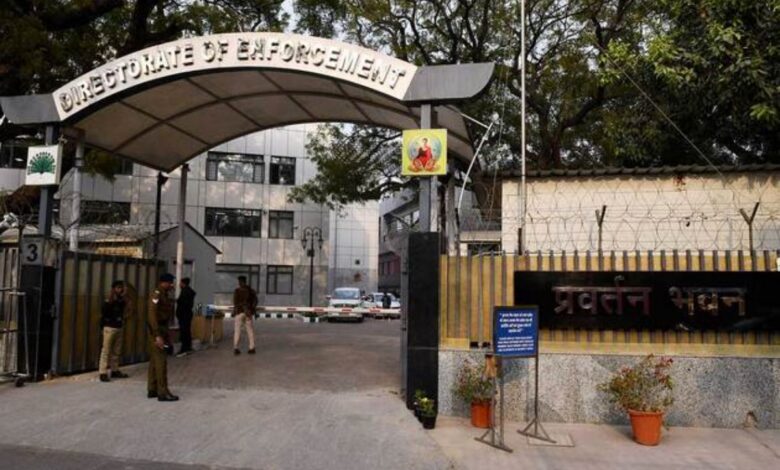
On 19.11.26, the Enforcement Directorate’s Nagpur Sub-Zonal Office announced the provisional attachment of movable and immovable properties worth approximately ₹16.23 crore under the Prevention of Money Laundering Act, 2002. The properties include high-end vehicles, land parcels, residential buildings, flats, commercial shops and farmhouses associated with the investigation into illegal sand excavation and transportation in Nagpur and Bhandara districts.
With the latest action, the cumulative value of assets seized, frozen and attached has exceeded ₹20 crore, while their estimated current market value stands at more than ₹50 crore. The scale of these assets has brought renewed attention to the financial networks operating behind the illegal sand trade and the manner in which earnings from mineral extraction were channelled into valuable movable and immovable properties.
However, the most significant aspect of the investigation is the method through which illegally extracted sand was allegedly introduced into the legitimate construction-material supply chain. According to the Enforcement Directorate, organised syndicates operating around Nagpur procured forged Electronic Transit Passes, commonly known as e-TPs, purportedly issued for legally leased sand ghats in neighbouring Madhya Pradesh.
These documents, reportedly available for ₹6,000 to ₹10,000 each, were used to disguise the actual origin of sand excavated from unauthorised locations in Maharashtra. By presenting the material as originating from legitimate mining sites across the state border, transporters could move substantial quantities of sand while avoiding applicable government royalties and taxes.
The alleged mechanism was particularly effective because the vehicle registration numbers appearing on the forged documents were genuine and reflected on the government portal. This gave the transportation records an appearance of authenticity, making it difficult to distinguish legitimate consignments from illegally sourced material through basic document verification. The deception became apparent when investigators examined GPS records and compared the declared journeys with actual vehicle movements.
The analysis revealed that vehicles supposedly transporting sand from authorised Madhya Pradesh ghats had never visited those locations. Instead, they had undertaken repeated trips from illegal mining sites in and around Nagpur. The discrepancy exposed how legitimate vehicle identities and misleading transportation documents were combined to conceal the origin of illegally extracted minerals.
The investigation raises a fundamental question about the effectiveness of electronic monitoring systems intended to prevent illegal mining. A transportation permit is supposed to establish the lawful origin and movement of minerals, but the Maharashtra case demonstrates how such documentation can become an instrument for concealing unlawful activity when its contents are not effectively reconciled with actual vehicle movements.
The use of genuine registration numbers alongside false mining locations also highlights weaknesses in verification mechanisms, particularly when transportation involves more than one state. In this case, the apparent credibility of official documentation helped facilitate repeated commercial movements of sand from locations different from those declared in the permits.
The origins of the investigation can be traced to a criminal complaint registered at Sadar Police Station, Nagpur, on 19.01.22. According to the Bombay High Court judgment delivered on 10.04.26 in Narendra s/o Keshavrao Pimpale versus State of Maharashtra, journalist Santosh Baburao Gaikwad lodged a complaint concerning suspicious royalty documentation associated with sand transportation. The original FIR named Rahul Khanna and other unidentified persons, following which investigators began examining forged royalty receipts, transportation records and the movement of vehicles connected with sand supplies.
As the investigation progressed, police collected witness statements, seized vehicles, examined commercial records and traced financial transactions involving individuals and business entities operating in the sand trade.
The criminal investigation subsequently expanded into a much larger examination of illegal extraction and transportation activities. Investigators identified 458 forged Electronic Transit Passes associated with Narsingpur sand ghats in Madhya Pradesh, which were allegedly being used for sand transported from locations around Nagpur. The police also examined the involvement of several individuals connected with sand excavation, transportation and commercial supply.
According to the High Court judgment, investigators arrested 22 accused and filed supplementary charge sheets. The proceedings eventually reached the Bombay High Court when Narendra Pimple sought to quash the criminal case against him, bringing extensive details of the forensic investigation into the public domain.
One of the most significant developments occurred when investigators appointed KND Associates, a chartered accountancy firm, to conduct a forensic examination of financial records and seized material. The firm was appointed on 01.11.22 and submitted a 525-page forensic audit report dated 02.09.23. The findings, subsequently reproduced in the Bombay High Court judgment, revealed substantial discrepancies between the quantities of sand commercially supplied and the electronic transit passes available for those movements.
The audit examined records showing that 46,153.72 brass of sand, valued at approximately ₹13.87 crore, had been supplied through 16 trucks to 58 different parties. However, corresponding electronic transit passes were identified for only 8,844.88 brass, leaving 37,308.84 brass of sand without matching transportation documentation.
The audit valued the quantity of sand supplied without corresponding electronic transit passes at approximately ₹11.21 crore. This discrepancy exposed the scale of the undocumented transportation activity reflected in the examined records. A substantial portion of the commercially supplied sand had moved through the transportation network without the electronic documentation ordinarily required to establish its lawful movement.
The findings also demonstrated how the investigation extended beyond individual forged permits to a wider commercial network involving multiple vehicles, purchasers and financial transactions. By comparing transportation records with banking information, the auditors were able to reconstruct significant portions of the business activity associated with the examined sand supplies.
The financial examination revealed another major discrepancy. While the seized business records identified sand supplies worth approximately ₹13.87 crore, the forensic auditors found banking receipts attributed to sand buyers amounting to ₹36.17 crore in the accounts of accused persons and their relatives. The difference of approximately ₹22.30 crore indicated that the financial activity reflected in the banking records was considerably larger than the transactions captured in the examined commercial supply records.
This became a significant part of the investigation because it directed attention towards the wider movement of funds associated with the sand trade and the financial relationships between individuals, businesses and purchasers.
The audit also examined substantial transactions involving Amit Lekhraj Rai and other individuals connected with the case. According to the High Court judgment, cash deposits amounting to approximately ₹2.26 crore were identified in Amit Rai’s bank accounts during FY 2020-21 and FY 2021-22, with a major portion utilised for payments to the Collector, Nagpur (Mining).
Investigators also identified transactions amounting to approximately ₹9.24 crore between Amit Rai and other accused persons and relatives during January 2021 to April 2021. These findings provided further insight into the financial scale of the sand business and the movement of money between individuals and entities examined during the investigation.
The forensic audit also recorded significant banking transactions involving Narendra Pimple and members of his family. The examination covered receipts, income-tax records, business transactions and property purchases associated with individuals named in the criminal proceedings. According to the findings reproduced in the High Court judgment, properties worth approximately ₹3,52,50,000 were purchased during FY 2019-20 to FY 2022-23 by Narendra Pimple, Keshav Pimple, Shrutika Pimple and Savita Khobragade, either individually or as joint owners.
The audit further examined how banking receipts were utilised for property acquisitions, business payments, jewellery purchases, personal expenditure and cash withdrawals, bringing the movement of funds and accumulation of assets into the centre of the investigation.
The investigation also revealed the geographical extent of the illegal mining operations. The forensic audit examined 458 forged electronic transit passes associated with Narsingpur sand ghats in Madhya Pradesh, covering 4,968 brass of sand. According to the findings reproduced in the Bombay High Court judgment, the sand was excavated from 8 auctioned ghats and 16 additional illegal locations adjacent to the Kanhan River.
The estimated government revenue loss associated with this particular analysis amounted to approximately ₹1.49 crore. These figures demonstrated how the use of forged transportation documents extended across multiple extraction locations and enabled commercially significant quantities of sand to move through the supply chain.
Another important element of the operation involved the transportation validity period of the electronic permits. The police investigation found that permits associated with Madhya Pradesh mining locations could provide additional transportation time, allowing repeated movements of sand against the same documentation. This arrangement was commercially advantageous because a permit representing a longer interstate journey could remain valid while vehicles undertook multiple shorter trips from nearby extraction locations.
When combined with false origin details and genuine vehicle registration numbers, the extended transportation window helped operators move sand repeatedly while maintaining the appearance of authorised transportation.
The Enforcement Directorate intensified its investigation in January 2026 with searches conducted at 16 premises across Maharashtra and Madhya Pradesh. The searches covered Nagpur and Bhandara in Maharashtra, along with Bhopal, Hoshangabad and Betul in Madhya Pradesh. The operations resulted in the recovery of unaccounted cash amounting to ₹38.43 lakh, along with property documents, business records and digital devices.
Investigators also froze bank balances worth ₹1.34 crore and seized valuable movable assets, including one BMW, two Toyota Fortuners, one Mahindra Thar, two JCB machines and two Poclain machines. The recovery of luxury vehicles alongside heavy excavation equipment highlighted the range of assets and machinery examined in connection with the illegal mining activities.
During the January enforcement action, the ED identified Rahul Khanna and Bablu Agarwal as alleged leaders of the syndicate involved in preparing forged electronic transit permits in the names of legally leased sand ghats in Madhya Pradesh. These documents were reportedly supplied to operators around Nagpur for ₹6,000 to ₹10,000 each.
The agency estimated the proceeds of crime generated through the illegal mining activities at more than ₹30 crore. The subsequent attachment announced on 19.11.26 expanded the enforcement action against assets connected with the investigation, bringing the cumulative value of seized, frozen and attached properties above ₹20 crore.
The criminal proceedings involving Narendra Pimple also became an important part of the case. Pimple approached the Bombay High Court seeking to quash the FIR and related proceedings, arguing that he had himself raised concerns about illegal sand excavation and that the case arose from business and political rivalry. His legal submissions referred to legitimate business activities and income-tax records.
The prosecution opposed the application and relied on the forensic audit, witness statements, financial transactions and other material collected during the investigation. On 10.04.26, Justice Urmila Joshi-Phalke rejected the application after examining the evidence presented, allowing the criminal proceedings to continue.
Beyond the individual transactions and properties, the Maharashtra investigation exposes wider weaknesses in the administration of minor minerals. Sand is an essential material for construction, and its extraction and transportation are governed by mining permissions, royalty payments and regulatory documentation. The alleged syndicate exploited weaknesses across these systems by combining forged transit passes, misleading origin details and repeated vehicle movements.
The interstate dimension added another layer of complexity, as sand extracted in Maharashtra was represented through documentation associated with authorised mining locations in Madhya Pradesh. The operation raises serious concerns about how effectively mining authorities reconciled excavation quantities, transportation permits, royalty payments and actual vehicle movements.
The environmental consequences of illegal sand excavation add another dimension to the scandal. Unauthorised and excessive extraction from riverbeds can destabilise riverbanks, disturb aquatic habitats, alter river channels and affect surrounding ecosystems. The identification of extraction activity around the Kanhan River highlights the importance of effective monitoring of mining boundaries and permitted quantities.
Illegal sand mining also undermines legitimate operators who comply with mining conditions and government payment requirements, while depriving public authorities of revenue generated from mineral resources. The resulting costs extend beyond the immediate value of the sand removed from the riverbed.
The financial structure revealed by the investigation also illustrates how illegal extraction can become embedded in ordinary commercial activity. The alleged operation involved excavation sites, transporters, document suppliers, sand purchasers, business entities, banking transactions and property acquisitions. Each stage contributed to the movement of material or money through a broader network.
The forged transit passes provided a mechanism for disguising the source of sand, while commercial sales generated receipts that entered the banking system. The forensic audit’s findings concerning property acquisitions and transactions involving multiple individuals brought attention to the subsequent movement and utilisation of those funds.
The latest Enforcement Directorate action has placed this wider network under renewed scrutiny. The attachment of approximately ₹16.23 crore in properties, cumulative enforcement action exceeding ₹20 crore and estimated current market valuation of more than ₹50 crore demonstrate the substantial financial scale associated with the investigation.
At the same time, the forensic findings concerning 458 forged transit passes, 37,308.84 brass of sand without corresponding electronic permits, ₹36.17 crore in banking receipts attributed to sand buyers and an estimated ₹1.49 crore revenue loss from the examined forged-pass transactions expose the operational and financial dimensions of the illegal sand trade.
Ultimately, the Maharashtra sand-mining scandal raises questions that extend well beyond the individuals named in the investigation. It exposes how weaknesses in transportation documentation, interstate verification, mining supervision and financial monitoring can be exploited to move natural resources into commercial markets.
The use of genuine vehicle identities with forged permits demonstrates how easily apparently credible documentation can conceal the actual origin of minerals, while the substantial banking transactions and property acquisitions show the financial reach of the activities examined by investigators.
The case has become a significant examination of the relationship between illegal resource extraction, regulatory weaknesses and commercial wealth accumulation. The Enforcement Directorate’s latest attachment has brought the asset trail into focus, but the underlying forensic audit reveals the wider significance of the investigation: an organised sand transportation and trading network operating across multiple locations, using manipulated documentation and generating substantial financial activity.
The central issue now confronting the mining administration is how such an extensive pattern of questionable extraction and transportation developed despite the existence of electronic permits, royalty systems and regulatory authorities responsible for protecting public mineral resources.