Crores In Alleged Homebuyer Fund Diversion, Repeated ED Summons And Denied Bail: How Deep Does The Raheja Developers Controversy Run?
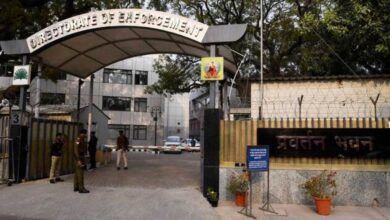
Raheja Developers' legal troubles have intensified following the Enforcement Directorate's prosecution complaint dated 06.11.26, alleging laundering of ₹1,353.26 crore collected from thousands of homebuyers. The case follows the Delhi High Court's 15.10.26 refusal to grant anticipatory bail to Nayan Raheja, son of promoter Navin Raheja, after investigators raised serious concerns about repeated non-compliance with summonses. With approximately 4,600 purchasers and investors affected, several projects remaining incomplete and substantial properties attached, the proceedings expose a prolonged crisis involving alleged diversion of construction funds, unanswered regulatory obligations and homebuyers who have spent years waiting for possession or refunds.


The legal troubles surrounding Raheja Developers Limited and its promoter family have reached a critical stage, with the Enforcement Directorate filing a prosecution complaint on 06.11.26 against the company, its managing director Navin M. Raheja, his son Nayan N. Raheja and 18 other persons and entities in connection with alleged money laundering involving ₹1,353.26 crore.
The prosecution complaint follows two significant judicial setbacks for Nayan Raheja, whose anticipatory bail application was dismissed by the Special PMLA Court on 19.09.26 and subsequently by the Delhi High Court on 15.10.26. The developments expose an increasingly serious legal crisis for a developer whose residential and commercial projects have been surrounded by years of homebuyer grievances, delayed possession, disputed financial transactions and allegations concerning the diversion of money collected for construction.
The ED’s investigation presents a disturbing account of how approximately ₹2,699.13 crore was collected from around 4,600 homebuyers and investors across Raheja Developers’ projects in Delhi and Gurugram. According to the agency, ₹1,353.26 crore has been identified as proceeds of crime, including ₹1,175.86 crore allegedly transferred out of project, escrow and RERA accounts for purposes unrelated to construction and another ₹177.40 crore allegedly collected in cash outside registered agreements.
The investigation concerns projects including Raheja Revanta, Atlantis, Navin Minar and The Delhi Mall, where purchasers complained of paying substantial amounts without receiving possession or refunds. The ED has stated that most of the group’s projects remain incomplete, raising serious questions about the handling of money entrusted to the developer over several years.
Nayan Raheja’s Anticipatory Bail Rejected as ED Questions His Role in Financial Transactions
The Delhi High Court’s judgment dated 15.10.26 provides important insight into the investigation against Nayan Raheja. Justice Amit Bansal dismissed Nayan Raheja’s anticipatory bail application after examining the material submitted by the Enforcement Directorate concerning alleged diversion of homebuyers’ funds, his involvement in the company’s affairs and his conduct during the investigation. The ED maintained that Nayan Raheja had been actively involved in the financial and operational affairs of Raheja Developers and associated entities despite his contention that he had ceased to be a director on 26.11.10 and held only 0.81% shareholding in the company.
One particularly significant piece of evidence discussed in the judgment was an iPad seized from the residence of Nayan Raheja’s wife during the investigation. According to the ED, forensic examination revealed information concerning project-wise costs, expenses and unsold inventory of Raheja Developers. Investigators argued that the presence of such information demonstrated his continued involvement in company affairs.
The agency also relied on a statement recorded from company employee Yogesh Huria, who indicated that Nayan Raheja was involved in managing the developer’s affairs. Nayan Raheja maintained that his architectural qualifications explained his access to project-related information, but the High Court considered that this defence would have to be examined during trial.
The Court also considered the ED’s allegations concerning the movement of funds between Raheja Developers and associated companies. Nayan Raheja’s counsel disputed the agency’s calculations and maintained that the money had been used for legitimate business purposes. However, the High Court found no basis to interfere with the Special Court’s detailed order rejecting anticipatory bail and concluded that the statutory conditions governing such relief under the PMLA had not been satisfied.
Nine ED Summons, Repeated Non-Appearance and Questions Over Cooperation
Perhaps the most striking aspect of the High Court proceedings concerns Nayan Raheja’s response to the Enforcement Directorate’s summonses. The judgment records that the agency issued nine summonses after December 2025, dated 08.04.26, 09.04.26, 13.04.26, 28.04.26, 06.05.26, 18.05.26, 19.06.26, 13.08.26 and 17.08.26.
According to the ED, Nayan failed to appear in response to these summonses, including those issued after an undertaking to cooperate with the investigation had been recorded before the Court. His counsel maintained that he had responded to the summonses and provided reasons for seeking exemptions or alternative arrangements.
The records also establish that Nayan had attended ED questioning on 15.05.25, 19.05.25, 10.12.25 and 12.12.25. The dispute therefore centred particularly on his subsequent non-appearance and the adequacy of his responses to the agency’s repeated requests. The ED argued that requests for exemption or participation through video conferencing did not satisfy the obligation to appear personally under Section 50 of the PMLA. It further maintained that custodial interrogation was necessary to confront him with financial records and establish the ultimate utilisation of the suspected proceeds of crime.
The Enforcement Directorate’s subsequent press release dated 06.11.26 extended these concerns to other members of the promoter family. The agency stated that Navin Raheja, Nayan Raheja, Nayana Singhania and Nirmal Raheja had deliberately not joined search proceedings and had failed to comply with repeated summonses. The ED consequently approached the Special Court at Saket seeking non-bailable warrants against all four individuals. The repeated summonses, disputed cooperation and applications for coercive judicial measures have become a significant part of the case, raising questions about the willingness of the company’s promoters to submit to sustained examination of its financial affairs.
Years of Homebuyer Grievances and the Alleged Diversion of Construction Funds
The ED’s investigation did not emerge from an isolated complaint. The Delhi High Court judgment records that eight FIRs were registered between 2018 and 2023 against Raheja Developers and Navin Raheja by the Delhi Police’s Economic Offences Wing and Gurugram Police. These cases arose against the backdrop of longstanding disputes involving purchasers who had invested in residential and commercial properties but continued waiting for possession or repayment. The ED registered its money laundering case on 31.03.22, based initially on six FIRs, before expanding its investigation into the financial transactions associated with the developer.
The agency alleges that homebuyers’ money was routed through group companies and entities operated by employees and their relatives acting as nominee directors. Funds were allegedly used to purchase land in the names of associated companies and transferred between the RERA accounts of different developments.
Such transactions are particularly consequential in real estate because purchasers make advance payments expecting their money to support construction of specific projects. When those funds are redirected, the financial burden can fall on buyers who continue servicing housing loans, paying rent and pursuing legal remedies while their properties remain unfinished.
Raheja Developers has previously attributed delays at Raheja Revanta to the absence of essential government infrastructure, including water, electricity, sewerage and firefighting services. However, the ED’s investigation has introduced a separate and serious dimension concerning the utilisation of project collections and financial transactions within the corporate group.
₹2,399.65 Crore in Properties Attached as Enforcement Pressure Intensifies
The ED’s investigation has also resulted in substantial property attachments. Through three provisional attachment orders dated 28.04.26, 15.06.26 and 30.07.26, the agency attached immovable properties with a book value of ₹810.57 crore and an estimated market value of ₹2,399.65 crore.
Searches conducted across 14 premises on 27.06.25 and 9 premises on 25.04.26 resulted in the seizure of documents, electronic devices, jewellery, bullion and foreign currency. These developments demonstrate the extensive financial examination undertaken by investigators and the scale of assets connected to the proceedings.
The combination of alleged fund diversion, substantial property attachments, repeated summonses and rejection of anticipatory bail has intensified scrutiny of Raheja Developers and its promoters. For thousands of homebuyers, however, the controversy remains rooted in a much older grievance: money was paid, possession was promised, and years passed without the expected delivery. The legal proceedings now extend beyond delayed construction into allegations concerning corporate fund movements, nominee-controlled entities and suspected money laundering.
When A Developer’s Financial Controversy Becomes a Test of Accountability
The ED’s prosecution complaint dated 06.11.26 and the Delhi High Court’s refusal to grant anticipatory bail to Nayan Raheja on 15.10.26 represent significant developments in the prolonged controversy surrounding Raheja Developers. The agency’s identification of ₹1,353.26 crore in alleged proceeds of crime, together with its findings concerning the movement of homebuyers’ funds, places the developer’s financial practices under serious scrutiny.
The repeated non-appearance alleged by investigators adds another troubling dimension. While thousands of purchasers have spent years pursuing possession or refunds, the ED has had to seek judicial intervention to secure the participation of members of the promoter family in its investigation. The contrast between the prolonged struggles of homebuyers and the alleged resistance encountered by investigators raises a fundamental question about corporate accountability.
For Raheja Developers, the issue now extends far beyond construction delays or individual contractual disputes. It concerns the management of thousands of crores collected from purchasers, the conduct of those controlling the business and the consequences of alleged financial irregularities across multiple projects. The continuing proceedings will determine the criminal liability of the accused, but the scale of the investigation has already exposed the depth of the financial and legal crisis surrounding the developer.