Top 10 Best Car Infotainment Systems in India in 2027
Car infotainment systems have become an important part of the modern driving experience. What was once limited to an audio player, radio and basic Bluetooth connectivity has evolved into an integrated digital interface offering touchscreen controls, smartphone connectivity, navigation, voice commands, connected-car technology, entertainment applications and vehicle information. In India, automobile manufacturers are increasingly introducing larger displays, improved software interfaces, wireless smartphone connectivity and connected services to make their vehicles more convenient and technologically advanced.
A modern car infotainment system serves several purposes beyond entertainment. It allows drivers to access navigation, receive calls, control music, monitor vehicle information and use selected smartphone applications without constantly handling their phones. Depending on the manufacturer and vehicle variant, these systems may also support wireless Android Auto, Apple CarPlay, connected vehicle applications, over-the-air software updates, voice assistants, multiple speakers and personalised settings.
Indian car buyers now have several options across different vehicle categories, ranging from affordable hatchbacks and compact SUVs to premium SUVs and luxury cars. Manufacturers such as Hyundai, Kia, Tata Motors, Mahindra, Maruti Suzuki, Toyota, MG, Volkswagen, Škoda, Honda and Renault have developed infotainment platforms with different hardware specifications and software capabilities.
The following are ten notable car infotainment systems available in the Indian automotive market, considering their functionality, connectivity, interface, entertainment features and overall user experience.
1. Kia Connect Infotainment System
Kia Seltos, Kia Carens, Kia Sonet and other selected Kia models
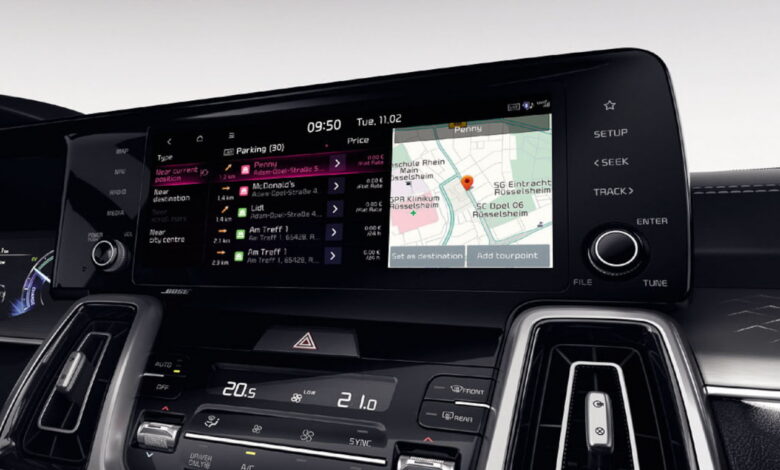
Kia has developed one of the more feature-rich infotainment experiences in the Indian automobile market through its touchscreen-based infotainment platform and Kia Connect technology. The system combines entertainment, smartphone connectivity, vehicle information and connected-car functions through an integrated interface. Depending on the model and variant, Kia vehicles offer touchscreen displays measuring up to 12.3 inches, wireless Android Auto, Apple CarPlay, Bluetooth connectivity and steering-mounted controls. Higher variants also receive premium audio equipment, digital instrument displays and additional connected features.
The Kia Seltos is among the notable examples of the brand’s infotainment capabilities. Its higher variants offer a large HD touchscreen, wireless smartphone connectivity and an eight-speaker Bose premium sound system. The interface is designed to provide access to navigation, music, calling functions and vehicle-related information without requiring drivers to operate multiple independent systems. The arrangement of the touchscreen and physical controls also makes frequently used functions relatively accessible.
Kia Connect adds another dimension to the infotainment experience. It enables selected remote vehicle functions through a compatible smartphone application, including vehicle status monitoring, location-related services, remote commands and safety notifications. Depending on the model and subscription availability, users can access features such as remote engine start, climate control, vehicle diagnostics, location sharing and driving information. These services are particularly useful for owners who want to monitor their vehicles even when they are away from them.
Another important feature is the integration of over-the-air software updates and remote diagnostics in supported models. Such capabilities can help improve the connected-car experience without requiring every software-related change to be handled through a conventional workshop visit. Kia’s infotainment platform is suitable for buyers who want a combination of entertainment, smartphone connectivity, premium audio and connected vehicle functionality.
2. Hyundai Bluelink Infotainment System
Hyundai Creta, Hyundai Alcazar, Hyundai Venue, Hyundai Verna and selected Hyundai models
Hyundai’s infotainment technology combines touchscreen entertainment, smartphone integration and Bluelink connected-car services. The company has progressively expanded its digital cabin features across its Indian vehicle portfolio, offering different touchscreen sizes and connectivity options depending on the model and variant. Its higher-end vehicles feature large HD displays, integrated navigation, voice recognition, premium sound systems and connected vehicle functionality.
The Hyundai Creta is one of the prominent examples of the company’s infotainment technology. Higher variants offer a 10.25-inch HD audio-video navigation system, accompanied by a similarly sized digital instrument cluster. The dual-screen arrangement creates a more integrated digital dashboard and allows drivers to access important driving information separately from entertainment and navigation functions. Selected variants also feature an eight-speaker Bose premium sound system with a front central speaker and subwoofer.
Wireless Android Auto and Apple CarPlay support is another important part of Hyundai’s infotainment offering, although availability and connectivity arrangements vary across models and variants. Users can connect compatible smartphones to access navigation, calls, messages and music applications through the vehicle’s touchscreen. Bluetooth connectivity, USB support and steering-mounted controls further improve everyday usability.
Hyundai Bluelink extends the platform beyond conventional entertainment. It offers connected-car functions such as remote vehicle operations, vehicle status information, location services, safety notifications and selected diagnostic features. The technology also supports voice recognition and, in compatible configurations, home-to-car integration with services such as Amazon Alexa. Certain higher variants receive over-the-air updates for maps and infotainment software.
The company’s focus on combining a familiar touchscreen interface with connected vehicle technology makes its infotainment platform suitable for both everyday commuters and buyers seeking a more sophisticated digital cabin. Its availability across several vehicle categories also gives customers different levels of access to Hyundai’s connected ecosystem.
3. Mahindra Adrenox Infotainment System
Mahindra XUV700, Scorpio-N, XUV 3XO and selected Mahindra SUVs
Mahindra’s Adrenox connected-car technology brings together infotainment, vehicle monitoring, remote functions and digital convenience features. The system is designed to provide an integrated experience for customers who want more than a conventional touchscreen music and navigation unit. Its features vary considerably across vehicle models, software generations and variants, but the platform has become an important part of Mahindra’s technology offering in India.
The Mahindra XUV700 is one of the best-known examples of the company’s digital infotainment approach. Its higher variants feature dual 10.25-inch screens, with one display serving as the infotainment interface and the other providing driver-related information. This arrangement creates a modern dashboard layout and allows occupants to access different categories of information through dedicated displays.
The infotainment system supports smartphone connectivity, navigation, music, Bluetooth and selected connected services. Depending on the configuration, users can access compatible applications and vehicle information through the touchscreen. Steering-mounted controls make it easier to manage commonly used audio and calling functions while driving. Mahindra has also incorporated voice-based functionality in supported vehicles, allowing users to interact with selected features through voice commands.
Adrenox connected-car technology offers functions such as remote vehicle operations, vehicle tracking, location-based services, vehicle health information and safety alerts. Certain functions can be accessed through a compatible smartphone application. This allows owners to monitor aspects of their vehicles without being physically present inside the cabin.
Mahindra’s newer electric vehicles have also taken its digital cabin experience further. The XEV 9e, for example, offers a triple-screen dashboard arrangement, wireless Android Auto and Apple CarPlay, 5G connectivity, connected functions and a Qualcomm Snapdragon-based computing platform. Higher configurations also offer Harman/Kardon audio, Dolby Atmos and additional entertainment capabilities. These features represent a more advanced direction for Mahindra’s in-car technology.
The platform is particularly relevant for customers interested in large displays, connected vehicle services, digital dashboards and integrated entertainment. However, buyers should distinguish between the conventional Adrenox-equipped vehicles and the newer digital architecture introduced in Mahindra’s electric vehicle range.
4. Tata Motors Infotainment System
Tata Harrier, Safari, Nexon, Curvv, Sierra and selected Tata electric vehicles
Tata Motors has steadily expanded its infotainment capabilities through touchscreen interfaces, connected-car services and premium audio partnerships. Its systems are designed to provide entertainment, smartphone connectivity, navigation and vehicle-related information through a central dashboard display. Depending on the vehicle and variant, Tata models offer different screen sizes, software interfaces and audio configurations.
The Tata Harrier and Safari are among the prominent vehicles showcasing the company’s larger infotainment displays. Their higher variants offer a 12.3-inch touchscreen infotainment system, with support for smartphone connectivity, navigation and connected vehicle functions. The interface provides access to music, calling and other compatible applications. The larger display also improves the presentation of maps, vehicle settings and entertainment controls.
Tata’s iRA connected-car technology adds remote monitoring and vehicle management features. Depending on the model, it offers functions such as vehicle location tracking, remote commands, vehicle health monitoring, driving information, alerts and selected diagnostic services. These functions are accessible through a compatible application and can improve the convenience of vehicle ownership.
Audio quality is another area in which Tata Motors has invested. Selected vehicles receive premium sound systems developed in collaboration with established audio brands. The Tata Sierra, for example, brings a more technology-oriented cabin experience with a 12.3-inch infotainment display, wireless smartphone integration and a multi-screen dashboard arrangement. Its higher audio configurations include a JBL Black sound system with Dolby Atmos, offering a more immersive entertainment experience.
The company’s electric vehicles also incorporate infotainment and connected features designed around the requirements of electric mobility. Depending on the model, users can access information related to charging, driving range, vehicle status and energy consumption. Integrating such information into the digital interface is useful because electric vehicle owners regularly need to monitor battery-related information alongside conventional driving data.
Tata’s infotainment ecosystem offers a combination of entertainment, vehicle connectivity and practical information. Its availability across several vehicle segments makes it relevant to customers considering both conventional petrol and diesel vehicles and electric cars.
5. MG i-SMART Infotainment System
MG Hector, Astor, Gloster and selected MG models
MG Motor India’s i-SMART technology is an integrated infotainment and connected-car platform developed to provide a technology-oriented cabin experience. The system combines touchscreen entertainment, voice commands, smartphone integration, navigation and remote vehicle functions. MG has positioned connected technology as an important part of its product offering, particularly in its SUV portfolio.
The MG Hector is one of the most recognisable examples of the company’s infotainment approach. Its higher variants feature a large portrait-oriented touchscreen display, which provides access to entertainment, navigation, vehicle settings and connected services. The vertically positioned screen gives the dashboard a distinctive appearance and provides a relatively expansive interface for accessing different functions.
The i-SMART system supports multiple connected features, including voice commands, remote vehicle operations, vehicle tracking and selected vehicle diagnostics. Users can access compatible functions through the touchscreen or a smartphone application. Depending on the vehicle and subscription arrangements, these features can include remote engine start, air-conditioning control, vehicle status information, location services and safety notifications.
Voice assistance is another important component of MG’s infotainment experience. The system allows users to operate selected functions through spoken commands, reducing the need to interact manually with the touchscreen. This can be useful when adjusting certain cabin functions, accessing entertainment or requesting information while travelling.
MG has also focused on integrating internet-based services into its infotainment platform. Selected models and software versions support connected applications and entertainment-related features, although availability depends on the vehicle’s hardware, software and connectivity package. Smartphone integration through Android Auto and Apple CarPlay further extends the available entertainment options.
The MG Astor also brought an emphasis on artificial intelligence and voice interaction to the company’s Indian portfolio. Its connected technology includes features designed to make vehicle interaction more conversational and convenient. MG’s approach is particularly suitable for buyers who value large touchscreen displays, connected services and voice-operated functions.
6. Volkswagen Infotainment System
Volkswagen Taigun, Virtus and other selected Volkswagen models
Volkswagen offers an infotainment experience focused on smartphone connectivity, navigation, digital displays and straightforward operation. The company’s systems are designed to integrate entertainment and communication features into the dashboard while retaining a relatively conventional interface. In India, the Taigun and Virtus are important examples of Volkswagen’s touchscreen infotainment offering.
The infotainment systems available in these vehicles provide touchscreen-based access to music, telephone functions, navigation and compatible smartphone applications. Depending on the model year and variant, the display size and equipment may differ. Higher variants offer larger touchscreen units and additional digital convenience features.
Android Auto and Apple CarPlay integration is an important part of the Volkswagen experience. These systems allow compatible smartphones to project supported applications onto the vehicle’s infotainment screen. Drivers can use navigation applications, access music services and manage calls through the touchscreen or steering-mounted controls. Wireless connectivity is available in supported configurations, reducing the need to connect a phone through a USB cable every time the vehicle is started.
The Volkswagen interface is designed to prioritise frequently used functions and maintain a relatively familiar user experience. Users can switch between entertainment, phone connectivity and navigation without having to learn an unnecessarily complicated operating structure. Physical controls and steering-mounted buttons also help with commonly used functions.
Another important component is the integration of the infotainment screen with the vehicle’s digital instrument display in selected configurations. This provides drivers with additional information while keeping the central screen available for entertainment and navigation. Depending on the model, the digital cockpit can display trip information, driving data and other relevant vehicle information.
Volkswagen’s infotainment platform is a suitable option for buyers who prefer smartphone-based navigation and entertainment rather than relying exclusively on built-in applications. Its emphasis on familiar controls, smartphone integration and a clean interface makes it relevant to customers who want a practical digital cabin.
7. Škoda Infotainment System
Škoda Kushaq, Slavia, Kylaq and selected Škoda models
Škoda’s infotainment technology combines touchscreen entertainment, smartphone integration, voice-based interaction and digital vehicle information. The company has increasingly focused on improving the software experience in its Indian models, with particular attention to connectivity and the integration of modern smartphone features.
The Kushaq and Slavia are important examples of the company’s infotainment offering. Their updated configurations feature a 10.1-inch touchscreen infotainment display, wireless Android Auto and Apple CarPlay. The touchscreen provides access to compatible navigation, music, calling and other smartphone applications. The interface is designed to provide convenient access to commonly used features without requiring users to operate separate devices.
One of the notable developments in Škoda’s newer infotainment technology is its AI-based voice assistant integration. The updated Kushaq introduces a voice assistant powered by Google’s automotive AI technology. This brings Gemini-based capabilities into the vehicle and allows users to access information through conversational voice interactions. The system is designed to understand Indian English accents and supports hands-free operation of selected functions, including music, calls and climate settings.
This type of integration represents a shift from traditional voice commands towards more context-aware assistance. Rather than simply recognising a limited number of predefined commands, newer AI-powered systems are designed to interpret more natural requests and provide relevant responses. The actual functions available depend on connectivity, software configuration and supported services.
Škoda’s infotainment experience also benefits from its integration with the vehicle’s digital cockpit. Selected variants offer digital instrument displays that present driving information separately from the central touchscreen. This arrangement helps maintain a clear distinction between essential driving information and entertainment functions.
The brand’s infotainment platform is suitable for customers who prefer a clean interface, wireless smartphone connectivity and increasingly sophisticated voice assistance. Its newer software developments also demonstrate how artificial intelligence is becoming part of the next generation of automotive infotainment.
8. Maruti Suzuki SmartPlay Pro+ Infotainment System
Maruti Suzuki Grand Vitara, Brezza, Baleno, Fronx and selected Maruti Suzuki models
Maruti Suzuki has developed its SmartPlay infotainment ecosystem to provide touchscreen entertainment, smartphone connectivity and convenient access to vehicle information. The system is available in different configurations across the company’s vehicle range, with SmartPlay Pro and SmartPlay Pro+ offering different levels of functionality depending on the model and variant. Its primary focus is on providing an accessible digital interface for customers who want modern entertainment and connectivity without complicated controls.
The SmartPlay Pro+ system is available in selected higher variants and provides a touchscreen interface for music, smartphone applications, calling and other entertainment functions. Depending on the vehicle, the system offers a 9-inch touchscreen display, with support for Android Auto and Apple CarPlay. The interface allows users to connect compatible smartphones and access supported applications through the vehicle’s central display.
One of the important features of Maruti Suzuki’s infotainment ecosystem is its integration with Suzuki Connect. This connected vehicle technology provides selected remote monitoring and vehicle management features through a compatible smartphone application. Users can access vehicle location information, driving behaviour reports, vehicle health information, safety notifications and other connected services, depending on the model and subscription.
SmartPlay Pro+ also supports voice-based interaction in compatible configurations. Voice functionality can make it easier to access selected entertainment and smartphone features without repeatedly using touchscreen controls. Steering-mounted audio and calling controls provide additional convenience, especially during regular city commutes and longer journeys.
The company’s infotainment technology is also designed to complement its broader vehicle equipment. In selected models, the touchscreen works alongside a digital instrument cluster, steering controls and other cabin convenience features. The combination provides a more integrated experience without making the dashboard unnecessarily complicated.
Maruti Suzuki’s widespread service network and extensive Indian customer base make its infotainment ecosystem relevant to a large section of car buyers. Customers looking for practical smartphone connectivity, straightforward entertainment controls and connected vehicle functions can consider SmartPlay Pro+ equipped models. However, it is important to check the exact variant because touchscreen size, wireless connectivity and connected services are not identical across the entire Maruti Suzuki range.
9. Toyota Infotainment System
Toyota Innova Hycross, Urban Cruiser Hyryder, Fortuner and selected Toyota models
Toyota offers touchscreen infotainment technology designed to combine entertainment, smartphone connectivity, navigation and connected vehicle services. Its Indian portfolio includes different infotainment configurations depending on the vehicle category and equipment level. The company focuses on integrating digital convenience features with a user-friendly interface that can be operated by different categories of customers.
The Toyota Innova Hycross is among the important examples of the brand’s infotainment offering. Selected higher variants feature a 10.1-inch touchscreen infotainment system with smartphone connectivity and other entertainment functions. The display provides access to music, calls and compatible smartphone applications. The system is designed to complement the vehicle’s premium cabin environment and provide convenient access to frequently used features.
Toyota’s connected technology, known as Toyota i-Connect in supported models, provides access to several vehicle-related services. These can include remote vehicle operations, vehicle health monitoring, location information, safety alerts and maintenance-related information. Depending on the model and connected package, owners can access selected functions through a compatible smartphone application.
Smartphone integration is an important part of the Toyota infotainment experience. Android Auto and Apple CarPlay support allows users to access compatible navigation and entertainment applications through the vehicle’s touchscreen. This is particularly useful for customers who regularly use smartphone-based navigation and music streaming services.
Selected Toyota models also offer premium audio configurations and digital convenience features. These can include multiple speakers, steering-mounted audio controls, Bluetooth connectivity and USB-based smartphone integration. The availability of these features depends on the vehicle and its variant.
Toyota’s infotainment technology is designed to offer a balance between functionality and ease of use. Its connected vehicle ecosystem adds value for owners who want to monitor vehicle information and access selected remote functions. Buyers considering Toyota vehicles should compare the touchscreen size, smartphone connectivity and connected features of the exact variant because the equipment differs between models.
10. Honda Infotainment System
Honda City, Honda Elevate and selected Honda models
Honda’s infotainment technology focuses on touchscreen entertainment, smartphone integration and convenient access to vehicle-related information. The company has incorporated modern connectivity features into its Indian passenger vehicles while maintaining a relatively straightforward dashboard design. Its infotainment systems are intended to provide access to navigation, music, telephone functions and compatible smartphone applications.
The Honda Elevate is one of the prominent examples of the company’s infotainment offering in India. Higher variants feature a 10.25-inch touchscreen infotainment system with wireless Android Auto and Apple CarPlay. The larger display provides a convenient interface for accessing compatible smartphone applications, navigation, music and communication functions. Its positioning within the dashboard makes it an important part of the vehicle’s overall digital cabin experience.
The Honda City also offers touchscreen infotainment functionality in selected variants. Depending on the model and equipment level, the system provides smartphone integration, Bluetooth connectivity, music playback and other entertainment features. Steering-mounted controls allow drivers to manage selected audio and calling functions without repeatedly reaching for the touchscreen.
Honda Connect adds connected vehicle capabilities to the infotainment experience. Through a compatible smartphone application, owners can access selected vehicle information and remote services. These may include vehicle location, vehicle health information, safety alerts, driving-related data and remote operations, depending on the vehicle’s compatibility and subscription package.
Another important aspect of Honda’s approach is the integration of infotainment with other vehicle systems. The touchscreen can work alongside the instrument display, rear-view camera and steering controls to provide a more convenient driving experience. Selected models also offer voice-based functionality and other digital convenience features.
Honda’s infotainment system is particularly relevant for buyers who want a practical interface with modern smartphone connectivity. Rather than relying entirely on complicated software features, its approach focuses on providing the essential functions required for daily driving. The Elevate’s larger touchscreen and wireless smartphone integration make it a notable option for customers considering a technology-equipped midsize SUV.
Important Features to Consider When Choosing a Car Infotainment System
Selecting a car infotainment system involves more than comparing touchscreen sizes. A large display may look impressive, but the overall experience depends on software responsiveness, smartphone compatibility, sound quality, navigation accuracy and ease of operation. Buyers should consider how frequently they use navigation, music streaming, hands-free calling and connected vehicle services before selecting a particular vehicle.
Screen size and display quality are important considerations. Modern cars offer infotainment displays ranging from approximately 8 inches to more than 12 inches. Larger screens can make maps, menus and entertainment controls easier to view, but display resolution, brightness, viewing angles and touchscreen responsiveness are equally important. A well-designed smaller screen can provide a better experience than a larger display with slow software or an inconvenient interface.
Android Auto and Apple CarPlay compatibility are also important. These technologies allow users to access supported smartphone applications through the car’s infotainment screen. Buyers should check whether the system supports wired or wireless connectivity. Wireless smartphone integration provides additional convenience because users do not need to connect their phones physically every time they enter the vehicle.
Built-in navigation can be useful for people who regularly travel to unfamiliar locations. Some infotainment systems provide integrated mapping and navigation, while others primarily depend on smartphone applications. Buyers should also check whether map updates are available and whether navigation functions require an active internet connection.
Audio quality is another major factor. The number of speakers alone does not determine how good a car’s sound system will be. Speaker placement, amplifier performance, sound tuning and cabin acoustics influence the listening experience. Premium systems from brands such as Bose, Harman/Kardon and JBL can offer a more sophisticated audio experience in selected vehicles. Buyers who enjoy music should ideally test the sound system before purchasing the vehicle.
Connected-car technology has also become an important consideration. Features such as remote locking, vehicle tracking, vehicle health monitoring, emergency alerts and remote climate control can improve convenience. However, not every connected feature is available permanently without restrictions. Some services may require an active subscription, a compatible smartphone, network connectivity or specific vehicle hardware.
Voice assistance can make infotainment systems more convenient by allowing users to operate selected functions without manually navigating through multiple menus. Traditional voice recognition and newer artificial intelligence-based assistants have different capabilities. Buyers should check which commands are supported and whether voice functionality works reliably with Indian accents and commonly used language patterns.
Software updates are another feature worth examining. Over-the-air updates can allow manufacturers to improve selected software functions, update maps and address certain technical issues without requiring a conventional service visit. However, not all vehicles support full infotainment updates remotely. Some updates may still require a dealership or service centre.
Finally, ease of operation should remain a priority. An infotainment system should provide entertainment and convenience without distracting the driver. Important functions such as volume adjustment, calling and climate control should be easy to access. Physical buttons, steering-mounted controls and a well-organised touchscreen interface can make a significant difference to everyday usability.
Conclusion
Car infotainment systems are becoming increasingly important in India’s automobile industry as customers expect more advanced digital features from their vehicles. Manufacturers are investing in larger touchscreen displays, wireless smartphone integration, connected vehicle applications, voice assistants, premium audio systems and improved software interfaces. These developments are transforming the car cabin into a connected environment that combines entertainment, communication and vehicle information.
Kia Connect, Hyundai Bluelink, Mahindra Adrenox, Tata Motors’ infotainment ecosystem and MG i-SMART offer a wide range of connected vehicle and entertainment features. Volkswagen and Škoda focus on smartphone integration and convenient digital interfaces, while Maruti Suzuki and Toyota provide infotainment solutions designed for different categories of Indian car buyers. Honda also offers practical touchscreen and connected-car functionality across its selected models.
The right infotainment system ultimately depends on individual requirements. Buyers who prioritise premium audio may prefer vehicles equipped with Bose, JBL or Harman/Kardon sound systems. Those who regularly use navigation and smartphone applications should look for wireless Android Auto and Apple CarPlay. Customers interested in remote vehicle monitoring and digital convenience should compare the connected-car features offered by different manufacturers.
It is equally important to remember that infotainment features vary between models and variants. A manufacturer may advertise a particular technology across its product portfolio, but the actual touchscreen size, wireless connectivity, audio configuration and connected services may be restricted to higher variants. Therefore, checking the exact equipment list and experiencing the interface during a test drive can help buyers make a more informed decision.
As automotive technology continues to develop, infotainment systems are likely to become more intelligent, personalised and closely integrated with vehicle functions. Artificial intelligence, cloud-based services, improved voice recognition and advanced digital dashboards are expected to influence the next generation of connected cars in India.