The Zilingo Pandemic Deal That Never Delivered On Its Promise, One Crore Masks, A USD 6.75 Million Bank Guarantee, A Startup That Collapsed And The Questions That Still Follow Ankiti Bose
Zilingo's USD 22.5 million contract to supply one crore KN95 masks to India during COVID-19 ended in a bitter procurement dispute, allegations of substandard products and forged inspection certificates, and a USD 6.75 million bank guarantee encashment. Six years later, questions surrounding the deal and its former CEO, Ankiti Bose, remain.

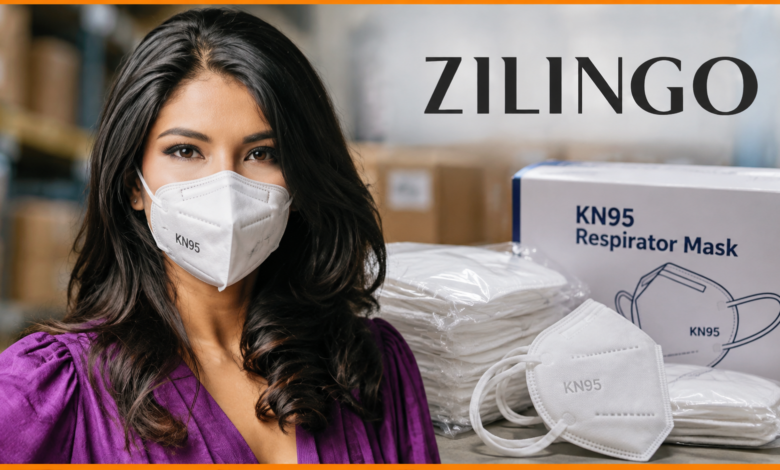
In April 2020, when India was struggling to secure essential medical supplies amid the COVID-19 pandemic, Singapore-based fashion and technology company Zilingo Pte. Ltd. entered into a USD 22.5 million contract to supply one crore KN95 respiratory masks to India. The company was co-founded by Ankiti Bose, who was serving as its chief executive at the time.
The agreement was entered into between the High Commission of India in Singapore and Zilingo, with HLL Lifecare Ltd., a government-owned healthcare company based in Thiruvananthapuram, acting as the channelising agency for the procurement.
The contract was substantial. Zilingo was expected to supply 10 million masks, with 30 per cent of the relevant invoice value secured through a USD 6.75 million bank guarantee issued by DBS Bank Ltd. in Singapore.
The timing of the deal is important. India was facing an unprecedented shortage of protective equipment, with hospitals and healthcare workers depending on reliable supplies of masks and other personal protective equipment.
Procurement agencies were under pressure to source products quickly, but the urgency did not remove the need for quality checks, proper certification and timely delivery.
For Zilingo, the agreement represented a significant opportunity to enter the medical supplies market at a time when governments worldwide were scrambling to secure protective equipment. But what began as a major pandemic-era procurement contract soon developed into a dispute involving delivery failures, questions about product quality and allegations concerning inspection documents.
Thirty-Two Lakh Masks Remained Undelivered as the Contract Dispute Reached Court
The first major problem with the agreement was the delivery schedule. According to the Indian government’s submissions before the Delhi High Court, the initial supplies were expected in May 2020. However, Zilingo was granted several extensions to complete the contracted quantity, with the final deadline expiring on September 15, 2020.
By the time the dispute reached the court in October, the company had supplied approximately 68 lakh masks against the contracted one crore. The remaining 32 lakh masks had not been delivered.
The government informed the court that it no longer wished to accept the outstanding quantity, citing repeated breaches of the agreed delivery deadlines. Zilingo, however, maintained that it was ready and willing to complete the supply and argued that testing protocols had affected its ability to fulfil the contract.
The disagreement was now more than a routine commercial dispute. The government had entered into the agreement during a public-health emergency, had granted multiple extensions and was still left with nearly a third of the contracted quantity undelivered.
Zilingo subsequently approached the Delhi High Court after the High Commission of India in Singapore sought to encash the USD 6.75 million bank guarantee issued in connection with the contract.
The proceedings brought the scale of the transaction and the competing positions of both sides into the public record. While the company maintained that it remained willing to fulfil its obligations, the government argued that the repeated delays had made it unwilling to accept the remaining masks.
The court proceedings would soon bring another important aspect of the controversy into focus: the USD 6.75 million bank guarantee and the allegations that would later emerge concerning the quality of the masks and their inspection certificates.
Allegations of Substandard Chinese Masks and Forged Inspection Certificates
The delivery dispute was followed by more serious allegations concerning the quality of the masks Zilingo had attempted to supply.
In a report published on September 1, 2022, Mint, citing two senior officials of the Union Health Ministry, reported that Zilingo had allegedly attempted to dispatch millions of substandard Chinese KN95 masks to India using forged third-party inspection certificates.
According to the officials quoted in the report, HLL Lifecare had engaged inspection agencies to conduct pre-dispatch checks at the manufacturing facilities. However, discrepancies were reportedly detected by HLL’s dispatch inspection team, raising questions about whether the masks met the required specifications and whether the accompanying inspection documents were genuine.
This was a considerably more serious issue than the original delivery dispute. The concern was no longer simply whether Zilingo had supplied the agreed quantity within the stipulated time. It was whether the products being offered actually met the standards expected of respiratory protective equipment during a public-health emergency.
The inspection certificates were particularly important because they were meant to establish that the products had undergone the necessary quality checks before being shipped. If the allegations were established, the use of falsified certificates would raise serious questions about the procurement process, the suppliers involved and the company’s quality-control arrangements.
Zilingo disputed allegations of unethical conduct. Its spokesperson pointed to the changing certification standards, manufacturing capacity constraints and pricing pressures that affected PPE procurement worldwide during the early months of the pandemic.
However, the allegations reported by Mint were attributed to senior government officials and were not, in themselves, judicial findings. The publicly available court orders do not establish that the certificates were forged or that the company deliberately attempted to supply defective products.
That distinction is important. The allegations are serious, but establishing what actually happened requires access to the inspection reports, laboratory findings, supplier records and the certificates in question.
It also raises questions about the level of oversight exercised by Zilingo’s senior management during the procurement exercise.
The USD 6.75 Million Bank Guarantee and the Delhi High Court Proceedings
The dispute over the undelivered masks eventually reached the Delhi High Court, with Zilingo challenging the Indian government’s attempt to encash its USD 6.75 million bank guarantee.
On October 14, 2020, the court initially restrained DBS Bank from making payment under the guarantee until further orders. At that stage, the court recorded Zilingo’s position that it remained willing to complete the outstanding supply and that testing protocols had prevented it from doing so. The court also noted that approximately 68 per cent of the contracted quantity had been delivered and that the reasons for invoking the guarantee required consideration.
However, the position changed the following day.
On October 15, the government informed the court that Zilingo had failed to meet several delivery deadlines, despite being granted multiple extensions. The final deadline had expired on September 15, and the government made it clear that it no longer wished to accept the remaining 32 lakh masks.
With the bank guarantee due to expire that day, the court directed that the full USD 6.75 million be encashed. However, it also imposed an important condition: the proceeds were to be credited to an identified account maintained by the High Commission of India in Singapore and could not be used for any other purpose. The money would remain subject to further orders of the court.
The distinction is significant. The court secured the disputed amount but did not finally decide the contractual dispute or establish the allegations concerning the quality of the masks and inspection certificates. Nor did it declare Ankiti Bose personally liable for the transaction.
The case remained on the court’s docket until February 22, 2024, when Zilingo’s petition was dismissed for want of prosecution. The court recorded that nobody had appeared on behalf of the petitioner for a considerable period and that the company appeared uninterested in pursuing the matter. The interim order was consequently vacated.
But the dismissal was procedural, not a judgment on the merits of the original dispute.
It also leaves an important question unanswered: what ultimately happened to the USD 6.75 million held under the court’s directions? The dismissal of the petition does not, by itself, establish the final disposition of those funds.
Inside Zilingo’s Corporate Crisis and Ankiti Bose’s Removal
The controversy surrounding the mask procurement contract was unfolding against the backdrop of a much larger crisis inside Zilingo. By early 2022, the company was facing questions about its financial management, internal controls and the way some of its business transactions had been handled.
In March 2022, Zilingo’s board suspended Ankiti Bose while an internal investigation into alleged financial irregularities was underway. On May 20, 2022, the company announced that it had terminated her employment following an investigation conducted by independent forensic consultancy Kroll.
The allegations included questions about payments exceeding USD 7 million to service providers. According to contemporary Bloomberg reporting, some of these payments had allegedly been approved by Bose without the knowledge of certain senior executives. The investigation also examined aspects of Zilingo’s accounting practices and financial reporting.
Bose disputed the allegations. She maintained that the payments were legitimate, supported by appropriate documentation and known to relevant finance, technology or operations personnel. She also questioned the fairness of the investigation, arguing that her termination was linked to an alleged lack of cooperation rather than any established financial misconduct.
The dispute attracted considerable attention because Zilingo was not a small, privately run venture with limited financial backing. It had raised hundreds of millions of dollars from institutional investors and had built a reputation as one of Southeast Asia’s prominent technology startups.
Subsequent reporting by Inc42 in April 2023 raised further questions about vendor payments, financial reporting discrepancies and transactions involving service providers. Bose continued to dispute the allegations and maintained that the payments had been legitimate.
The internal investigation and the disagreements between Bose and the company’s board added another dimension to Zilingo’s troubles. However, the allegations concerning its financial management should be treated separately from the pandemic mask procurement dispute. Neither set of allegations, on its own, establishes personal criminal wrongdoing by Bose.
From A USD 970 Million Startup To Liquidation
Zilingo’s eventual collapse marked the end of a company that had once been regarded as one of Southeast Asia’s promising technology ventures.
The startup had attracted considerable investor interest, particularly after raising USD 226 million in 2019 at a reported valuation of USD 970 million. Its business model focused on connecting fashion manufacturers, suppliers and retailers through a technology-driven platform.
Its investor base included Singapore-linked investment entities Temasek and EDBI, both of which had invested in the company between 2018 and 2020, according to a parliamentary reply issued by Singapore’s Ministry of Finance in February 2023.
But the company’s financial and management difficulties eventually proved difficult to overcome. In January 2023, Zilingo entered provisional liquidation, with EY Corporate Services appointed to oversee the process. The following month, its members resolved to place the company into creditors’ voluntary winding up after it declared that it could no longer continue business because of its liabilities.
There were also corporate compliance issues. Singapore’s Accounting and Corporate Regulatory Authority confirmed enforcement action against Zilingo for failing to submit annual returns for 2020 and 2021, as well as failing to file annual financial statements for those years.
The collapse brought an abrupt end to a heavily funded startup that had once been valued close to USD 1 billion. It also left questions about the company’s financial controls, management decisions and reporting practices.
For the Indian pandemic procurement controversy, however, Zilingo’s liquidation did not automatically resolve the outstanding questions about the masks, the inspection certificates or the money secured through the bank guarantee. Those remain separate matters requiring their own documentary and legal answers.
The Legal Battles That Continued After Zilingo’s Collapse
Zilingo’s closure did not bring an end to the disputes involving its former leadership. In the years that followed, Ankiti Bose became involved in separate legal proceedings involving her former colleagues, adding another chapter to the company’s already complicated history.
In April 2024, Mumbai Police registered an FIR following a complaint by Bose against Zilingo co-founder Dhruv Kapoor and former Chief Operating Officer Aadi Vaidya. Her complaint included allegations of cheating, criminal intimidation, conspiracy and sexual harassment. She also alleged that the two former colleagues had attempted to pressure her into relinquishing her shares and business interests.
Both Kapoor and Vaidya denied the allegations. Kapoor described the accusations as baseless and malicious, while Vaidya also rejected the charges and characterised the complaint as retaliatory. The allegations therefore remain a separate matter requiring examination through the police investigation and any subsequent judicial proceedings. An FIR, by itself, does not establish guilt.
A further legal dispute emerged in 2026 involving Inventiva’s publisher, Nitin Naresh. Reports concerning a Jaipur extortion FIR described allegations of extortion, criminal intimidation and conspiracy. However, the available material does not establish that Bose personally filed the complaint or directed its registration. Reporting identifies a representative associated with Terra Vision Investments in connection with the complaint, making it important not to attribute the FIR directly to Bose without supporting evidence.
Separately, Bose instituted civil defamation proceedings against Naresh and others before the Delhi High Court on August 24, 2026, in CS(OS) 756/2026. The proceedings concerned publications she alleged were defamatory, and the court issued interim directions relating to the dissemination of specified material.
On September 14, 2026, Krishan Rattan also instituted a separate defamation suit, CS(OS) 815/2026, against Naresh and others. The court passed an ad-interim direction restricting further publication of articles containing defamatory imputations against Rattan. Importantly, the order clarified that the direction was not intended to prevent the defendants from continuing their fact-finding exercise concerning the allegations.
These proceedings are distinct from the original pandemic procurement dispute. They also do not establish whether the allegations concerning Zilingo’s mask contract were true or false. What they do demonstrate is that the disagreements surrounding the company’s former leadership have continued to generate legal disputes long after the startup ceased operations.
Six Years Later, The Questions Surrounding The Mask Contract Remain
The Zilingo mask procurement controversy began in 2020, but several important questions remain unanswered in the publicly available records examined for this article.
The first concerns the manufacturers and suppliers involved in the transaction. Who selected the Chinese manufacturing facilities, who approved the sourcing arrangements and what quality checks were conducted before the masks were cleared for dispatch?
The allegations reported by Mint also require greater clarity. Which inspection agencies issued the certificates that were subsequently questioned? What discrepancies did HLL Lifecare’s inspection team identify, and were the alleged irregularities formally investigated? Were laboratory tests conducted on the disputed batches, and what did those tests establish?
There are also questions about management oversight. Ankiti Bose was Zilingo’s CEO when the procurement agreement was entered into. Her position makes her management role relevant, but it does not automatically establish that she personally approved the suppliers, knew about the alleged inspection discrepancies or authorised any questionable documentation. Those questions require documentary evidence.
The financial aspect is equally important. The Delhi High Court directed the encashment of the USD 6.75 million bank guarantee, while requiring the proceeds to be kept in a designated account pending further orders. What ultimately happened to that money following the subsequent dismissal of Zilingo’s petition? Was the amount released, retained or otherwise dealt with under further directions?
The relevant authorities, including HLL Lifecare and the ministries involved in the procurement, should be able to establish a complete record of the transaction, including the payments made, quantities delivered, rejected consignments, inspection findings and final treatment of the bank guarantee.
There is no need to presume wrongdoing to demand these answers. Equally, the passage of time and the company’s liquidation should not make the underlying questions disappear.
Zilingo may no longer be operating, but the procurement agreement was entered into with Indian government entities during a national emergency. The public has a legitimate interest in knowing whether the contract failed because of delivery problems, supplier shortcomings, inadequate quality control, falsified documentation or a combination of these factors.
Ultimately, the issue is not simply the rise and fall of a once-celebrated startup. It is whether a major government procurement transaction involving essential medical equipment was properly executed, independently examined and adequately accounted for.