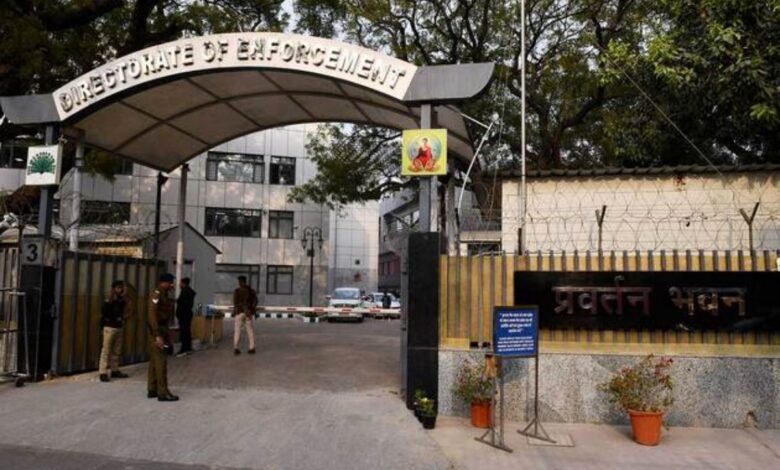
The recruitment of ordinary people through WhatsApp messages and other online channels led them to a website where free registration was followed by a demand for 1,109 rupees inclusive of GST. That payment was presented as the price of permanent membership and the gateway to earnings from viewing advertisements. No such earning facility materialised. The money that poured in was directed instead toward the personal expenses and benefits of the directors of Jaa Lifestyle India Private Limited.
Between 6 December 2020 and 4 June 2021 the sum that changed hands reached 4,29,00,000 rupees. On 22 July 2026 bank balances amounting to 3,70,65,355 rupees held by the company were provisionally attached. On 7 October 2026 a prosecution complaint was placed before the Special Court under the Prevention of Money Laundering Act in Bengaluru. The public announcement of that filing followed on 14 October 2026.
How many households parted with 1,109 rupees in the belief that a few minutes of screen time each day would return a steady income. How many of those households still wait for even a partial return of the money they handed over. The scale of the collection in a window of less than six months forces every subsequent fact into sharper relief.
The company itself had been incorporated only three days before the first payments began to arrive. Corporate records place the incorporation of Jaa Lifestyle India Private Limited on 3 December 2020 under CIN U74999KA2020PTC141790, with authorised capital of 10,00,000 rupees and paid-up capital of 1,00,000 rupees. The registered office stood in Basaveshwaranagar, Bengaluru. The directors listed in those records are Johny and Jolly Johny. The prosecution complaint names three accused persons or entities that include the company and its directors, yet the public summary leaves the complete identity of the third party unspoken.
That three-day gap between incorporation and the start of collections raises the most basic questions about preparation. What business plan existed on the day the company was born. What advertising clients had already signed contracts. What technical infrastructure was in place to display advertisements, measure viewing time and calculate earnings. The absence of any public answer leaves the impression that the membership fee itself was the product.
The mathematical equivalent of 4,29,00,000 rupees divided by 1,109 is approximately 3,86,835 individual payments. That figure cannot be treated as a precise head-count of victims. Some people may have paid more than once. Some transactions may have failed or been reversed. Some may have been refunded in part. The public record supplies none of those details. What it does supply is the stark fact that hundreds of thousands of transactions, or tens of thousands of people making repeated payments, moved money into the company’s accounts in a period shorter than two ordinary fiscal quarters.
Each of those 1,109-rupee payments represented a concrete sacrifice. For a daily-wage worker the sum equals several days of earnings. For a student it equals months of pocket money. For a retired person it equals a meaningful slice of pension. The cumulative human cost is therefore not an abstract 4,29,00,000 rupees but the multiplied hardship of every individual decision to believe the promise of easy digital income.
The provisional attachment of 3,70,65,355 rupees on 22 July 2026 recovers roughly 86 percent of the reported collections. The difference of approximately 58,35,000 rupees remains unaccounted for in the public summary. That difference cannot be dismissed as operating expense or tax without the underlying ledgers. It cannot be assumed to have vanished into personal pockets without the transaction trail. It cannot be treated as recovered merely because a larger sum sits under attachment. The attachment itself is provisional. Its final confirmation still depends on processes that have not been publicly concluded.
The five-year interval between the end of collections in June 2021 and the attachment in July 2026 is itself an unanswered question. Where was the money during those five years. Which accounts held it. Which transfers moved it. Which personal expenditures drew upon it. The public announcement supplies none of these particulars. The silence forces the inquiry to remain open.
The promised model rested on a simple sequence. Prospective members were contacted on WhatsApp and other platforms. They were directed to a website. Registration was free. Permanent membership and the right to earn required the 1,109-rupee payment. Once paid, the member was supposed to view advertisements and receive income. The facility never appeared. No dashboard of earnings materialised. No withdrawals became possible. The representation that viewing advertisements would generate money therefore stands as an empty claim against which the entire collection must be measured.
A genuine advertising-based programme requires revenue from advertisers. Contracts, invoices, campaign reports and bank credits from those advertisers would demonstrate that revenue. Their absence from the public record leaves the membership fees as the only visible inflow. When the only visible inflow is the money of participants and the only promised outflow is income to those same participants, the structure collapses into a closed loop that benefits only those who control the accounts.
The directors controlled those accounts. The allegation that the funds served their personal expenses and benefits therefore sits at the centre of the case. A transfer to a director’s personal account is not automatically illegitimate; it could be salary, reimbursement or dividend. The public record does not distinguish among those categories. It does not list the dates, the amounts or the stated purposes of the transfers. It simply asserts personal use. That assertion demands the full ledger before any final evaluation can be made, yet the ledger remains closed to public view.
The original police complaint was registered at Magadi Road Police Station in Bengaluru under the Indian Penal Code. That complaint became the foundation for the Enforcement Directorate’s money-laundering investigation. The FIR itself has not been placed in the public domain. Its date, its complainant, the precise sections invoked and the number of initial informants therefore remain unknown. Without those details the chronology of detection cannot be reconstructed. The five-year gap between the last collection and the attachment becomes even more difficult to explain.
The Prevention of Money Laundering Act permits provisional attachment when proceeds of crime are believed to be involved. The attachment of 3,70,65,355 rupees followed that route. Confirmation of the attachment requires further proceedings before the adjudicating authority. Those proceedings have not been publicly concluded. The prosecution complaint filed on 7 October 2026 places the matter before the Special Court. The court has not yet delivered any publicly recorded finding on guilt or on the final quantum of proceeds.
Comparable structures have appeared before. Membership fees linked to promises of online earnings have drawn regulatory attention for decades. The Prize Chits and Money Circulation Schemes (Banning) Act of 1978 already addressed arrangements that promised quick or easy money in consideration of enrolment. Direct-selling rules later attempted to separate legitimate product-based networks from pure recruitment schemes. The Jaa Lifestyle model sits uneasily against both frameworks. Its public face was digital marketing. Its economic engine was the membership fee. The gap between face and engine is the precise point that invites scrutiny.
One earlier investigation into Preeya Home Study Private Limited involved a reported collection of approximately 70,00,00,000 rupees under an “earn while you learn” banner. Entry fees ranged from 5,800 to 11,800 rupees. Properties were allegedly acquired in the names of the company and relatives of directors. The scale differs. The structural parallel remains. In both instances an apparently legitimate activity—education in one case, advertisement viewing in the other—served as the public justification for collecting money from individuals who expected a return. In both instances the return failed to materialise in the form promised. The parallel does not prove identity of operators or shared accounts. It does illustrate a recurring pattern that regulators continue to confront.
The use of WhatsApp as a recruitment channel adds a further layer of opacity. Private messages leave fewer public traces than open advertisements. Group invitations can spread rapidly through personal networks. Screenshots of those messages, if preserved, would show exactly what was promised. The public record contains no such screenshots. The absence leaves the content of the representations dependent on the Enforcement Directorate’s summary alone.
The strongest remaining questions therefore concern documentation that has not yet reached the public. The original FIR would establish the first formal complaint. The full prosecution complaint would identify every accused and every scheduled offence relied upon. The complete set of bank statements would trace every inflow and every outflow. The member database would reveal how many distinct individuals paid and whether any of them ever received a single rupee back. Archived pages of the website would show the precise language of the earning promise. MCA filings would confirm shareholding, related-party transactions and any annual returns that disclosed the true financial position.
Until those documents are examined, the public is left with a stark outline. A company incorporated on 3 December 2020 began collecting money three days later. Over the next six months it took in 4,29,00,000 rupees from people who paid 1,109 rupees each for the right to earn by viewing advertisements. The earning facility never appeared. Five years later 3,70,65,355 rupees in bank balances were attached. A prosecution complaint followed. The difference of roughly 58,35,000 rupees, the personal expenditures alleged against the directors, the precise number of people affected and the prospect of any recovery all remain outside the public summary.
The human impact continues long after the last payment was made. Every person who handed over 1,109 rupees did so on the strength of a representation that has not been honoured. Some may have borrowed the money. Some may have diverted household savings. Some may have recruited friends and relatives in the hope of additional rewards. The secondary damage of broken trust within families and neighbourhoods cannot be quantified in the same ledger that records the 4,29,00,000 rupees, yet it forms part of the total cost.
The directors remain named in corporate records. Their individual roles in designing the programme, controlling the bank accounts, authorising transfers and receiving personal benefits have not been publicly dissected. The prosecution complaint treats them as accused. The court process will determine the legal consequences. Until that process concludes, the questions surrounding their conduct stand unanswered.
The Enforcement Directorate’s action has moved the matter from investigation into formal prosecution. That step itself does not restore a single rupee to any participant. Attachment freezes funds; it does not distribute them. Only subsequent orders can convert attached balances into recoverable amounts for those who paid. The timeline for any such recovery remains unknown.
The case therefore stands as a concentrated illustration of how quickly a membership-based digital promise can gather large sums and how slowly the machinery of recovery can respond. The 4,29,00,000 rupees collected between December 2020 and June 2021 represent decisions made by ordinary people under the influence of online recruitment. The 3,70,65,355 rupees attached in July 2026 represent the portion still visible in company accounts more than five years later. The gap between those two figures, the use of the intervening funds, the absence of the promised earning facility and the continuing silence on the exact number of affected individuals together form the core of the unresolved inquiry.
Every additional day that passes without public disclosure of the transaction trail, the member register and the full prosecution complaint leaves those individuals without clarity. The critical questions remain the same. What precisely was shown on the website when the first payments were demanded. Which bank accounts received the 1,109-rupee transfers. Which personal accounts or expenses ultimately absorbed the money. How many people still hold the expectation that some portion of their payment will return. The answers lie in documents that have not yet been opened to public examination. Until they are opened, the case of Jaa Lifestyle India Private Limited continues to raise more questions than it resolves.
The incorporation documents themselves warrant closer inspection. Authorised capital of 10,00,000 rupees and paid-up capital of 1,00,000 rupees suggest a modest corporate vehicle. Yet within days of incorporation the company was receiving a volume of retail payments that far exceeded its stated capital base. The mismatch between capital structure and cash-flow velocity is itself a signal that requires explanation. Who opened the bank accounts. Who was authorised to operate them. What know-your-customer documentation was submitted to the banks. Those operational details sit behind the public figures and have not been disclosed.
The GST component of the 1,109-rupee payment adds another layer. If GST was collected, corresponding returns ought to have been filed. If the returns were filed, the tax authorities would possess independent records of the turnover. If the returns were not filed, the non-compliance itself becomes part of the broader picture. The public summary is silent on this point. The silence leaves open the possibility that statutory obligations were either met or ignored while the membership money continued to flow.
The provisional nature of the attachment must be kept in view. Provisional attachment under the Prevention of Money Laundering Act is a protective measure. It prevents dissipation of funds while the adjudication process runs its course. Confirmation converts the provisional order into a more durable restraint. Confiscation, if ultimately ordered, transfers the funds to the state for possible restitution. None of those later stages has been publicly completed. The 3,70,65,355 rupees therefore remain in a holding pattern. Their eventual destination—whether returned to participants, retained by the company or absorbed by the state—cannot yet be stated.
The geographical concentration of the case in Bengaluru also invites attention. The registered office, the police station that registered the FIR and the Special Court that received the prosecution complaint all lie within the same city. The recruitment, however, occurred through WhatsApp and other online channels that know no municipal boundary. Participants could have been located anywhere in the country. The public record supplies no geographical breakdown of the payers. Without that breakdown it is impossible to assess whether the impact was local or national and whether multiple police jurisdictions ought to have been involved at an earlier stage.
The absence of any public statement from the company or its directors compounds the difficulty. No defence, no alternative explanation of the business model, no claim of refunds already made and no challenge to the quantum of 4,29,00,000 rupees has entered the public domain through the channels examined. That silence cannot be treated as proof of anything. It does, however, leave the Enforcement Directorate’s narrative as the only account currently available. Fairness requires that the company and the directors be given a clear opportunity to respond. Until they do, the questions directed at them remain open.
The broader regulatory environment continues to struggle with digital membership schemes. Online platforms lower the cost of recruitment and accelerate the speed of collection. Traditional investigative timelines, measured in years rather than weeks, struggle to match that speed. The five-year interval between the last collection and the attachment is one illustration of the mismatch. Whether that interval reflects the complexity of financial tracing, the volume of other cases or some other factor cannot be determined from the public summary. The interval itself, however, is a fact that any evaluation must confront.
Participants who paid 1,109 rupees in late 2020 or early 2021 have now waited more than five years for clarity. Some may have written off the sum. Others may still hope for recovery. The attachment of 3,70,65,355 rupees creates a pool from which recovery might eventually be drawn, yet the mechanism for distributing any recovered amount has not been described. The prosecution complaint itself is directed at criminal liability, not at civil restitution. The two processes can run in parallel, but they are not the same. The public summary does not indicate whether any civil claims have been filed or whether any voluntary refunds have occurred.
The case therefore leaves a series of concrete numerical facts surrounded by a larger field of unanswered questions. The company was incorporated on 3 December 2020. Collections of 4,29,00,000 rupees occurred between 6 December 2020 and 4 June 2021. The membership price was 1,109 rupees. Bank balances of 3,70,65,355 rupees were attached on 22 July 2026.
A prosecution complaint was filed on 7 October 2026 and announced on 14 October 2026. Each of those dates and figures is fixed in the public record. Everything that connects them—the content of the WhatsApp messages, the exact number of payers, the destination of every outflow, the personal benefits alleged against the directors, the current status of the attachment proceedings and the prospect of restitution—remains outside that record.
The critical task is therefore not to treat the public summary as a closed account but to treat it as the starting point for further examination. The money trail must be reconstructed transaction by transaction. The member register must be produced. The website archives must be recovered. The directors must be asked to explain the personal expenditures. Only when those steps are completed can the full human and financial cost of the 4,29,00,000-rupee collection be measured. Until then the questions continue to accumulate and the people who paid continue to wait.