FIITJEE’s ₹85.79-Crore Money-Laundering Case: 14,411 Students Left in the Lurch, ₹24.92 Crore in Directors’ Salaries and a Coaching Empire Under Scrutiny
ED seeks prosecution of FIITJEE Limited and directors Dinesh Kumar Goel and Monila Goel; 32 centre closures, unpaid faculty salaries and advance-fee collections raise serious questions about corporate accountability

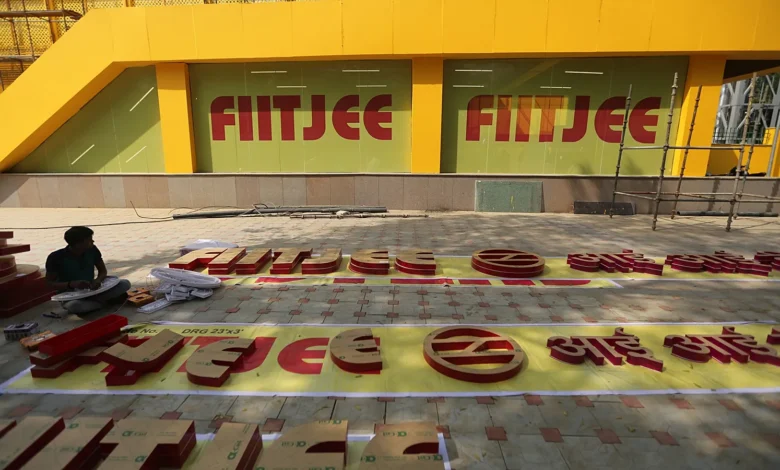
For thousands of families, admission to a reputed coaching institute is not an ordinary commercial transaction. It is a calculated gamble with a child’s future, backed by years of sacrifice, parental savings, expensive education loans and the belief that the institution collecting the money will deliver what it has promised.
The latest developments in the FIITJEE case have brought that relationship of trust under an extraordinary cloud of scrutiny.
On 15 October 2026, the Directorate of Enforcement (ED), Lucknow Zonal Office, filed a prosecution complaint before the Special Court under the Prevention of Money Laundering Act (PMLA) at Ghaziabad against FIITJEE Limited and its directors, Dinesh Kumar Goel and Monila Goel. The agency alleges that fees collected in advance from students preparing for competitive examinations were misappropriated and that the matter involves money laundering.
The ED has quantified the allegedly retained and misappropriated amount at ₹85.79 crore as proceeds of crime. It has also sought conviction of the accused and confiscation of assets valued at ₹71.88 crore that were seized or provisionally attached during the investigation.
These are grave allegations, and they must be tested in court. But the questions raised by the agency cannot be dismissed as a routine dispute between a coaching institute and a handful of dissatisfied customers.
According to the ED, FIITJEE abruptly closed 32 centres between May 2024 and February 2025, leaving 14,411 enrolled students without the coaching for which they had paid. The agency further alleges that the company continued to admit students to programmes extending up to March 2029 despite knowing that it would be unable to deliver the promised services.
If these allegations are established through evidence and judicial findings, the case would represent a deeply troubling failure of corporate responsibility in a sector entrusted with the educational ambitions of young people.
The immediate question is not merely why coaching centres closed. It is how an institution that continued collecting advance fees could allegedly reach a position where thousands of students were left without the promised academic support, faculty members were reportedly awaiting salaries, and the remuneration of the company’s directors became a major subject of the financial investigation.
The bigger question is one of accountability: who should answer when the promises made at the time of admission bear little resemblance to the services ultimately delivered?
1. The numbers behind the controversy: ₹85.79 crore, ₹71.88 crore and 14,411 affected students
The scale of the case is best understood by separating its principal figures.
The ED’s latest prosecution complaint identifies ₹85.79 crore as the amount retained and misappropriated and determined to be proceeds of crime. Separately, the agency is seeking confiscation of assets worth ₹71.88 crore.
These figures serve different purposes. The first concerns the alleged proceeds of crime; the second represents the value of assets for which confiscation is being sought. They should not be confused or treated as interchangeable.
The number of affected students is equally significant. The ED says 14,411 enrolled students were left without the coaching services they had paid for following the abrupt closure of 32 centres.
The agency says students had paid between ₹2.8 lakh and ₹3.5 lakh per student in advance for programmes lasting two to four years, primarily for competitive examinations such as the Joint Entrance Examination (JEE).
For a family paying several lakh rupees upfront, such an arrangement is not a minor purchase. It is a substantial financial commitment made on the expectation that teaching, faculty availability, academic planning and examination preparation will continue for the agreed period.
A student enrolled in a multi-year programme does not purchase a few isolated classroom sessions. The family is paying for a structured educational pathway. When that pathway is disrupted without adequate notice or an effective remedy, the consequences extend beyond the money paid. Students may lose continuity of instruction, need to locate alternative coaching arrangements at short notice and face the difficult task of adjusting to unfamiliar teachers and teaching methods during critical preparation periods.
Those consequences explain why the case deserves close public scrutiny even before the criminal allegations are adjudicated.
The ED’s allegations also raise a question that goes to the heart of advance-fee business models: what financial safeguards should exist when an institution collects money today for services it promises to deliver over the next two, three or four years?
An organisation accepting payments for future educational services must confront the difference between cash received and obligations still outstanding. Money collected in advance may make current cash flow appear healthier, but the corresponding teaching obligations do not disappear merely because the funds have entered the company’s accounts.
If the prosecution’s allegations are proved, the case will require a detailed examination of whether that distinction was adequately respected in FIITJEE’s financial and operational decisions.
2. The most serious allegation: admissions allegedly continued despite the inability to deliver
One of the most consequential allegations in the ED’s 15 October complaint concerns the alleged continuation of admissions even after the company was aware that it could not deliver the programmes being sold.
The agency says FIITJEE continued enrolling students for courses running up to March 2029 despite the operational difficulties and faculty departures. It further alleges that the fees collected were spent while the company remained in continuous deficit.
This is more serious than the proposition that a business encountered financial difficulties or that several branches became unviable.
Businesses can fail. Coaching centres can close. Faculty members can resign, and managements can make poor commercial decisions. None of those circumstances, standing alone, establishes fraud or money laundering.
The decisive question is whether the people controlling the business knew that promised services could not be delivered and nevertheless continued collecting money on assurances that were no longer realistic.
That question must be answered through documentary evidence: admission dates, representations made to parents, internal financial forecasts, branch-level operating records, faculty resignation records, student communications and the company’s knowledge of its outstanding teaching obligations.
The investigation should establish what the management knew, when it knew it, what corrective measures were attempted and whether new admissions continued after the risks had become sufficiently serious that prospective students should have been warned.
The distinction matters because a genuine attempt to rescue a financially distressed organisation is not the same thing as knowingly taking advance payments for services that cannot be delivered. The former may represent a failed business strategy; the latter, if proved and if the applicable legal elements are met, could raise far more serious questions of criminal liability.
The allegation that admissions continued for programmes extending to March 2029 makes that inquiry particularly important. Investigators should examine the period between the emergence of financial stress, faculty departures, individual centre closures and subsequent admissions.
The relevant issue is not simply whether FIITJEE faced a financial crisis. It is whether students and parents were adequately informed of material risks before committing their money.
An institution cannot answer that question merely by invoking its reputation, past results or historic standing in the coaching industry. Reputation may attract customers, but it does not replace the obligation to deliver the services for which payment has been accepted.
3. The ₹24.92-crore salary question: directors’ remuneration while employees allegedly remained unpaid
Perhaps the most politically and commercially uncomfortable aspect of the ED’s allegations concerns the remuneration received by the two directors.
According to the agency, Dinesh Kumar Goel and Monila Goel received a combined ₹24.92 crore in salaries from financial year 2022–23 onwards.
The ED says Dinesh Kumar Goel drew approximately ₹56 lakh per month, while Monila Goel received more than ₹25 lakh per month. The agency further states that the Goel family held 86.31 per cent of the company’s shares and alleges that the directors approved their own remuneration without an independent check.
The agency’s account is especially troubling because it says payments to the directors continued even as other employees’ salaries were delayed or unpaid and centres were closing.
A company’s financial distress is not, by itself, proof that directors’ salaries are unlawful. Executive remuneration can be substantial, and a business may legitimately compensate its senior management according to contracts, approvals and applicable corporate requirements.
The problem is the alleged context.
When an organisation is struggling to meet payroll, retaining the faculty required to deliver its core service and maintaining teaching operations should be central management concerns. If directors were simultaneously drawing substantial remuneration while teachers and other employees remained unpaid, the circumstances warrant a rigorous examination of the company’s priorities, internal controls and decision-making.
The question is not whether directors are entitled to receive salaries. They are entitled to lawful remuneration. The question is whether the remuneration was properly authorised, commercially justified, transparently recorded and consistent with the company’s obligations to employees and students.
The ED says Monila Goel acknowledged that she did not attend the office regularly and mainly signed cheques from home. According to the agency, payments to her continued even when centres were closing.
That allegation deserves careful verification against records of actual duties, employment terms, board and shareholder approvals, payroll documentation, bank records and the company’s financial position during the relevant period. It would be inappropriate to infer wrongdoing solely from an individual’s attendance pattern or salary. The relevant issue is whether the remuneration was legitimate, properly approved and consistent with applicable law and the company’s circumstances.
The reported 86.31 per cent family shareholding also makes the governance question important. Where controlling shareholders occupy leadership positions and approve remuneration involving themselves, independent scrutiny and reliable documentation become particularly significant.
The investigation should establish who proposed and approved the payments, what corporate approvals were obtained, what financial information was available to the decision-makers and whether any independent review took place.
There is also a wider ethical question. Should the people at the top continue receiving substantial payments while the employees responsible for teaching students wait for their wages? The answer cannot be supplied by rhetoric alone; it must emerge from records and applicable legal standards. But the contrast alleged by the ED demands an explanation that is more substantial than general assurances about the company’s reputation or intentions.
4. From May 2024 to February 2025: 32 centres shut, 14,411 students affected
The ED says FIITJEE abruptly closed 32 centres between May 2024 and February 2025.
The closures became a national controversy in January 2025, when reports emerged that several centres across Delhi-NCR, Uttar Pradesh, Madhya Pradesh and Maharashtra had stopped functioning. Contemporary reporting referred to closures or disruptions in locations including Delhi’s Laxmi Nagar, Noida Sector 62, Ghaziabad, Meerut, Lucknow, Varanasi, Bhopal and parts of Mumbai.
Students and parents found themselves confronting an immediate practical problem: how to continue their preparation when the premises they had been attending were no longer operating as expected.
The timing made the disruption particularly painful. Competitive examinations such as JEE require sustained preparation, systematic coverage of a syllabus, continuity of teaching and repeated practice. Changing institutions abruptly can impose additional costs and create uncertainty at precisely the stage when students need stability.
Media reports at the time also recorded allegations that faculty members had resigned after salaries were delayed or remained unpaid. The Indian Express reported that multiple centres had shut down, staff had left and parents were concerned about the future of their children’s academic preparation.
Those reports predated the present prosecution complaint. They now form part of the public history against which the ED’s later findings should be understood, although contemporaneous reports of complaints must not be mistaken for judicial findings of criminal guilt.
The eventual scale specified by the ED—32 centres and 14,411 affected students—is substantially more revealing than the description of a few isolated branch closures.
The figures require a systematic investigation of how a large coaching network managed its teaching commitments across locations. Investigators should establish when each centre began experiencing faculty shortages, when operations became unreliable, when admissions were suspended or continued, and what information was given to students and their parents.
They should also examine what happened after the closures: whether students were offered workable alternatives, whether teaching was resumed elsewhere, what refunds or adjustments were made, and how outstanding obligations were recorded in the company’s books.
These are not secondary administrative details. They determine the extent of the financial harm, the company’s remaining liabilities and the practical remedies available to families.
5. The earlier ED findings: ₹250.2 crore collected and approximately ₹206 crore relating to undelivered services
The latest complaint must also be considered alongside the earlier stage of the investigation.
In April 2025, following searches at seven premises, news reports based on the ED’s findings stated that FIITJEE had collected approximately ₹250.2 crore from 14,411 students for educational programmes spanning the academic years 2025–26 through 2028–29. The reported breakdown was approximately ₹181.89 crore from 9,823 students for 2025–26, ₹47.48 crore from 3,316 students for 2026–27, ₹17.07 crore from 1,008 students for 2027–28 and ₹3.76 crore from 264 students for 2028–29.
Those amounts total approximately ₹250.2 crore.
The April 2025 reporting also attributed to the ED an estimate of approximately ₹206 crore relating to fees for services allegedly not delivered and described an alleged diversion of collected money for personal or unauthorised use.
The current prosecution complaint, however, identifies ₹85.79 crore as the amount retained and misappropriated and quantified as proceeds of crime.
These are important figures, but they must not be carelessly conflated. The gross fees collected, the estimated value of services not delivered and the amount ultimately identified in a prosecution complaint as proceeds of crime may represent different measures. They cannot automatically be treated as identical, and the public press-release summary does not provide a full accounting reconciliation between the earlier reported estimate and the present figure.
That distinction presents a legitimate question for investigators and the company alike.
What portion of the total fees collected was attributable to services already delivered? What portion related to future teaching obligations? What expenses were legitimately incurred? What sums were refunded or adjusted? What transactions are alleged to have constituted diversion or misappropriation? And how was the final amount of ₹85.79 crore calculated?
A detailed, properly explained accounting of these amounts would serve the public interest. It would help establish the difference between gross receipts, outstanding contractual liabilities, operational expenses and the allegedly unlawful retention or movement of funds.
The figures must be reconciled through the underlying records, not speculation. The public deserves clarity, and students seeking redress deserve figures that can be independently understood.
6. Searches, seized valuables and assets worth ₹71.88 crore
The enforcement action has developed over more than one stage.
According to the ED’s latest press release, searches were conducted at seven premises on 24 April 2025. The agency reported the seizure of ₹10 lakh in cash and jewellery worth ₹4.86 crore.
On 9 October 2026, the ED provisionally attached properties valued at ₹66.92 crore under the PMLA. The subsequent prosecution complaint seeks confiscation of assets worth ₹71.88 crore seized or provisionally attached during the investigation.
The figures are arithmetically consistent with the components described by the agency: ₹66.92 crore in provisionally attached property, ₹4.86 crore in jewellery and ₹10 lakh in cash amount to ₹71.88 crore.
But provisional attachment is not the same as final confiscation. Attachment is a legal measure taken during the proceedings; confiscation is a separate outcome that must follow the applicable statutory process and judicial determination.
The distinction is essential. An asset does not become finally forfeited merely because an investigative agency has attached it, and a prosecution complaint does not itself establish guilt.
Nevertheless, the scale of the reported attachment demonstrates why the financial trail requires careful scrutiny. Investigators should establish the ownership, acquisition, valuation and source of funds associated with the attached properties, along with any connections they allege between those assets and the proceeds of crime.
The proceedings should also establish whether the value of the attached or seized assets can support the remedies sought and how any legally recoverable money might ultimately be applied to lawful claims.
Most importantly, enforcement action should translate into meaningful accountability. The purpose cannot end with announcing impressive figures for searches, seizures or attachments. The public will reasonably expect the investigation to establish the facts and the legal process to determine the appropriate consequences.
For affected families, the central issue remains whether they can obtain a clear account of what happened to their money and what avenues for relief are available.
7. Four FIRs, a police charge-sheet and approximately 300 victim statements
The ED says its investigation originated from four FIRs registered by Uttar Pradesh Police in Noida and Greater Noida and by Madhya Pradesh Police in Bhopal.
The underlying complaints alleged offences including criminal breach of trust, cheating and criminal conspiracy under the relevant provisions of law. The ED press release identifies provisions of the Bharatiya Nyaya Sanhita, 2023, corresponding to Sections 406, 420, 120B and 34 of the Indian Penal Code, 1860.
The agency further says Noida Police has filed a charge-sheet naming Dinesh Kumar Goel and Monila Goel as accused. According to the ED’s summary, that charge-sheet draws on statements from approximately 300 victims, operators of FIITJEE coaching centres and other witnesses, together with fee receipts and other material gathered during the investigation.
A charge-sheet represents the investigating agency’s formal presentation of its case; it is not a conviction. The evidence must be evaluated through the judicial process, and the accused retain their right to contest the allegations.
Even with that qualification, the reported evidentiary base is significant. Statements from affected families, admissions and fee records, witness testimony and financial documentation can help establish the chronology of admissions, the services promised, the circumstances of centre closures and the handling of money.
The key is to test those materials rigorously. Investigators and prosecutors must distinguish between individual contractual disputes and any broader conduct alleged to have formed part of a deliberate scheme. They should identify which decision-makers controlled admissions, finance, payroll, student communication and the closure of individual centres.
The inquiry should also establish whether relevant information was available to particular directors at material times. Corporate responsibility cannot be decided solely by titles or shareholding; individual criminal liability depends on the evidence and the applicable law.
Equally, if the evidence establishes that decisions were made at different levels of the organisation, accountability should extend to every person against whom sufficient evidence exists, irrespective of seniority or position.
8. The February 2025 police action: ₹11.11 crore frozen in 12 bank accounts
The FIITJEE controversy had already prompted significant police action before the latest ED complaint.
On 10 February 2025, The Indian Express reported that Greater Noida Police had frozen approximately ₹11.11 crore in 12 bank accounts linked to founder Dinesh Goyal in connection with a cheating investigation following centre closures.
The report stated that an FIR had been registered after a parent’s complaint concerning a four-year coaching programme. The parent alleged that ₹2.80 lakh had been paid and that the family was informed that teachers had left and the centre would close.
The police reportedly found ₹11,11,12,987 across the 12 accounts then identified and froze the amount while the investigation continued.
This was a separate reported police measure in the earlier cheating investigation. It should not be added to the ED’s ₹71.88-crore seizure-and-attachment figure without documentary confirmation that the amounts are distinct and non-overlapping.
The significance of the episode lies in its chronology: by February 2025, police were investigating complaints associated with the closures and had taken action to preserve funds in bank accounts.
A rigorous investigation should establish how the various criminal proceedings relate to one another, which assets or transactions overlap, and whether information obtained by one investigating agency has been appropriately shared with others.
The objective should be a coherent evidentiary record, not a collection of disconnected announcements. Duplication, gaps and uncertainty over the status of money can undermine both public confidence and the effectiveness of legal remedies.
9. FIITJEE’s defence: management blamed centre partners and alleged a conspiracy
The company’s own explanation must be placed on record.
In a statement reported in January 2025, FIITJEE denied that it had independently decided to close the affected centres. It blamed the sudden departure of centre managing partners and their teams, described the turmoil as temporary and said officials were working to resume operations.
The company also alleged that people with vested interests had hatched a criminal conspiracy and referred to what it characterised as mismanagement or exploitation by centre managing partners. It indicated that its legal team was taking action in response to the criminal cases and also raised allegations of unfair competitive conduct.
Those were the company’s stated positions at that time. They must not be suppressed, because a fair account of the controversy includes the defence offered by the organisation under scrutiny.
But the defence raises its own questions.
If the crisis resulted primarily from the departure of centre partners, what financial and operational safeguards were in place to ensure that students continued receiving the services already paid for? What contingency plans existed for replacing faculty? What steps did the central management take to protect students whose centres had become non-operational? What happened to admissions and fee collections while these difficulties persisted?
If the company believes that outside parties or centre partners caused the disruption, its claims should be supported by relevant records and tested through the appropriate legal proceedings. Any independently substantiated misconduct by those parties should be investigated as well.
At the same time, a dispute with centre partners would not automatically dispose of questions about the central company’s admissions, finances, executive remuneration or obligations to students. Those matters require their own evidentiary assessment.
As of 16 October 2026, the latest published reports reviewed for this article did not provide a substantive response from FIITJEE to the ED’s new prosecution complaint. Hindustan Times reported that it attempted to contact the company using a number listed on its website, but that the number did not exist.
The absence of a published response should not be presented as an admission of guilt. FIITJEE and the named directors must have a fair opportunity to respond to the specific allegations and present their version of the financial and operational record.
However, a controversy involving thousands of students and sums running into tens or hundreds of crores requires more than a general statement that the situation will improve. Parents are entitled to clear, specific and verifiable information concerning teaching arrangements, refunds, outstanding liabilities and the status of the investigations.
10. The older consumer cases: refund disputes did not begin with the latest ED complaint
The present PMLA proceedings are not the first publicly reported disputes involving FIITJEE and the refund of advance course fees.
Consumer commission records show that students and parents have previously challenged the company’s reliance on non-refundable fee clauses.
In an order dated 5 April 2019, the State Consumer Disputes Redressal Commission, Chandigarh, decided three appeals involving FIITJEE and student complaints concerning fees for periods during which the students had not attended classes. The commission directed refunds in the cases before it, along with compensation and litigation costs in the relevant matters.
The individual amounts differed from case to case. They should be understood as case-specific consumer disputes, not evidence that every FIITJEE enrolment or refund decision was unlawful.
A later decision provides another example. In November 2025, LiveLaw reported that the Delhi State Consumer Disputes Redressal Commission dismissed FIITJEE’s appeal in a dispute brought by Manas Mehra.
According to the report, Mehra had paid ₹4,01,493 for a two-year weekend programme, attended two classes and sought to withdraw after finding the coaching unsatisfactory. FIITJEE initially refunded ₹24,780 and relied on its no-refund clause to justify retaining the remaining amount.
The Delhi State Commission upheld the direction to refund ₹3.20 lakh with applicable interest and to pay ₹25,000 towards compensation and litigation costs. The commission reportedly found the no-refund clause arbitrary, unreasonable and one-sided in the circumstances of that dispute, and noted that FIITJEE had not demonstrated actual financial loss or shown that the student’s seat remained vacant.
This was a consumer decision concerning a particular student’s claim, not a criminal conviction and not a judicial determination of the current money-laundering allegations.
Nevertheless, the decision is relevant to the wider consumer-protection issue. It illustrates why advance-fee arrangements and contractual no-refund provisions deserve scrutiny when an institution retains money for services the student did not receive.
There is a crucial distinction between a student voluntarily withdrawing from a functioning programme and students being left without the promised programme because a centre has closed. The precise rights and remedies depend on the relevant contract, facts and applicable law. Neither situation should be reduced to a simplistic assumption that all fees are automatically refundable or that all fees are automatically non-refundable.
The larger lesson is that a printed clause cannot, by itself, settle every dispute over whether retaining an advance payment is fair or legally permissible. Consumer commissions examine the relevant facts, applicable law and the conduct of the parties.
11. The governance questions the FIITJEE case now demands investigators answer
The figures and allegations in the current complaint raise several questions that should be resolved through evidence.
First, when did management know that the centres could not continue delivering the promised programmes?
Investigators should compare internal financial forecasts, faculty departures, centre performance data, admissions records and the dates on which families were informed of disruptions.
Second, why did admissions allegedly continue for courses extending to March 2029?
The inquiry should determine which programmes remained operational, what services were available, and what the relevant decision-makers knew when new fees were collected.
Third, how were the advance fees used?
A transaction-by-transaction examination should identify payments for legitimate teaching and operating expenses, amounts attributable to services already provided, refunds and adjustments, and the transactions alleged to represent misappropriation or proceeds of crime.
Fourth, how were the directors’ salaries authorised and paid?
The company’s employment arrangements, board approvals, financial statements, payroll records and applicable corporate requirements should be examined. The alleged contrast between substantial directors’ remuneration and unpaid employee salaries warrants careful scrutiny but is not, in isolation, proof of an offence.
Fifth, what is the status of the affected students’ claims?
The relevant agencies should establish what arrangements were made for replacement teaching, refunds and other available remedies, and how many students remain financially affected. The ED’s figure of 14,411 students left without the promised coaching does not, by itself, tell us how many have received refunds or other relief.
Sixth, what is the relationship between the police cases and the PMLA complaint?
The four underlying FIRs, the reported police charge-sheet, the ED’s financial investigation and any subsequent judicial proceedings should be tracked so that the public can distinguish allegations, evidence, judicial decisions and enforceable remedies.
Seventh, how were the financial amounts calculated?
The earlier reported estimate of ₹206 crore related to undelivered services and the current ₹85.79-crore proceeds-of-crime figure need to be understood in their proper accounting and legal contexts. The underlying complaint and supporting records should clarify the connection between gross fees collected, outstanding obligations, alleged diversion and the proceeds identified by the ED.
These questions are not a demand that investigators reach a predetermined conclusion. They are a demand that the evidence be examined comprehensively, that the relevant individuals be held accountable where the law and evidence justify it, and that affected families are not lost in the complexity of lengthy proceedings.
12. Why a prolonged investigation would fail the public interest
Economic investigations are complex. Establishing the movement of funds, tracing asset ownership, examining records across branches and identifying individual responsibility can take time. The seriousness of the allegations makes a careful investigation essential.
But careful investigation should not become a euphemism for indefinite delay.
Students preparing for competitive examinations cannot recover lost academic time. Families who paid substantial advance fees may face continuing financial uncertainty. Employees who were allegedly not paid should not have to wait unnecessarily for their claims to be examined. And the accused themselves are entitled to a timely, fair determination rather than an unresolved accusation that lingers indefinitely.
The appropriate response is a disciplined and time-bound process: prompt examination of the prosecution complaint, preservation of relevant financial and digital records, coordinated investigation of connected offences, transparent communication about student remedies and expeditious judicial proceedings consistent with due process.
Investigators should follow the money wherever reliable evidence leads. They should identify the transactions that support the alleged proceeds of crime, determine whether assets can lawfully be linked to those proceeds and place the relevant evidence before the court.
Prosecutors should present a clear, document-supported case. The court should determine the admissibility and weight of the evidence, consider the defence and decide the charges in accordance with law. If the evidence is insufficient, that too must be recognised. Justice is not served by assuming guilt before trial; neither is it served by allowing serious allegations to remain unresolved without adequate reason.
Consumer and education authorities should also examine what safeguards can reduce the likelihood of similar situations. Institutions offering multi-year programmes against large advance payments should be expected to communicate material disruptions transparently and comply with applicable requirements governing consumer rights, financial reporting and contractual obligations.
The objective should be both accountability for past conduct, if proved, and practical protection for students who may face similar situations in the future.
13. The bitter question: who bears the risk when an education business collects money in advance?
The FIITJEE case exposes a fundamental imbalance in the advance-fee model.
The institution receives money upfront. The family commits savings and entrusts its child’s preparation to the organisation. The business is then responsible for providing services over a much longer period.
When operations fail, the family may be left trying to recover money while also finding alternative coaching, adjusting academic plans and dealing with the uncertainty surrounding a high-stakes examination.
That imbalance is precisely why transparency and responsible management matter.
A company’s brand can be built over decades, but a reputation is not a substitute for the ability to deliver a programme. Its past results cannot guarantee future performance. Its size cannot excuse failures in communication. And its financial difficulties cannot automatically erase contractual obligations.
At the same time, a financial crisis does not establish criminal wrongdoing. The distinction between commercial failure and criminal conduct must be established by the evidence.
The present case therefore demands neither a predetermined verdict nor a soft-pedalled response. It demands a serious investigation of the allegations, an explanation of the financial record, meaningful attention to student claims and a timely judicial determination.
The public should not have to choose between blind faith in a well-known educational brand and an assumption that every allegation against it is true. The correct course is to insist on evidence, transparency and accountability.
That is the standard that should govern a coaching institution entrusted with the aspirations of thousands of students.
14. A demand for faster investigations, meaningful remedies and judicial accountability
The ED’s latest complaint marks a significant development, but filing a prosecution complaint is not the end of the process.
The priority now should be to establish the facts without unnecessary delay.
The investigative agencies should complete any remaining essential investigative steps promptly, examine the financial transactions and corporate approvals relevant to the allegations, preserve the integrity of the evidence and ensure that related proceedings are coordinated appropriately.
The prosecution should clearly establish the basis for the ₹85.79-crore proceeds-of-crime figure, the assets covered by the ₹71.88-crore confiscation request and the relationship between these amounts and the earlier reported collections and undelivered services.
The relevant authorities should also ensure that affected families receive clear information about available legal remedies. The number of students reported to have been affected is too large for the consumer dimension to be treated as an afterthought.
Any recovery or restitution should take place through lawful procedures, with transparent accounting and without prejudging the criminal liability of the accused. The preservation of assets, the determination of ownership and the rights of affected claimants must be addressed in accordance with the applicable law.
The judiciary should endeavour to deal with the matter expeditiously, consistent with a fair trial and the rights of all parties. Speed must never come at the expense of justice, but neither should procedural complexity become a reason for avoidable stagnation.
The authorities should report accurately on the status of the proceedings, the progress of any outstanding investigative steps and the remedies available to students, subject to legal restrictions and the requirements of a fair investigation.
For its part, FIITJEE should provide specific, verifiable information about the affected programmes, outstanding student obligations, refund and adjustment arrangements, and the company’s response to the allegations. It should also be given a fair opportunity to answer the specific claims concerning its management and finances.
If the allegations are proved, responsibility must follow the evidence and the law, regardless of corporate prominence or family shareholding. If particular allegations are not proved, that too must be acknowledged.
The objective is not a sensational headline or a trial by media. It is a credible process that identifies what happened, determines responsibility lawfully and addresses the position of the people whose money and educational plans were affected.
Conclusion: A famous name is no substitute for accountability
FIITJEE now faces a serious prosecution complaint built around allegations of advance-fee misappropriation, continued admissions, centre closures, unpaid employee salaries and substantial directors’ remuneration.
The central numbers are stark: ₹85.79 crore identified by the ED as proceeds of crime; ₹71.88 crore in assets for which confiscation is sought; 32 centres reported closed; and 14,411 students said to have been left without the coaching they paid for.
The agency also alleges that Dinesh Kumar Goel and Monila Goel received a combined ₹24.92 crore in salaries from FY 2022–23 onwards, while employees’ salaries were delayed or unpaid. The significance of those payments, their authorisation and their relationship to the company’s financial position must be determined through the underlying records and judicial process.
The earlier complaints, police investigations and consumer decisions show why the latest development should not be viewed in isolation. But they must also be described carefully: a complaint is not proof of guilt, a provisional attachment is not a final confiscation, and a consumer ruling in an individual refund dispute is not a criminal conviction in this case.
What the public can reasonably demand is that the questions raised by the evidence be answered without unnecessary delay. Students and parents deserve clarity about their claims; employees deserve the lawful payment of outstanding dues; the accused deserve a fair trial; and the public deserves a transparent account of how such a large number of educational commitments allegedly went unfulfilled.
An institution’s reputation may persuade families to pay in advance. Only reliable performance, responsible governance and accountability can justify the trust that follows.
The test of the FIITJEE case will not be the force of the allegations or the size of the figures announced in a press release. It will be whether the investigation establishes the facts, the court adjudicates them fairly and the lawful consequences—whatever they ultimately prove to be—are implemented without avoidable delay.
Strong legal disclaimer
This article reports allegations contained in the Enforcement Directorate’s prosecution complaint and previously reported police investigations, together with specific consumer commission decisions. The allegations concerning FIITJEE Limited, Dinesh Kumar Goel and Monila Goel in the present money-laundering matter have not been treated as established facts or as a finding of criminal guilt.
As of 16 October 2026, no criminal conviction in this particular PMLA matter has been identified in the public material reviewed for this article. The filing of a prosecution complaint, registration of an FIR, filing of a police charge-sheet or provisional attachment of assets does not, by itself, constitute a conviction. The named parties retain their rights to respond to the allegations, contest the evidence and receive a fair determination by the competent court.
Any criminal liability must be established through the applicable judicial process. The figures attributed to the ED are reported as agency findings or allegations, not as independently adjudicated findings of guilt.